


Filter Tip Pipette
In the landscape of precision liquid handling, the filter tip pipette stands as a critical component for maintaining sample integrity and preventing equipment contamination. For engineers, laboratory managers, and procurement specialists in the pharmaceutical, chemical, and biotechnological sectors, understanding the technical nuances of these components is essential for optimizing experimental reproducibility and operational efficiency. While often viewed as a simple consumable, the engineering behind the filtration media within these tips involves complex material science and fluid dynamics, mirroring the precision required in large-scale industrial filtration systems.
As a manufacturer specializing in high-performance filtration solutions, Kaifil recognizes that whether a filter is a micron-rated stainless steel mesh or a porous polymer plug in a pipette tip, the objective remains the same: the reliable separation of contaminants from a medium without compromising the flow or accuracy of the process. This guide explores the technical specifications, selection criteria, and engineering considerations of filter tip pipettes within an industrial R&D and quality control framework.
The Fundamental Role of Filtration in Liquid Handling
The primary function of a filter tip pipette is to act as a physical barrier between the liquid sample and the internal components of the pipette, particularly the piston and the internal air column. During the aspiration and dispensing of liquids, aerosols—fine mists or droplets—are naturally generated. Without a filtration barrier, these aerosols can enter the pipette shaft, leading to several significant risks.
Prevention of Cross-Contamination
In high-throughput environments, such as diagnostic labs or pharmaceutical R&D, cross-contamination is a primary concern. Residual aerosols from a previous sample can remain in the pipette body and contaminate subsequent samples. A filter tip pipette utilizes a porous barrier to trap these aerosols, ensuring that the air displaced by the pipette remains sterile and free of molecular or chemical carry-over.
Protection of Equipment
Corrosive chemicals, radioactive isotopes, and biological agents can damage the internal mechanisms of expensive pipetting instruments. By integrating a high-efficiency filter, organizations can extend the service life of their equipment and reduce the frequency of maintenance and recalibration necessitated by internal contamination.
Engineering Specifications: Pore Size and Airflow Resistance
The performance of a filter tip pipette is defined by the physical characteristics of the filter media. Most industrial-grade tips utilize sintered porous polyethylene (PE) or similar polymers. The engineering challenge lies in balancing the filtration efficiency with the airflow required for accurate aspiration.
Pore Size Distribution
Filter tips are typically rated by their pore size, often ranging from 10 to 30 microns. Unlike absolute-rated industrial metal filters, the filters in pipette tips function through a combination of inertial impaction, interception, and diffusion. The pore structure must be dense enough to block aerosols and liquid droplets while remaining open enough to allow the air column to move freely. If the pores are too small, the airflow resistance increases, leading to "lag" in the pipette’s response and potential volumetric errors.
Hydrophobicity and Surface Energy
To prevent the liquid sample from penetrating the filter, the material is typically treated to be highly hydrophobic. This high surface energy ensures that even if the liquid accidentally comes into contact with the filter (due to over-aspiration), the filter will resist wetting. In some advanced designs, the filter may contain additives that cause it to swell and seal upon contact with liquid, effectively locking the pipette and preventing the sample from reaching the internal shaft.
Material Integrity and Chemical Compatibility
In industrial B2B applications, the chemical nature of the samples can vary widely, from aqueous buffers to organic solvents and volatile acids. Selecting the right filter tip requires an evaluation of the material’s chemical resistance.
1. Polyethylene (PE): The standard material for most filter tips due to its excellent chemical resistance to a wide range of laboratory reagents and its ability to be manufactured into precise porous structures through sintering.
2. Leachable and Extractable Profiles: For sensitive applications like Mass Spectrometry (LC-MS) or trace element analysis, it is vital that the filter itself does not introduce contaminants. Engineers should look for tips that are certified free of additives, lubricants, and heavy metals.
3. Thermal Stability: If the tips are to be used in environments with temperature fluctuations or require specific sterilization protocols, the thermal stability of the polymer must be confirmed to ensure the filter does not shrink or lose its structural integrity.
Volumetric Accuracy and Fluid Dynamics
A common technical question among engineers is how the presence of a filter affects the calibration and accuracy of a pipette. Because pipettes operate on the principle of air displacement, any change in the resistance of the air column can impact the volume of liquid aspirated.
The Impact of Dead Volume
The "dead volume" is the air space between the liquid surface and the filter. A well-engineered filter tip pipette minimizes this space to ensure a direct and responsive transfer of force from the piston to the liquid. If the filter is seated too high or too low, it can alter the pressure dynamics, leading to systematic errors in dispensing.
Airflow Consistency
Consistency across a batch of tips is paramount. In industrial manufacturing, the sintering process for the filters must be tightly controlled to ensure that every filter has the same airflow resistance. Variations in the density of the filter plug can lead to tip-to-tip variability, which is unacceptable in automated liquid handling systems or validated clinical assays.
Quality Control Protocols for Industrial-Grade Pipette Tips
For B2B procurement, verifying the quality standards of a supplier is a non-negotiable step. High-quality filter tips undergo rigorous testing to ensure they meet the demands of regulated industries.
* Aerosol Breakthrough Testing: This involves challenging the filter with a standardized aerosol (often using a specific dye or radioactive tracer) to measure the percentage of particles that pass through the barrier.
* Sterility Assurance Levels (SAL): Tips used in microbiology or cell culture must be sterilized, typically via Gamma irradiation or Electron-beam (E-beam) processing, to achieve an SAL of 10^-6.
* Certification of Purity: Suppliers should provide documentation confirming the absence of DNase, RNase, Protease, and Endotoxins (pyrogens). This is critical for molecular biology applications where even minute amounts of these enzymes can degrade samples.
Strategic Procurement: Evaluating OEM and Custom Filtration Solutions
When purchasing filter tip pipettes for large-scale operations, procurement teams should look beyond the unit price and consider the total cost of ownership and the reliability of the supply chain.
Customization and OEM Capabilities
Many industrial applications require specialized tip geometries or unique filter properties. For example, automated workstations often require conductive tips (to detect liquid levels) with integrated filters. Partnering with a manufacturer that understands the complexities of filtration—from material selection to precision assembly—allows for the development of customized solutions that fit specific robotic platforms or proprietary assays.
Technical Support and Documentation
A reliable supplier provides more than just a product; they provide the technical data necessary for laboratory validation. This includes chemical compatibility charts, certificates of analysis (CoA) for each lot, and guidance on the best tip for specific liquid classes (e.g., low-retention tips for viscous liquids).
Integrating Filtration Solutions Across the Production Lifecycle
The precision required in a filter tip pipette is a microcosm of the filtration challenges faced throughout the industrial production lifecycle. While the pipette tip protects the sample at the R&D stage, the transition to pilot plants and full-scale manufacturing requires more robust filtration systems.
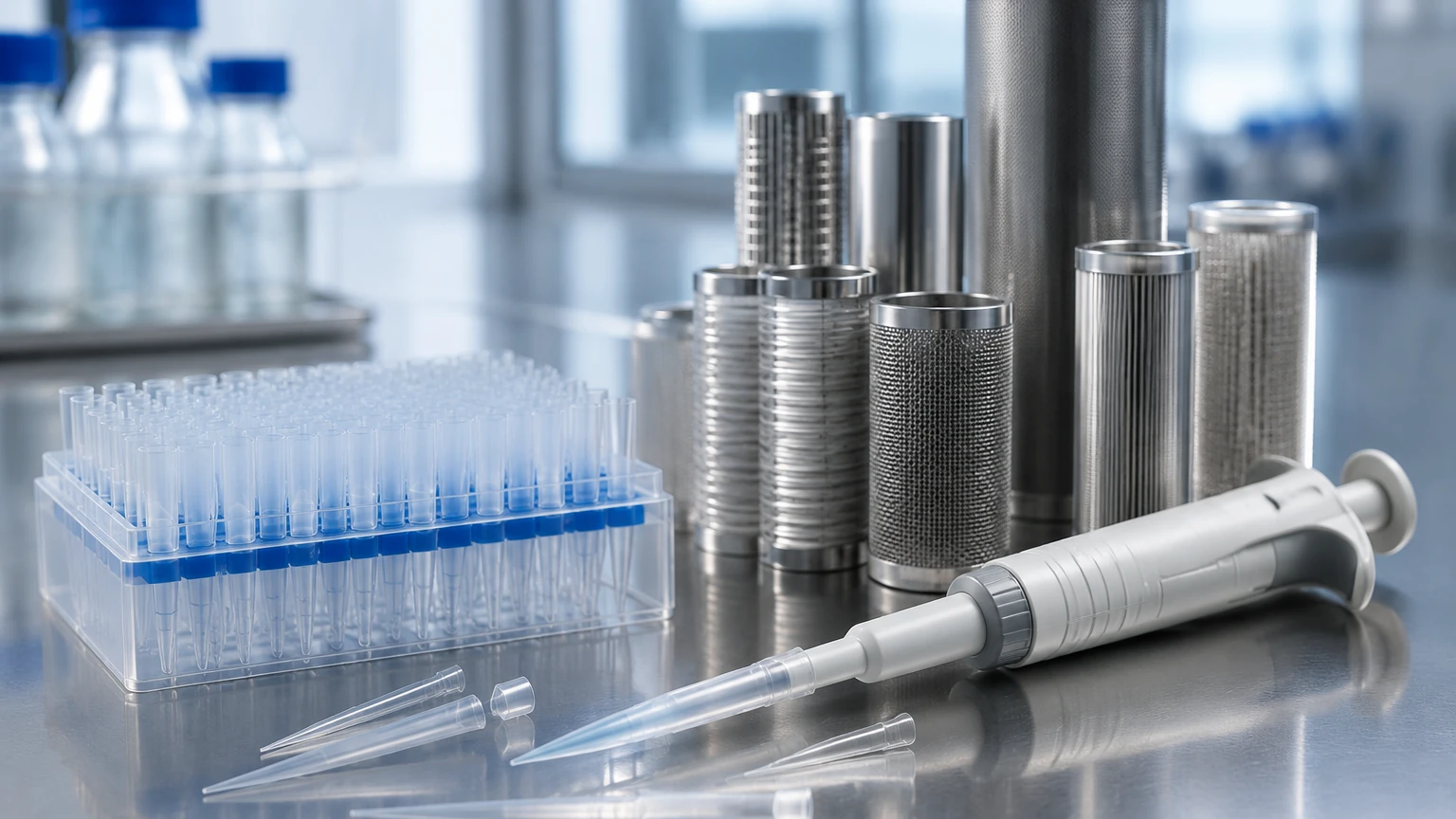
At Kaifil, we specialize in the transition from lab-scale precision to industrial-scale durability. Our expertise in stainless steel filter cartridges and wire mesh filters provides the necessary infrastructure for chemical processing, pharmaceutical manufacturing, and water treatment. Understanding the principles of aerosol barriers in pipettes helps technical teams appreciate the importance of high-integrity filtration in larger systems where the stakes involve thousands of liters of product.
For organizations looking to optimize their entire filtration workflow, it is beneficial to work with partners who understand the spectrum of filtration technology. You can Review product options and application support on our Main Page to see how industrial-grade metal filtration components complement the precision requirements of your laboratory and production environments.
Conclusion: Making Informed Decisions
The filter tip pipette is a small but indispensable tool in the modern industrial laboratory. By focusing on the engineering of the filter media, the consistency of the manufacturing process, and the rigor of the quality control protocols, engineers and purchasing teams can significantly reduce the risk of contamination and experimental failure.
When selecting a filtration partner, prioritize those who demonstrate a deep technical understanding of material science and fluid dynamics. Whether you are managing a small research team or a large-scale manufacturing facility, the integrity of your filtration solutions is the foundation of your product’s quality and your process’s reliability. By applying the same rigorous standards to your pipette tips as you do to your industrial process filters, you ensure a seamless path from discovery to delivery.
