


How Does a Pressure Vessel Work Az
In industrial engineering, understanding the mechanics of fluid containment and filtration is essential for maintaining system integrity. A pressure vessel is defined as a closed container designed to hold gases or liquids at a pressure substantially different from the ambient pressure. Whether used in chemical processing, pharmaceutical manufacturing, or hydraulic systems, these components are the backbone of high-pressure operations. This guide provides a comprehensive overview of how does a pressure vessel work az, covering design principles, internal filtration integration, and safety considerations for technical professionals.
Fundamental Principles of Pressure Vessel Operation
At its core, a pressure vessel operates on the principle of structural equilibrium. When a fluid is compressed within a container, it exerts equal force in all directions against the internal walls. The vessel must be engineered to withstand these stresses without deforming or failing.
There are two primary types of stress that engineers calculate when determining how a pressure vessel functions: hoop stress and longitudinal stress. Hoop stress acts tangentially to the circumference of the vessel, while longitudinal stress acts parallel to the axis of the cylinder. In most cylindrical vessels, hoop stress is twice as high as longitudinal stress, which is why the thickness of the shell is a critical variable in the design phase.
To manage these forces, manufacturers like Kaifil utilize high-strength materials, primarily stainless steel, which offers the necessary tensile strength and corrosion resistance required for demanding industrial environments. For more information on specific material grades and their applications in filtration housings, you can visit our Main Page.
Component Breakdown: The Anatomy of a Vessel
To understand how does a pressure vessel work az, one must look at the individual components that ensure its functionality and safety.
1. The Shell
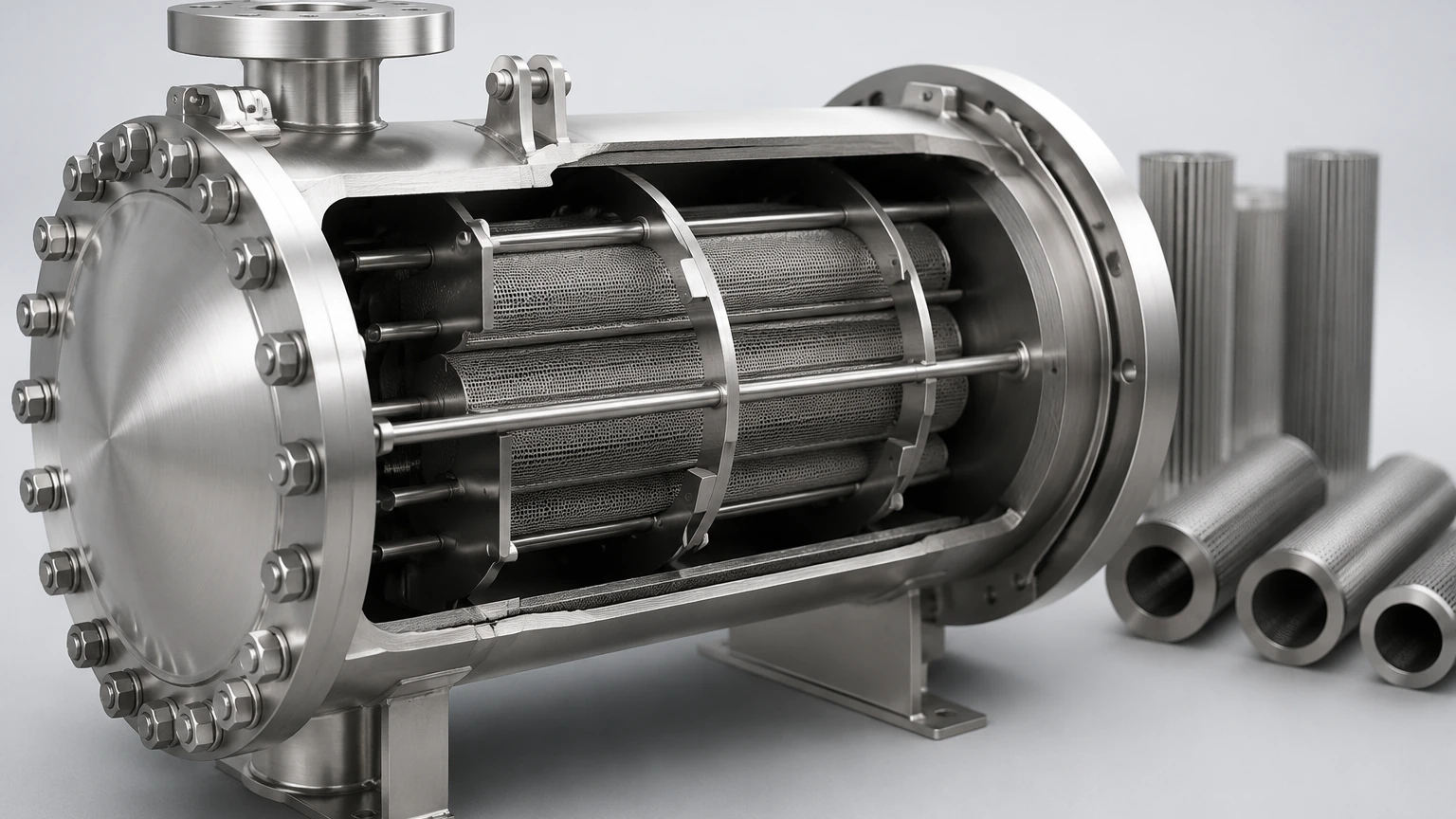
The shell is the primary containment boundary. It is typically cylindrical or spherical. Cylindrical shells are more common in industrial filtration because they are easier to manufacture and provide a practical shape for housing internal filter cartridges and wire mesh elements.
2. The Heads (End Caps)
Heads are the end caps that seal the shell. They come in various shapes, including hemispherical, ellipsoidal, and torispherical. The shape of the head influences the distribution of stress; hemispherical heads are the strongest but most expensive to produce, whereas torispherical heads are common in lower-pressure applications due to their cost-effectiveness.
3. Nozzles and Flanges
Nozzles are the entry and exit points for the fluid. In a filtration context, the inlet nozzle directs contaminated fluid into the vessel, while the outlet nozzle carries the filtered medium back into the process line. Flanges provide the connection points for piping and allow for the vessel to be opened for maintenance or filter replacement.
4. Internal Supports and Filtration Assemblies
Inside the vessel, specialized supports hold filtration components in place. For high-precision applications, stainless steel filter cartridges or wire mesh filters are installed to remove particulates from the pressurized stream. The vessel acts as a protective housing that ensures the fluid passes through the filter media at a controlled velocity and pressure.
Engineering Design Standards and Material Selection
The construction of pressure vessels is strictly regulated by international standards, most notably the ASME (American Society of Mechanical Engineers) Boiler and Pressure Vessel Code (BPVC). These standards dictate the minimum wall thickness, welding procedures, and testing protocols required to ensure safety.
Material selection is perhaps the most critical factor in how a pressure vessel performs over its lifecycle. Stainless steel is the industry standard for several reasons:
* Corrosion Resistance: In chemical and food processing, the fluid being handled can be highly corrosive. Stainless steel 304 and 316L provide the necessary protection against oxidation and chemical attack.
* Temperature Stability: Pressure vessels often operate at extreme temperatures. Stainless steel maintains its mechanical properties across a wide thermal range, preventing brittle fracture in cold environments or creep in high-heat applications.
* Hygiene: In pharmaceutical and food industries, the smooth surface finish of stainless steel prevents bacterial growth and allows for effective Clean-in-Place (CIP) procedures.
Integration of Stainless Steel Filtration Solutions
A common application for pressure vessels is as a housing for industrial filtration systems. In these setups, the vessel's primary role is to manage the pressure differential created by the filter media.
As fluid flows through a stainless steel wire mesh or a sintered metal cartridge, a pressure drop (delta P) occurs. The vessel must be designed to handle the maximum possible pressure drop that might occur when the filter is fully loaded with contaminants. If the vessel is not rated for this differential, it risks structural compromise.
Kaifil specializes in custom stainless steel filtration solutions that are designed to fit seamlessly within these pressure vessels. By optimizing the surface area of the filter media, engineers can reduce the initial pressure drop, thereby extending the service life of the components and reducing the energy required to pump fluid through the system.
Performance Evaluation and Selection Criteria
When engineers evaluate a pressure vessel for a specific application, several technical parameters must be confirmed. Understanding how does a pressure vessel work az requires a deep dive into these selection criteria:
Design Pressure and Temperature
The vessel must be rated for the Maximum Allowable Working Pressure (MAWP). This is the highest pressure at which the vessel is permitted to operate at a specific temperature. Engineers typically include a safety factor, often 3:1 or 4:1, meaning the actual burst pressure of the vessel is much higher than the MAWP.
Flow Rate and Velocity
The size of the vessel and its nozzles must be compatible with the required flow rate. If the velocity is too high, it can cause erosion of the internal walls or damage the delicate wire mesh of the filtration elements. Conversely, if the velocity is too low, particulates may settle in the bottom of the vessel rather than being captured by the filter.
Filtration Accuracy
Depending on the application, the internal filtration components might need to remove particles as small as 1 micron or as large as several millimeters. The choice of filter media—whether it is pleated wire mesh, sintered metal, or wedge wire—depends on the required filtration accuracy and the nature of the contaminants.
Common Risks and Safety Mechanisms
Operating high-pressure equipment inherently involves risks, including overpressurization, material fatigue, and corrosion. To mitigate these risks, pressure vessels are equipped with several safety features:
* Pressure Relief Valves (PRVs): These are designed to open automatically if the internal pressure exceeds a pre-set limit, venting the fluid to a safe location.
* Rupture Disks: A one-time-use safety device that bursts at a specific pressure to provide rapid pressure relief.
* Pressure Gauges and Sensors: Continuous monitoring allows operators to detect anomalies in real-time, such as a sudden increase in pressure drop indicating a clogged filter.
* Non-Destructive Testing (NDT): During manufacturing and periodic maintenance, techniques like radiographic testing (X-ray) and ultrasonic testing are used to check for cracks or thinning of the vessel walls.
Maintenance and Lifecycle Management
The longevity of a pressure vessel and its internal filtration components depends on a rigorous maintenance schedule. Over time, even the most durable stainless steel filters will accumulate debris.
1. Monitoring Pressure Drop: The most effective way to determine when a filter needs cleaning or replacement is by monitoring the pressure differential across the vessel. A significant increase suggests that the filter media is obstructed.
2. Inspection for Corrosion: Even though stainless steel is resistant to corrosion, certain chemical environments can cause pitting or stress corrosion cracking. Regular visual and technical inspections are necessary.
3. Gasket and Seal Replacement: The seals at the flanges and nozzles are often the first components to fail. These should be replaced during every major maintenance cycle to prevent leaks.
For purchasing teams and engineers looking to optimize their filtration processes, selecting a manufacturer that understands the intersection of vessel design and filtration performance is vital. Custom OEM solutions allow for the development of vessels that are perfectly tailored to the specific flow characteristics and chemical requirements of a unique industrial process.
Conclusion
Understanding how does a pressure vessel work az involves more than just knowing it holds pressure; it requires an appreciation for the engineering, material science, and safety protocols that allow these containers to operate reliably under extreme conditions. By integrating high-quality stainless steel filtration components into a well-designed pressure vessel, industrial facilities can achieve superior fluid purity, protect downstream equipment, and ensure a safe working environment.
For technical assistance in selecting the right filtration media for your pressure vessel or to discuss custom OEM manufacturing, please refer to the resources available on our Main Page. Whether you are dealing with hydraulic fluids, chemical solvents, or food-grade liquids, the right combination of vessel design and filtration technology is the key to operational efficiency.
