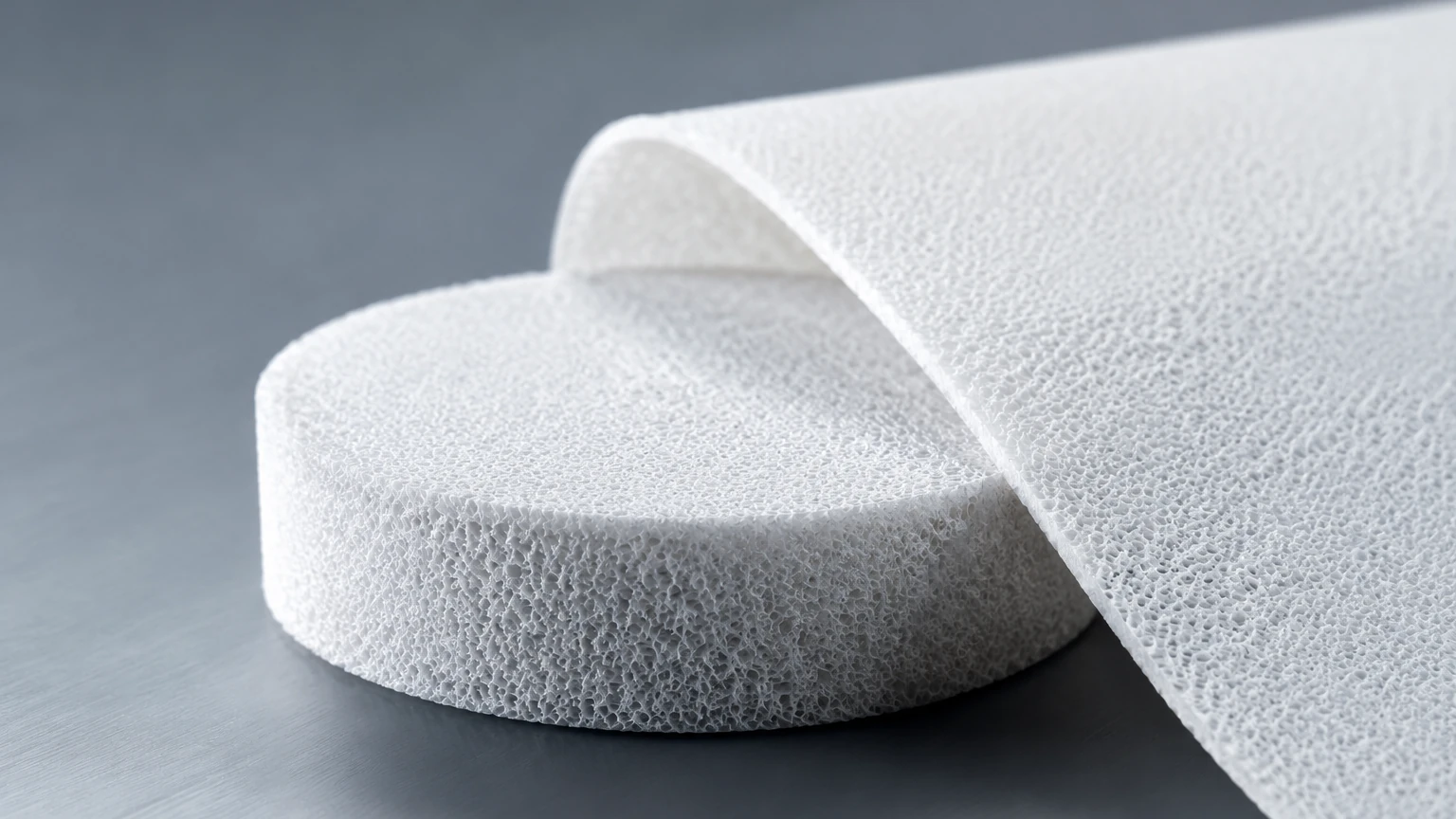
Ptfe Porous Membrane
In the landscape of industrial filtration, the PTFE porous membrane stands as a critical component for applications requiring extreme chemical resistance, thermal stability, and precise pore size control. Polytetrafluoroethylene (PTFE) is a synthetic fluoropolymer of tetrafluoroethylene that has found extensive use in demanding environments where standard polymers like polypropylene or polyester would fail. For engineers and technical procurement teams, understanding the structural nuances and performance boundaries of these membranes is essential for optimizing process efficiency and ensuring the longevity of filtration systems.
Understanding the Engineering of PTFE Porous Membranes
A PTFE porous membrane is typically produced through a process of stretching or expansion, resulting in what is technically known as expanded PTFE (ePTFE). This manufacturing technique creates a unique microstructure consisting of nodes interconnected by very fine fibrils. The resulting matrix is highly porous—often reaching a porosity of 80% or higher—while maintaining a controlled pore size distribution.
From an engineering perspective, the fibril structure is what provides the membrane with its high surface area and mechanical strength relative to its weight. Unlike depth filters, which rely on the thickness of the media to trap particles, a PTFE membrane acts primarily as a surface filter. This allows for high-efficiency retention of sub-micron particles while maintaining relatively low pressure drops across the media. For industrial applications, this means that the membrane can effectively block contaminants at the surface, facilitating easier cleaning or back-pulsing in certain configurations.
Key Performance Characteristics for Industrial Use
The selection of a PTFE porous membrane is usually driven by four primary physical and chemical attributes:
1. Chemical Inertness: PTFE is virtually unaffected by almost all chemicals, including strong acids, highly alkaline solutions, and aggressive organic solvents. This makes it the material of choice for chemical processing and pharmaceutical manufacturing where fluid purity and material compatibility are non-negotiable.
2. Thermal Stability: These membranes can operate continuously at temperatures ranging from -200°C to +260°C. This wide operating window allows for steam sterilization (SIP) and high-temperature gas filtration without the risk of polymer degradation or off-gassing.
3. Hydrophobicity: Naturally, PTFE is highly hydrophobic. It resists wetting by water and aqueous solutions, which is an invaluable trait for gas venting and air filtration. For liquid filtration of aqueous fluids, specialized hydrophilic treatments are applied to the membrane surface to allow for spontaneous wetting.
4. Low Surface Energy: The non-stick nature of PTFE prevents many types of cake buildup and reduces the adhesion of biological contaminants. This property simplifies the cleaning process and helps maintain flow rates over longer periods compared to more adhesive polymer membranes.
The Role of Support Structures in Membrane Integrity
While a PTFE porous membrane offers exceptional filtration properties, it is mechanically fragile in its thin-film state. In industrial filtration systems, the membrane must be supported to withstand high differential pressures and mechanical stresses. This is where the integration of precision metal components becomes vital.
Manufacturers like Kaifil specialize in providing the robust structural frameworks necessary to house these membranes. Stainless steel wire mesh and perforated metal cores serve as the skeleton for the membrane. By laminating or mechanically securing the PTFE membrane to a stainless steel support, engineers can create a filter cartridge that combines the fine filtration accuracy of PTFE with the high-pressure tolerance and durability of stainless steel.
When designing a custom filtration solution, the choice of support mesh—such as 304 or 316L stainless steel—must align with the chemical environment of the application. The interaction between the membrane and its support determines the overall burst pressure and the ability of the filter to withstand hydraulic shocks within a system.
Critical Selection Criteria for Engineering Specifications
When evaluating a PTFE porous membrane for a specific project, technical professionals must look beyond the basic material name and confirm specific performance metrics. These data points are essential for calculating the total cost of ownership and system throughput.
Pore Size and Retention Efficiency
Industrial PTFE membranes are available in a range of pore sizes, typically from 0.05 microns to 10 microns. For sterile venting in pharmaceutical applications, a 0.2-micron membrane is the industry standard for ensuring the removal of bacteria such as *Brevundimonas diminuta*. It is important to distinguish between "nominal" and "absolute" ratings; in critical industrial processes, absolute ratings are required to guarantee a specific level of contaminant removal.
Air Permeability and Flow Rates
For gas filtration and venting, the air permeability is often measured using the Gurley or Frazier tests. This metric indicates how much air can pass through a specific area of the membrane at a set pressure. High permeability is desirable to minimize the size of the filtration housing required, but it must be balanced against the required retention efficiency.
Water Intrusion Pressure (WIP)
For hydrophobic membranes used in venting, the WIP is a critical safety metric. It defines the amount of pressure required to force water through the pores of a dry membrane. In industrial tanks, if the WIP is exceeded, the vent filter may allow liquid to pass through, potentially contaminating the external environment or damaging downstream equipment.
Application-Specific Considerations in Harsh Environments
The versatility of the PTFE porous membrane allows it to solve complex problems across various sectors:
* Chemical Processing: In the filtration of concentrated sulfuric acid or hot caustic solutions, PTFE is often the only viable polymer. Engineers must ensure that the housing and seals (often O-rings made of FKM or EPDM) are as chemically resistant as the membrane itself.
* Pharmaceutical and Biotech: Membranes are used for sterile tank venting and the filtration of process gases. Here, the focus is on the membrane's ability to withstand repeated autoclave cycles and its compliance with USP Class VI plastics biological reactivity tests.
* Electronics and Semiconductors: The manufacturing of microchips requires ultra-pure chemicals. PTFE membranes provide the necessary cleanliness, as they contain no surfactants or binders that could leach into the process fluid and cause wafer defects.
* Food and Beverage: Used primarily for the filtration of carbon dioxide, nitrogen, and compressed air used in packaging. The membrane must meet FDA requirements for food contact.
Evaluating Longevity and Total Cost of Ownership
While the initial cost of a PTFE porous membrane is higher than that of polypropylene or cellulose media, the total cost of ownership (TCO) often favors PTFE in industrial settings. The durability of the material means fewer filter changes, reduced downtime, and lower labor costs.
Furthermore, when the membrane is integrated into a high-quality stainless steel cartridge, the entire unit becomes more resilient to process upsets. For instance, a sudden temperature spike that would melt a standard plastic filter will have no effect on a PTFE and stainless steel assembly. Purchasing teams should evaluate the frequency of replacement and the potential cost of process failure when deciding between lower-cost alternatives and high-performance PTFE solutions.
Engineering Consultation and Customization
No two industrial filtration challenges are identical. Factors such as fluid viscosity, particle loading, and flow velocity all influence how a PTFE porous membrane will perform in the field. Customization is often required to achieve the optimal balance between filtration fineness and mechanical longevity. This might involve varying the thickness of the PTFE layer, choosing a specific pleat density, or selecting a reinforced stainless steel core to handle high-pressure differentials.
For engineers looking to integrate these technologies into their systems, reviewing the technical capabilities of a manufacturer is the first step. You can explore a wide range of industrial filtration components and request technical support by visiting the Kaifil Main Page. Accessing detailed product specifications and engineering data ensures that the selected filtration solution meets the rigorous demands of your specific application.
Conclusion
The PTFE porous membrane remains a cornerstone of modern industrial filtration due to its unmatched chemical and thermal resilience. By understanding the relationship between the membrane’s microstructure and its macro-level performance, engineers can better specify filtration systems that are both efficient and durable. When supported by precision-engineered metal components, these membranes provide a reliable barrier against contaminants in the most challenging environments. Proper selection, guided by empirical data and application-specific requirements, leads to optimized processes and significant long-term value in industrial operations.