


Filtre À Manches
In the landscape of industrial liquid and gas processing, the filtre à manches, or bag filter, remains one of the most versatile and cost-effective solutions for removing particulate matter. Designed to handle high flow rates and high dirt-holding capacities, these systems are integral to sectors ranging from chemical processing and pharmaceuticals to food and beverage production. For engineers and procurement specialists, selecting the right filtration system requires a deep understanding of fluid dynamics, material compatibility, and the long-term operational impact of different filter media.
While traditional fabric bags are common, the evolution of industrial requirements has led to a significant shift toward more durable, high-precision components. As a specialist in custom stainless steel filtration, Kaifil provides the engineering expertise necessary to optimize these systems, ensuring that the internal components—whether they are support baskets or permanent metal filter elements—meet the rigorous demands of modern manufacturing. For a comprehensive overview of available technologies, professionals can visit the Main Page to explore advanced filtration configurations.
Understanding the Mechanics of Bag Filtration Systems
The fundamental operation of a filtre à manches is based on pressure-driven separation. Fluid enters the filter housing, typically from the top or side, and is directed into the interior of a filter bag. As the fluid passes through the media, solids are trapped on the inner surface or within the depth of the material, while the clarified liquid exits through the bottom or side outlet.
One of the primary engineering advantages of this system is its simplicity. However, the efficiency of the process is heavily dependent on the seal between the bag and the housing. If the seal is compromised, "bypass" occurs, allowing unfiltered fluid to contaminate the downstream process. Engineers must evaluate the sealing mechanism—whether it is a snap-fit ring, a plastic flange, or a heavy-duty V-ring—to ensure it can withstand the operating pressure without deformation.
In high-pressure applications, the bag requires a support basket, often made of perforated stainless steel or wire mesh. This basket prevents the bag from bursting under the stress of the differential pressure ($ \Delta P $). The design of this basket is critical; it must provide maximum open area to minimize flow resistance while offering enough structural integrity to support the loaded filter bag.
Material Selection and Chemical Compatibility
Choosing the media for a filtre à manches is not merely a matter of selecting a micron rating. Industrial fluids often carry chemical properties or thermal profiles that can degrade standard synthetic fibers. Common materials include:
* Polypropylene (PP): Widely used for its excellent chemical resistance to acids and alkalis, though limited to temperatures below 90°C.
* Polyester (PE): Offers higher thermal resistance (up to 150°C) and good tensile strength, but is susceptible to hydrolysis in certain environments.
* Nylon Monofilament: Ideal for precise straining applications where a fixed pore size is required, often used in the food and beverage industry.
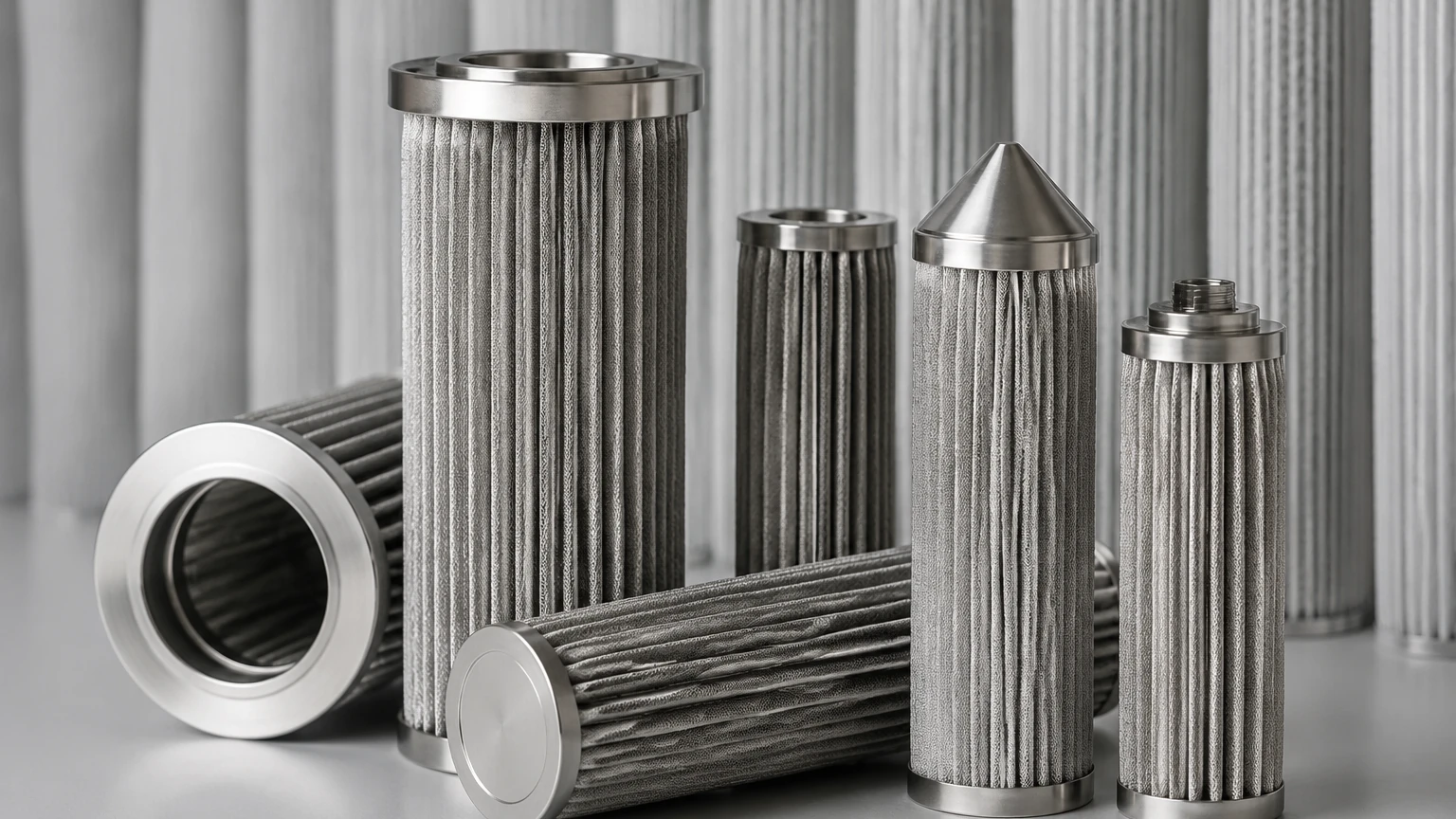
* Stainless Steel Wire Mesh: For the most demanding environments, stainless steel mesh filters replace synthetic bags. These are essential for high-temperature processes (exceeding 250°C), high-viscosity fluids, or applications requiring aggressive chemical cleaning.
When engineers specify a filtre à manches, they must also consider the "nominal" versus "absolute" filtration rating. Most standard bags are nominally rated, meaning they trap a high percentage of particles at a given size but may allow some larger particles to pass through under fluctuating pressures. For critical applications, such as pharmaceutical pre-filtration, absolute-rated media or multi-layered depth bags are required to ensure consistent output quality.
Engineering Considerations for Housing Design
The housing that contains the filtre à manches is as important as the media itself. Most industrial housings are constructed from Stainless Steel 304 or 316L to ensure corrosion resistance and longevity. The design must account for several technical factors:
Flow Dynamics and Inlet Configuration
Two main designs dominate the market: side-entry and top-entry. In a side-entry housing, the fluid enters through the side of the vessel, requiring the lid to be removed and the bag to be lifted out over the inlet. A top-entry design allows the fluid to flow directly over the top of the bag, creating a more uniform pressure distribution and simplifying the change-out process. This design often incorporates a "gooseneck" lid that seals directly onto the bag flange, virtually eliminating the risk of bypass.
Vessel Sizing and Velocity
To prevent premature clogging and excessive pressure drop, the housing must be sized according to the maximum flow rate and the viscosity of the fluid. A common engineering mistake is sizing a filter based on the pipe size rather than the actual flow requirements. If the fluid velocity is too high, it can cause turbulence that drives particles through the media, reducing filtration efficiency. Generally, a maximum velocity of 2 to 3 meters per second is recommended for liquid service.
Comparing Fabric Bags with Stainless Steel Filter Cartridges
While the filtre à manches is a staple of industrial filtration, many facilities are transitioning toward stainless steel filter cartridges or permanent metal mesh elements. This shift is often driven by the need for sustainability and reduced waste.
1. Durability: Fabric bags are typically single-use. In high-load applications, this results in significant recurring costs and downtime for replacements. Stainless steel filters, such as those manufactured by Kaifil, can be cleaned and reused multiple times, offering a lower total cost of ownership (TCO) over the long term.
2. Pressure Tolerance: Synthetic bags can stretch or tear if the differential pressure exceeds 1.5 to 2.0 bar. Stainless steel mesh elements can withstand much higher $ \Delta P $, making them suitable for hydraulic systems and high-viscosity polymer filtration.
3. Filtration Precision: While bags are excellent for bulk solids removal, stainless steel wire mesh provides a more rigid pore structure. This ensures that the filtration accuracy remains constant even as the pressure increases during the filtration cycle.
For operations that currently use bag housings but wish to upgrade their performance, it is often possible to retrofit the housing with a custom stainless steel filter element. This allows the facility to benefit from the precision of metal filtration without the capital expense of replacing the entire vessel.
Performance Evaluation and Replacement Cycles
Monitoring the performance of a filtre à manches is essential for maintaining process integrity. The most reliable indicator of filter condition is the differential pressure ($ \Delta P $). A clean bag typically shows a $ \Delta P $ of 0.1 to 0.2 bar. As the bag captures contaminants, the pressure rises.
Engineers generally recommend replacing the bag or cleaning the element when the $ \Delta P $ reaches 1.0 to 1.5 bar. Waiting beyond this point risks "breakthrough," where the pressure forces trapped contaminants through the media, or mechanical failure of the bag itself.
To optimize the replacement cycle, many modern systems incorporate differential pressure sensors linked to a central control system. This allows for predictive maintenance, ensuring that filters are changed only when necessary, thereby reducing labor costs and minimizing process interruptions.
Customization and OEM Solutions for Industrial Filtration
No two industrial processes are identical, and off-the-shelf filtration products often fall short in specialized applications. Customization is where engineering expertise becomes a competitive advantage. Whether it is a specific micron rating for a unique chemical compound or a custom-dimensioned support basket for an older housing, tailored solutions ensure that the filtration system operates at peak efficiency.
Kaifil specializes in these customized designs, working closely with global customers to develop filtration components that meet specific technical requirements. From material selection (such as 316Ti for enhanced temperature resistance) to specialized mesh weaves for specific particle shapes, the ability to customize the filtre à manches components is vital for industries like aerospace, specialty chemicals, and advanced water treatment.
When consulting with a manufacturer, engineers should be prepared to provide the following data points:
* Fluid Type and Viscosity: To determine the required surface area.
* Operating Temperature and Pressure: To select the appropriate alloy and seal material.
* Particle Distribution: To choose the correct micron rating and media structure.
* Chemical Concentration: To ensure long-term material compatibility.
By confirming these details, purchasing teams can avoid the common pitfalls of underspecified filtration, such as frequent clogging, bypass, or premature component failure.
Conclusion: Optimizing the Filtration Lifecycle
The filtre à manches remains a cornerstone of industrial separation technology due to its reliability and high capacity. However, the effectiveness of the system is not determined by the housing alone, but by the synergy between the media, the internal support structures, and the specific demands of the application.
As industries move toward more efficient and sustainable manufacturing practices, the role of high-quality, durable filtration components becomes even more critical. By understanding the engineering principles of pressure, flow, and material science, professionals can select filtration solutions that not only protect downstream equipment but also improve product quality and reduce operational overhead. For those seeking to refine their filtration strategy or explore custom stainless steel options, the Main Page serves as a gateway to technical resources and professional support tailored to the most demanding industrial environments.
