


What Is a Well Casing
In the context of industrial water extraction, chemical processing, and resource management, the integrity of a borehole is paramount to the success of the operation. Engineering teams often begin their technical evaluations by asking the fundamental question: what is a well casing? At its core, a well casing is a series of heavy-duty pipes installed in a newly drilled hole to maintain the structural integrity of the well, prevent the walls from collapsing, and protect the surrounding environment from contamination. For industries relying on high-purity water or chemical extraction, the casing serves as the primary conduit through which the resource travels, making its material composition and design critical to the overall efficiency of the filtration system.
Understanding the mechanics of well casings is essential for engineers and purchasing managers who must balance long-term durability with immediate capital expenditure. This article explores the technical specifications, material selections, and the vital relationship between well casings and precision filtration components.
The Structural and Functional Role of Well Casing
To fully answer what is a well casing, one must look beyond its appearance as a simple pipe. In industrial applications, the casing performs several critical functions simultaneously. First and foremost, it provides structural support. During the drilling process, the pressure from surrounding soil, rock, and hydrostatic forces can cause a borehole to cave in. The casing acts as a rigid skeleton that resists these external pressures.
Secondly, the well casing serves as a barrier against contamination. In water treatment and food and beverage applications, it is vital to prevent surface runoff or shallow groundwater from entering the deeper, cleaner aquifers. By sealing the well from the surrounding geological strata, the casing ensures that only the intended fluid enters the system. This is often achieved through a process called "cementing," where a cement slurry is pumped into the annular space between the borehole wall and the casing.
Finally, the casing provides a smooth, controlled environment for the installation of downhole equipment. This includes pumps, sensors, and, most importantly, filtration components like well screens and stainless steel filter cartridges. Without a properly installed casing, these sensitive precision instruments would be exposed to mechanical damage and excessive sediment loading.
Material Selection: The Case for Stainless Steel
When evaluating what is a well casing for a specific project, material selection is perhaps the most significant engineering decision. While residential wells may use PVC or low-grade carbon steel, industrial environments demand materials that can withstand corrosive chemicals, high temperatures, and mechanical stress.
Carbon Steel vs. Stainless Steel
Carbon steel is often selected for its high strength and lower initial cost. However, in many industrial applications—particularly those involving chemical processing or saline environments—carbon steel is susceptible to rapid oxidation and scaling. Corrosion not only weakens the structural integrity of the casing but also introduces iron oxides into the fluid stream, which can clog downstream filtration systems and contaminate the final product.
Stainless steel, particularly grades 304 and 316L, is the preferred choice for demanding industrial applications. Its inherent resistance to corrosion ensures a significantly longer service life, often exceeding 50 years in environments where carbon steel might fail in less than a decade. For engineers visiting the Main Page of a professional filtration manufacturer, the emphasis on stainless steel is clear: it provides the chemical stability required for pharmaceutical and food-grade processes.
Thermoplastic Options
In specific low-pressure and low-temperature applications, high-density polyethylene (HDPE) or PVC may be used. While these materials are immune to corrosion, they lack the mechanical strength and temperature resistance required for deep industrial wells or high-flow hydraulic applications. When the depth of the well increases, the collapse pressure often necessitates the transition back to metal alloys.
The Integration of Well Casings and Filtration Systems
A well casing does not operate in isolation; it is the foundation upon which the entire filtration architecture is built. At the bottom of the casing string, or at specific intervals corresponding to the target aquifer, the casing is replaced or supplemented by a "well screen." This is where the definition of what is a well casing intersects with precision engineering.
Wire Mesh and Well Screens
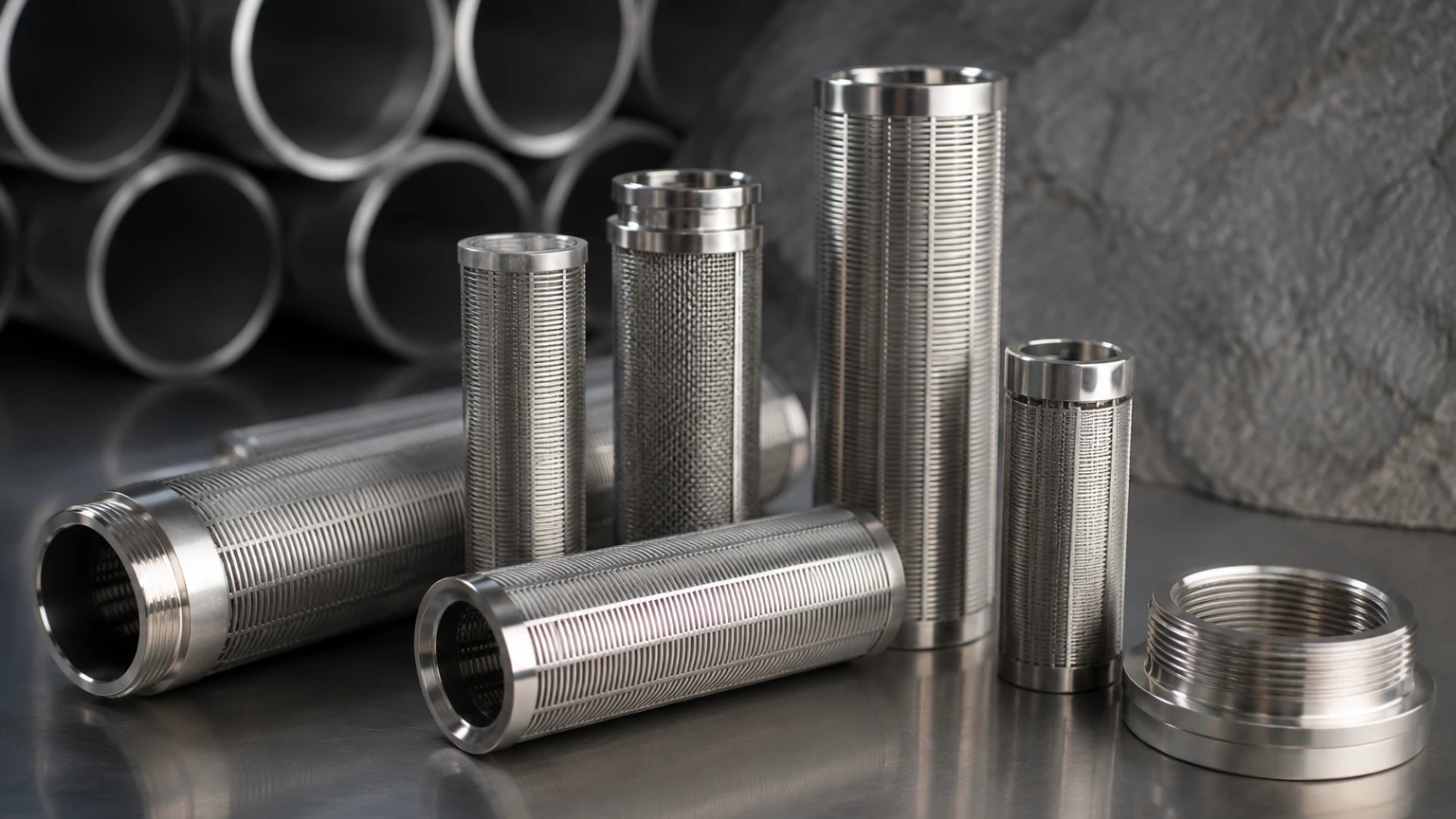
Well screens are essentially perforated or slotted sections of casing designed to allow fluid to enter while keeping sand, gravel, and sediment out. High-performance filtration solutions often utilize continuous-slot wire-wrapped screens. These are manufactured by wrapping a V-shaped wire around a circular array of internal support rods. This design provides a high open area, minimizing friction losses and preventing the "sand-pumping" that can destroy industrial pumps.
Secondary Filtration Stages
In many industrial setups, the well casing houses secondary filtration stages. For example, in a hydraulic or chemical processing well, stainless steel filter cartridges may be deployed within the casing to achieve specific micron ratings. By understanding the internal diameter and pressure ratings of the casing, engineers can select filtration components that fit precisely, ensuring that no bypass occurs and that the fluid quality meets strict industrial standards.
Engineering Considerations for Casing Design
When specifying a well casing, several technical parameters must be confirmed to ensure the system’s longevity and performance. These factors go beyond the basic definition of what is a well casing and delve into the specifics of mechanical engineering.
1. Collapse Pressure: The casing must be thick enough to withstand the external pressure exerted by the surrounding earth and fluid. This is particularly critical in deep wells where the hydrostatic head can be immense.
2. Tensile Strength: During installation, the casing string is suspended from the surface. The top joints must be strong enough to support the weight of the entire string, which can weigh several tons.
3. Joint Integrity: Casings are typically joined by threading or welding. Threaded connections must be precision-machined to ensure a gastight and watertight seal. In high-vibration environments, such as those near heavy industrial machinery, the choice of joint can prevent structural failure.
4. Diameter and Flow Rate: The internal diameter (ID) of the casing determines the maximum size of the pump and the volume of fluid that can be extracted. If the casing is too narrow, the resulting high-velocity flow can cause turbulence and increase the rate of erosion on the casing walls and screens.
Maintenance and the Total Cost of Ownership
For purchasing teams, the question of what is a well casing is often followed by a question of cost. While the initial investment in high-grade stainless steel casing and precision-engineered screens is higher than standard alternatives, the total cost of ownership (TCO) is generally lower.
Corrosion and scaling are the primary drivers of well failure. When a casing fails, the well may become unusable, requiring a complete redrill—an expense that far outweighs the cost of premium materials. Furthermore, a well-designed casing reduces the burden on downstream filtration. By effectively managing sediment at the source through integrated well screens, the replacement cycle for finer filter cartridges is extended, reducing operational downtime.
Regular maintenance, such as mechanical brushing or chemical treatment to remove biofouling, is also easier to perform on stainless steel surfaces. The smooth finish of high-quality metal components prevents the deep adhesion of mineral scales, allowing the well to be restored to its original efficiency with minimal intervention.
Customization and OEM Solutions in Well Design
In the industrial sector, a "one size fits all" approach rarely succeeds. Each geological site and chemical process presents unique challenges. This is why many engineers seek out OEM (Original Equipment Manufacturer) partners who can provide customized filtration and casing components.
Customization options often include:
* Specific Alloy Selections: Utilizing Duplex or Super Duplex stainless steel for extreme brine or acidic environments.
* Variable Slot Sizes: Tailoring the openings in the well screen to the specific grain size of the local aquifer to optimize filtration efficiency.
* Custom Lengths and Diameters: Ensuring the casing fits perfectly within the constraints of existing infrastructure or specialized drilling equipment.
By collaborating with manufacturers who specialize in precision metal filtration, companies can ensure that their well casing is not just a pipe, but a sophisticated component of a larger industrial system. For more information on specialized filtration components that integrate with industrial well systems, professionals can Review product options and application support.
Conclusion
Defining what is a well casing is the first step in designing a reliable and efficient industrial fluid extraction system. As the primary structural and protective element of a borehole, the casing dictates the lifespan and purity of the resource being tapped. By prioritizing high-quality materials like stainless steel and ensuring precise integration with filtration components like wire mesh screens and cartridges, engineers can protect their equipment, ensure regulatory compliance, and optimize the total cost of ownership. In the demanding world of industrial filtration, the well casing remains the silent guardian of process integrity.
