


Plastic Slot
In the landscape of industrial filtration and fluid distribution, the term "plastic slot" refers to a critical geometric feature found in a variety of components, ranging from filter nozzles and lateral systems to specialized screen plates. These slots serve as the primary interface for particle retention and fluid passage. While plastic materials offer specific advantages in terms of cost and chemical resistance to certain corrosive agents, the engineering requirements of modern industrial processes often demand a rigorous evaluation of whether a plastic slot design can withstand the operational stresses of high-pressure, high-temperature, or high-purity environments. Understanding the technical nuances of slot geometry, material properties, and structural limitations is essential for engineers and procurement teams tasked with optimizing filtration systems.
Understanding the Role of Slotted Geometry in Industrial Filtration
The fundamental purpose of a plastic slot is to provide a precise opening that allows liquid or gas to pass through while retaining solid media, such as ion exchange resins, sand, or catalysts. The efficiency of this process is governed by the slot width, the total open area, and the hydraulic profile of the slot itself. In many plastic components, such as molded nozzles used in water treatment underdrains, the plastic slot is typically created through injection molding or precision machining.
Slot width is the most critical parameter. In applications like resin traps, the slot must be narrow enough to prevent the escape of expensive resin beads, which can be as small as 0.2 mm. However, as the slot width decreases, the resistance to flow increases, leading to a higher pressure drop across the element. Engineers must balance the need for fine filtration with the requirement for high flow rates. The total open area—the sum of the areas of all individual slots—directly impacts the flux rate. A well-designed component maximizes this open area without compromising the structural integrity of the plastic ribs between the slots.
Engineering Considerations for Plastic Slot Selection
When selecting a component featuring a plastic slot, material science plays a pivotal role. Common materials include Polypropylene (PP), Polyvinylidene Fluoride (PVDF), and Acrylonitrile Butadiene Styrene (ABS). Each material interacts differently with the process fluid and the environment.
1. Chemical Compatibility: Plastic slots are often chosen for their immunity to galvanic corrosion and their resistance to specific chemicals that might attack low-grade stainless steels. For instance, PVDF is frequently used in highly acidic or oxidizing environments where even 316L stainless steel might struggle.
2. Thermal Stability: One of the primary weaknesses of a plastic slot is its sensitivity to temperature. Plastics have a significantly higher coefficient of thermal expansion than metals. As temperatures rise, the plastic expands, which can lead to the narrowing or widening of the slots, potentially allowing media bypass or causing a spike in pressure drop. Furthermore, the mechanical strength of plastics degrades rapidly as they approach their glass transition temperature.
3. Mechanical Loading: In pressurized filtration vessels, the components are subject to significant hydraulic forces. The "ribs" that define the plastic slot must be engineered to resist bending or snapping under the weight of the media bed or the force of backwashing cycles.
Performance Limitations of Plastic Slotted Components
While functional for many standard applications, the plastic slot has inherent limitations that can lead to system failures if not properly accounted for. One major issue is "creep"—the tendency of a solid material to move slowly or deform permanently under the influence of persistent mechanical stresses. Over time, a plastic slot that was originally 0.5 mm wide may deform under the pressure of a media bed, leading to inconsistent filtration performance.
Another limitation is the difficulty of achieving high-precision slot tolerances through injection molding. Variations in cooling rates and mold wear can lead to inconsistencies in slot width across a single component. In high-precision industrial processes, even a 10% variation in slot width can result in uneven flow distribution, leading to "channeling" within the filter bed. This phenomenon reduces the effective surface area of the media and can cause premature breakthrough of contaminants.
Furthermore, plastic slots are susceptible to abrasion. If the process fluid contains hard, angular particles, the edges of the plastic slot can erode over time. As the edges round off, the retention characteristics change, and the component may eventually need replacement much sooner than a metal counterpart.
Comparing Plastic Slots with Stainless Steel Precision Wedgewire and Mesh
For many demanding industrial applications, engineers often transition from plastic slot designs to stainless steel solutions, such as those provided by Kaifil. Stainless steel offers several technical advantages that address the shortcomings of plastic.
Structural Rigidity and Precision
Unlike a plastic slot, which is limited by the molding process, stainless steel wedge wire or wire mesh can be manufactured with extremely tight tolerances. Wedge wire screens, for example, use a V-shaped profile that creates a slot that widens inwardly. This design reduces the risk of clogging, as particles that pass the initial gap are unlikely to get stuck in the widening throat. Achieving this specific V-shaped geometry in a plastic slot is significantly more difficult and often results in a less robust structure.
Thermal and Pressure Resistance
Stainless steel maintains its mechanical properties across a much wider temperature range. In steam cleaning or high-temperature chemical reactions, a plastic slot would likely fail, whereas a stainless steel filter cartridge remains stable. This stability ensures that the filtration rating remains constant regardless of operational fluctuations.
Longevity and Total Cost of Ownership
While the initial capital expenditure for a stainless steel component is higher than that of a plastic one, the total cost of ownership (TCO) is often lower. Stainless steel components are more durable, easier to clean (allowing for aggressive chemical or mechanical cleaning), and have a much longer service life. For critical infrastructure, the cost of downtime caused by a failed plastic slot often far outweighs the savings on the component itself.
To explore the full range of high-performance metal filtration options that can replace or supplement plastic designs, you can visit the Main Page of the Kaifil website for detailed technical specifications.
Integration and Customization: Transitioning from Plastic to Metal Solutions
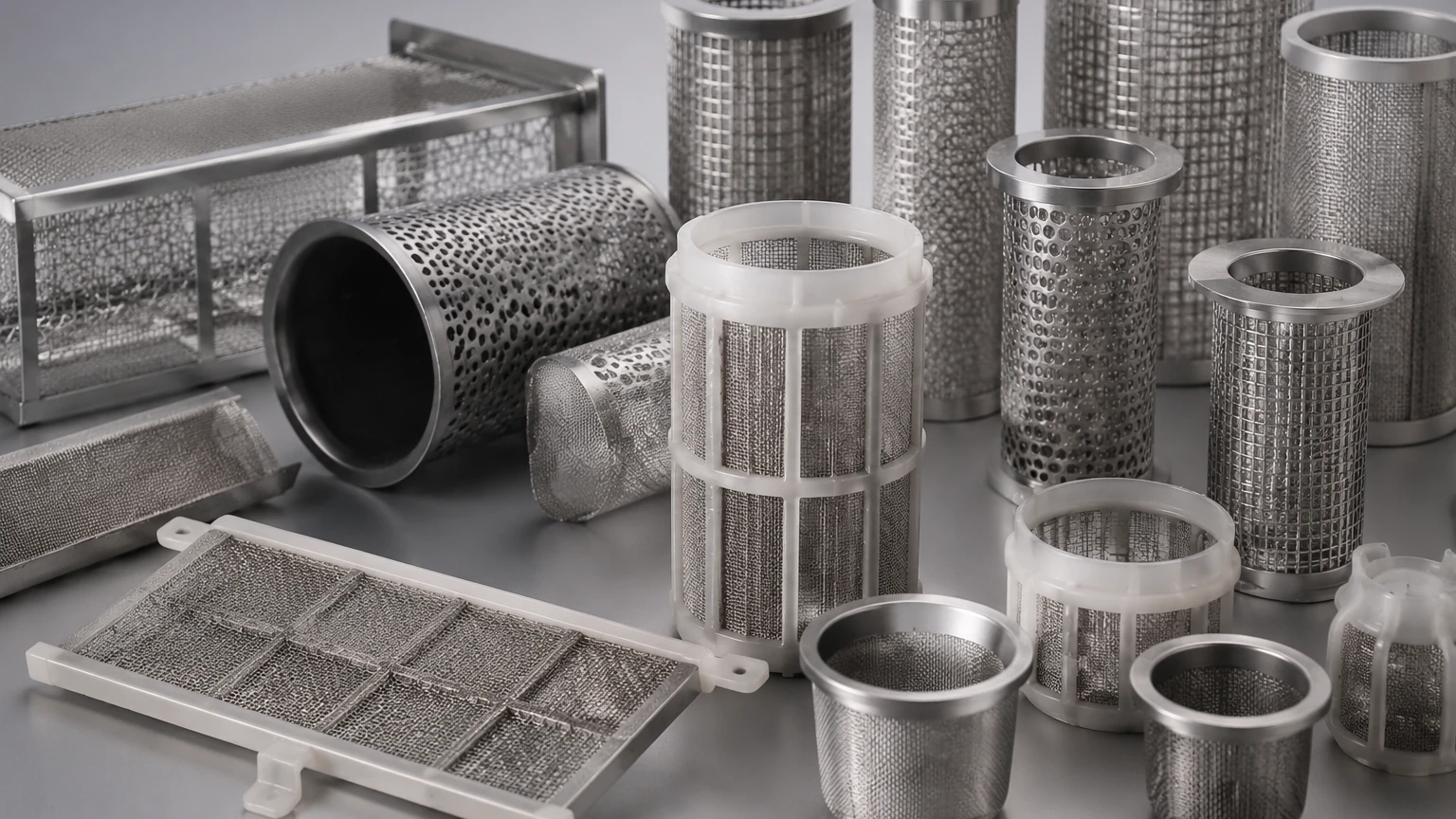
In many systems, a plastic slot component is used as a standard OEM part. However, as process requirements become more stringent—such as in the pharmaceutical or food and beverage industries—upgrading to custom stainless steel components becomes necessary. Kaifil specializes in manufacturing custom filtration solutions that can be engineered to fit existing housings originally designed for plastic components.
When transitioning, engineers must confirm several factors:
* Interface Compatibility: Ensuring the threads or flange connections of the new metal component match the existing plastic housing.
* Flow Dynamics: Because stainless steel can often achieve a higher open area percentage than a molded plastic slot, the pump settings and flow meters may need to be recalibrated to account for the reduced pressure drop.
* Weight Considerations: Stainless steel is significantly heavier than plastic. The support structures within the filter vessel must be verified to ensure they can handle the increased load, especially when the vessel is filled with media and fluid.
Customization allows for the optimization of the slot geometry to the specific particle size distribution of the media. While a standard plastic slot might come in a few fixed sizes (e.g., 0.2 mm, 0.5 mm), a custom-manufactured metal screen can be produced with the exact slot width required for optimal performance.
Maintenance and Longevity: Total Cost of Ownership Analysis
Maintenance cycles are a critical factor in B2B purchasing decisions. A plastic slot is often considered a "consumable" item. In many water treatment plants, plastic nozzles are replaced every 3 to 5 years because of brittleness caused by chemical exposure or UV degradation. In contrast, stainless steel filtration elements are designed for decades of service.
Cleaning a plastic slot can also be problematic. High-pressure backwashing or the use of certain solvents can damage the plastic or cause it to crack. Stainless steel, particularly 316L or duplex grades, can withstand rigorous CIP (Clean-in-Place) cycles, including high-temperature caustic washes and acid descaling. This capability is essential in industries like food processing, where hygiene and the complete removal of biological films are mandatory.
When calculating the TCO, engineers should include:
1. Purchase Price: Plastic is lower; Stainless steel is higher.
2. Installation Labor: Frequency of replacement for plastic increases labor costs.
3. Disposal Costs: Plastic components often cannot be recycled if they have been in contact with hazardous chemicals.
4. Production Downtime: The most significant cost. Every hour a system is offline for nozzle replacement is lost revenue.
Conclusion: Making the Informed Choice
The choice between a plastic slot and a stainless steel filtration element depends entirely on the specific constraints of the application. For low-pressure, ambient-temperature water distribution where cost is the primary driver, plastic components may suffice. However, in industrial environments where precision, durability, and chemical resistance are non-negotiable, the limitations of plastic become apparent.
Engineers should look for suppliers who offer extensive OEM and customization capabilities. By understanding the hydraulic and mechanical demands of the process, a manufacturer can provide a solution that balances filtration accuracy with long-term reliability. Whether you are looking for standard wire mesh filters or complex, custom-engineered metal components, reviewing the available technologies is the first step toward system optimization.
For more information on professional filtration manufacturing and to view our complete product catalog, please visit our Main Page. Kaifil provides the technical expertise and manufacturing precision required to meet the most demanding industrial filtration challenges, ensuring that your fluid processing systems operate at peak efficiency with minimal maintenance overhead.
