


Capsule Filter Pes
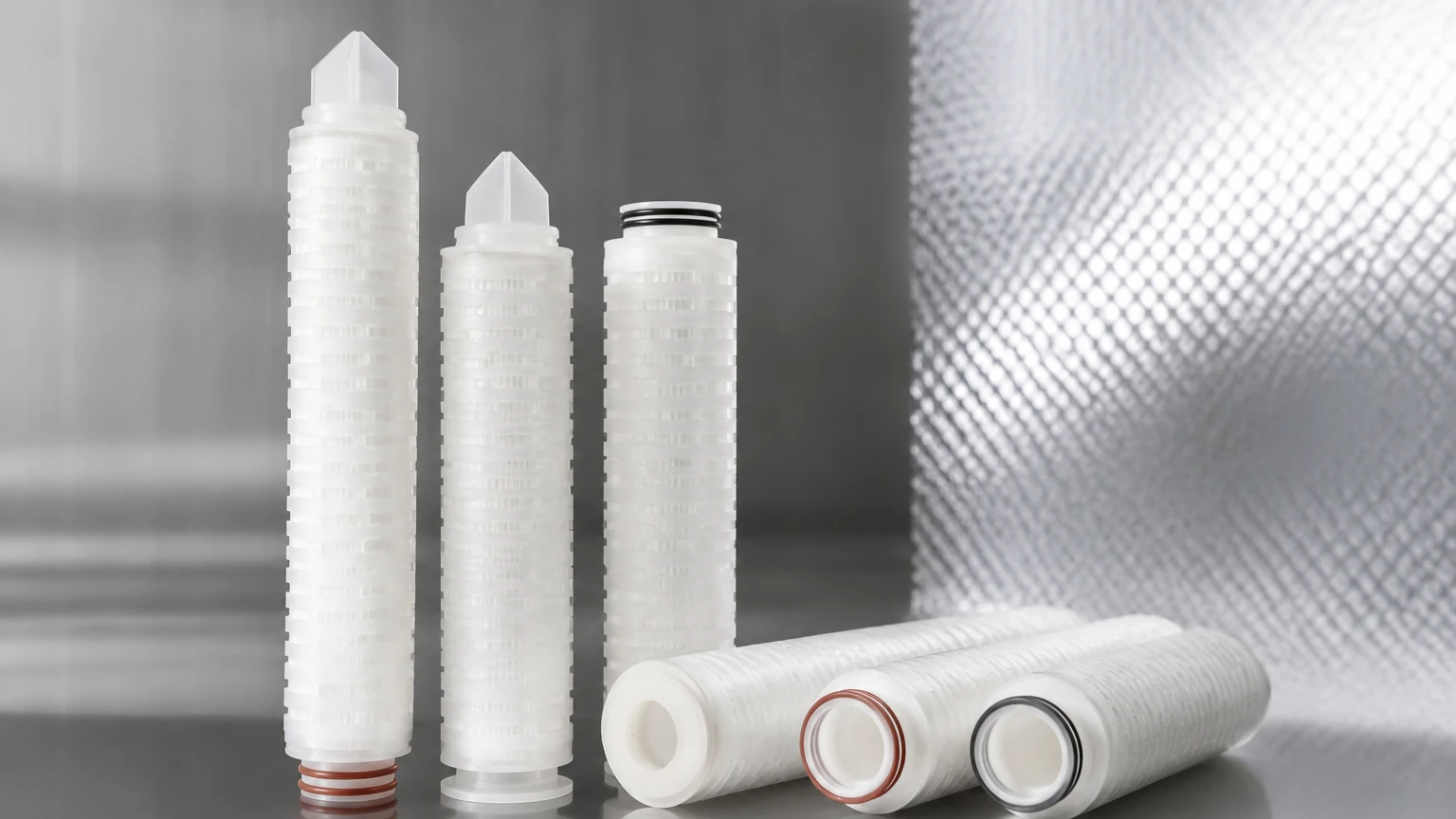
In critical industrial processes where fluid purity is non-negotiable, the selection of filtration media determines the efficiency, safety, and cost-effectiveness of the entire production line. Among the various membrane materials available, Polyethersulfone (PES) has emerged as a gold standard for aqueous applications. A capsule filter PES (polyethersulfone) assembly provides a self-contained, ready-to-use solution that eliminates the need for separate filter housings, reducing the risk of cross-contamination and simplifying system maintenance. For engineers and procurement specialists, understanding the technical nuances of PES membranes and the structural design of capsule filters is essential for optimizing filtration performance in sectors ranging from biopharmaceuticals to microelectronics.
Understanding PES Membrane Technology in Capsule Filters
Polyethersulfone is a high-performance thermoplastic known for its excellent thermal and chemical stability. When used as a filtration membrane, PES is typically manufactured through a phase-inversion process that creates an asymmetric pore structure. This structure is characterized by a finer pore size on the downstream side and a more open, coarser structure on the upstream side.
This asymmetry is a critical engineering advantage. It allows the membrane to act as a built-in pre-filter, capturing larger particles within the depth of the membrane while the tighter downstream layer ensures absolute retention of the target particle size. In a capsule filter PES configuration, this translates to higher dirt-holding capacity and longer service life compared to symmetric membranes. Furthermore, PES is naturally hydrophilic, meaning it does not require the addition of wetting agents (surfactants) to filter aqueous solutions. This inherent property minimizes the risk of extractables leaching into the process fluid, which is a primary concern in high-purity applications.
Engineering Advantages: Flow Rates and Throughput
One of the most significant reasons engineers specify PES capsule filters is their superior flow performance. Because of the high porosity and asymmetric structure of the PES membrane, these filters exhibit lower pressure drops at equivalent flow rates when compared to materials like Nylon or PVDF.
High Flux and Low Pressure Drop
In industrial filtration, flux refers to the rate at which a fluid passes through a unit area of the membrane. PES membranes offer some of the highest flux rates in the industry. For a facility looking to maximize throughput without increasing the footprint of their filtration system, a capsule filter PES allows for rapid processing of large volumes. Lower initial pressure drops also mean that the system can operate longer before reaching the terminal pressure differential, effectively extending the interval between filter changes.
Low Protein Binding
In the pharmaceutical and biotechnology sectors, the interaction between the filter media and the product is a critical variable. PES is characterized by low non-specific protein binding. This means that valuable biological products, such as proteins, enzymes, or vaccines, are less likely to adhere to the membrane surface during the filtration process. By maximizing product recovery, PES capsule filters directly contribute to the bottom-line efficiency of high-value manufacturing processes.
Critical Applications in Regulated Industries
The versatility of the capsule filter PES makes it a staple in several high-stakes industries. Each application demands specific performance characteristics that PES is uniquely suited to provide.
Biopharmaceuticals and Life Sciences
For sterile filtration of buffers, media, and biological intermediates, PES is often the preferred choice. These filters are typically rated at 0.22 microns for absolute sterilization. Because capsule filters are self-contained units, they are ideal for single-use technologies (SUT), reducing the time and cost associated with cleaning and validating stainless steel housings.
Food and Beverage Processing
In the production of bottled water, beer, and wine, PES capsule filters are used for microbial stabilization and final clarification. They effectively remove spoilage organisms like yeast and bacteria without stripping away the essential flavors or colors of the product. The ability of PES to withstand repeated hot water sanitization or steam sterilization cycles makes it durable enough for the rigorous demands of the beverage industry.
Microelectronics and Ultrapure Water
The microelectronics industry requires water with extremely low levels of ionic and particulate contamination. PES capsule filters are used in point-of-use filtration for ultrapure water (UPW) systems. Their high flow rates and low extractable profiles ensure that the water remains within the strict resistivity and TOC (Total Organic Carbon) limits required for semiconductor fabrication.
Key Selection Parameters for Industrial Filtration
When selecting a capsule filter PES for a specific application, engineers must look beyond the membrane material and evaluate the entire assembly's specifications. For more comprehensive information on industrial filtration components and customized metal solutions, professionals often consult the Main Page of specialized manufacturers like Kaifil to compare different filtration technologies.
Pore Size and Retention Rating
Pore sizes for PES capsule filters typically range from 0.04 µm to 1.2 µm. It is vital to distinguish between "nominal" and "absolute" ratings. An absolute rating implies that the filter will retain 99.9% or more of particles at the specified size under defined test conditions. For sterile applications, an absolute 0.22 µm rating is standard.
Effective Filtration Area (EFA)
The EFA is the total surface area of the pleated membrane within the capsule. A larger EFA generally leads to higher flow rates and a higher capacity for solids loading. Engineers must balance the EFA with the physical dimensions of the capsule to ensure it fits within the existing piping or equipment layout.
Connection Types and Housing Materials
Capsule filters come with various inlet and outlet configurations, including NPT threads, hose barbs, and sanitary Tri-clamp fittings. The housing material is typically polypropylene, which offers broad chemical compatibility. However, it is essential to verify that the housing material, as well as any O-rings or gaskets, are compatible with the process fluid and the expected operating temperatures.
Chemical Compatibility and Thermal Stability
While PES is highly versatile, it is not universal. It performs exceptionally well with most aqueous solutions, alcohols, and some mild acids and bases. However, it is generally not recommended for use with strong oxidizing agents, ketones, or halogenated hydrocarbons. Engineers should always refer to a chemical compatibility chart before finalizing a filter selection.
Thermal stability is another critical factor. Most PES capsule filters are designed to withstand autoclaving or in-line steam sterilization (SIP). However, the number of sterilization cycles a filter can endure is finite. Exceeding the manufacturer's recommended temperature or duration can lead to membrane degradation or structural failure of the capsule housing. For processes requiring extreme temperature resistance or high-pressure durability, transitioning to stainless steel filtration components may be necessary.
Integrity Testing and Quality Assurance
In regulated environments, particularly in pharmaceuticals, the integrity of the filter must be verified before and after use. The two most common non-destructive integrity tests for a capsule filter PES are the Bubble Point test and the Diffusion Flow test.
* Bubble Point Test: This test measures the pressure required to force air through the pores of a fully wetted membrane. It is based on the principle that the pressure required is inversely proportional to the pore diameter.
* Diffusion Flow Test: This test measures the rate of gas diffusion through the liquid-filled pores of the membrane at a pressure below the bubble point. It is particularly useful for large-area capsule filters where the bubble point might be difficult to discern clearly.
Manufacturers provide specific integrity test values for each filter grade, ensuring that the user can validate that the filter is performing to its stated retention specifications.
Optimizing Filtration Systems with Custom Solutions
While polymer-based capsule filters are excellent for many applications, industrial filtration often requires a hybrid approach. In many heavy-duty chemical or hydraulic processes, a capsule filter PES might serve as a final polishing stage, while the primary filtration is handled by robust stainless steel wire mesh or sintered metal cartridges.
As a professional manufacturer, Kaifil specializes in these high-durability solutions. By integrating custom stainless steel filter housings and precision-engineered metal filter elements, companies can protect sensitive downstream PES capsules from premature clogging. This multi-stage approach optimizes the total cost of ownership by using cleanable, long-lasting metal filters for bulk contaminant removal and disposable PES capsules for final high-purity requirements.
Maintenance and Replacement Strategies
To ensure consistent product quality, a proactive maintenance schedule is required. The primary indicator for filter replacement is the differential pressure ($ΔP$). As the membrane captures particles, the resistance to flow increases. Once the $ΔP$ reaches a predetermined terminal value (often around 2.0 to 2.5 bar, depending on the application), the filter should be replaced.
Operating a filter beyond its terminal pressure can lead to "breakthrough," where particles are forced through the membrane, or even structural failure of the pleats. Additionally, for filters used in batch processes, the shelf life and the duration of use after the first wetting must be monitored to prevent microbial growth within the filter assembly itself.
Conclusion
The capsule filter PES remains a cornerstone of modern industrial liquid processing due to its high flux, low protein binding, and ease of use. By selecting the appropriate pore size, ensuring chemical compatibility, and implementing rigorous integrity testing, engineers can achieve the high levels of purity required in today’s competitive B2B landscape. Whether used as a standalone unit in a laboratory or as a final stage in a complex industrial array, understanding the technical fundamentals of PES technology is the first step toward a more efficient and reliable filtration process.
