


Porous Plastic Material
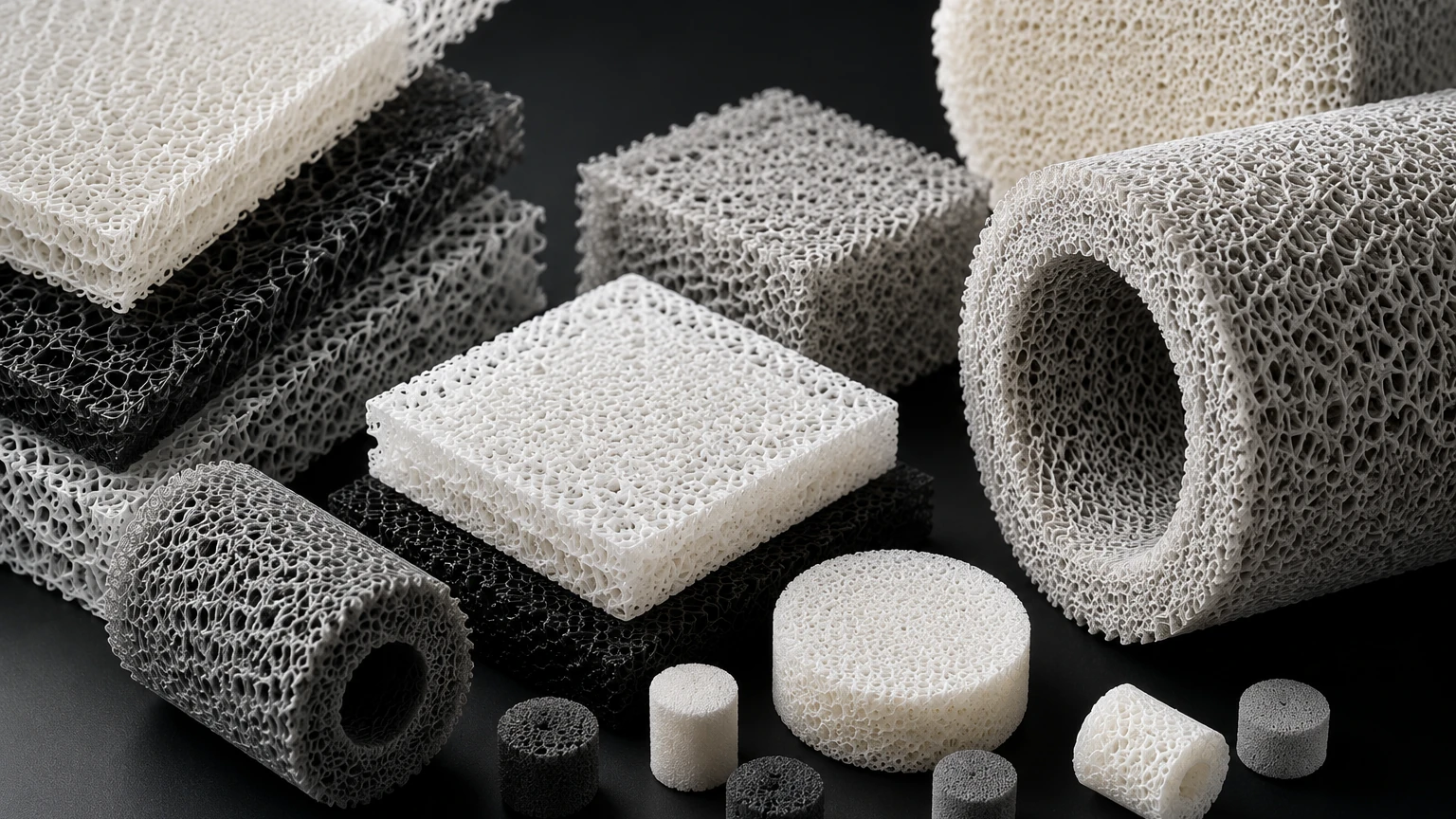
In industrial filtration and fluid handling, porous plastic material represents a specialized class of engineered media designed to provide controlled permeability, structural integrity, and chemical resistance. Unlike standard solid plastics, these materials feature an omni-directional, interconnecting pore structure that allows for the precise passage of gases or liquids while capturing particulate matter or managing fluid dynamics. For engineers and procurement specialists, understanding the nuances of porous plastic material—from its manufacturing via sintering to its operational limits—is essential for optimizing filtration efficiency and system longevity.
While Kaifil specializes in high-performance stainless steel filtration solutions, it is critical for technical professionals to evaluate the trade-offs between polymer-based porous media and metallic alternatives. This guide provides a technical deep dive into the properties, applications, and selection criteria for porous plastic materials in industrial environments.
The Fundamentals of Porous Plastic Material
Porous plastic material is typically produced through a process known as sintering. In this manufacturing method, thermoplastic particles—such as High-Density Polyethylene (HDPE), Ultra-High Molecular Weight Polyethylene (UHMWPE), Polypropylene (PP), or Polytetrafluoroethylene (PTFE)—are placed into a mold and heated to a temperature just below their melting point. Under controlled pressure, the surface of these particles softens and fuses at contact points, creating a rigid, self-supporting structure.
The resulting matrix is characterized by a "tortuous path"—a complex network of channels that fluid must navigate. This structure is what gives the material its depth filtration capabilities. Unlike surface filtration media (like some thin membranes or fine wire meshes), porous plastics can trap particles throughout the entire thickness of the material, which often leads to a higher dirt-holding capacity in specific low-pressure applications.
Key Material Types
1. Polyethylene (PE): The most common choice for general-purpose filtration. It is cost-effective and offers good chemical resistance to most acids and alkalis. It is typically available in HDPE and UHMWPE variants, with the latter providing superior abrasion resistance.
2. Polypropylene (PP): Frequently used when higher thermal resistance is required compared to PE. It maintains its structural integrity at slightly higher operating temperatures and offers excellent fatigue resistance.
3. Polytetrafluoroethylene (PTFE): Reserved for the most demanding chemical environments. PTFE porous plastics are chemically inert, hydrophobic, and can withstand significantly higher temperatures than PE or PP, though at a higher cost.
4. Polyvinylidene Fluoride (PVDF): Used in high-purity applications, particularly in the pharmaceutical and semiconductor industries, due to its low extractables and high chemical purity.
Engineering Specifications and Performance Metrics
When specifying a porous plastic material for an industrial project, engineers must look beyond simple dimensions. The performance of the filter is dictated by several measurable physical properties.
Pore Size and Distribution
Pore size is usually measured in microns (µm). In porous plastics, the pore size is not a single uniform diameter but a distribution. Manufacturers typically provide a "mean pore size" or a "micron rating." It is important to distinguish between nominal ratings (where a percentage of particles are captured) and absolute ratings. Because of the sintered structure, porous plastics often provide nominal filtration, making them excellent for pre-filtration or venting rather than sterile absolute filtration in critical paths.
Porosity (Void Volume)
Porosity refers to the percentage of the material's total volume that is composed of open space. Most industrial porous plastics have a porosity ranging from 30% to 50%. A higher porosity typically results in lower pressure drops and higher flow rates but may compromise the mechanical strength of the component. Balancing porosity with structural requirements is a primary engineering challenge during the design phase.
Flow Rate and Differential Pressure
The relationship between the flow rate of a fluid (gas or liquid) and the differential pressure (ΔP) across the material is governed by Darcy’s Law. Engineers must ensure that the porous plastic material can handle the required flow without exceeding the maximum allowable pressure drop, which could lead to material deformation or "blow-through" of contaminants.
Comparative Analysis: Porous Plastic vs. Stainless Steel
For many industrial applications, the choice between a porous plastic material and a stainless steel filter (such as those found on the Main Page) is a critical decision point. While plastics offer advantages in weight and specific chemical resistances (like hydrofluoric acid), stainless steel remains the standard for heavy-duty industrial processes.
Temperature Constraints
One of the primary limitations of porous plastic material is its thermal threshold. Most PE-based filters are limited to continuous operating temperatures below 80°C (176°F). Even PTFE, a high-performance polymer, rarely exceeds 260°C. In contrast, stainless steel filter cartridges can operate effectively at temperatures exceeding 500°C, making them indispensable for steam filtration and high-temperature chemical processing.
Mechanical Strength and Pressure Resistance
Porous plastics are susceptible to compression and creep under high pressure. If the differential pressure becomes too high, the internal pore structure can collapse, permanently altering the filtration characteristics. Stainless steel wire mesh and sintered metal components offer significantly higher burst strengths and can withstand high-pressure hydraulic cycles without deformation.
Cleanability and Reusability
In many B2B environments, the total cost of ownership is heavily influenced by whether a filter is disposable or cleanable. Porous plastic materials are often treated as consumables; once they are fully loaded with contaminants, they are difficult to clean effectively without damaging the polymer matrix. Stainless steel filters, however, are designed for backwashing, ultrasonic cleaning, or chemical cleaning, allowing for a much longer service life and lower long-term waste.
Common Applications of Porous Plastic Materials
Despite the limitations in extreme environments, porous plastic material is highly effective in specific niches where its unique properties—such as hydrophobicity or lightweight—are advantageous.
Industrial Venting
Porous plastics are widely used as vents for industrial enclosures and storage tanks. Because materials like PTFE are naturally hydrophobic, they allow gases to pass through while blocking liquid water. This prevents pressure buildup in containers while protecting the contents from external contamination.
Fluidization
In bulk powder handling, porous plastic sheets are used as fluidizing media. By passing compressed air through a large surface area of porous plastic, powders (like flour, cement, or plastic resins) can be "fluidized," allowing them to flow like a liquid for easier transport and dosing.
Wicking and Diffusing
The capillary action inherent in the fine pore structure of sintered plastics makes them ideal for wicking applications, such as in medical diagnostic swabs or industrial ink reservoirs. They are also used as diffusers in water treatment to create fine bubbles for aeration, optimizing oxygen transfer rates.
Risks and Maintenance Considerations
Integrating porous plastic material into a system requires an understanding of potential failure modes. Engineers should be aware of the following risks:
* Chemical Swelling: Some polymers may swell when exposed to certain solvents. This swelling reduces the pore size, drastically increasing the pressure drop and potentially starving downstream processes.
* Biological Growth: In water-based applications, the large internal surface area of porous plastics can provide a breeding ground for bacteria if not treated with antimicrobial agents or regularly replaced.
* Static Build-up: Plastics are naturally insulating. In the transport of flammable fluids or dry powders, the friction of flow through the pores can generate static electricity. In these cases, anti-static or conductive porous plastics must be specified.
Selection Guide for Engineers
Before finalizing a purchase order for porous plastic components, technical teams should confirm the following data points with their supplier:
1. Operating Environment: What is the maximum temperature and the full chemical composition of the fluid? (Don't forget trace chemicals which can degrade polymers).
2. Mechanical Load: Will the material be self-supporting, or does it require a stainless steel cage or support core to prevent collapse under pressure?
3. Filtration Efficiency: Is the requirement for a nominal "guard filter" or an absolute barrier? If the latter, a multi-stage approach using a porous plastic pre-filter followed by a precision stainless steel mesh may be necessary.
4. Compliance: Does the material need to meet FDA, USP Class VI, or REACH standards for food, pharmaceutical, or environmental safety?
Conclusion
Porous plastic material is a versatile and essential component in the modern industrial toolkit, offering unique solutions for venting, fluidization, and low-pressure filtration. However, its application must be carefully weighed against the demands of the operating environment. For high-temperature, high-pressure, or high-purity requirements where durability and reusability are paramount, transition to metallic filtration solutions is often the more cost-effective engineering choice.
By understanding the material science behind sintering and the physical properties of different polymers, engineers can better navigate the complexities of fluid handling. For more information on professional-grade filtration components and custom engineering support, you can review product options and application support on our Main Page. Selecting the right media—whether plastic or metal—is the first step toward achieving optimized, reliable, and efficient industrial performance.
