


Filtri Per Acqua Autopulenti
In industrial water management, the transition from manual filtration to automated systems represents a significant leap in operational efficiency and process reliability. Industrial water filtration is rarely a static process; fluctuating levels of suspended solids, organic matter, and particulate debris can quickly overwhelm traditional static filters. This is where the implementation of filtri per acqua autopulenti (self-cleaning water filters) becomes essential. For engineers and facility managers, understanding the technical nuances of these systems—from the metallurgy of the filter elements to the mechanics of the cleaning cycle—is critical for optimizing plant performance and minimizing downtime.
At the core of these systems is the filter element, often constructed from high-grade stainless steel to withstand the mechanical stresses of continuous operation. As a professional manufacturer specializing in custom stainless steel filtration solutions, Kaifil provides the precision components that enable these automatic systems to function in the most demanding environments, including chemical processing, food and beverage production, and large-scale water treatment.
The Mechanics of Self-Cleaning Filtration Systems
The primary advantage of a self-cleaning filter is its ability to maintain a continuous flow of filtered water without the need for manual intervention or process interruption. The operation typically relies on a pressure differential (ΔP) trigger. As contaminants accumulate on the internal surface of the filter element, the resistance to flow increases, causing the pressure on the inlet side to rise relative to the outlet side.
Backwashing Mechanisms
When the pre-set pressure differential is reached, the system initiates a cleaning cycle. In backwashing systems, a portion of the filtered fluid (or an external clean fluid source) is diverted and forced backward through the filter media. This reverse flow dislodges the accumulated "filter cake" and flushes it out through a dedicated waste valve. For these systems, the structural integrity of the wire mesh or sintered metal element is paramount, as it must resist the hydraulic shocks associated with rapid flow reversal.
Mechanical Scraper Systems
In applications involving high-viscosity fluids or sticky contaminants that do not easily dislodge with backwashing, mechanical cleaning is preferred. These systems utilize internal scrapers—often made of reinforced polymers or metal—that move across the surface of the stainless steel filter element. The scrapers physically remove debris, which then settles into a collection chamber at the bottom of the housing to be purged. This method requires precision-engineered filter surfaces, such as wedge wire or high-strength woven mesh, to ensure the scraper does not damage the media over thousands of cycles.
Material Selection: Why Stainless Steel is the Industrial Standard
When specifying components for filtri per acqua autopulenti, material selection is the most critical factor in determining the system's lifespan and chemical compatibility. While plastic or low-grade alloy filters may suffice for light commercial use, industrial applications demand the durability of stainless steel.
Grade 304 vs. Grade 316L
* Stainless Steel 304: Suitable for general industrial water applications where corrosion risk is moderate. It offers excellent structural strength and cost-effectiveness for cooling tower water or pre-filtration in municipal systems.
* Stainless Steel 316L: The "L" denotes low carbon, which is essential for components that require extensive welding. 316L contains molybdenum, providing superior resistance to chlorides and pitting. This makes it the standard for pharmaceutical water systems, food processing, and applications involving brackish water or chemical additives.
Durability and Hygiene
Stainless steel is non-porous and resistant to microbial growth, a vital characteristic for the food and beverage industry. Furthermore, it can withstand high-temperature sterilization (SIP) and chemical cleaning (CIP) protocols without degrading. Kaifil’s expertise in manufacturing these components ensures that the filtration accuracy remains consistent even after years of exposure to aggressive cleaning cycles.
Engineering Criteria for Filter Selection
Selecting the right self-cleaning filter requires a deep dive into the specific parameters of the application. Engineers must look beyond the initial flow rate and consider the long-term behavior of the fluid and the contaminants.
Micron Rating and Filtration Efficiency
The micron rating defines the size of the particles the filter will capture. However, it is important to distinguish between nominal and absolute ratings. In industrial water treatment, a nominal rating might allow some larger particles through during pressure surges, whereas an absolute rating guarantees the retention of all particles above the specified size. For filtri per acqua autopulenti, the choice of mesh—whether it is plain weave, twilled weave, or Dutch weave—will dictate the effective filtration area and the ease with which the element can be cleaned.
Total Suspended Solids (TSS) and Particle Characterization
The concentration and type of solids in the water significantly impact the frequency of the cleaning cycle. Hard, angular particles like sand are easily removed by backwashing, but fibrous or gelatinous materials (such as algae or organic polymers) may require specialized mesh geometries or mechanical scraping to prevent blinding of the filter media.
Flow Velocity and Pressure Drop
High flow velocities can force deformable contaminants through the filter mesh or cause premature wear on the filter housing. A well-designed system should maintain a low initial pressure drop, typically between 0.05 to 0.2 bar, to allow for maximum dirt-holding capacity before the cleaning cycle is triggered. For technical teams seeking to optimize these parameters, it is beneficial to Review product options and application support to ensure the filter geometry aligns with the hydraulic requirements of the system.
Applications Across Industrial Sectors
The versatility of filtri per acqua autopulenti allows them to be integrated into various stages of a production line.
Chemical and Petrochemical Processing
In these sectors, water is often used for cooling reactors or as a solvent in chemical reactions. Contaminants in the water can lead to heat exchanger fouling or catalyst poisoning. Stainless steel self-cleaning filters provide a robust barrier against particulates while resisting the corrosive nature of process chemicals.
Food and Beverage Industry
Water used in food production must meet stringent purity standards. Self-cleaning filters are used for the primary filtration of incoming utility water and for the recovery of process water. The ability to automate the cleaning process ensures that there is no risk of human error or contamination during filter changes, maintaining a closed and hygienic system.
Power Generation and Cooling Towers
Cooling towers are prone to accumulating atmospheric dust and biological growth. If left unfiltered, these solids settle in the basin or clog the small orifices in heat exchangers. Automatic filtration systems continuously remove these solids, maintaining heat transfer efficiency and reducing the need for expensive chemical dispersants.
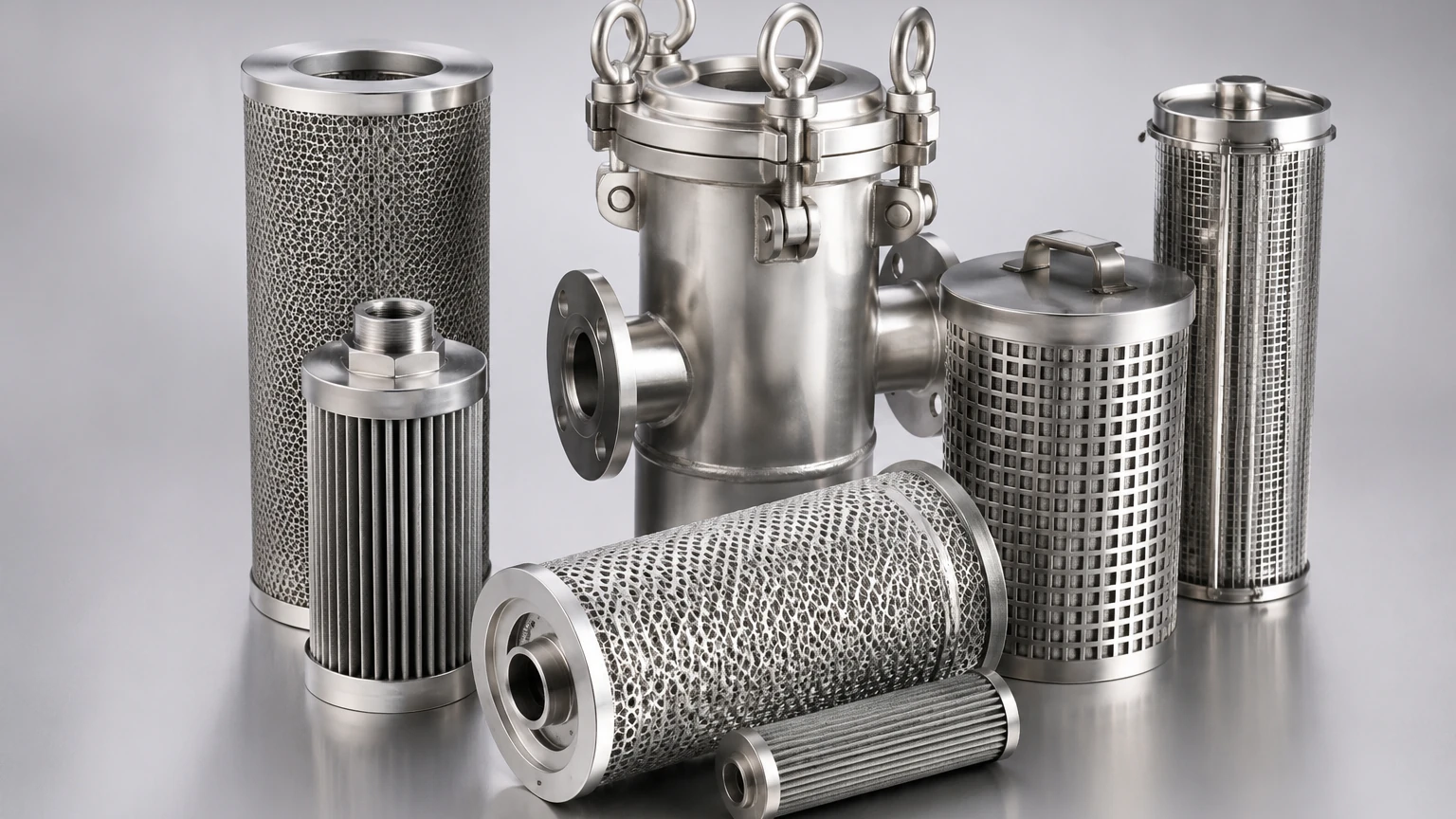
Customization: The Role of Precision Manufacturing
Off-the-shelf filtration solutions often fail to meet the unique constraints of specialized industrial equipment. This is where custom OEM manufacturing becomes a strategic advantage. When designing filtri per acqua autopulenti, engineers often require specific dimensions, unique connection types (such as Flange, NPT, or Tri-clamp), and tailored filtration media.
Kaifil’s manufacturing capabilities allow for the production of custom stainless steel filter cartridges and precision metal components that fit seamlessly into existing automatic systems. Whether the requirement is for a specific wire mesh density to capture micro-plastics or a reinforced sintered element for high-pressure hydraulic water, customization ensures that the filter performs exactly as intended under specific site conditions.
Integration with Automation
Modern industrial filters are no longer stand-alone mechanical devices; they are integrated into the plant’s PLC (Programmable Logic Controller) system. This allows for real-time monitoring of filtration performance. Custom-manufactured elements must be built to exacting tolerances to ensure that sensors and mechanical cleaning arms operate without interference, preventing mechanical failure and extending the service life of the equipment.
Total Cost of Ownership (TCO) Considerations
While the initial investment in filtri per acqua autopulenti is higher than that of manual bag or cartridge filters, the Total Cost of Ownership is significantly lower in the long run.
1. Reduced Labor Costs: Manual filter changes require personnel time and often necessitate a complete system shutdown. Automatic systems eliminate these costs.
2. Zero Consumable Waste: Unlike disposable polypropylene cartridges or felt bags, stainless steel filter elements are permanent. This reduces both the purchasing cost of replacements and the environmental impact of disposing of contaminated filter media.
3. Process Consistency: By maintaining a steady pressure drop and continuous flow, self-cleaning filters ensure that downstream processes—such as Reverse Osmosis (RO) membranes or UV sterilization units—operate under stable conditions, extending their lifespan.
4. Water Conservation: Advanced self-cleaning designs minimize the amount of water used during the backwash cycle, which is a critical factor in regions with high water costs or strict wastewater discharge regulations.
Conclusion: Making Informed Purchasing Decisions
For engineers and purchasing managers, the decision to implement filtri per acqua autopulenti should be based on a rigorous analysis of the fluid characteristics, the required filtration accuracy, and the long-term operational goals of the facility. By focusing on high-quality stainless steel components and precision-engineered cleaning mechanisms, industrial operators can achieve a level of reliability that manual systems simply cannot match.
When evaluating potential suppliers, it is essential to partner with a manufacturer that understands the technical demands of industrial filtration. From material traceability to the precision of the mesh weave, every detail contributes to the overall success of the filtration strategy. For those looking to explore high-performance, customized stainless steel filtration components, visiting the Main Page provides access to technical resources and engineering support necessary for selecting the optimal solution for complex industrial water challenges.
