


Industrial Baghouse Dust Collectors
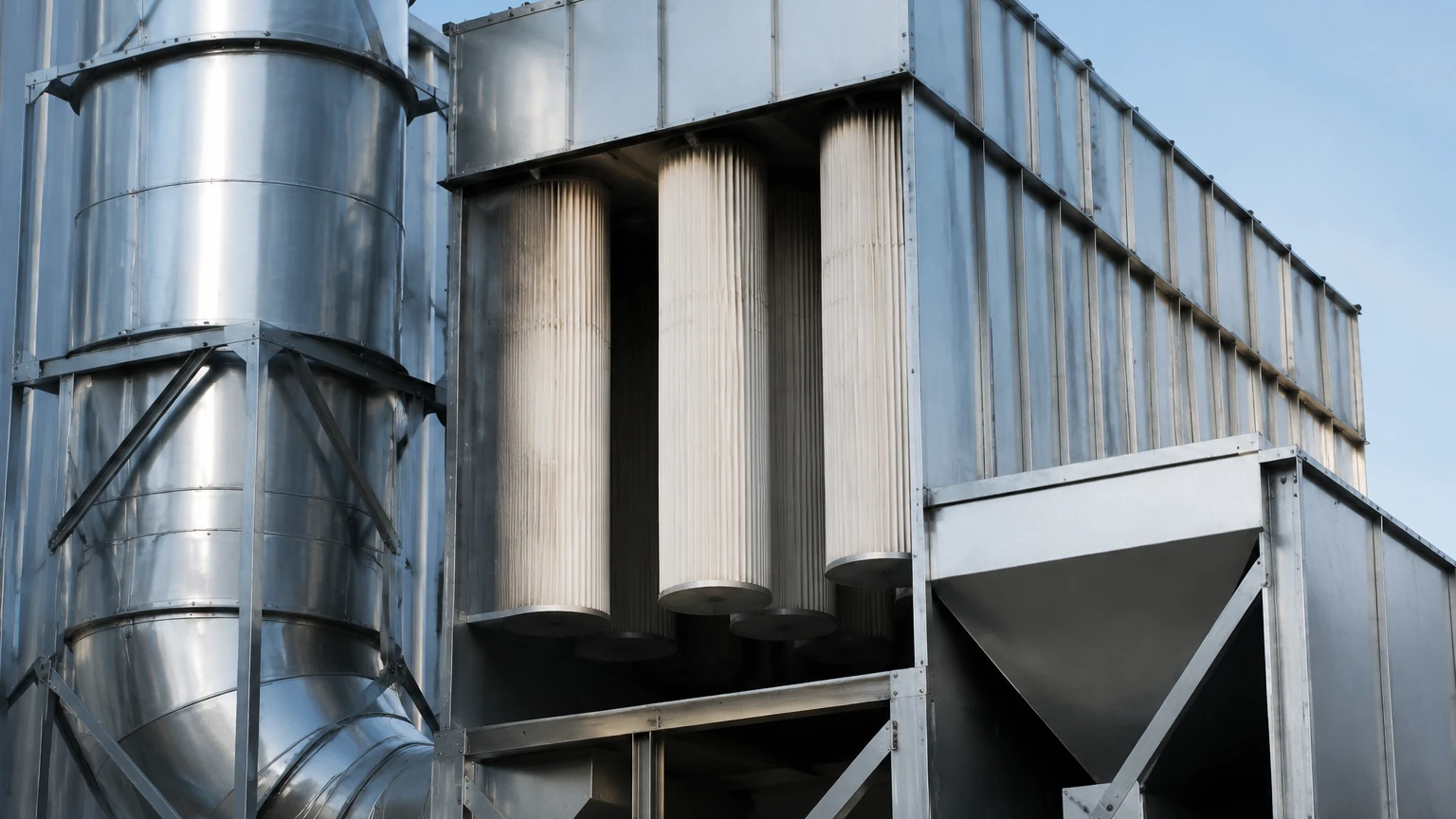
In the landscape of industrial air pollution control, industrial baghouse dust collectors serve as the primary defense against particulate emissions. These systems are engineered to handle high volumes of dust-laden air, separating solid particles from gas streams to ensure regulatory compliance, protect worker health, and recover valuable process materials. For engineers and facility managers, selecting the right filtration architecture requires a deep understanding of gas chemistry, particle physics, and material science.
While many standard systems utilize fabric media, demanding industrial environments—such as those involving high temperatures, corrosive chemicals, or stringent hygiene requirements—often necessitate the integration of precision metal components. As a manufacturer specializing in custom stainless steel filtration solutions, Kaifil provides the technical expertise and high-performance components required to optimize these critical systems.
Understanding the Role of Industrial Baghouse Dust Collectors in Modern Manufacturing
Industrial baghouse dust collectors are versatile filtration units used across diverse sectors, including chemical processing, pharmaceutical manufacturing, food and beverage production, and metalworking. Their primary function is to intercept airborne particulates before they are exhausted into the atmosphere or recirculated into the facility.
In chemical processing, for instance, dust collectors must manage aggressive vapors and fine powders that may be abrasive or chemically reactive. In the food and beverage industry, the focus shifts to hygiene and the prevention of cross-contamination, often requiring stainless steel construction to facilitate thorough cleaning and sterilization. The efficiency of these systems is measured by their ability to maintain a consistent pressure drop while achieving high collection efficiencies, often exceeding 99.9% for sub-micron particles.
Engineering Principles: How Industrial Baghouse Dust Collectors Operate
The operation of a baghouse is governed by several physical mechanisms: inertial impaction, interception, and diffusion. As dust-laden air enters the collector, larger particles lose velocity and fall into a hopper via gravity. Finer particles are carried toward the filter media, where they are trapped.
Cleaning Mechanisms
The method used to remove the accumulated "dust cake" from the filter media defines the type of baghouse:
1. Pulse-Jet Collectors: This is the most common industrial configuration. High-pressure compressed air is blasted down the center of the filter bag, causing it to expand rapidly and shatter the dust cake. This process allows for continuous operation without shutting down the airflow.
2. Shaker Collectors: These units mechanically shake the top of the bags to dislodge dust. They generally require the airflow to be stopped during the cleaning cycle, making them suitable for intermittent processes.
3. Reverse-Air Collectors: These systems use a fan to blow air in the opposite direction of the filtration flow, gently collapsing the bags to release the dust. They are typically used in large-scale applications where the filter media is fragile.
The Importance of Structural Support
In pulse-jet systems, the filter media is supported by an internal structure known as a filter cage. The quality and precision of these cages are paramount; any burrs or misalignments can lead to premature wear or tearing of the filter media. For specialized applications, these supports and even the primary filtration elements are manufactured from stainless steel wire mesh to withstand environments that would destroy traditional fabric polymers.
Critical Selection Criteria for Industrial Air Filtration Systems
When specifying industrial baghouse dust collectors, engineers must evaluate several technical parameters to ensure long-term reliability and cost-effectiveness.
Air-to-Cloth Ratio
The Air-to-Cloth (A/C) ratio, also known as the filtration velocity, represents the volume of air passing through one square foot of filter media per minute (CFM/ft²). A lower A/C ratio generally leads to a longer filter life and lower pressure drop but requires a larger, more expensive housing. Conversely, an excessively high A/C ratio can cause "blinding," where particles become deeply embedded in the media, making cleaning difficult.
Temperature and Chemical Compatibility
Standard polyester or aramid bags have strict temperature limits. In applications such as kiln exhaust or high-temperature chemical synthesis, these materials may fail. Stainless steel filtration components, such as those offered by Kaifil, provide a solution for temperatures exceeding 500°F (260°C) and offer superior resistance to acid and alkali exposure.
Particle Characteristics
The physical properties of the dust—such as particle size distribution, shape, abrasiveness, and moisture content—dictate the choice of filter media. For example, hygroscopic (moisture-absorbing) dust can lead to "mudding," where the dust turns into a paste on the filter surface. In such cases, specialized surface treatments or stainless steel mesh with specific pore structures may be required to facilitate release.
Enhancing Durability with Stainless Steel Filtration Components
In many high-stakes industrial applications, the transition from synthetic fabrics to stainless steel filtration media offers significant advantages. Stainless steel wire mesh filters and cartridges provide a level of mechanical strength and thermal stability that polymers cannot match.
Why Choose Stainless Steel?
1. Corrosion Resistance: In environments involving salt spray, acidic gases, or caustic cleaning agents, stainless steel (particularly Grades 304 and 316L) prevents oxidation and structural failure.
2. Precision Filtration: Wire mesh can be woven to exacting tolerances, providing a consistent micron rating across the entire surface area. This is critical for applications requiring precise particle size cut-offs.
3. Cleanability: Unlike fabric bags, which may need to be disposed of once blinded, stainless steel filter elements can often be cleaned via ultrasonic baths, back-pulsing, or chemical washing, extending their service life significantly.
For organizations looking to optimize their filtration hardware, it is advisable to Review product options and application support on our Main Page to understand how customized metal components can be integrated into existing or new dust collection systems.
Common Operational Risks and Troubleshooting
Even a well-designed baghouse can encounter operational hurdles. Identifying these early is key to preventing unscheduled downtime.
* High Pressure Drop: If the differential pressure across the filters rises and stays high, it indicates that the cleaning system is ineffective or the media is blinded. This often results from incorrect pulse-jet settings or an undersized collector.
* Abrasion: In industries handling silica, fly ash, or metallic dust, the high-velocity entry of particles can erode the filter media and the housing. Strategic use of wear plates and heavy-duty stainless steel supports can mitigate this risk.
* Leakage: Dust bypass is usually caused by improper installation of the filter bags or holes in the media. Regular leak detection tests using fluorescent powders can help identify compromised sections before they lead to environmental violations.
Total Cost of Ownership and Maintenance Cycles
While the initial capital expenditure (CAPEX) of industrial baghouse dust collectors is a significant factor, the total cost of ownership (TCO) is driven by operational expenses (OPEX). These include energy consumption (fan power), compressed air usage, and filter replacement costs.
High-quality filtration components reduce TCO by maintaining a lower average pressure drop, which decreases the load on the system's fans. Furthermore, by selecting durable materials like stainless steel for critical components, facilities can extend the intervals between maintenance shutdowns. A well-maintained system not only saves money but also ensures that the production line remains operational without the threat of environmental non-compliance.
Customization Options for Specialized Industrial Applications
No two industrial processes are identical, and off-the-shelf filtration solutions often fall short in specialized environments. Customization is essential for optimizing performance in unique space constraints or under extreme process conditions.
Kaifil specializes in the OEM manufacture of precision metal filtration components tailored to specific engineering requirements. Whether you need a custom-sized wire mesh filter for a pharmaceutical cleanroom or a heavy-duty stainless steel cartridge for a hydraulic system integrated within a dust collector, customization ensures that every component is fit for purpose. Engineers should confirm the following before proceeding with a custom design:
* Exact Micron Requirements: Determine the absolute vs. nominal filtration needs.
* Flow Dynamics: Analyze the expected flow rates and potential turbulence within the collector.
* Material Certification: Ensure that the alloys used (e.g., 316L) meet the necessary industry standards for corrosion resistance and food safety.
By focusing on these technical details, purchasing teams can secure filtration solutions that deliver reliable, long-term performance in the most demanding industrial settings. For further technical specifications and to explore our range of custom stainless steel solutions, please visit our Main Page.
