


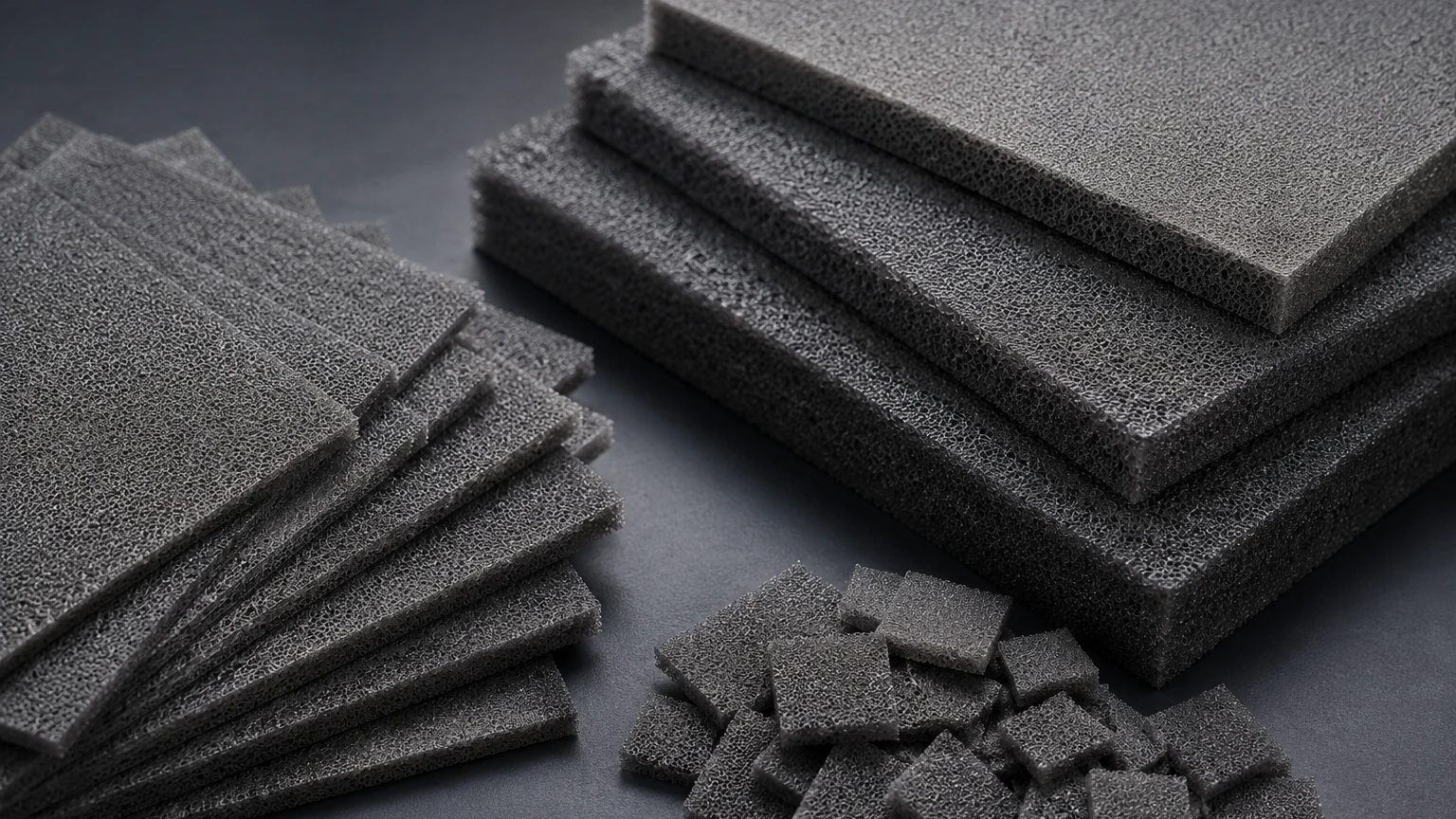
Reticulated Foam Sheet
In the landscape of industrial filtration and fluid management, the reticulated foam sheet stands as a fundamental component for air, gas, and liquid processing. Characterized by its highly porous, open-cell structure, this material is engineered to provide a unique balance between surface area and low resistance to flow. For engineers and procurement professionals, understanding the technical nuances of reticulated foam—from its chemical composition to its pore geometry—is essential for optimizing filtration systems and ensuring long-term operational efficiency.
While many industrial applications eventually graduate to more robust solutions like stainless steel wire mesh or sintered metal cartridges, reticulated foam remains a primary choice for pre-filtration, mist elimination, and acoustic damping. This guide examines the engineering properties, selection criteria, and industrial applications of reticulated foam sheets to assist technical teams in making informed specification decisions.
Understanding the Structure and Manufacturing of Reticulated Foam
The term "reticulated" refers to the skeletal structure of the foam. Unlike standard flexible foams, which contain a mix of open and closed cells (membranes), a reticulated foam sheet has undergone a specialized manufacturing process to remove the cell windows or membranes. This leaves only the structural "struts" or the dodecahedron-like skeleton of the polymer.
The Reticulation Process
There are two primary methods used to achieve this open-cell architecture:
1. Thermal Reticulation (Zapping): The foam is placed in a vacuum chamber filled with an explosive gas mixture (typically hydrogen and oxygen). Upon ignition, a controlled flash flame travels through the foam, melting the thin cell membranes and wrapping them around the thicker skeletal struts. This process creates a very clean, open structure without significantly altering the physical dimensions of the sheet.
2. Chemical Reticulation (Quenching): The foam is immersed in a caustic solution (such as a heated sodium hydroxide bath) that chemically dissolves the cell membranes. While effective, this method requires careful rinsing and neutralization to ensure no residual chemicals remain within the pore structure.
The resulting reticulated foam sheet offers a void volume often exceeding 95%, providing a massive internal surface area for depth filtration while maintaining a high flow rate.
Key Technical Specifications: PPI and Porosity
When specifying a reticulated foam sheet, the most critical metric is the Pores Per Inch (PPI). This value determines the filtration efficiency, pressure drop, and the specific surface area of the material.
Pores Per Inch (PPI) Ranges
Industrial reticulated foams are typically available in a range from 10 PPI to 110 PPI.
* Coarse (10–30 PPI): These sheets are used for heavy-duty pre-filtration, large particle capture, and as substrates for ceramic coatings in foundry filters. They offer the lowest pressure drop and are least prone to clogging.
* Medium (40–60 PPI): Frequently utilized in HVAC systems, small engine air filters, and general industrial air scrubbing. They provide a balance between mechanical strength and filtration fineness.
* Fine (70–110 PPI): These are used for high-efficiency air filtration, medical devices, and cosmetic applicators. While they offer superior particle retention, they require careful monitoring of pressure differentials to prevent system strain.
Void Volume and Density
Because the membranes are removed, the density of a reticulated foam sheet is significantly lower than its non-reticulated counterpart. Engineers must account for the "void volume," which represents the percentage of the foam's total volume that is air. A high void volume is critical for applications involving fluid storage or where the foam acts as a reservoir for lubricants or catalysts.
Material Selection: Polyester vs. Polyether Formulations
Most industrial reticulated foam sheets are manufactured from polyurethane, but the specific polymer base—polyester or polyether—drastically changes the material’s performance in different environments.
Polyester-Based Reticulated Foam
Polyester foams are characterized by high mechanical strength, excellent abrasion resistance, and superior resistance to hydrocarbons and chemicals.
* Best For: Oil filtration, fuel systems, and applications involving petroleum-based solvents.
* Limitation: Polyester is susceptible to hydrolysis. In high-humidity environments or constant contact with water, the polymer chains can break down, leading to "crumbles" or structural failure over time.
Polyether-Based Reticulated Foam
Polyether foams are engineered for stability in aqueous environments. They offer excellent resistance to moisture and are generally more resistant to microbial growth (mold and mildew).
* Best For: Water treatment, outdoor power equipment, and medical applications where moisture exposure is guaranteed.
* Limitation: Polyether generally has lower tensile strength and less resistance to oils and fuels compared to polyester.
Engineering Performance: Pressure Drop and Flow Dynamics
One of the primary reasons engineers specify a reticulated foam sheet is to manage the pressure drop ($ΔP$) across a filtration stage. The open-cell structure allows for a linear relationship between face velocity and pressure drop at lower speeds, following Darcy's Law for porous media.
Factors Influencing Flow
1. Thickness: Increasing the thickness of the sheet improves the "tortuous path" for particles, increasing filtration efficiency but also increasing the resistance to flow.
2. Compression: If a foam sheet is compressed into a housing that is smaller than its nominal thickness, the PPI effectively increases, and the void volume decreases. This significantly raises the pressure drop and can lead to premature clogging.
3. Face Velocity: In high-velocity air streams, the foam must be mechanically supported (often by a metal mesh or perforated plate) to prevent deformation or "blow-through."
For systems requiring precise flow control, technical teams often consult the Main Page of filtration specialists to compare these foam characteristics against the rigid performance of stainless steel alternatives.
Industrial Applications and Filtration Efficiency
The versatility of the reticulated foam sheet allows it to serve multiple roles across diverse sectors:
* Air and Gas Filtration: In HVAC and industrial compressors, foam sheets act as primary filters for dust and debris. Their depth-loading capability allows them to hold a significant volume of contaminants before requiring replacement.
* Mist Elimination: In chemical processing, reticulated foam is used to coalesce liquid droplets from gas streams. The droplets collect on the foam struts, grow in size, and eventually drain away due to gravity.
* Acoustic Damping: The complex internal geometry of the foam is highly effective at dissipating sound energy. It is frequently used in speaker grilles and industrial equipment housings to reduce noise pollution without restricting cooling airflow.
* Fluid Management: In fuel tanks (especially in racing or aerospace), reticulated foam prevents fuel sloshing and suppresses explosions by limiting the rapid movement of vapors.
Comparative Analysis: Reticulated Foam vs. Stainless Steel Mesh
In many B2B procurement scenarios, the choice between a reticulated foam sheet and a stainless steel wire mesh filter comes down to the operating environment and the total cost of ownership.
| Feature | Reticulated Foam Sheet | Stainless Steel Wire Mesh |
| :— | :— | :— |
| Initial Cost | Low | High |
| Cleanability | Limited (Disposable) | Excellent (Reusable) |
| Temperature Limit | ~120°C (Polyurethane) | Up to 800°C+ |
| Chemical Resistance | Selective (Polyether/Polyester) | Broad (304/316L) |
| Structural Integrity | Flexible/Compressible | Rigid/Self-supporting |
| Filtration Type | Depth Filtration | Surface/Depth Hybrid |
While foam is an excellent low-cost solution for ambient temperature air filtration, applications involving high pressures, corrosive chemicals, or high temperatures typically require the transition to metal-based components. Many systems utilize a reticulated foam sheet as a sacrificial pre-filter to extend the life of more expensive stainless steel secondary filters.
Procurement and Customization: Critical Verification Steps
Before finalizing a purchase order for reticulated foam sheets, purchasing teams and engineers should confirm the following technical details with their supplier:
1. Exact PPI Requirements: Ensure the PPI is measured consistently. Some suppliers use "nominal PPI," while others provide a range (e.g., 25–35 PPI). A tighter tolerance is necessary for calibrated flow systems.
2. Environmental Compatibility: Confirm if the application involves UV exposure, high humidity (requiring polyether), or specific chemical vapors (requiring polyester or specialty coatings).
3. Dimensional Tolerances: Unlike metal, foam is flexible. Standard cutting tolerances might be ±1/16" or more. If the foam must fit into a precision-machined slot, die-cutting or water-jet cutting may be required for accuracy.
4. Fire Retardancy: Many industrial building codes require foam to meet specific flammability standards (such as UL 94 HF-1). Verify that the reticulated foam sheet includes the necessary additives to meet these safety regulations.
5. Outgassing: In sensitive electronics or aerospace applications, the outgassing of volatile organic compounds (VOCs) from the foam can be a concern. Special "low-outgassing" grades may be required.
Conclusion
The reticulated foam sheet remains a versatile and indispensable tool in the industrial filtration toolkit. Its ability to provide high-surface-area contact with minimal pressure interference makes it ideal for a vast array of air and liquid management tasks. By carefully selecting the correct PPI and polymer base, engineers can achieve reliable performance in diverse environments.
For organizations looking to integrate these materials into broader filtration strategies—especially those requiring the transition from flexible media to high-precision metal components—consulting with a manufacturer experienced in custom filtration is paramount. To explore advanced filtration components and engineering support for demanding industrial applications, visit the Main Page of Kaifil for comprehensive product specifications and selection guidance.
