


What Is Cip Cleaning
In the landscape of modern industrial processing, maintaining the internal hygiene of complex piping systems and filtration units is a critical operational requirement. For engineers and facility managers in the food and beverage, pharmaceutical, and chemical sectors, the question of "what is cip cleaning" is fundamental to ensuring product safety, process efficiency, and equipment longevity. Clean-In-Place (CIP) refers to a method of cleaning the interior surfaces of pipes, vessels, process equipment, filters, and associated fittings without the need for disassembly.
Historically, industrial equipment had to be manually dismantled and cleaned piece by piece—a process known as Clean-Out-of-Place (COP). This was not only labor-intensive and time-consuming but also increased the risk of recontamination during reassembly. The advent of CIP technology revolutionized these industries by allowing for automated, repeatable, and verifiable cleaning cycles that minimize downtime and human error.
Understanding the Fundamentals of CIP
To fully grasp what is cip cleaning, one must look at it as a multi-stage process designed to remove both organic and inorganic soils. The process typically involves the circulation of water and chemical cleaning agents through the equipment at specific velocities and temperatures. This is particularly vital for filtration systems, where internal components like stainless steel wire mesh or sintered metal cartridges can trap particulates that are difficult to reach through manual scrubbing.
CIP systems are generally integrated into the process flow, utilizing a series of tanks, pumps, and valves to manage the delivery of cleaning solutions. The primary goal is to achieve a level of cleanliness that meets stringent regulatory standards, such as those set by the FDA or EHEDG, while optimizing the consumption of water, energy, and chemicals.
The Four Pillars of CIP: The TACT Principle
The efficacy of a CIP cycle is governed by four interdependent variables, often referred to by the acronym TACT. Balancing these factors is the core engineering challenge when designing a cleaning protocol for industrial filters and piping.
1. Time
Each stage of the CIP cycle—from the initial rinse to the final sanitization—requires a specific duration to ensure that the cleaning agents have sufficient contact time with the soils. If the time is too short, residues may remain; if too long, it leads to unnecessary downtime and resource waste.
2. Action (Mechanical Force)
In CIP, mechanical action is provided by the flow of the cleaning fluid. To effectively dislodge particles from filter surfaces, the fluid must achieve a state of turbulent flow. This is typically measured by the Reynolds number, with values above 3,000 to 4,000 indicating the turbulence necessary to create a scrubbing effect on internal surfaces.
3. Chemical Concentration
The selection and concentration of chemicals depend on the nature of the soil. Caustic solutions (typically Sodium Hydroxide) are used to break down fats and proteins, while acidic washes (such as Nitric or Phosphoric acid) are employed to remove mineral scales and milk stone. In filtration applications, chemical compatibility with the filter media is paramount to prevent corrosion.
4. Temperature
Heat enhances the chemical activity of cleaning agents and helps to melt fats or soften stubborn residues. Most CIP cycles operate between 60°C and 90°C (140°F to 194°F). However, engineers must ensure that the temperature does not exceed the thermal limits of seals, gaskets, or the structural integrity of the filter housing.
Integration of Stainless Steel Filters in CIP Systems
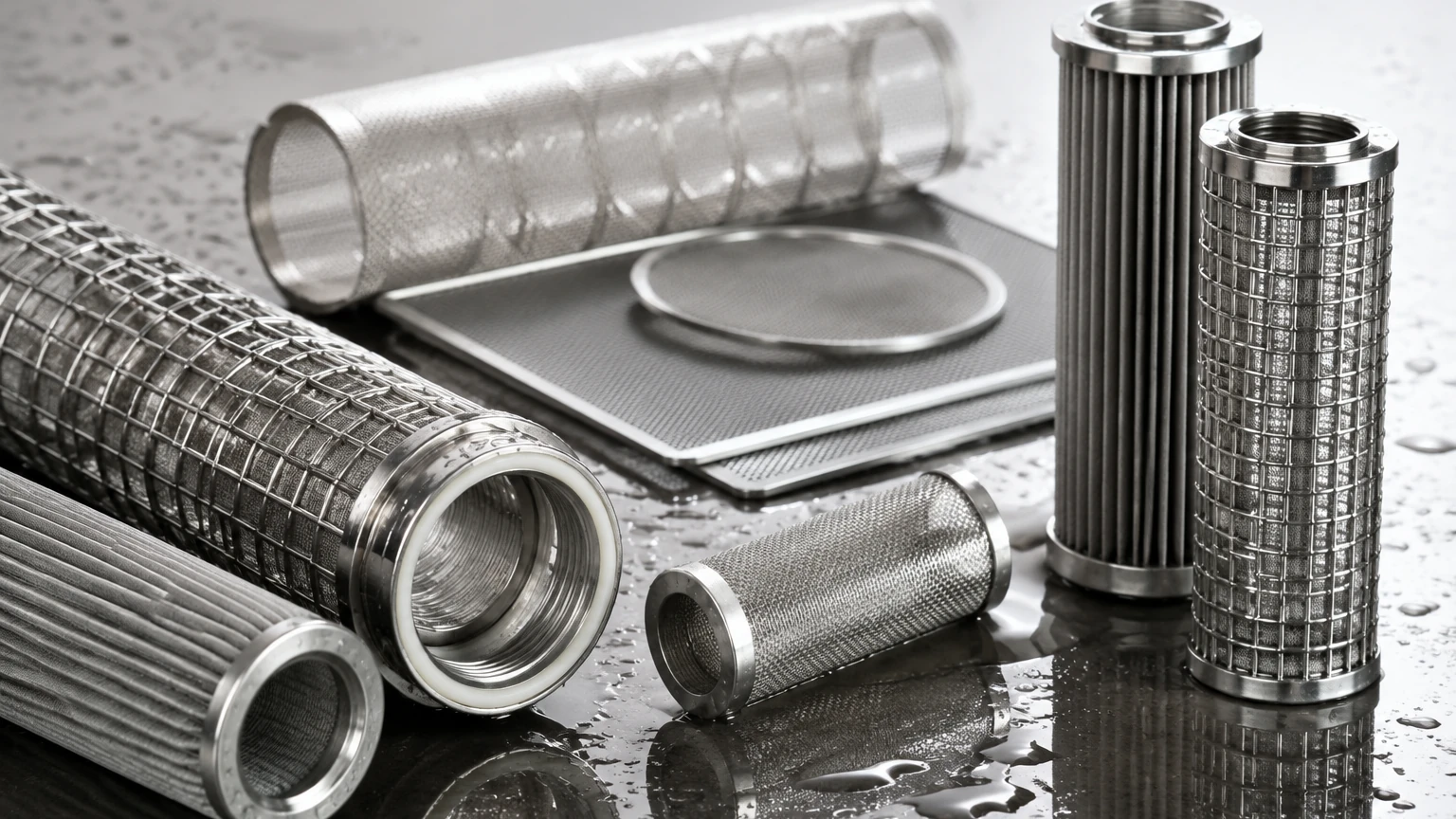
Filtration components are often the most challenging parts of a system to clean. Unlike smooth-walled pipes, filters have complex geometries and fine pores designed to capture contaminants. This is why material selection is a critical factor in the success of CIP. Stainless steel, particularly grades 304 and 316L, is the industry standard for CIP-compatible filtration due to its excellent resistance to high temperatures and aggressive cleaning chemicals.
Custom stainless steel filtration solutions, such as those manufactured by Kaifil, are engineered to withstand the rigorous pressures of backpulsing and high-velocity flow during CIP cycles. For engineers seeking high-performance components that withstand these rigorous cleaning protocols, visiting the Main Page of a specialized manufacturer like Kaifil provides insights into custom-engineered filtration solutions that prioritize durability and cleanability.
When evaluating filters for CIP environments, engineers must consider the mechanical strength of the mesh. During a CIP cycle, the filter may experience reverse flow or "backwashing" to push contaminants out of the mesh pores. If the filter media is not properly supported or if the wire mesh is of inferior quality, the pressure fluctuations can lead to media migration or structural failure.
Designing for Cleanability: Engineering Considerations
An effective CIP process begins with the design of the equipment itself. If a filter housing or a piping run has "dead legs" (areas where fluid can stagnate), the cleaning solution will not reach those surfaces, leading to bacterial growth or cross-contamination.
Key design features for CIP-compatible systems include:
* Surface Finish: The internal surfaces of filter housings and components are often polished to a specific roughness average (Ra). A lower Ra value (typically < 0.8 μm) means a smoother surface with fewer microscopic crevices where bacteria can hide.
* Self-Draining Geometry: All components should be designed to drain completely by gravity. Residual cleaning fluids or rinse water can become a breeding ground for microorganisms if left to sit in low points of the system.
* Hygienic Connections: The use of Tri-Clamp or other sanitary fittings ensures that there are no gaps or threads exposed to the process fluid, which are notoriously difficult to clean via CIP.
* Nozzle Placement: In large vessels or filter housings, static or rotary spray balls are used to ensure that the cleaning solution is distributed evenly across all internal surfaces.
The Typical CIP Cycle Sequence
While every industrial application is unique, a standard CIP sequence for a filtration system generally follows these steps:
1. Pre-Rinse: Potable water is circulated to remove the bulk of the loose soil and product residue. This step prevents the subsequent chemical wash from becoming prematurely saturated with debris.
2. Caustic Wash: A circulating caustic solution breaks down organic matter. In many filtration applications, this is the most critical stage for removing biofilms and protein-based blockages from the mesh.
3. Intermediate Rinse: Water is used to flush out the caustic solution and loosened soils.
4. Acid Wash (Optional): If mineral scaling is a concern, an acid wash is performed. This is also used for passivation of stainless steel surfaces to maintain their corrosion resistance.
5. Final Rinse: High-purity water (often deionized or RO water) is used to remove all traces of chemicals.
6. Sanitization: The final step involves circulating a chemical sanitizer (like peracetic acid) or using hot water/steam to kill any remaining microorganisms.
Verification and Validation of CIP Efficacy
Understanding what is cip cleaning also involves knowing how to prove that the process worked. In regulated industries, cleaning must be validated. This is typically achieved through a combination of methods:
* Conductivity Sensors: These sensors measure the concentration of cleaning chemicals in the return line, ensuring the correct TACT parameters were met.
* ATP Testing: Adenosine Triphosphate (ATP) swabs are used to detect biological residues on surfaces after the CIP cycle is complete.
* Visual Inspection: Where possible, borescope inspections allow engineers to view the internal state of filters and pipes.
* Analytical Testing: Rinse water samples may be analyzed for TOC (Total Organic Carbon) or specific product residues to ensure zero cross-contamination.
Operational Challenges and Maintenance
Even with a well-designed CIP system, challenges can arise. One common issue is the "blinding" of filter media. This occurs when particulates become deeply embedded in the wire mesh and are not removed by the standard CIP flow. In such cases, engineers may need to implement ultrasonic cleaning or specialized chemical soaks.
Furthermore, the repeated exposure to caustic and acidic cycles can eventually degrade seals and gaskets. Regular maintenance schedules must include the inspection of these elastomer components to prevent leaks and ensure the integrity of the CIP circuit. Choosing high-grade stainless steel filter cartridges reduces the frequency of replacement, as these components are designed to handle the thermal and chemical stresses of CIP better than disposable plastic alternatives.
Conclusion
In summary, CIP cleaning is a sophisticated, automated approach to maintaining industrial hygiene that is indispensable in today’s high-output manufacturing environments. By integrating the TACT principles with hygienically designed equipment and high-quality stainless steel filtration components, companies can achieve consistent cleanliness, protect their brand reputation, and optimize their total cost of ownership. For technical professionals, understanding the nuances of how CIP interacts with filtration media is the key to designing resilient and efficient process systems.
