


Pneumatic Mufflers
In industrial environments, pneumatic systems are essential for automation, material handling, and tool operation. However, the rapid exhaustion of compressed air into the atmosphere creates significant noise pollution and potential safety hazards. Pneumatic mufflers, also known as pneumatic silencers, are critical components designed to reduce the noise levels generated by exhausting air while maintaining the efficiency of the pneumatic circuit. For engineers and maintenance professionals, selecting the correct muffler involves balancing noise reduction, back pressure, and material compatibility to ensure long-term system reliability.
As a specialized manufacturer of stainless steel filtration and precision metal components, Kaifil provides high-performance solutions tailored for demanding industrial applications. Understanding the technical nuances of pneumatic mufflers is essential for optimizing workplace safety and equipment longevity.
The Engineering Behind Pneumatic Noise Reduction
When compressed air is released from a valve or cylinder, it exits at high velocity. As this high-speed air interacts with the relatively static ambient air, it creates turbulence. This turbulence is the primary source of the "hissing" or "roaring" sound associated with pneumatic machinery. Without mitigation, these noise levels can exceed 100 decibels (dB), which poses a risk of hearing loss to operators and violates occupational safety standards.
Diffusion and Velocity Control
Pneumatic mufflers function by increasing the surface area through which the air must pass. By forcing the exhaust air through a porous medium—typically sintered metal or wire mesh—the muffler breaks up the single high-velocity stream into thousands of tiny, low-velocity streams. This process, known as diffusion, significantly reduces the kinetic energy of the air and, consequently, the noise generated by turbulence.
Back Pressure Considerations
A critical engineering trade-off in muffler design is the relationship between noise reduction and back pressure. Back pressure is the resistance to flow created by the muffler’s internal structure. If a muffler is too restrictive, it causes a pressure buildup in the exhaust port, which can slow down cylinder cycle times, reduce the force of pneumatic actuators, and even cause valve malfunctions.
Engineers must evaluate the flow coefficient (Cv) of the muffler to ensure it matches the requirements of the pneumatic valve. A properly sized muffler provides maximum noise attenuation with minimal impact on system performance. For more information on optimizing filtration and flow components, you can visit the Main Page to explore technical specifications.
Material Selection for Industrial Pneumatic Mufflers
The environment in which a pneumatic system operates dictates the material requirements for its mufflers. While plastic and sintered bronze are common in light-duty applications, industrial environments often require the durability and chemical resistance of stainless steel.
Sintered Stainless Steel
Sintered stainless steel is the gold standard for heavy-duty pneumatic mufflers. It offers several distinct advantages over other materials:
1. Corrosion Resistance: In chemical processing or marine environments, standard bronze mufflers can oxidize and fail. Stainless steel (typically 304 or 316L) remains inert when exposed to moisture and corrosive gases.
2. High Temperature Tolerance: Pneumatic systems in foundries or near industrial ovens may operate at elevated temperatures. Stainless steel mufflers maintain their structural integrity where plastic alternatives would soften or melt.
3. Mechanical Strength: In high-pressure applications, the structural rigidity of sintered metal prevents the muffler from bursting or deforming under sudden pressure spikes.
4. Purity and Hygiene: For the food and beverage and pharmaceutical industries, stainless steel is preferred due to its non-contaminating properties and ease of sterilization.
Sintered Bronze
Sintered bronze is a cost-effective solution for general-purpose applications where the air is relatively clean and the environment is non-corrosive. It provides excellent noise reduction but is susceptible to "greening" (oxidation) in humid conditions, which can eventually lead to clogging.
Critical Evaluation Criteria for Selection
When specifying pneumatic mufflers for a project, engineers should go beyond thread size and consider the following technical parameters:
Noise Reduction Rating (dB)
Most industrial mufflers are rated for the amount of noise reduction they provide, typically ranging from 20 dB to 40 dB. It is important to note that the decibel scale is logarithmic; a 3 dB reduction represents a 50% decrease in sound energy. Selecting a muffler that brings the system noise below 85 dB is generally required to meet OSHA and other international safety regulations.
Filtration Efficiency and Clogging
Because pneumatic mufflers act as a porous barrier, they also trap contaminants present in the compressed air line, such as oil mist, pipe scale, and moisture. Over time, these contaminants can clog the muffler. Engineers should look for mufflers with a pore size that balances noise reduction with the ability to pass fine particulates. In systems with high oil content, a muffler with a larger surface area or a specialized coalescing design may be necessary to extend the maintenance interval.
Connection Type and Thread Standards
Mufflers must be compatible with the exhaust ports of pneumatic valves. Common thread standards include NPT (National Pipe Thread) for North American markets and BSPP/BSPT (British Standard Pipe) for European and Asian markets. Ensuring a leak-free, secure fit is essential for preventing the muffler from vibrating loose during operation.
Common Risks and Failure Modes
Ignoring the condition of pneumatic mufflers can lead to several systemic issues. Understanding these risks helps in developing an effective preventative maintenance schedule.
Increased Cycle Times
As a muffler clogs, the increasing back pressure slows the evacuation of air from the cylinder. This leads to sluggish machine movements and reduced throughput. If an automated assembly line begins to lose synchronization, the pneumatic mufflers are often the first components that should be inspected.
Valve Damage
Extreme back pressure can prevent a pneumatic valve from fully shifting or cause internal seals to wear prematurely. In some cases, a completely blocked muffler can cause the exhaust air to find an alternative path, potentially damaging sensitive internal components of the valve manifold.
Contaminant Ingress
In certain environments, a muffler also serves as a filter to prevent dust and debris from entering the valve when it is not in the exhaust cycle. A damaged or missing muffler allows particulates to enter the pneumatic circuit, leading to abrasive wear on cylinder seals and valve spools.
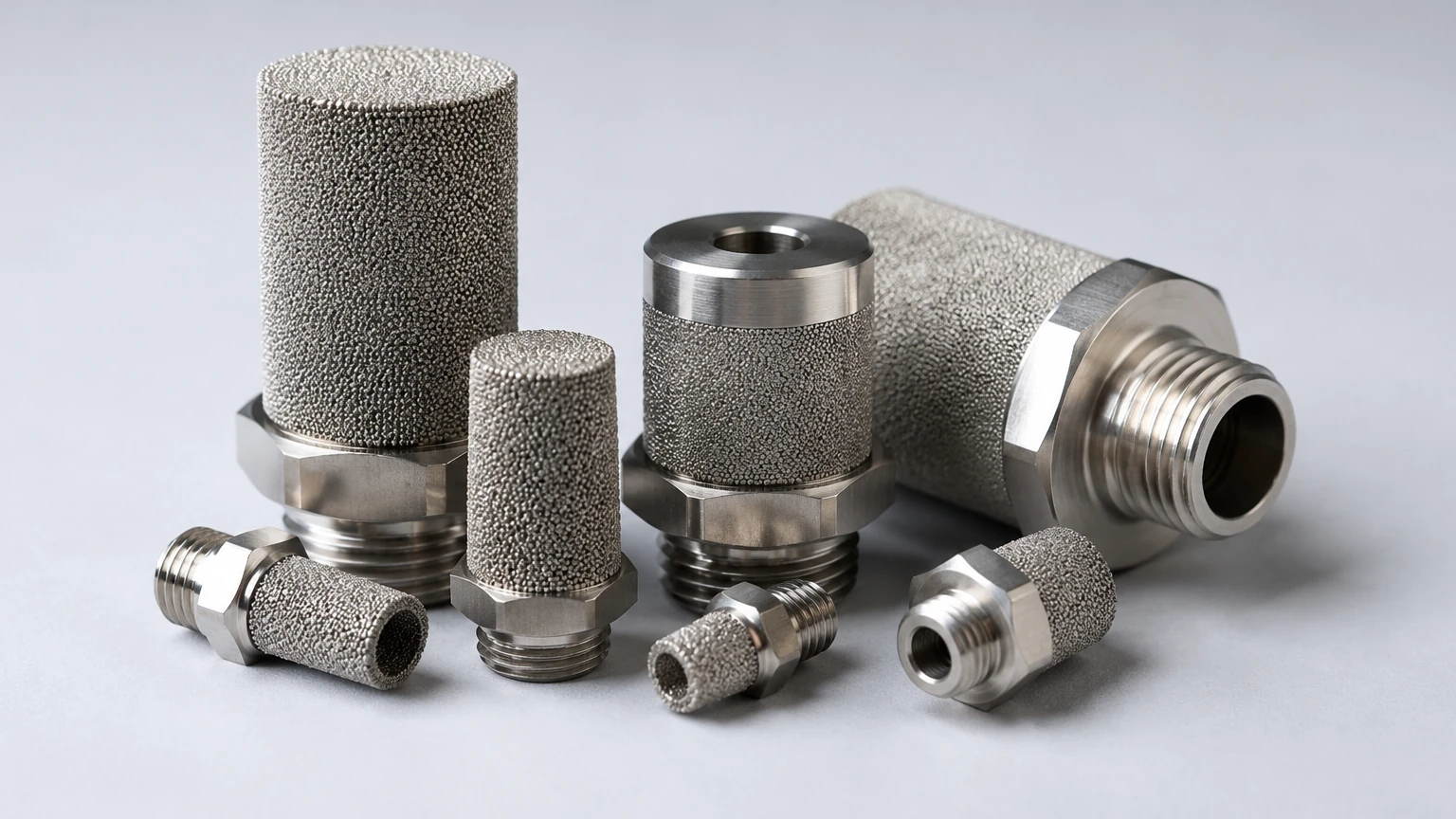
Customization and OEM Solutions
Standard off-the-shelf mufflers do not always meet the specific needs of specialized machinery. Factors such as restricted space, unique thread requirements, or extreme filtration needs necessitate customized solutions.
Kaifil specializes in developing custom stainless steel filtration components, including tailored pneumatic mufflers. Whether the application requires a low-profile design for compact manifolds or a high-flow silencer for large-scale industrial blowers, custom engineering ensures that the muffler is optimized for the specific flow dynamics of the system. Customization options often include:
* Variable Porosity: Adjusting the density of the sintered material to achieve a specific balance of dB reduction and Cv value.
* Integrated Housings: Designing mufflers that fit directly into proprietary equipment housings to save space.
* Material Upgrades: Utilizing high-grade alloys for extreme chemical compatibility.
Maintenance and Replacement Cycles
There is no universal replacement cycle for pneumatic mufflers, as the lifespan depends entirely on the quality of the compressed air and the duty cycle of the machine. However, the following best practices can help maintain system efficiency:
1. Visual Inspection: Regularly check for signs of oil saturation or physical damage to the muffler body.
2. Pressure Drop Monitoring: In critical systems, monitoring the time it takes for a cylinder to stroke can indicate when a muffler is becoming restrictive.
3. Cleaning vs. Replacement: While some sintered metal mufflers can be cleaned using ultrasonic baths or solvent degreasers, it is often more cost-effective in B2B environments to replace them. Cleaning may not always restore the original flow characteristics if particulates are deeply embedded in the porous structure.
Conclusion
Pneumatic mufflers are far more than simple accessories; they are vital engineering components that ensure workplace safety, regulatory compliance, and mechanical efficiency. By selecting the appropriate material, such as stainless steel for harsh environments, and carefully calculating the required flow and noise reduction, engineers can significantly enhance the performance of their pneumatic systems.
For purchasing teams and engineers seeking reliable, high-quality filtration and silencing components, working with an experienced manufacturer like Kaifil ensures access to technical expertise and durable products. To explore our full range of stainless steel filters and custom solutions, please visit our Main Page.
