


Steam Flash Tank
In industrial steam systems, energy efficiency and resource recovery are paramount for maintaining operational cost-effectiveness. A steam flash tank is a specialized pressure vessel engineered to capture and repurpose the energy contained within high-pressure condensate. When high-pressure condensate is discharged to a lower-pressure environment, a portion of the liquid spontaneously boils, or "flashes," into steam. Without a dedicated recovery system, this thermal energy is often lost to the atmosphere or wasted in cooling processes.
For engineers and plant managers, understanding the design, operation, and maintenance of a steam flash tank is essential for optimizing heat balance. Furthermore, the integration of high-performance filtration components ensures that the recovered steam and the remaining condensate remain free of contaminants, protecting downstream equipment from erosion and fouling. To explore specific filtration components that support these systems, technical professionals can refer to the Main Page for detailed product specifications.
Understanding the Mechanics of Flash Steam Recovery
The operation of a steam flash tank is governed by the principles of thermodynamics. Condensate formed at high pressure contains more sensible heat (enthalpy) than condensate at a lower pressure. When this high-pressure fluid enters a flash tank—which is maintained at a significantly lower pressure—the excess energy causes a percentage of the water to evaporate instantly. This resulting "flash steam" is chemically identical to live steam and can be utilized for low-pressure heating applications, such as space heating, boiler feedwater preheating, or deaeration.
The Flashing Process
The amount of flash steam generated depends on the pressure differential between the high-pressure source and the flash tank. The formula for calculating the percentage of flash steam is:
Flash Steam % = (SH – SL) / H
*Where:*
* SH is the sensible heat of the high-pressure condensate.
* SL is the sensible heat of the condensate at the lower pressure (flash tank pressure).
* H is the latent heat of the steam at the lower pressure.
By effectively separating this steam from the liquid, a steam flash tank reduces the load on the primary boiler and lowers the overall carbon footprint of the facility. However, the efficiency of this process relies heavily on the internal design of the tank and the quality of the incoming fluid.
Engineering Design and Sizing Criteria for Flash Tanks
Properly sizing a steam flash tank is critical to ensure effective separation of steam and water. If a tank is undersized, the high velocity of the entering steam can carry water droplets into the steam outlet (carryover), leading to water hammer and reduced heat transfer efficiency in downstream equipment. Conversely, an oversized tank leads to unnecessary capital expenditure and heat loss through the vessel walls.
Velocity Control
The primary design goal is to keep the upward velocity of the flash steam low enough to allow water droplets to fall back into the liquid pool by gravity. Generally, steam velocities within the tank should be kept below 3 to 5 meters per second, depending on the specific gravity of the fluid and the pressure.
Internal Components
To enhance separation, many industrial flash tanks incorporate internal baffles or stainless steel mesh demisters. These components provide a surface area for small droplets to coalesce and drop out of the steam flow. In high-purity applications, such as those found in the pharmaceutical or food and beverage sectors, the quality of these internal components is vital. Precision-engineered wire mesh filters and separators are often utilized to ensure the dryness and purity of the recovered flash steam.
Pressure Ratings and Safety
As a pressure vessel, a steam flash tank must be designed according to relevant standards (such as ASME Section VIII). It must include a safety valve, a pressure gauge, and a reliable steam trap at the bottom to discharge the remaining low-pressure condensate without losing the recovered steam.
The Critical Role of Filtration in Steam Systems
One of the most overlooked aspects of steam flash tank performance is the impact of particulates and chemical contaminants. Condensate return lines often carry pipe scale (iron oxides), copper deposits, and hardness salts. When these contaminants enter the flash tank, they can cause significant operational hurdles.
Protecting the Flash Tank
Particulates in the high-pressure condensate can act as abrasive agents. As the fluid flashes, the high-velocity transition can drive these particles against the vessel walls and nozzles, leading to localized erosion. Installing a high-temperature stainless steel filter cartridge upstream of the flash tank can remove these solids, extending the service life of the vessel.
Preventing Downstream Fouling
The flash steam recovered from the tank is often sent to heat exchangers. If the condensate is contaminated, the flashing process can carry fine particulates into the low-pressure steam line. These particles eventually settle on the heat transfer surfaces of exchangers, creating a thermal barrier that reduces efficiency. By utilizing precision metal filter components, engineers can ensure that the steam remains clean, maintaining the "U-value" (heat transfer coefficient) of downstream equipment.
For more information on selecting the appropriate filtration media for high-temperature steam applications, users can consult the Main Page to review material compatibility and micron ratings.
Material Selection and Corrosion Resistance
Industrial steam environments are inherently corrosive. The combination of high temperatures, dissolved oxygen, and carbon dioxide (which forms carbonic acid) can rapidly degrade standard carbon steel components. In a steam flash tank system, material selection is a primary factor in total cost of ownership.
Stainless Steel vs. Carbon Steel
While carbon steel is often used for the main shell of large flash tanks to reduce initial costs, stainless steel (typically Grade 304 or 316) is the preferred material for internal components, nozzles, and filtration elements. Stainless steel offers superior resistance to erosion-corrosion, which is particularly prevalent at the point where high-pressure condensate enters the tank.
Durability of Filtration Components
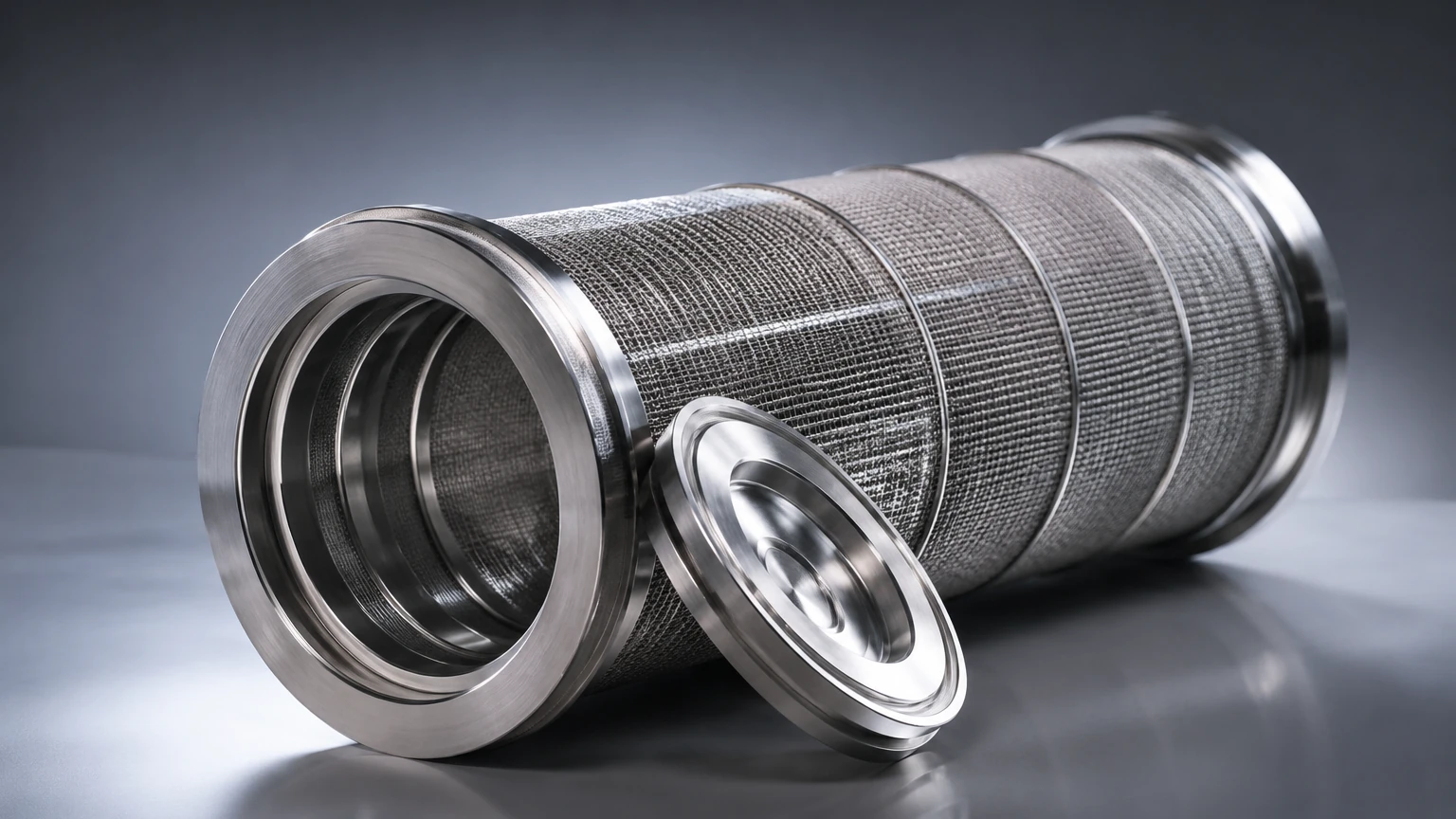
In the context of filtration, stainless steel wire mesh and sintered metal cartridges are the industry standard. Unlike polymer-based filters, these metal components can withstand the thermal shock and high temperatures associated with steam flashing. They are also cleanable, allowing for a longer replacement cycle and lower long-term operational costs. When specifying a steam flash tank, engineers should confirm that all internal filtration and separation media are constructed from corrosion-resistant alloys to prevent premature system failure.
Operational Risks and Mitigation Strategies
Despite their relatively simple design, steam flash tanks are subject to several operational risks that can compromise safety and efficiency.
Water Hammer
Water hammer occurs when steam comes into contact with cooler condensate, causing the steam to collapse rapidly and creating a shockwave. In a flash tank, this can happen if the condensate level is allowed to rise too high due to a failed steam trap. Regular inspection of the discharge traps and the use of level-sensing alarms are essential mitigation strategies.
Carryover and Priming
Carryover refers to liquid water being pulled into the steam outlet. This is often caused by sudden pressure drops or excessive foaming due to high chemical concentrations in the boiler water. High-quality separation through precision-engineered mesh filters is the most effective way to mitigate carryover, ensuring that only dry steam reaches the low-pressure header.
Scaling and Sedimentation
Over time, the bottom of the flash tank can accumulate sediment. If not managed, this sediment can plug the discharge trap, leading to flooding. Implementing a regular blowdown schedule and installing a coarse filter or strainer on the condensate inlet can significantly reduce the frequency of manual tank cleaning.
Optimizing System Performance Through Integrated Filtration
To achieve the highest level of efficiency, a steam flash tank should not be viewed as an isolated component but as part of an integrated thermal and filtration circuit. The synergy between effective separation and high-purity filtration is what allows modern plants to maximize energy recovery.
Selection Considerations for Engineers
When evaluating filtration solutions for use with a steam flash tank, engineers should consider the following:
1. Micron Rating: Determine the particle size that must be removed to protect downstream valves and exchangers.
2. Pressure Drop: Ensure the filter does not create an excessive pressure drop that would interfere with the flashing process.
3. Cleanability: For industrial applications, backwashable or ultrasonically cleanable stainless steel filters provide the best value.
4. Customization: Many steam systems have unique piping layouts. OEM providers like Kaifil can develop customized filtration housings and elements that fit specific spatial constraints.
By addressing these factors during the design phase, purchasing teams can ensure that the steam flash tank operates at peak performance from day one. For technical guidance on integrating these solutions, the Main Page serves as a resource for exploring custom engineering capabilities and material options.
Conclusion
The steam flash tank remains a cornerstone of industrial energy conservation. By capturing the latent heat of condensate, facilities can significantly reduce fuel consumption and improve boiler house efficiency. However, the success of a flash steam recovery system is dependent on more than just the vessel itself; it requires a robust approach to material selection, engineering design, and, crucially, filtration. Protecting the system from particulates and ensuring the purity of the recovered steam through high-quality stainless steel filtration components is essential for long-term reliability. As industries continue to push for higher efficiency and lower emissions, the role of precision-engineered steam recovery components will only grow in importance.
