


Stainless Steel Plate Heat Exchanger
In the landscape of industrial thermal management, the stainless steel plate heat exchanger stands as a cornerstone technology for efficient energy transfer. These systems are engineered to facilitate the exchange of heat between two fluids—liquid or gas—without the fluids coming into direct contact. Known for their compact footprint and high thermal efficiency, they are indispensable in sectors ranging from chemical processing and pharmaceuticals to food and beverage production. For engineers and procurement specialists, understanding the technical nuances of these units, particularly their maintenance requirements and the necessity of integrated filtration, is vital for optimizing operational uptime.
Understanding the Engineering of Stainless Steel Plate Heat Exchangers
The fundamental design of a stainless steel plate heat exchanger involves a series of thin, corrugated metal plates. These plates are stacked together to create a series of channels through which the primary and secondary fluids flow. The corrugated patterns—often referred to as chevron or herringbone patterns—serve a dual purpose: they increase the structural integrity of the plates and, more importantly, induce high levels of turbulence in the fluid flow.
Turbulence is a critical factor in heat transfer efficiency. In traditional shell-and-tube heat exchangers, achieving high Reynolds numbers often requires significant velocity, which can lead to excessive pressure drops. In contrast, the plate geometry in a stainless steel plate heat exchanger promotes turbulent flow even at lower velocities. This turbulence disrupts the boundary layer of the fluid at the plate surface, significantly increasing the heat transfer coefficient. Consequently, these units can achieve the same thermal duty as a shell-and-tube exchanger while occupying approximately 20% to 50% less floor space.
Material Selection: 304 vs. 316L Stainless Steel
When specifying a stainless steel plate heat exchanger, material selection is the most consequential decision regarding durability and chemical compatibility. Stainless steel is preferred due to its inherent resistance to corrosion, high-temperature stability, and ease of sterilization.
1. Grade 304 Stainless Steel: This is the standard grade used for general-purpose applications. It offers good corrosion resistance in environments where the fluids are relatively non-aggressive, such as in standard HVAC systems or basic water-to-water heat exchange. However, it is susceptible to pitting in the presence of chlorides.
2. Grade 316L Stainless Steel: For more demanding industrial environments, 316L is the industry standard. The addition of molybdenum provides superior resistance to chloride-induced pitting and crevice corrosion. This makes it ideal for chemical processing, pharmaceutical manufacturing, and applications involving brackish water or mildly acidic solutions. The "L" denotes low carbon content, which minimizes carbide precipitation during welding, ensuring the integrity of the heat exchanger’s structure over time.
In specialized cases involving highly corrosive media, such as concentrated acids or seawater, engineers may look beyond standard stainless steel to alloys like Titanium or Hastelloy. However, for the vast majority of B2B industrial applications, 316L stainless steel provides the optimal balance between performance and cost-effectiveness.
The Critical Role of Pre-Filtration in Heat Exchanger Longevity
One of the most significant operational challenges with a stainless steel plate heat exchanger is its sensitivity to particulate matter. Because the channels between the plates are narrow—typically ranging from 2mm to 5mm—they are highly susceptible to clogging and fouling. Even small amounts of suspended solids, scale, or biological growth can bridge the gaps between the corrugations, leading to a rapid increase in pressure drop and a precipitous decline in heat transfer efficiency.
This is where the integration of high-quality filtration components becomes essential. To protect the integrity of the heat exchanger, a robust pre-filtration system must be installed on the inlet side of both the hot and cold circuits. Utilizing custom stainless steel wire mesh filters or stainless steel filter cartridges ensures that particles larger than the plate gap (and ideally much smaller) are captured before they enter the heat exchange pack.
Effective filtration prevents "fouling," which is the accumulation of unwanted material on the heat transfer surfaces. Fouling acts as an insulating layer, forcing the system to work harder to achieve the desired temperature differential, thereby increasing energy consumption. By consulting the Main Page of a professional filtration manufacturer, engineers can identify the specific micron ratings and filter structures required to safeguard their thermal equipment. For instance, a wedge wire screen or a multi-layer sintered mesh filter can provide the necessary precision to keep plate channels clear, extending the intervals between manual cleanings.
Evaluating Performance: Heat Transfer Efficiency and Pressure Drop
When evaluating a stainless steel plate heat exchanger for a specific application, engineers must balance two competing factors: thermal efficiency and pressure drop.
* Logarithmic Mean Temperature Difference (LMTD): This metric helps determine the temperature driving force within the exchanger. Plate heat exchangers are capable of handling very close temperature approaches—sometimes as low as 1°C—which is significantly better than shell-and-tube designs.
* Pressure Drop (ΔP): While high turbulence increases heat transfer, it also increases the resistance to flow. A well-designed unit must stay within the pumping capacity of the existing system. If the pressure drop is too high, it indicates that the plate pattern or the number of plates is not optimized for the flow rate.
* Heat Transfer Coefficient (U-Value): This represents the overall rate at which heat is transferred. Stainless steel’s thermal conductivity, combined with the plate’s thinness and the induced turbulence, results in high U-values, allowing for rapid heating or cooling cycles.
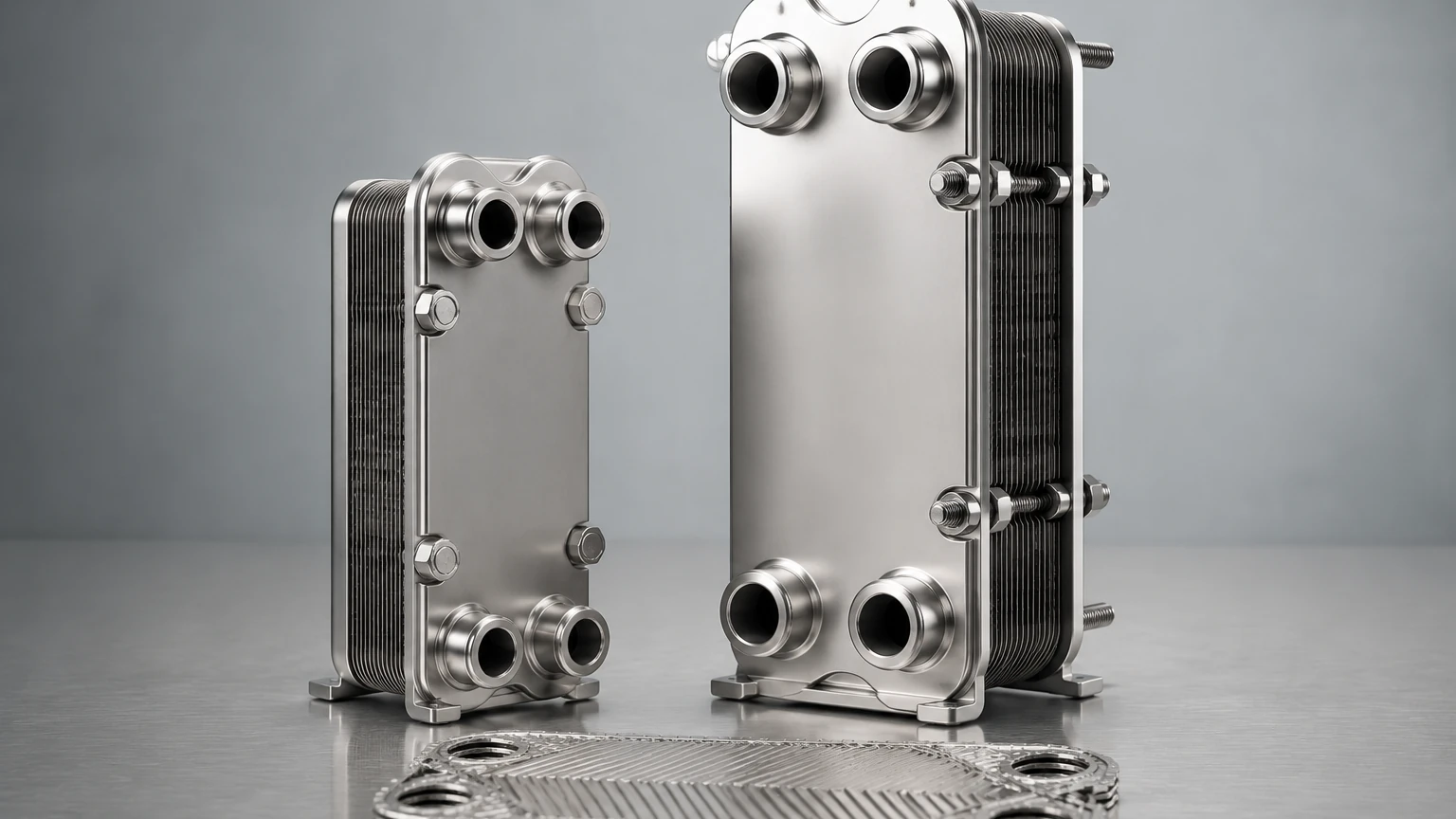
Operational Risks: Fouling, Corrosion, and Maintenance
Despite their efficiency, stainless steel plate heat exchangers are not "set and forget" systems. They require a proactive maintenance strategy to mitigate common industrial risks.
Fouling Types
* Scaling: The precipitation of minerals (like calcium carbonate) from the fluid onto the plates, common in hard water applications.
* Particulate Fouling: The accumulation of silt, sand, or rust particles. This is best managed through the filtration solutions mentioned previously.
* Biological Fouling: The growth of algae or bacteria, which can create a biofilm that severely impedes heat transfer.
Corrosion Risks
While stainless steel is resilient, it is not invincible. Pitting corrosion can occur if the fluid's chloride levels exceed the material's threshold. Furthermore, stress corrosion cracking (SCC) can occur at high temperatures in the presence of specific tensile stresses and corrosive ions. Regular inspection of the plates for signs of discoloration or surface pitting is necessary during scheduled shutdowns.
Maintenance Protocols
Most modern units are designed for "Cleaning-in-Place" (CIP). This involves circulating specialized cleaning chemicals through the exchanger to dissolve scale and flush out debris without disassembling the plate pack. However, if fouling is severe, the unit must be opened, and the plates must be manually cleaned with soft brushes and high-pressure water. It is crucial to avoid using steel brushes or scrapers, as these can scratch the stainless steel surface, creating sites for future corrosion.
Customization and Selection Guidelines for Industrial Applications
No two industrial processes are identical, and the selection of a stainless steel plate heat exchanger must be tailored to the specific parameters of the project. Engineers should confirm the following data points before finalizing a purchase:
1. Fluid Properties: Beyond temperature and flow rate, the viscosity, density, and specific heat of both fluids must be known. High-viscosity fluids may require wider plate gaps.
2. Gasket Compatibility: The plates are sealed with gaskets, typically made from NBR (Nitrile), EPDM, or Viton. The choice depends on the operating temperature and the chemical nature of the fluids. For example, EPDM is excellent for steam and water, while Viton is required for oils and certain chemicals.
3. Expansion Capability: One of the unique advantages of frame-mounted plate heat exchangers is their scalability. If the process requirements increase in the future, additional plates can often be added to the existing frame to increase the heat transfer area.
4. Filtration Integration: Always specify the filtration requirement alongside the heat exchanger. A stainless steel plate heat exchanger is only as reliable as the fluid entering it. Ensuring that the supplier can provide or recommend compatible stainless steel filter components is a best practice in industrial procurement.
Total Cost of Ownership and Long-Term Value
While the initial purchase price of a stainless steel plate heat exchanger is a primary consideration, the Total Cost of Ownership (TCO) provides a more accurate picture of value. TCO includes the initial capital expenditure, installation costs, energy consumption (related to pressure drop), and maintenance expenses (including replacement gaskets and cleaning labor).
A high-quality unit made from 316L stainless steel, protected by a precision-engineered filtration system, will consistently outperform a lower-grade alternative. The reduction in energy costs due to high thermal efficiency often allows these units to pay for themselves within the first year of operation. Furthermore, by investing in durable filtration components from a trusted manufacturer, the frequency of expensive manual cleanings and the risk of unexpected downtime are drastically reduced.
In conclusion, the stainless steel plate heat exchanger is a sophisticated piece of engineering that offers unparalleled efficiency for modern industrial processes. By focusing on correct material selection, understanding the balance between heat transfer and pressure drop, and prioritizing the protection of the unit through high-performance filtration, engineers can ensure long-term reliability. For those seeking to optimize their filtration and thermal management systems, reviewing the technical capabilities and product options on the Main Page is a vital step toward achieving operational excellence.
