


Vertical Coalescer Separators
In industrial process engineering, the efficient separation of immiscible liquids or the removal of liquid aerosols from gas streams is a critical requirement for protecting downstream equipment, ensuring product purity, and meeting environmental regulations. Vertical coalescer separators represent a specialized class of pressure vessels designed to perform these separations by utilizing the principles of mechanical coalescence and gravity. Unlike horizontal configurations, vertical units are often selected for their compact footprint and specific performance characteristics in handling liquid-liquid or gas-liquid phases where space is a primary constraint.
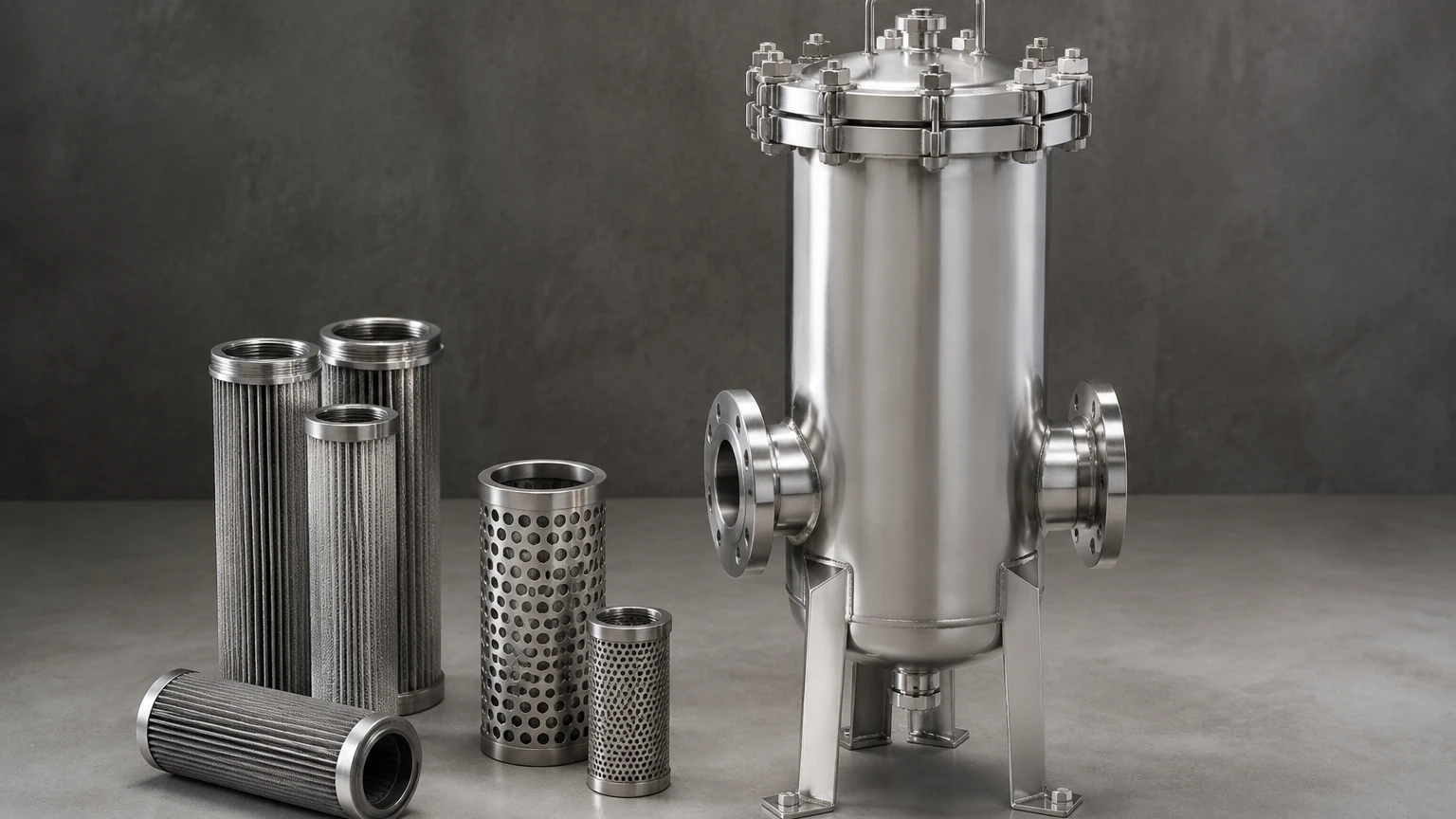
For engineers and procurement teams, selecting the right vertical coalescer separator involves a deep understanding of fluid dynamics, material science, and the specific requirements of the application. The performance of these systems is heavily dependent on the internal components, such as stainless steel filter cartridges and wire mesh media, which facilitate the merging of fine droplets into larger ones that can be easily separated by gravity.
Understanding the Mechanism of Vertical Coalescer Separators
The primary function of vertical coalescer separators is to accelerate the separation of two phases that would otherwise take an impractical amount of time to separate through simple residence in a settling tank. The process typically occurs in two or three stages.
The Coalescence Stage
In the first stage, the contaminated fluid passes through a coalescing medium. This medium is often composed of specialized layers of wire mesh or pleated stainless steel cartridges. As the fluid flows through the tortuous path of the media, small droplets (the dispersed phase) are intercepted by the fibers or wires. Due to the surface tension and the affinity of the liquid for the media material, these micro-droplets adhere to the surface and merge with other droplets. This process continues until the droplets grow large enough that the drag force of the fluid stream pushes them off the media.
The Separation Stage
Once the droplets have reached a sufficient size, they enter the separation stage. In vertical coalescer separators, gravity plays the lead role. If the dispersed phase is heavier than the continuous phase (e.g., water in oil), the enlarged droplets sink to the bottom of the vessel into a collection sump. If the dispersed phase is lighter (e.g., oil in water), the droplets rise to the top. The vertical orientation of the vessel provides a clear path for this vertical migration, reducing the risk of re-entrainment compared to some horizontal designs.
Engineering Considerations for Vertical Configuration
Choosing a vertical orientation over a horizontal one is rarely a matter of preference; it is dictated by engineering constraints and fluid properties.
1. Footprint and Space Constraints: In offshore platforms, chemical plants, or skid-mounted systems, floor space is expensive. Vertical coalescer separators occupy significantly less horizontal area, making them ideal for integrated modules.
2. Liquid-Liquid Ratios: Vertical units are often preferred when the volume of the dispersed phase is relatively low compared to the continuous phase. The vertical height allows for a clear interface level to be established, which simplifies the integration of level control sensors and discharge valves.
3. Gas-Liquid Separation: When removing liquid mist from a gas stream, the vertical design allows the gas to rise at a controlled velocity while the coalesced liquid drops fall counter-currently or cross-currently into the sump, minimizing the chance of the gas "carrying over" the liquid.
To explore high-performance internal components for these systems, engineers can Review product options and application support to ensure the media matches the specific chemical and thermal demands of the process.
Key Evaluation Criteria for Selection
When specifying vertical coalescer separators, engineers must move beyond nominal flow rates and consider the following technical parameters to ensure long-term reliability.
Interfacial Tension (IFT)
Interfacial tension is perhaps the most critical factor in coalescence. It is a measure of the force keeping the two phases separate. Fluids with high IFT (above 20 dynes/cm) are relatively easy to coalesce. However, when the IFT is low (below 10 dynes/cm), often due to the presence of surfactants or chemicals, the droplets become extremely stable and difficult to merge. In these cases, high-precision stainless steel media with specific surface treatments or ultra-fine wire mesh may be required to break the emulsion.
Fluid Viscosity and Density
According to Stokes' Law, the settling velocity of a droplet is inversely proportional to the viscosity of the continuous phase and directly proportional to the density difference between the two phases. If the continuous phase is highly viscous, the droplets will move slowly, requiring a larger vessel or more efficient coalescing media to achieve the desired separation within the residence time. Vertical coalescer separators must be sized to ensure the upward or downward velocity of the continuous phase does not exceed the settling velocity of the coalesced droplets.
Operating Temperature and Pressure
Industrial filtration often occurs under extreme conditions. The materials used in the separator—particularly the seals and the filter media—must withstand the operating temperature without losing structural integrity. Stainless steel 304 or 316L is the standard for many vertical coalescer separators due to its corrosion resistance and ability to maintain precise filtration ratings under high pressure.
The Role of Custom Stainless Steel Media
The heart of any vertical coalescer separator is the internal media. While some applications use disposable glass fiber elements, many industrial processes require the durability and cleanability of stainless steel. Kaifil specializes in manufacturing these critical components, including wire mesh filters and precision metal filter cartridges that serve as the primary coalescing surface.
Advantages of Stainless Steel Internals:
* Chemical Compatibility: Unlike synthetic fibers, stainless steel is resistant to a wide range of hydrocarbons, solvents, and corrosive chemicals found in the pharmaceutical and chemical sectors.
* Structural Rigidity: In high-pressure hydraulic or process streams, the media must resist pleat bunching or collapse. Custom-engineered stainless steel supports ensure the coalescing surface remains consistent.
* Cleanability: For applications where solids are also present, stainless steel media can often be backwashed or ultrasonically cleaned, extending the service life and reducing the total cost of ownership compared to disposable elements.
Common Risks and Performance Limitations
Even a well-designed vertical coalescer separator can fail if certain environmental factors are ignored. Engineers should be aware of the following risks:
Surfactant "Disarming"
Surfactants (surface-active agents) are chemicals that lower the interfacial tension. In many oil and gas or cleaning applications, surfactants can coat the coalescing media, making it "hydrophilic" or "oleophilic" in a way that prevents droplets from sticking and merging. This is known as disarming. When surfactants are present, the selection of the media material and the pore structure becomes significantly more complex.
Solids Loading
Coalescers are not primary particulate filters. If the process fluid contains a high concentration of solid contaminants, these solids will quickly plug the fine pores of the coalescing media. This leads to an increase in differential pressure and can eventually cause the media to rupture or allow "slugs" of the dispersed phase to pass through. It is a best practice to install a dedicated pre-filtration stage—such as a stainless steel wire mesh filter—upstream of the vertical coalescer separator to remove solids larger than 5-10 microns.
Flow Turndown
Coalescers are designed for specific velocity ranges. If the flow rate drops too low, the energy required to bring droplets into contact with the media may be insufficient. Conversely, if the flow rate is too high, the velocity may strip droplets off the media before they have grown large enough to settle, or it may cause re-entrainment at the interface. Understanding the "turndown ratio" of the separator is essential for processes with variable flow rates.
Maintenance and Performance Monitoring
To maintain the efficiency of vertical coalescer separators, a proactive maintenance schedule based on data is required. The primary indicator of performance is the differential pressure (ΔP) across the coalescing stage.
* Baseline ΔP: Engineers should record the pressure drop when the filters are new and the fluid is at operating temperature.
* Scheduled Inspection: A gradual increase in ΔP usually indicates solids buildup, while a sudden drop in ΔP could indicate media rupture or seal failure.
* Effluent Quality Testing: Periodic sampling of the outlet fluid is necessary to confirm that the parts-per-million (PPM) levels of the dispersed phase remain within the specified limits. If the effluent quality degrades while ΔP remains normal, the media may be disarmed or the flow rate may be exceeding the design velocity.
Conclusion for Purchasing and Engineering Teams
Vertical coalescer separators are essential for achieving high-purity separation in space-constrained industrial environments. However, the vessel is only as effective as the technology inside it. When evaluating suppliers, it is vital to confirm the quality of the filtration media, the precision of the manufacturing process, and the ability to customize components to meet specific chemical and thermal requirements.
By focusing on the engineering fundamentals of interfacial tension, fluid velocity, and material compatibility, technical professionals can select a separation solution that offers both high efficiency and a low total cost of ownership. For those seeking reliable, custom-manufactured filtration components, visiting the Main Page provides access to technical expertise and a wide range of stainless steel filtration solutions tailored for demanding industrial applications.
