


Filtres Pour Filtration De Poussière
In industrial manufacturing and processing, the management of airborne particulates and solid contaminants is a critical engineering challenge. The implementation of high-performance filtres pour filtration de poussière (dust filtration filters) is essential not only for maintaining air quality and environmental compliance but also for protecting sensitive downstream equipment from abrasion and clogging. While many industries traditionally relied on disposable fabric or paper media, the shift toward stainless steel and metal alloy filtration components has accelerated due to the demanding nature of modern industrial environments.
Industrial dust filtration involves the separation of solid particles from gas or air streams. This process requires a deep understanding of particle size distribution, flow rates, and the chemical nature of the dust being filtered. For engineers and procurement specialists, selecting the right filtration medium is a balance between filtration efficiency, structural integrity, and long-term operational costs. As a specialized manufacturer, Kaifil provides customized stainless steel solutions designed to meet these rigorous technical requirements.
The Role of Stainless Steel in Dust Filtration
When evaluating options for filtres pour filtration de poussière, the material of construction is the most significant factor influencing performance. Stainless steel, particularly grades 304, 316, and 316L, offers distinct advantages over synthetic materials. In applications involving high temperatures, corrosive gases, or abrasive particles, synthetic fibers often fail prematurely, leading to bypass or frequent system downtime.
Stainless steel wire mesh and sintered metal filters provide a rigid structure that maintains its pore geometry even under high differential pressure. This stability ensures consistent filtration accuracy over the entire life cycle of the filter. Furthermore, metal filters are inherently fire-resistant, a crucial safety feature in industries where combustible dust is a concern. By utilizing metal media, facilities can operate at higher temperatures—often exceeding 300°C—which is far beyond the thermal limits of standard polyester or aramid bags.
Technical Configurations of Metal Dust Filters
There are several ways to configure metal media to optimize dust collection. The choice depends on the specific characteristics of the dust and the operational parameters of the filtration system.
Woven Wire Mesh Filters
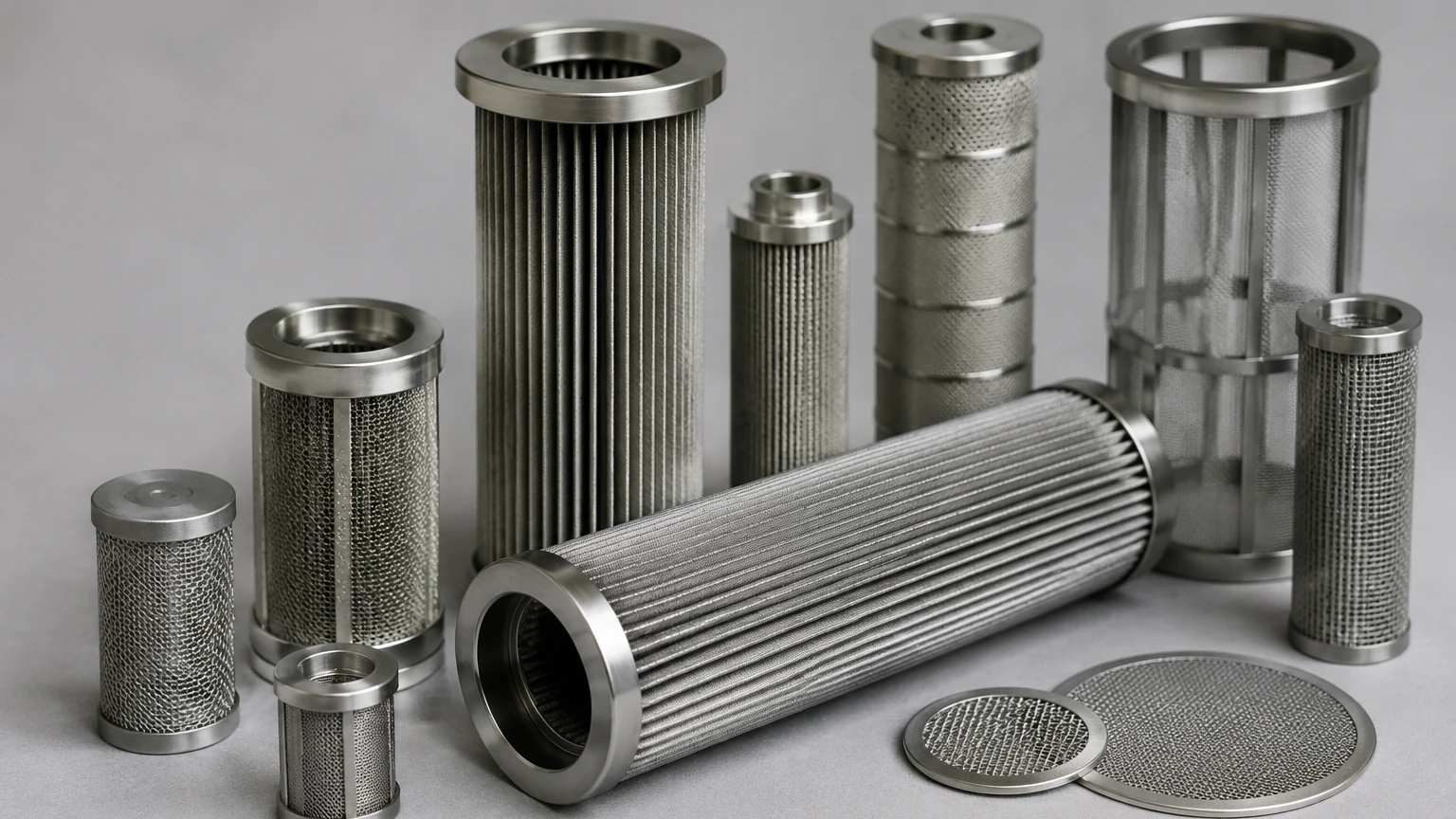
Precision woven wire mesh is a primary choice for surface filtration. It consists of metallic wires woven into specific patterns, such as plain, twill, or dutch weaves. This structure allows for a high open area, which translates to low initial pressure drop and high flow rates. For dust filtration, woven mesh is often used in multi-layer configurations to provide both a fine filtration layer and a robust support layer.
Sintered Metal Mesh
Sintering is a process where multiple layers of wire mesh are bonded together using heat and pressure without melting the wires. This creates a porous metal plate or cylinder that is incredibly strong. Sintered filtres pour filtration de poussière are ideal for high-pressure applications where the filter must withstand regular mechanical cleaning or back-pulsing. The diffusion-bonded structure ensures that no wire migration occurs, preventing media migration into the clean gas stream.
Perforated Metal Supports
In many dust collection systems, the primary filtration media requires a rigid internal or external skeleton. Perforated metal tubes or sheets provide the necessary mechanical support to prevent the collapse of the filter element under heavy dust loading. These components are often integrated into custom OEM designs to ensure the filter fits perfectly within existing housing units.
Engineering Considerations for Selection
Selecting an industrial filter is not a one-size-fits-all process. Engineers must evaluate several technical variables to ensure the chosen filtres pour filtration de poussière will perform as expected in the field.
1. Micron Rating and Efficiency: It is vital to distinguish between nominal and absolute micron ratings. For critical dust filtration, an absolute rating ensures that 99.9% of particles above a certain size are captured. Understanding the particle size distribution (PSD) of the dust is the first step in determining the required mesh density.
2. Pressure Drop (Delta P): Every filter introduces resistance to the flow. A high initial pressure drop consumes more energy and reduces the efficiency of the blowers or compressors. Stainless steel mesh filters are engineered to provide maximum surface area to minimize this resistance.
3. Face Velocity: This refers to the speed at which the gas passes through the filter media. If the velocity is too high, particles may be forced through the pores or become deeply embedded, making cleaning difficult. Proper sizing of the filter element is essential to maintain an optimal face velocity.
4. Chemical Compatibility: In chemical processing or flue gas filtration, the presence of acidic or alkaline vapors can corrode standard materials. Using 316L stainless steel or specialized alloys ensures the filter remains structurally sound in chemically aggressive environments.
Applications Across Key Industries
The versatility of stainless steel filtres pour filtration de poussière makes them suitable for a wide range of industrial sectors where purity and durability are paramount.
Chemical and Petrochemical Processing
In these environments, filters are often exposed to high temperatures and volatile organic compounds. Metal filters are used to recover valuable catalysts from gas streams or to remove particulate matter before gas is vented or recycled into the process. The ability to withstand chemical cleaning solvents is a major advantage here.
Food and Beverage Production
Dust filtration in the food industry, such as in flour mills or powdered milk production, requires materials that are food-grade and easy to sanitize. Stainless steel is the industry standard for hygiene. Unlike fabric filters, metal mesh does not shed fibers and can be sterilized using steam or high-pressure hot water.
Pharmaceutical Manufacturing
Precision is non-negotiable in pharmaceutical processing. Filters used in tablet coating or bulk powder handling must provide absolute retention of active pharmaceutical ingredients (APIs). Custom-engineered stainless steel cartridges ensure that no cross-contamination occurs and that the highest levels of air purity are maintained.
Hydraulic and Industrial Equipment
While often associated with fluid filtration, many hydraulic systems require air breathers to prevent atmospheric dust from entering the reservoir. Metal mesh breathers provide a rugged solution that protects the hydraulic fluid from contamination in dusty factory environments.
Customization and OEM Solutions
Every industrial facility has unique spatial and operational constraints. Off-the-shelf filtration products often fail to meet the specific needs of specialized machinery. This is where the value of a professional manufacturer like Kaifil becomes apparent. Customization options for filtres pour filtration de poussière include:
* Custom Dimensions: Tailoring the length, diameter, and end-cap configurations to fit existing filter housings without the need for expensive system modifications.
* Layer Optimization: Combining different mesh counts to create a graduated filtration effect, which increases the dirt-holding capacity and extends the time between cleaning cycles.
* Specialized End Fittings: Incorporating threaded, flanged, or bayonet-style fittings to ensure a leak-proof seal within the system.
By working closely with an OEM partner, engineering teams can develop filtration components that are optimized for their specific flow rates and particulate types, rather than settling for a generic solution. For more information on technical specifications and custom designs, you can visit the Main Page to review product options and application support.
Maintenance and Total Cost of Ownership (TCO)
One of the most compelling arguments for switching to stainless steel filtres pour filtration de poussière is the reduction in the total cost of ownership. While the initial purchase price of a metal filter is higher than that of a disposable synthetic filter, the long-term savings are significant.
Cleanability and Reuse
Unlike disposable media that must be discarded once clogged, stainless steel filters can be cleaned and returned to service multiple times. Cleaning methods include ultrasonic cleaning, back-flushing with high-pressure air or water, and chemical baths. This eliminates the recurring cost of purchasing replacement filters and reduces the environmental impact associated with waste disposal.
Durability and Reliability
Metal filters are designed to last for years, even in high-vibration or high-pressure environments. This reliability translates to fewer unscheduled shutdowns. In many industrial processes, the cost of an hour of downtime far exceeds the cost of the filtration system itself. Investing in high-quality metal components is a form of insurance against process failure.
Conclusion
The selection of filtres pour filtration de poussière is a critical decision that impacts the efficiency, safety, and profitability of industrial operations. Stainless steel filtration solutions offer the mechanical strength, thermal resistance, and cleanability required for the most demanding applications. By focusing on technical parameters such as micron rating, material compatibility, and structural design, engineers can implement filtration systems that provide consistent performance over a long service life.
Kaifil continues to support global industries by manufacturing precision-engineered stainless steel filter cartridges and wire mesh components. Whether for chemical processing, food production, or industrial dust collection, the transition to high-quality metal filtration media represents a strategic investment in operational excellence. For technical guidance on selecting the right filter for your specific application, exploring professional resources and manufacturer specifications is the recommended next step for any procurement or engineering project.
