


Porous Media Filter Elements
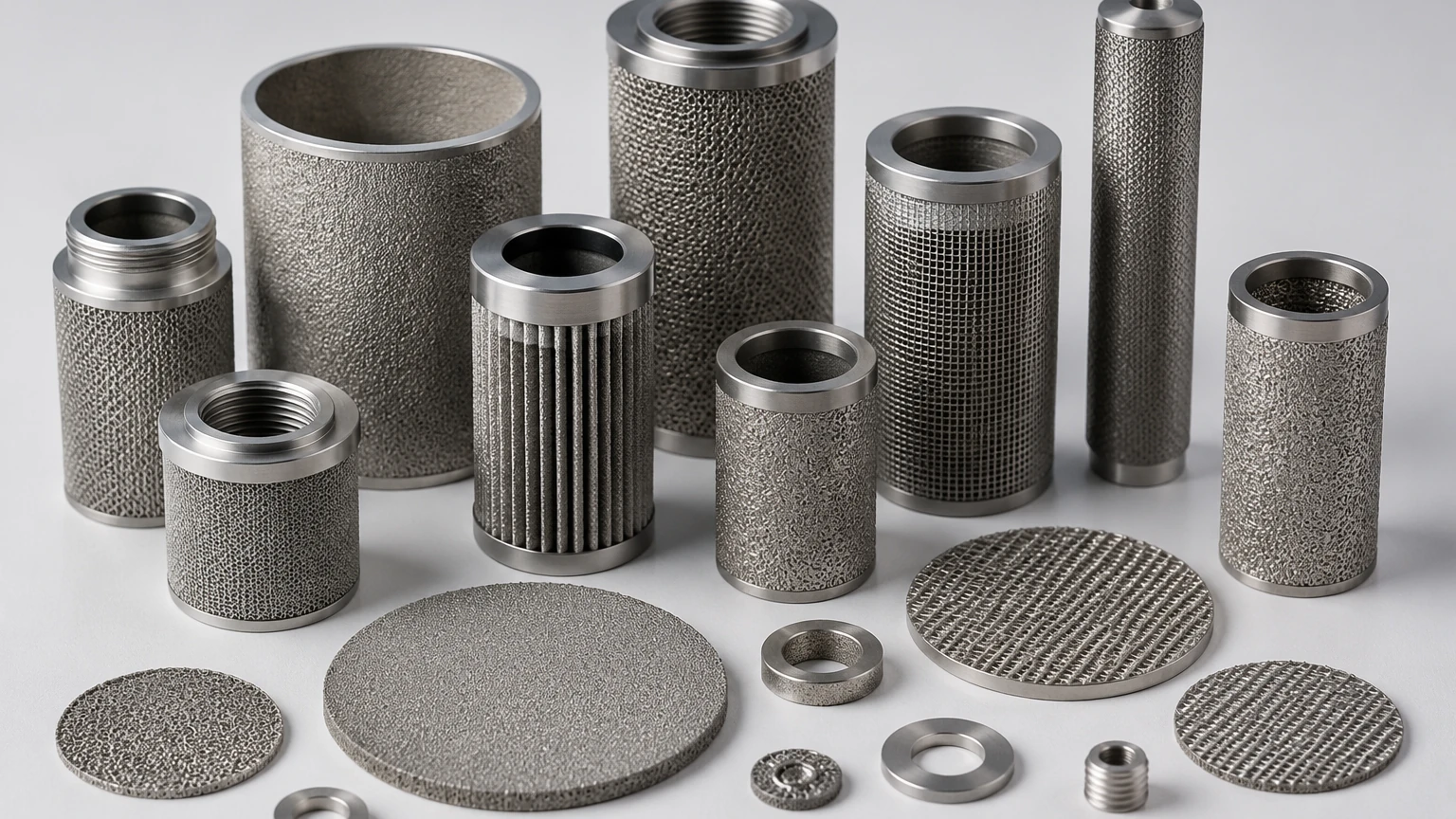
In industrial filtration, the selection of a filter medium is a critical engineering decision that directly impacts process efficiency, equipment longevity, and product purity. Porous media filter elements represent a specialized category of filtration components designed to operate under conditions where conventional polymer or paper-based filters fail. These elements, typically constructed from metallic materials like stainless steel, offer a combination of mechanical strength, thermal stability, and precise pore geometry required for demanding applications in chemical processing, aerospace, pharmaceuticals, and power generation.
Understanding the technical nuances of porous media filter elements is essential for engineers and procurement teams. This guide examines the structural characteristics, material considerations, and performance metrics that define high-quality metallic filtration solutions.
The Fundamentals of Porous Media Filtration
Porous media filter elements are characterized by a rigid, interconnected network of pores that allow the passage of fluids (liquids or gases) while capturing solid contaminants. Unlike flexible membrane filters, these elements are self-supporting structures, often manufactured through sintering—a process where metal particles, fibers, or wire meshes are heated below their melting point to create molecular bonds at contact points.
Depth vs. Surface Filtration
Depending on the specific construction of the porous media, filtration occurs through two primary mechanisms:
1. Surface Filtration: Contaminants are captured on the upstream surface of the filter. This is common in sintered wire mesh elements where the pore size is uniform across the surface. These are generally easier to clean via backpulsing or backwashing.
2. Depth Filtration: Contaminants are trapped within the complex, tortuous path of the media's internal structure. Sintered metal fiber felts and metal powder elements utilize this mechanism, providing high dirt-holding capacity and the ability to capture particles smaller than the average pore size through impingement and diffusion.
Material Selection and Structural Varieties
The performance of porous media filter elements is largely dictated by the raw materials and the manufacturing method used to create the porous structure. While various alloys are available, stainless steel (primarily 316L) remains the industry standard due to its balance of cost, availability, and resistance to corrosion.
Sintered Wire Mesh
Sintered wire mesh is created by layering multiple sheets of woven wire cloth and bonding them together through vacuum sintering. This results in a robust, pleated, or cylindrical element with fixed pore geometry. The multi-layer construction often includes a fine filtration layer protected by coarser drainage and support layers. This structure ensures that the filter does not deform under high differential pressure.
Sintered Metal Fiber (Felt)
Metal fiber media are produced from non-woven stainless steel fibers that are laid down randomly and then sintered. This creates a highly porous structure (up to 80% porosity) that offers significantly lower pressure drops compared to metal powder or wire mesh. The high void volume provides exceptional dirt-holding capacity, making these elements ideal for high-viscosity fluids like polymers or heavy oils.
Sintered Metal Powder
In this process, spherical or irregular metal powders are compacted and sintered into a rigid shape. Metal powder elements are known for their exceptional mechanical strength and ability to be formed into complex geometries. They are frequently used in gas sparging, flame arrestors, and high-pressure liquid filtration where structural integrity is the primary concern.
For engineers evaluating these options, reviewing the technical specifications on the Main Page can provide a baseline for available material grades and standard configurations.
Key Performance Metrics for Engineering Evaluation
When specifying porous media filter elements, engineers must look beyond simple dimensions. The following metrics determine whether a filter will meet the operational requirements of a specific system.
Micron Rating: Absolute vs. Nominal
* Nominal Rating: An arbitrary value indicating the ability of the filter to capture a percentage of particles of a given size (e.g., 90% of 10-micron particles). This is often used for non-rigid media.
* Absolute Rating: The diameter of the largest hard spherical particle that will pass through the filter under specified test conditions. For critical industrial processes, absolute ratings are preferred to ensure consistent downstream purity.
Permeability and Pressure Drop
Permeability refers to the ease with which a fluid passes through the porous medium. A higher permeability results in a lower initial pressure drop (ΔP). Engineers must calculate the clean pressure drop to ensure the system pump can handle the resistance, and establish a terminal pressure drop limit at which the element must be cleaned or replaced.
Porosity and Tortuosity
Porosity is the ratio of the volume of voids to the total volume of the medium. Higher porosity generally leads to better flow rates and higher dirt-holding capacity. Tortuosity describes the complexity of the path a fluid must take through the media. In depth filtration, higher tortuosity increases the likelihood of particle capture but also increases resistance to flow.
Application-Specific Considerations
Porous media filter elements are utilized across diverse sectors, each with unique environmental stressors that influence design.
Chemical and Petrochemical Processing
In these environments, filters are exposed to aggressive solvents, acids, and high temperatures. Sintered 316L or Hastelloy elements are often required to prevent material degradation. The ability of metallic porous media to withstand thermal shock is a significant advantage over ceramic or polymer alternatives in refinery operations.
Food and Beverage Production
Filtration in the food industry requires materials that are biologically inert and easy to sterilize. Stainless steel porous media are compatible with Steam-In-Place (SIP) and Clean-In-Place (CIP) procedures. Common applications include steam filtration for direct injection and the removal of yeast or carbon fines in beverage processing.
Hydraulic and Lubrication Systems
High-pressure hydraulic systems require filter elements that can withstand sudden pressure surges without collapsing. Sintered wire mesh elements provide the necessary structural rigidity to maintain filtration integrity under fluctuating loads, protecting sensitive valves and actuators from wear-inducing particulates.
Customization and OEM Integration
Standard off-the-shelf filters rarely meet the precise needs of specialized industrial machinery. Customization of porous media filter elements involves several engineering variables:
* End Fittings: Custom threads, flanges, or O-ring grooves (such as 222 or 226 configurations) must be integrated to ensure a leak-proof seal within the filter housing.
* Structural Reinforcement: For high-pressure applications, internal perforated cores or external shrouds are added to prevent the media from deforming.
* Pleating: To increase the effective filtration area within a limited footprint, the porous media can be pleated. This reduces the flux (flow per unit area), which in turn lowers the pressure drop and extends the service life.
Working with a manufacturer that understands these variables allows for the development of OEM components that are optimized for the specific fluid dynamics of the host system.
Maintenance, Cleaning, and Total Cost of Ownership
One of the primary justifications for the higher initial investment in porous media filter elements compared to disposable filters is their reusability. In many industrial processes, the total cost of ownership (TCO) is lower for metallic filters due to reduced waste and lower replacement frequency.
Cleaning Methodologies
Metallic elements can be cleaned and returned to service multiple times. Common methods include:
* Ultrasonic Cleaning: Uses high-frequency sound waves in a cleaning solution to dislodge particles from deep within the pores.
* Chemical Cleaning: Involves soaking the elements in acids, alkalis, or solvents to dissolve specific contaminants (e.g., organic polymers or mineral scale).
* Backpulsing/Backwashing: A reverse flow of fluid or gas is used to blow contaminants off the surface of the media during operation.
* Thermal Cleaning (Burn-off): Used for removing organic binders or polymers by heating the element in a controlled atmosphere to carbonize and remove the residue.
Determining Replacement Cycles
While cleanable, porous media filter elements do have a finite lifespan. Repeated cleaning cycles can eventually lead to "media migration" or a permanent increase in the base pressure drop (fouling that cannot be removed). Engineers should monitor the time it takes for an element to reach terminal pressure drop after each cleaning. A significant shortening of this interval indicates that the element has reached the end of its functional life.
Risk Mitigation in Procurement
When sourcing porous media filter elements, there are several risks that purchasing teams must mitigate:
1. Material Integrity: Ensure the manufacturer provides material certifications (MTRs) to verify that the alloy meets the specified grade (e.g., 316L vs. 304).
2. Bypass Risks: Poorly welded seams or low-quality end-cap bonding can allow fluid to bypass the filter media entirely. High-quality elements utilize TIG welding or specialized sintering techniques to ensure a 100% integral structure.
3. Performance Verification: Request bubble point test data or multipass test results to verify that the micron rating is accurate to the application requirements.
By focusing on these technical and structural realities, engineers can ensure they select porous media filter elements that provide reliable, long-term performance in the most challenging industrial environments. For further technical specifications and customized filtration design support, professionals are encouraged to consult the resources available on the Main Page.
