


Hydraulic Vent
In industrial hydraulic systems, the hydraulic vent—often referred to as a reservoir breather—serves as the primary interface between the internal fluid environment and the external atmosphere. While often viewed as a simple accessory, the vent is a critical component for maintaining system integrity, preventing pump cavitation, and ensuring fluid cleanliness. For engineers and procurement teams, selecting the correct hydraulic vent requires an understanding of airflow dynamics, filtration efficiency, and material compatibility to avoid the high costs associated with premature component wear and fluid degradation.
The Functional Role of a Hydraulic Vent in Industrial Systems
A hydraulic reservoir is a dynamic environment. As hydraulic cylinders extend and retract or as thermal expansion occurs, the fluid level within the tank fluctuates. This movement necessitates the intake and expulsion of air. Without a functioning hydraulic vent, a vacuum could form as fluid levels drop, potentially leading to pump cavitation and structural damage to the reservoir. Conversely, as fluid levels rise, air must be expelled to prevent over-pressurization.
However, this air exchange introduces a significant risk: the intake of atmospheric contaminants. Dust, silica, and moisture present in the ambient air can enter the reservoir if the vent is not equipped with high-efficiency filtration media. Industrial statistics indicate that a vast majority of hydraulic system failures are rooted in fluid contamination. Therefore, the hydraulic vent acts as the "lung" of the system, ensuring that the air entering the tank is as clean as the fluid residing within it.
Technical Specifications and Airflow Dynamics
When specifying a hydraulic vent, the most critical technical parameter is the airflow capacity, typically measured in Cubic Feet per Minute (CFM) or Liters per Minute (LPM). The vent must be sized to handle the maximum possible rate of change in fluid volume. A common engineering rule of thumb is that the breather should accommodate an airflow rate at least twice the maximum pump flow rate to ensure that pressure differentials remain within safe limits.
Pressure Drop and Micron Ratings
Every filter medium creates a resistance to flow, known as pressure drop (ΔP). If the filtration media is too restrictive (too low a micron rating for the required flow), it can impede the air exchange process. In B2B industrial applications, the goal is to balance high filtration efficiency with low pressure drop.
* Micron Rating: Standard industrial vents may range from 3 to 40 microns. For high-precision systems with sensitive servo valves, a 3-micron absolute rating is often required.
* Efficiency: It is essential to distinguish between nominal and absolute ratings. For critical hydraulic applications, absolute-rated stainless steel wire mesh or sintered metal media provide consistent performance under varying pressure conditions.
Material Engineering: The Advantage of Stainless Steel
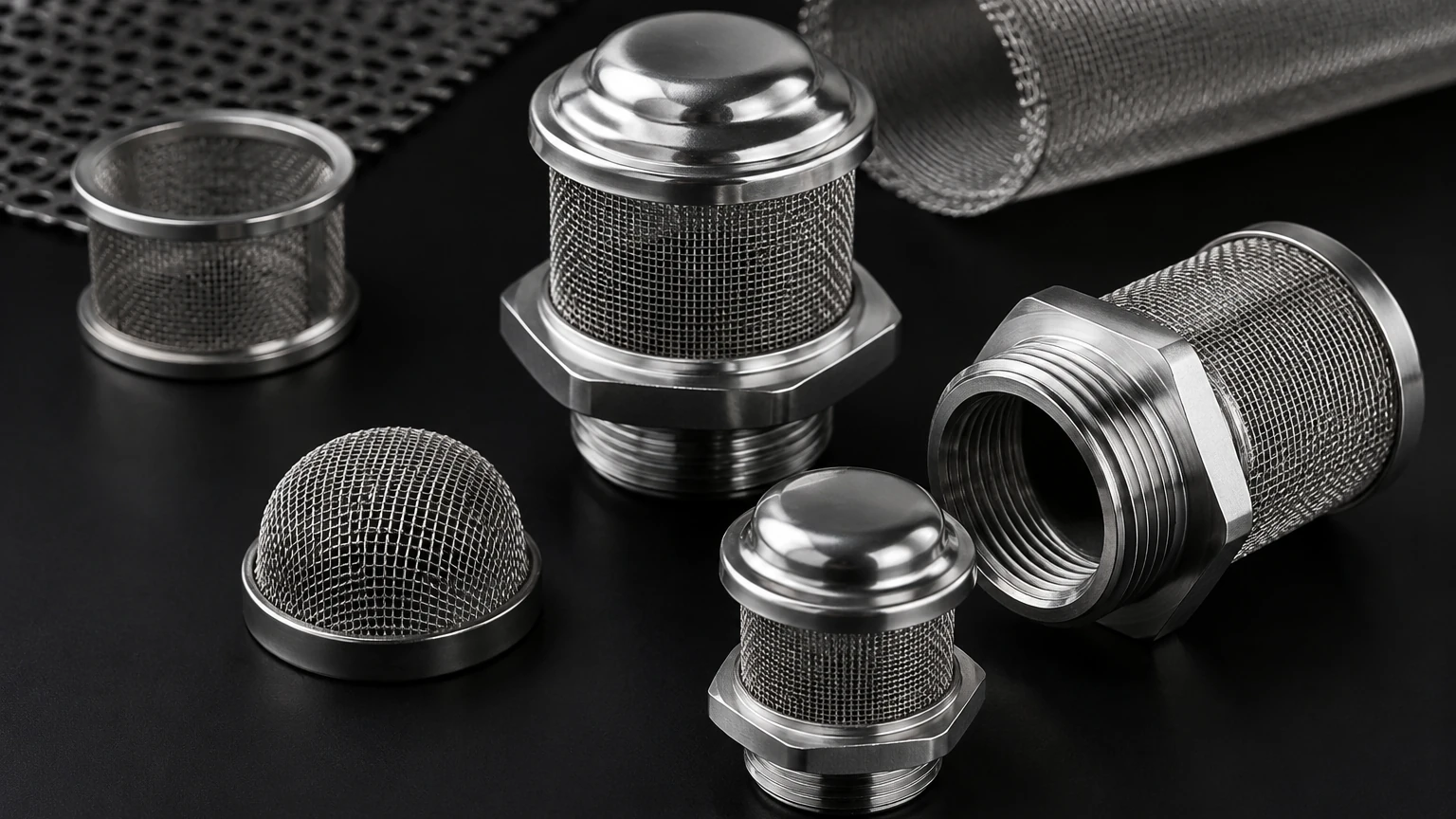
While many standard hydraulic vents utilize cellulose or synthetic fiber media, demanding industrial environments often require the durability of stainless steel. Kaifil specializes in custom stainless steel filtration solutions that address the limitations of traditional materials.
Corrosion Resistance and Chemical Compatibility
In chemical processing, offshore oil and gas, or food and beverage production, hydraulic systems are frequently exposed to corrosive vapors or aggressive cleaning agents. A hydraulic vent constructed with a 304 or 316L stainless steel housing and filter element offers superior resistance to oxidation and chemical breakdown. Unlike plastic or treated paper components, stainless steel does not degrade when exposed to high temperatures or hydraulic fluids containing specialized additives.
Structural Integrity in Harsh Environments
Industrial environments are prone to mechanical impacts, vibrations, and extreme temperature fluctuations. Stainless steel wire mesh filters provide the structural rigidity necessary to maintain their shape and filtration integrity under these conditions. Sintered metal media, in particular, offers excellent resistance to pressure surges, ensuring that the filter element does not collapse or bypass during rapid air intake cycles.
Key Evaluation Criteria for Procurement and Engineering
Selecting a hydraulic vent is not a one-size-fits-all process. Technical professionals should evaluate several factors before finalizing a specification:
1. Environmental Contaminant Load: Is the system located in a cleanroom or a high-dust foundry? High-dust environments require larger surface areas or multi-stage filtration to extend the service life of the vent.
2. Moisture Management: In humid environments, simple particulate filtration may be insufficient. While some vents incorporate desiccant beads to adsorb moisture, others utilize hydrophobic stainless steel mesh to repel water droplets while allowing air to pass.
3. Connection Types: Compatibility with existing reservoir ports is vital. Common options include NPT, BSPP, or flange mounts. Custom adapters may be necessary for retrofitting older equipment with modern high-performance vents.
4. Cleanability vs. Replacement: One of the primary advantages of stainless steel wire mesh vents is their cleanability. In many B2B operations, the ability to ultrasonically clean and reuse a filter element significantly reduces the total cost of ownership compared to disposable cartridges.
Maintenance and Performance Monitoring
A clogged hydraulic vent is a liability. As the filter media traps particulates, the resistance to airflow increases. This can lead to a vacuum in the reservoir, causing the pump to labor and eventually fail. Monitoring the status of the vent is essential for proactive maintenance.
Visual and Differential Pressure Indicators
Many advanced hydraulic vent assemblies include visual indicators that change color or mechanical gauges that track the pressure differential across the media. When the pressure drop reaches a predetermined threshold, it signals that the element requires cleaning or replacement. For automated facilities, electronic sensors can be integrated into the system's PLC to provide real-time alerts.
Replacement Cycles
The replacement cycle for a hydraulic vent depends heavily on the operating environment. In a controlled indoor environment, a vent may last six months to a year. In a mining or construction application, the same vent might require attention every few weeks. Establishing a baseline by inspecting the element during the first few months of operation helps engineers create an optimized maintenance schedule.
Customization and OEM Solutions
For many original equipment manufacturers (OEMs), standard off-the-shelf vents do not meet the specific spatial or performance constraints of a new machine design. Customization allows for the optimization of the filtration surface area, the integration of specific mounting hardware, and the selection of specialized materials for unique fluid types.
Kaifil works closely with global customers to develop customized filtration components that meet these exact requirements. By leveraging advanced manufacturing capabilities, it is possible to produce hydraulic vents that offer precise micron ratings and robust mechanical properties tailored to the application's specific pressure and flow profiles. To explore the full range of custom capabilities and technical support, Review product options and application support.
Total Cost of Ownership (TCO) Considerations
When evaluating the cost of a hydraulic vent, the initial purchase price is only one component. The true value lies in the protection the vent provides to the entire hydraulic circuit. A high-quality stainless steel vent may have a higher upfront cost than a plastic disposable unit, but its longevity, cleanability, and superior protection of expensive hydraulic pumps and valves result in a much lower TCO.
By preventing the ingress of even a small amount of abrasive silica dust, a high-efficiency vent can extend the life of hydraulic oil and reduce the frequency of downstream filter element changes. In large-scale industrial operations, these savings in maintenance labor and fluid replacement costs can be substantial.
Conclusion
The hydraulic vent is a fundamental component of any reliable hydraulic system. By understanding the technical requirements of airflow, filtration efficiency, and material durability, engineers can select a solution that ensures long-term system stability. Whether the application requires a standard threaded breather or a custom-engineered stainless steel filtration component, the focus should always remain on maintaining a clean and pressure-balanced reservoir environment. For more information on precision filtration solutions and custom industrial components, visit the Main Page.
