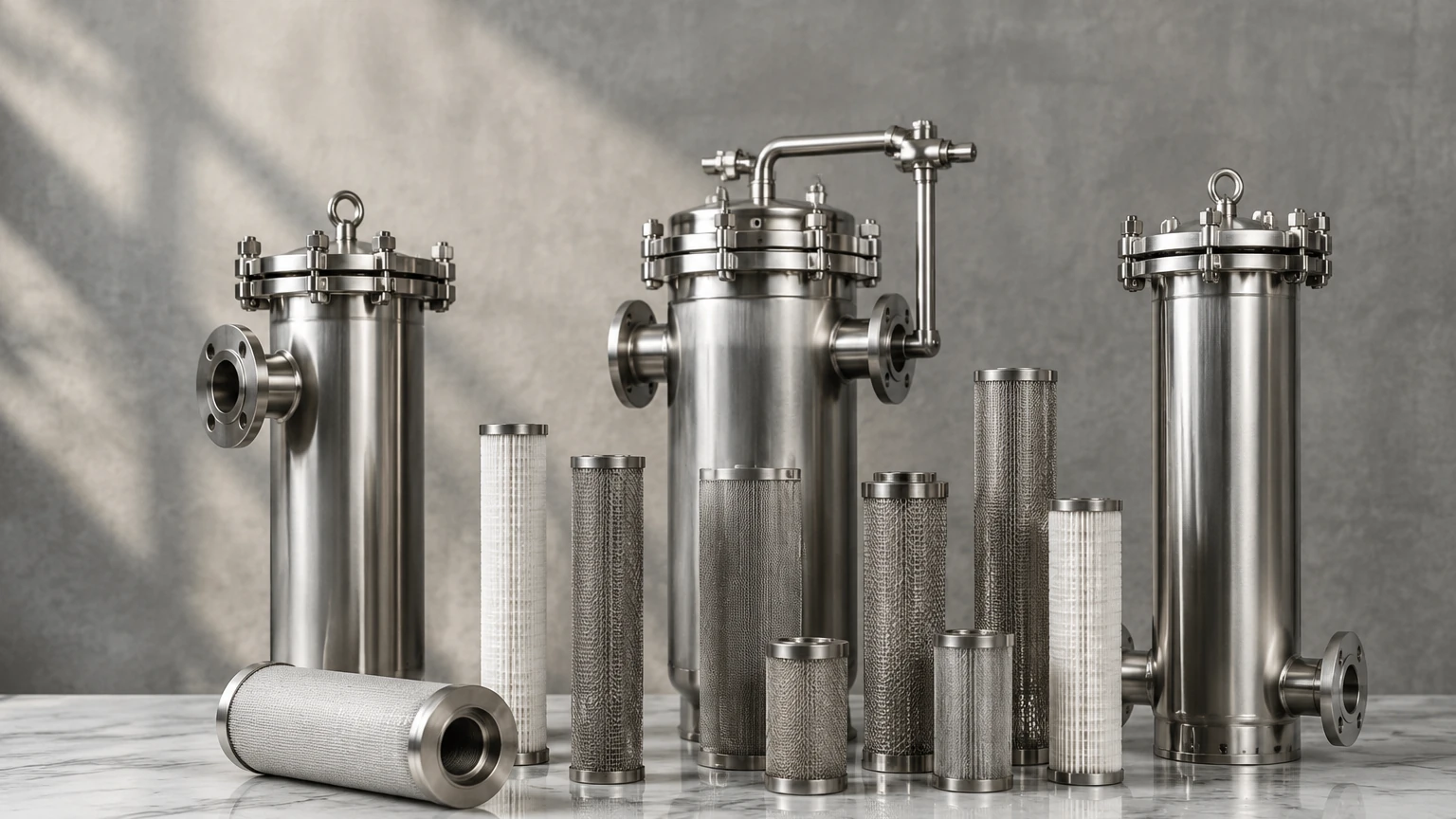
Self Backwashing Filter
In industrial liquid processing, maintaining continuous flow while ensuring the removal of particulate matter is a critical operational requirement. Manual filtration systems, while effective for low-solids applications, often necessitate system shutdowns or bypass configurations during cleaning cycles. A self backwashing filter offers an automated solution to this challenge, utilizing the process fluid itself or an external clean source to clear the filter element without interrupting the main flow. For engineers and facility managers, understanding the mechanical nuances, material constraints, and selection criteria of these systems is essential for optimizing filtration efficiency and reducing the total cost of ownership.
Understanding the Mechanism of a Self Backwashing Filter
The primary function of a self-backwashing system is to maintain a consistent pressure drop across the filtration medium. As solids accumulate on the surface of the filter element—typically a stainless steel wire mesh or wedge wire screen—the flow resistance increases, leading to a rise in differential pressure (ΔP).
Most industrial systems utilize a pressure differential sensor to trigger the cleaning cycle. Once a pre-set threshold is reached (often between 0.5 to 1.0 bar, depending on the application), the internal cleaning mechanism activates. There are two primary methods of backwashing:
1. Internal Backflow: A portion of the filtered liquid is redirected backward through a localized section of the filter element. This high-velocity reverse flow dislodges the "filter cake" and flushes it into a concentrated waste chamber or drain.
2. Mechanical Scraper/Scanner: In some designs, a suction scanner or mechanical scraper moves across the surface of the element. This is often combined with a purge valve that opens to create a pressure drop, drawing the contaminants out of the system.
Because the cleaning cycle only targets a small section of the filter area at any given time, the majority of the screen remains in service, ensuring that the downstream process receives a constant supply of filtered fluid.
Critical Components and Material Selection
The reliability of a self backwashing filter is heavily dependent on the quality of its internal components. Unlike static filters, these systems involve moving parts and high-velocity fluid dynamics during the cleaning phase.
Filtration Media
Stainless steel is the industry standard for self-cleaning applications due to its mechanical strength and resistance to corrosion. Common configurations include:
* Sintered Wire Mesh: Multiple layers of stainless steel mesh are diffusion-bonded to create a robust, high-precision medium. This is ideal for fine filtration where pore stability is paramount.
* Wedge Wire (V-Wire): Constructed from V-shaped profiles welded to support rods, wedge wire is highly resistant to clogging and provides an easy-to-clean surface for backwashing cycles. It is particularly effective for heavy solid loads and high-viscosity fluids.
Housing and Seals
For chemical processing and pharmaceutical applications, 316L stainless steel is preferred for its superior resistance to pitting and crevice corrosion. Seal selection (EPDM, Viton, or PTFE) must be validated against the process fluid's chemical compatibility and operating temperature. In hydraulic systems, the housing must also be rated for the specific pressure spikes inherent to the circuit.
For technical specifications on material grades and mesh configurations, engineers can refer to the Main Page of specialized manufacturers to align component selection with application demands.
Engineering Considerations for Industrial Integration
When specifying a self backwashing filter, several engineering parameters must be evaluated to ensure the system does not become a bottleneck or a source of frequent mechanical failure.
Flow Rate and Flux
The "flux" or flow per unit area is a vital metric. Oversizing a filter can lead to unnecessary capital expenditure, while undersizing leads to frequent backwashing cycles, increased wear on moving parts, and excessive fluid loss. Engineers must calculate the peak flow rate, not just the average, to ensure the system can handle surge conditions.
Particle Size Distribution (PSD)
Selecting the correct micron rating requires an understanding of the particle size distribution in the influent. If the micron rating is too fine, the filter will trigger backwashing cycles too frequently. Conversely, a rating that is too coarse will allow harmful contaminants to pass downstream, potentially damaging sensitive equipment like high-pressure pumps or spray nozzles.
Fluid Viscosity
Viscosity significantly impacts the pressure drop across the filter media. Higher viscosity fluids require larger surface areas and potentially modified backwashing pressures to effectively dislodge contaminants. Temperature fluctuations must also be considered, as they directly influence viscosity and, consequently, filtration performance.
Advantages of Automated Filtration in Continuous Processes
The transition from manual to automated filtration provides several tangible benefits for industrial operations:
* Reduced Labor Costs: Manual cleaning of large industrial filters is labor-intensive and requires specialized training for handling pressurized vessels. Self-cleaning systems eliminate the need for routine manual intervention.
* Consistent Pressure Regulation: By maintaining a stable differential pressure, these filters ensure that downstream equipment operates within its designed parameters, preventing cavitation in pumps and maintaining consistent flow in heat exchangers.
* Minimized Fluid Loss: Modern backwashing designs are engineered to use the minimum amount of fluid necessary to clean the element. This is particularly important when processing expensive chemicals or when wastewater treatment costs are high.
* Safety and Environmental Compliance: In the pharmaceutical and chemical sectors, exposing operators to hazardous fluids during manual filter changes is a significant safety risk. An enclosed, automated system mitigates this exposure and reduces the risk of environmental spills.
Common Operational Risks and Maintenance Strategies
While a self backwashing filter is designed for automation, it is not a "fit and forget" component. Certain risks must be managed through proper design and routine inspection.
Mechanical Fatigue
The internal moving parts, such as the backwash arm or suction scanner, are subject to wear. If the solids are abrasive (e.g., sand or metal shavings), the wear rate increases. Specifying hardened materials or specialized coatings can extend the service life of these components.
Sensor Calibration
The differential pressure (DP) transmitter is the "brain" of the system. If the sensor drifts or becomes clogged, the system may fail to trigger a cleaning cycle, leading to a collapsed filter element, or it may trigger too often, wasting fluid. Regular calibration and the installation of secondary manual gauges are recommended for critical applications.
Bypass Issues
In some installations, a bypass valve is installed to ensure flow if the filter becomes completely blinded. However, if the bypass is not properly monitored, unfiltered fluid can enter the system unnoticed. Integrating the bypass valve into the plant's SCADA (Supervisory Control and Data Acquisition) system is a best practice for maintaining process integrity.
Selection Guide: Confirming Specifications Before Procurement
Before contacting a manufacturer like Kaifil for a customized filtration solution, the purchasing and engineering teams should confirm the following data points:
1. Fluid Characteristics: Name of fluid, concentration, pH value, and viscosity at operating temperature.
2. Contaminant Profile: Type of solids (organic vs. inorganic), particle size range, and total suspended solids (TSS) concentration.
3. Operating Parameters: Minimum and maximum flow rates, operating pressure, design pressure, and temperature range.
4. Filtration Goal: Required micron rating and the allowable maximum pressure drop (ΔP).
5. Interface Requirements: Flange standards (ANSI, DIN, JIS), power supply for the controller, and communication protocols (e.g., 4-20mA, Modbus).
By providing detailed application data, engineers can work with manufacturers to develop a self backwashing filter that is tailored to the specific rigors of their environment. Customization options often include specialized mesh weaves for better cake release or reinforced housings for high-pressure hydraulic applications.
Conclusion
The implementation of a self backwashing filter is a strategic investment in process stability and operational efficiency. By automating the removal of contaminants, industrial facilities can achieve longer run times, protect downstream assets, and reduce the environmental footprint associated with filter media disposal. Whether the application involves cooling water, fuel oil, or chemical intermediates, the successful deployment of these systems hinges on rigorous material selection and a thorough understanding of the fluid dynamics at play. For those seeking to optimize their filtration circuits, reviewing technical capabilities and OEM options on the Main Page of a dedicated manufacturer is the first step toward a more reliable industrial process.