


Sintered Filter Element
In the landscape of industrial filtration, the sintered filter element represents a pinnacle of engineering durability and precision. Unlike traditional disposable filters made from polymers or paper, these metallic components are designed to withstand extreme temperatures, high pressures, and corrosive environments. For engineers and procurement professionals, understanding the technical nuances of sintering technology is essential for optimizing process efficiency and reducing the total cost of ownership in demanding applications.
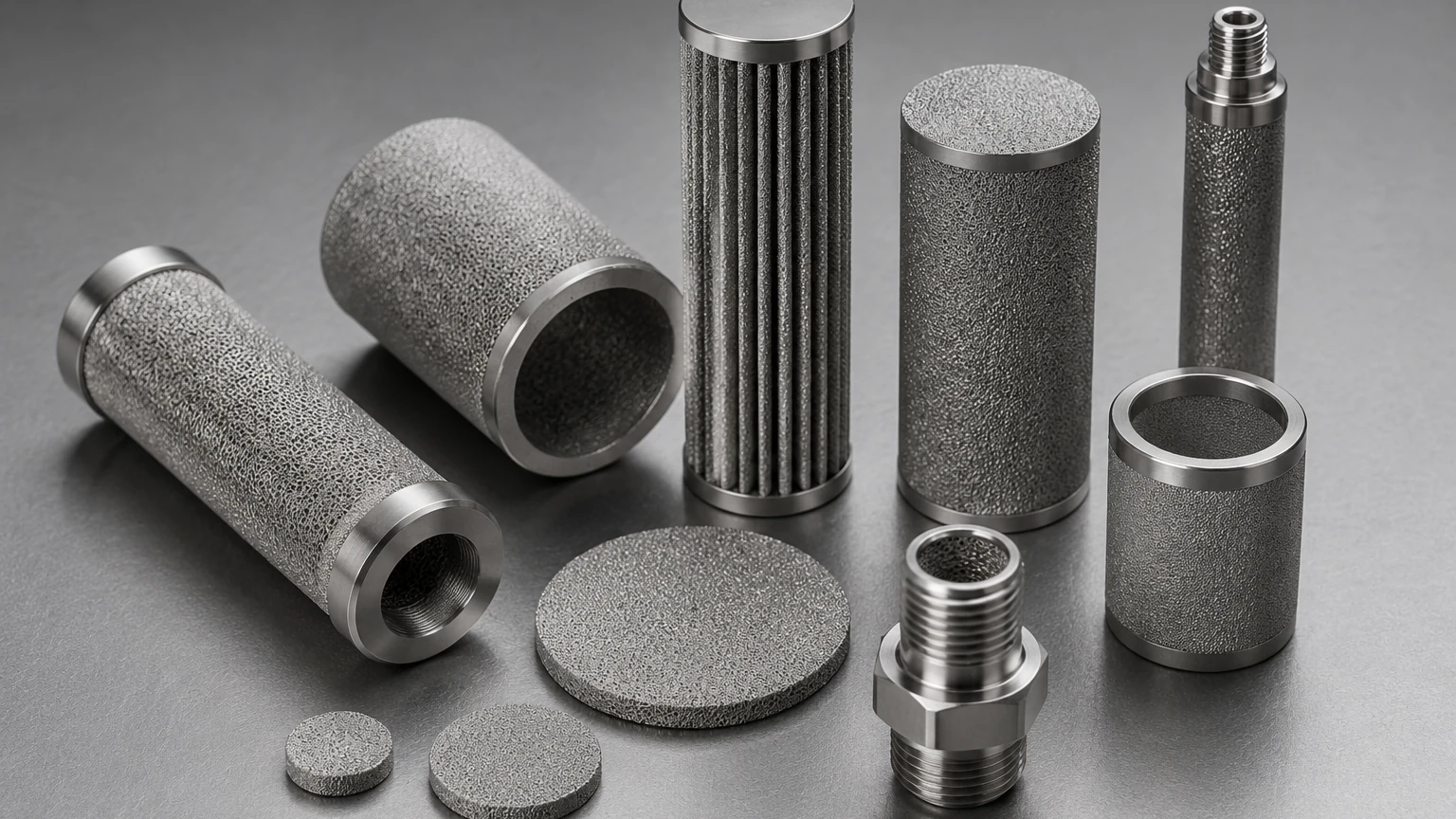
At its core, a sintered filter element is produced through a thermal process known as sintering. This involves subjecting metal materials—typically stainless steel wire mesh, metal fibers, or metal powders—to high temperatures below their melting point in a controlled atmosphere. This process causes the contact points of the material to bond molecularly, creating a rigid, porous structure that maintains its shape and pore size even under significant mechanical stress. For those seeking comprehensive details on high-performance filtration components, the Main Page of specialized manufacturers like Kaifil provides a foundation for exploring these technical solutions.
Understanding the Sintering Process in Filtration Engineering
The sintering process is what differentiates a standard wire mesh from a high-performance sintered filter element. In standard woven wire mesh, the individual wires can shift or migrate when subjected to high-pressure flow or backpulsing. Sintering eliminates this risk by fusing the wires at every intersection. This creates a stable pore geometry that ensures consistent filtration accuracy throughout the life of the element.
From an engineering perspective, the sintering process allows for the creation of multi-layer structures. A typical sintered wire mesh element might consist of five layers: a fine filtration layer, a protective layer, and three support layers of coarser mesh. This composite structure provides the ideal balance between fine filtration (down to 1 micron) and the structural integrity required to handle differential pressures that would collapse a single-layer mesh. The diffusion bonding achieved during sintering ensures that these layers act as a single, monolithic unit, preventing delamination and media migration.
Classification of Sintered Filter Media
When selecting a sintered filter element, engineers must choose between three primary types of media, each offering distinct advantages based on the filtration mechanism required: surface filtration or depth filtration.
Sintered Wire Mesh
This is perhaps the most common type used in industrial settings. It is constructed from multiple layers of woven stainless steel wire cloth. It is primarily a surface filtration medium, meaning particles are trapped on the upstream side of the mesh. Its main advantages include high mechanical strength, ease of cleaning (backwashing), and precise pore size distribution. It is widely used in hydraulic systems, polymer melt filtration, and water treatment.
Sintered Metal Fiber Felt
Unlike the structured weave of wire mesh, metal fiber felt consists of non-woven stainless steel fibers that are randomly laid and then sintered. This creates a high-porosity depth filtration medium. Because of its three-dimensional structure, it offers a significantly higher dirt-holding capacity and lower pressure drop compared to wire mesh. It is the preferred choice for applications involving high-viscosity fluids or where long intervals between cleaning cycles are required.
Sintered Metal Powder
This media is formed by sintering spherical or irregular metal powders. It results in a very dense, rigid structure with extremely fine pores. Sintered powder elements are ideal for gas filtration, sparging, and applications requiring very high precision in the sub-micron range. While they offer exceptional filtration accuracy, they typically have a higher pressure drop than fiber felt or wire mesh due to their lower porosity.
Technical Specifications and Performance Evaluation
Evaluating a sintered filter element requires a deep dive into technical specifications that go beyond simple micron ratings. Engineers must consider the following parameters to ensure the component meets the application's demands:
1. Filtration Accuracy (Micron Rating): It is critical to distinguish between nominal and absolute ratings. An absolute rating indicates the largest particle that can pass through the filter under specific test conditions, whereas a nominal rating is an average. Sintered elements are prized for their ability to provide true absolute filtration.
2. Permeability and Pressure Drop: The permeability of the sintered filter element determines the initial pressure drop across the media. High permeability allows for higher flow rates with smaller filter housings, which can reduce capital expenditure. However, there is often a trade-off between permeability and filtration fineness.
3. Mechanical Strength: In high-pressure systems, the filter must resist deformation. Sintered elements are tested for collapse pressure and burst pressure. The multi-layer design of sintered mesh is specifically engineered to provide the necessary support to the fine filtration layer.
4. Bubble Point Pressure: This is a standard quality control test used to verify the integrity of the sintered structure. By submerging the element in a liquid and increasing air pressure until the first bubble appears, manufacturers can calculate the maximum pore size and ensure there are no defects in the sintering or welding.
Material Selection and Chemical Compatibility
The choice of material is fundamental to the longevity of a sintered filter element. Stainless steel is the industry standard due to its versatility and cost-effectiveness.
* 304 Stainless Steel: Suitable for general industrial applications where corrosion risk is low to moderate.
* 316L Stainless Steel: The "L" stands for low carbon, which improves weldability and resistance to intergranular corrosion. 316L contains molybdenum, making it significantly more resistant to chlorides and pitting than 304. This is the standard choice for the pharmaceutical, chemical, and food and beverage industries.
* Specialty Alloys: For extreme environments, sintered elements can be manufactured from Hastelloy, Inconel, or Monel. These alloys are used when dealing with highly acidic or alkaline fluids, or in high-temperature gas filtration (up to 900°C) where stainless steel might oxidize or lose structural integrity.
Industrial Applications and Operating Environments
The robustness of the sintered filter element makes it indispensable across various high-stakes industries:
Chemical and Petrochemical Processing
In these sectors, filters are often exposed to aggressive solvents and high temperatures. Sintered elements are used for catalyst recovery, where the filter must capture expensive catalyst particles from a process stream and then be cleaned via backpulsing to return the catalyst to the reactor.
Pharmaceutical and Biotechnology
Sterility and cleanability are paramount here. Sintered 316L elements are used for steam filtration (SIP – Sterilization in Place) and for venting fermentation tanks. Their smooth surface finish and ability to withstand repeated sterilization cycles without degrading make them ideal for maintaining aseptic conditions.
Food and Beverage Production
From filtering carbon dioxide used in carbonation to removing impurities from culinary steam, sintered filters ensure product purity. They comply with stringent food safety regulations because they do not shed fibers or particles into the product stream, a common risk with polymer-based filters.
Hydraulics and Aerospace
In high-pressure hydraulic systems, even microscopic particles can cause catastrophic component failure. Sintered wire mesh elements provide the high-strength filtration necessary to protect sensitive valves and actuators under fluctuating pressure conditions.
Maintenance, Cleaning, and Life Cycle Management
One of the most significant advantages of a sintered filter element is its reusability. While the initial purchase price is higher than that of a disposable filter, the long-term cost is often much lower because the element can be cleaned and returned to service multiple times.
Cleaning methods depend on the nature of the contaminant:
* Backwashing/Backpulsing: This is the most common in-situ cleaning method, where the flow is reversed to dislodge particles from the surface of the filter.
* Ultrasonic Cleaning: For deep-seated contaminants, the element is placed in an ultrasonic bath. High-frequency sound waves create cavitation bubbles that scrub the internal pores of the sintered structure.
* Chemical Cleaning: Soaking the element in specific solvents, acids, or alkalis can dissolve organic or inorganic deposits that mechanical cleaning cannot reach.
* Burn-off/Pyrolysis: For polymer or organic buildup, the element can be heated in a furnace to carbonize the contaminants, which are then removed via ultrasonic cleaning.
Engineers should establish a pressure-drop threshold for cleaning. Waiting too long to clean an element can lead to "blinding," where the contaminants become so deeply embedded that the element cannot be fully restored to its original permeability.
Customization and Procurement Considerations
Selecting a sintered filter element is rarely an "off-the-shelf" process. Most industrial applications require a degree of customization to fit existing housings or to meet specific flow dynamics. When consulting with a manufacturer like Kaifil, engineers should be prepared to provide data on fluid viscosity, operating temperature, maximum allowable pressure drop, and the specific nature of the solids being removed.
Customization options often include:
* End Fitting Configurations: Threaded (NPT/BSP), flange, or specialized O-ring seals (222/226) to ensure a leak-proof fit.
* Reinforcement: Adding internal cores or external cages for applications with high differential pressures.
* Surface Treatments: Electropolishing to improve corrosion resistance and cleanability in sanitary applications.
By focusing on these technical details, procurement teams can move beyond price-based decisions and select filtration solutions that enhance process stability and reduce downtime. The durability of a properly specified sintered filter element ensures that it remains a reliable component of the industrial process for years, rather than weeks. For further technical guidance and product specifications, visiting the Main Page of an experienced manufacturer is the recommended next step for engineering teams.
