


Catalytic Filter
In modern industrial processing, the demand for higher efficiency and smaller equipment footprints has led to the development of multifunctional components. The catalytic filter represents a significant advancement in this area, combining the physical separation capabilities of a high-efficiency filter with the chemical transformation properties of a catalyst. By integrating these two functions into a single unit, engineers can streamline gas treatment and chemical synthesis processes, reducing energy consumption and capital expenditure.
For technical professionals and procurement teams, understanding the engineering nuances of a catalytic filter is essential for optimizing system performance. This guide explores the structural design, material selection, and operational considerations necessary to implement these components effectively in demanding industrial environments.
The Evolution of Integrated Filtration and Catalysis
Traditionally, industrial gas cleaning and chemical processing occurred in discrete stages. A mechanical filter would first remove particulate matter, followed by a separate reactor vessel where catalytic reactions—such as the reduction of nitrogen oxides (NOx) or the oxidation of volatile organic compounds (VOCs)—would take place. However, this sequential approach often leads to significant pressure drops across multiple units and requires substantial space.
The catalytic filter merges these steps. By utilizing a porous substrate—typically made of sintered metal or ceramic—as a support for catalytic materials, the filter captures dust and aerosols on its surface or within its depth while simultaneously facilitating chemical reactions as the fluid passes through the catalytic active sites. This integration is particularly beneficial in high-temperature applications where maintaining thermal energy is critical for the reaction kinetics.
Structural Components of a Metal-Based Catalytic Filter
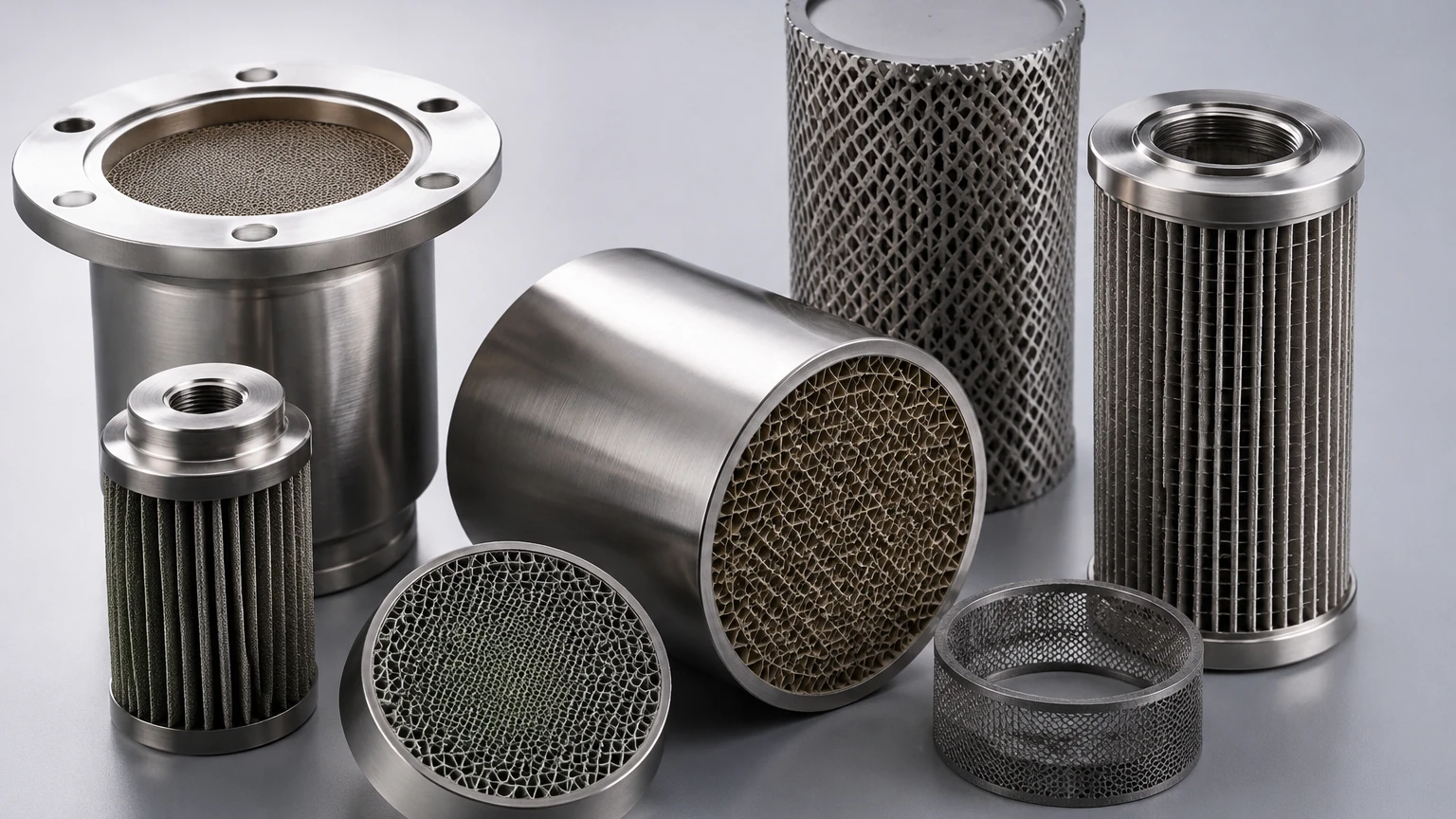
While ceramic catalytic filters are common, metal-based systems, particularly those utilizing stainless steel and specialty alloys, offer superior mechanical robustness and thermal conductivity. A typical metal catalytic filter consists of three primary layers:
1. The Porous Substrate
The substrate provides the mechanical framework. In high-performance industrial applications, sintered wire mesh or sintered metal fiber felt is preferred. These materials offer controlled porosity and high permeability. The substrate must be engineered to withstand the mechanical stresses of high-pressure differentials and the thermal stresses of rapid temperature cycling.
2. The Washcoat
Because the surface area of a bare metal substrate is often insufficient for high-conversion catalytic reactions, a washcoat is applied. This is usually a high-surface-area inorganic oxide, such as alumina (Al2O3), titania (TiO2), or silica (SiO2). The washcoat creates a "micro-porous" environment that increases the available area for catalyst deposition by several orders of magnitude.
3. The Active Catalyst Phase
The final layer consists of the active catalytic species. Depending on the application, this may include noble metals like platinum (Pt) or palladium (Pd), or base metal oxides like vanadium pentoxide (V2O5) or tungsten trioxide (WO3). The distribution of these active sites within the filter structure is critical to ensuring that the reaction occurs uniformly as the fluid flows through the media.
Material Science in High-Temperature Filtration
Material selection is the most critical factor in the longevity of a catalytic filter. Industrial processes often operate at temperatures ranging from 200°C to over 800°C, frequently in the presence of corrosive gases.
* Stainless Steel 316L: Often the standard for moderate temperatures and general corrosion resistance. It is widely used in pharmaceutical and food-grade applications due to its stability.
* Stainless Steel 310S: Selected for high-temperature oxidation resistance. Its high chromium and nickel content allow it to maintain structural integrity at temperatures where 316L would fail.
* Inconel and Hastelloy: These nickel-based superalloys are reserved for the most extreme environments, such as those involving high concentrations of chlorides or sulfur compounds, which can cause stress corrosion cracking in standard stainless steels.
When evaluating these materials, engineers must consider the coefficient of thermal expansion. If the catalytic coating and the metal substrate expand at significantly different rates, the coating may delaminate (spall), leading to a loss of catalytic activity and potential downstream contamination.
Fluid Dynamics and Reaction Kinetics
The performance of a catalytic filter is governed by the interplay between filtration efficiency and chemical reaction rates. This is often analyzed through two primary metrics: pressure drop and residence time.
Pressure Drop Management
As a filter accumulates particulate matter, the pressure drop (ΔP) increases. In a catalytic system, a high ΔP can reduce the flow rate and negatively impact the throughput of the entire plant. Engineers must balance the pore size of the substrate to ensure it is fine enough to protect the catalyst from fouling by large particles, yet open enough to maintain low resistance to flow. Sintered metal media are particularly effective here because their uniform pore structure allows for predictable fluid dynamics.
Residence Time and Space Velocity
For a catalytic reaction to reach completion, the reactant molecules must remain in contact with the catalyst for a specific duration, known as the residence time. In filtration terms, this is related to the "face velocity" of the fluid. If the velocity is too high, the fluid passes through the filter before the reaction can occur. Conversely, if the velocity is too low, the equipment must be oversized to handle the required volume. Designing the optimal thickness of the catalytic layer is a precision engineering task that requires detailed knowledge of the specific reaction kinetics involved.
Industrial Application Scenarios
Catalytic filters are deployed across various sectors where gas purity and emission standards are stringent. For technical teams looking to integrate these solutions, reviewing product options and application support on the Main Page can provide insights into how specific metal filter configurations meet these industrial demands.
Hot Gas Clean-up in Biomass Gasification
In biomass gasification, the syngas produced contains high levels of tars and particulates. A catalytic filter can remove the char and ash while simultaneously cracking the tars into lighter, usable gases. This prevents tar condensation in downstream equipment, which is a major cause of operational failure in gasification plants.
VOC Abatement in Chemical Manufacturing
Chemical plants often emit volatile organic compounds that must be neutralized before atmospheric release. A catalytic filter can capture fine chemical dust while oxidizing VOCs into carbon dioxide and water vapor. This dual action is more space-efficient than using a separate baghouse and thermal oxidizer.
NOx Reduction (SCR) in Power Generation
Selective Catalytic Reduction (SCR) is a standard method for removing nitrogen oxides from flue gas. By using a catalytic filter impregnated with DeNOx catalysts, power plants can achieve particulate and NOx removal in a single high-temperature stage, often located before the air preheater to take advantage of the optimal reaction temperature window.
Maintenance and Longevity: Managing Catalyst Deactivation
The economic viability of a catalytic filter depends on its service life. Unlike standard filters, which are replaced when they can no longer be cleaned, a catalytic filter may need replacement if its chemical activity drops below a certain threshold, even if the physical filtration is still functional.
Catalyst deactivation generally occurs through three mechanisms:
1. Poisoning: Irreversible binding of contaminants (such as arsenic, lead, or sulfur) to the active sites.
2. Sintering: The loss of catalytic surface area due to the migration and agglomeration of catalyst particles at high temperatures.
3. Fouling: The physical masking of the catalyst surface by dust or carbon deposits (coking).
To mitigate these issues, many industrial systems employ backpulsing—a process where a high-pressure pulse of gas is sent in the reverse direction through the filter to dislodge the dust cake. Because metal catalytic filters are mechanically rigid, they respond better to backpulsing than flexible fabric filters, allowing for more consistent catalytic performance over time.
Engineering Checklist for Custom Catalytic Filter Procurement
When sourcing a catalytic filter for a specific industrial application, engineers should confirm several technical parameters with the manufacturer to ensure compatibility and performance.
* Operating Temperature Range: Confirm both the steady-state operating temperature and the maximum excursion temperature the substrate and catalyst can withstand.
* Gas Composition: Provide a detailed breakdown of the gas stream, including trace contaminants that could act as catalyst poisons.
* Filtration Rating: Define the required beta ratio or micron rating for particulate removal. This ensures the substrate provides adequate protection for the internal catalytic surfaces.
* Mechanical Load: In high-flow or high-pressure applications, the filter must be able to withstand the structural load without collapsing or deforming.
* Cleaning Compatibility: Ensure the catalyst and its bond to the substrate can withstand the mechanical shock of backpulse cleaning or the chemical environment of ultrasonic cleaning if required.
Conclusion
The catalytic filter is a sophisticated tool that solves two industrial challenges simultaneously. By selecting the right metal substrate and tailoring the catalytic phase to the specific chemical environment, manufacturers can achieve significant gains in process efficiency and environmental compliance. As industries move toward more compact and energy-efficient designs, the role of integrated metal filtration solutions will continue to expand, providing a robust platform for the next generation of industrial gas and liquid treatment systems.
