


Compressed Air Filter for Breathing
In industrial environments ranging from pharmaceutical manufacturing to abrasive blasting and tank cleaning, the provision of safe, breathable air is a critical engineering requirement. Standard industrial compressed air is not suitable for human consumption; it typically contains high concentrations of water vapor, oil aerosols, carbon monoxide, and particulate matter. To bridge the gap between industrial-grade air and breathable air, a specialized compressed air filter for breathing must be integrated into the delivery system. This article examines the technical specifications, engineering considerations, and material requirements necessary to ensure system reliability and compliance with international safety standards.
Understanding Breathing Air Quality Standards
Before selecting a compressed air filter for breathing, engineers must understand the regulatory landscape that defines "breathable" air. In the United States, the Occupational Safety and Health Administration (OSHA) and the Compressed Gas Association (CGA) define Grade D breathing air as the minimum standard for respiratory protection. Internationally, EN 12021 is the prevailing standard in Europe.
Grade D breathing air specifications include:
- Oxygen Content: 19.5% to 23.5%
- Hydrocarbons (Condensed Oil): ≤ 5 mg/m³
- Carbon Monoxide (CO): ≤ 10 ppm
- Carbon Dioxide (CO2): ≤ 1,000 ppm
- Odor: Lack of noticeable contaminants
Achieving these levels requires more than a single filter element. It necessitates a multi-stage purification process designed to remove contaminants in a specific sequence to prevent the premature saturation of high-sensitivity media. For engineers designing these systems, the filtration housing and the internal mesh supports must withstand high pressures while maintaining a sterile, corrosion-resistant environment.
Multi-Stage Filtration Architecture
A robust compressed air filter for breathing system is typically composed of four to five distinct stages. Each stage targets a specific class of contaminant to ensure the final output meets safety thresholds.
1. Bulk Water and Particulate Removal
The first stage involves a centrifugal separator or a high-capacity particulate filter. This stage removes liquid water and large scale (typically 5 to 25 microns). Using stainless steel wire mesh in this stage provides a durable, washable solution that protects downstream fine filters from heavy loading.
2. High-Efficiency Coalescing
Coalescing filters are designed to remove oil aerosols and sub-micron particles. These filters force air through a dense mat of fibers where oil droplets collide and merge into larger drops, which then drain away. For breathing applications, a secondary ultra-fine coalescer is often used to bring oil carryover down to less than 0.01 mg/m³.
3. Adsorption of Vapors and Odors
Even after oil aerosols are removed, oil vapors and gaseous hydrocarbons remain. An activated carbon stage is essential in any compressed air filter for breathing to eliminate odors and tastes that could cause nausea or respiratory distress in the user. This stage relies on a large surface area for molecular adhesion.
4. Catalyst Stages (CO Removal)
If the compressor is at risk of producing carbon monoxide (common in reciprocating compressors or due to poor intake location), a catalytic converter stage is required. This stage uses a catalyst, such as Hopcalite, to convert CO into CO2. This process is highly sensitive to moisture, requiring the air to be extremely dry before reaching the catalyst.
Engineering Considerations for Filter Selection
When specifying a compressed air filter for breathing, engineers must look beyond the micron rating. Several technical factors influence the long-term performance and safety of the system.
Flow Rate and Pressure Drop
Every filtration stage introduces a pressure drop (ΔP). For breathing air systems, maintaining a consistent flow to the respirator or hood is vital. Engineers should select filters with a low initial saturated pressure drop to minimize energy consumption and ensure that the end-user receives the required volume of air even as the filter elements begin to load with contaminants. For more information on high-performance filtration components, you can visit our Main Page.
Material Compatibility and Durability
In many industrial settings where breathing air is required, such as offshore oil rigs or chemical plants, the environment is corrosive. Standard aluminum filter housings may succumb to salt spray or chemical fumes over time. Stainless steel (304 or 316L) is the preferred material for both the filter housing and the internal support structures. Stainless steel does not outgas, is resistant to oxidation, and provides the structural integrity needed for high-pressure breathing air cylinders, which often operate at 200 to 300 bar.
Temperature Management
The adsorption efficiency of activated carbon and the performance of coalescing media are temperature-dependent. If the compressed air is too hot, oil vapors will remain in a gaseous state and bypass the coalescing stage, quickly saturating the carbon bed. Engineering the system with adequate aftercooling is essential for the compressed air filter for breathing to function as intended.
The Role of Stainless Steel in High-Purity Filtration
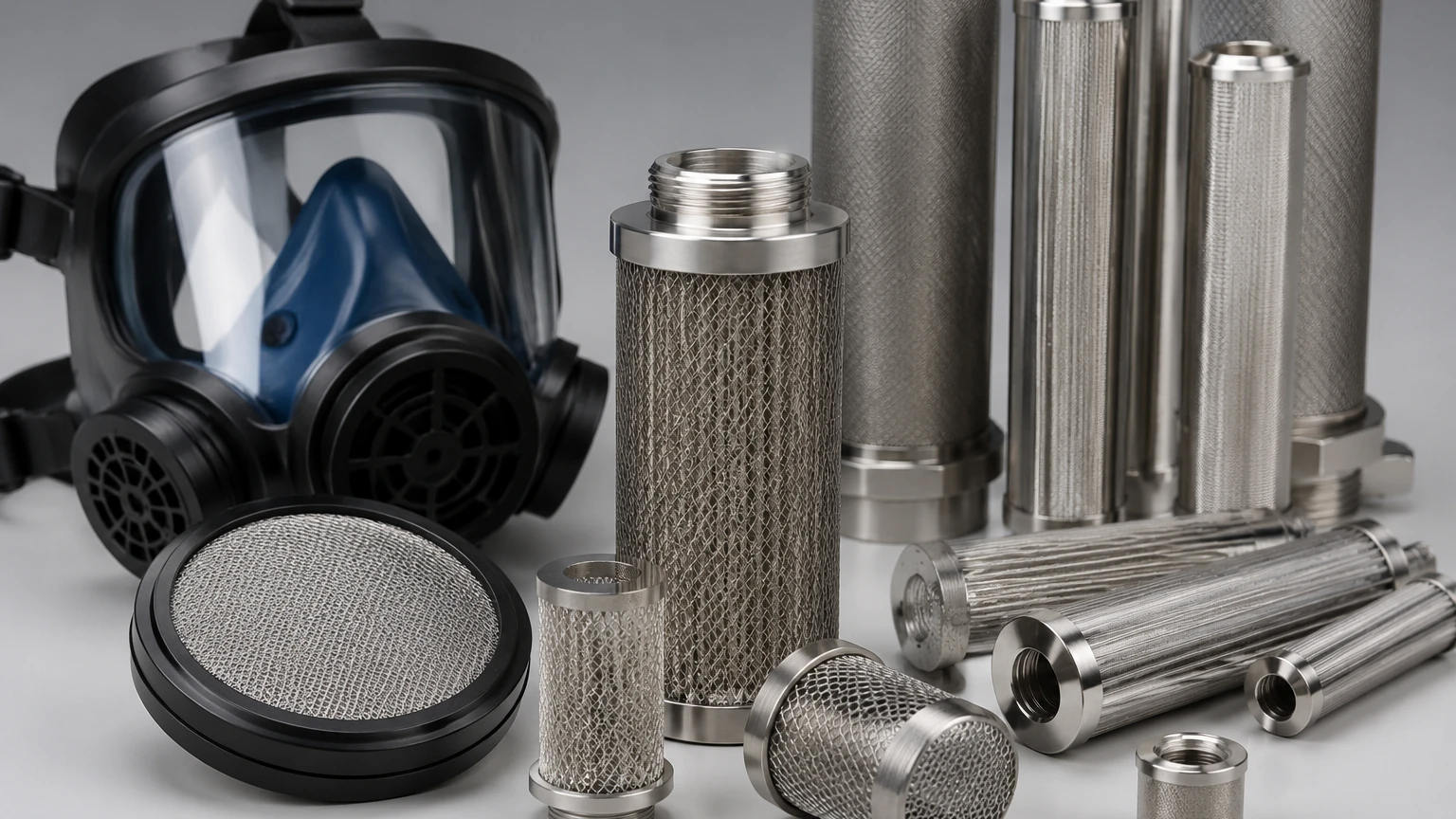
As a manufacturer specializing in custom stainless steel filtration solutions, Kaifil recognizes that the internal components of a breathing air system are just as important as the media itself. Precision metal filter components provide several advantages in breathing air applications:
1. Structural Support: Fine fiber media used in coalescing filters require rigid support to prevent collapsing under pressure surges. Stainless steel wire mesh provides this support without shedding fibers into the air stream.
2. Cleanability: Pre-filters made from stainless steel can be cleaned and reused, reducing the total cost of ownership for the filtration system.
3. Chemical Inertness: Unlike some plastics or low-grade alloys, stainless steel does not react with the trace gases or moisture found in compressed air, ensuring the purity of the air remains uncompromised.
4. Customization: Industrial systems often have unique spatial constraints. Custom-designed stainless steel cartridges can be engineered to fit specific OEM housings while meeting stringent filtration accuracy requirements.
Maintenance and Replacement Cycles
The reliability of a compressed air filter for breathing is entirely dependent on its maintenance schedule. Unlike standard industrial filters where a filter might be used until it reaches a specific pressure drop, breathing air filters often require replacement based on elapsed time or air volume to ensure chemical safety.
- Coalescing Elements: Typically replaced every 6 to 12 months, or when the differential pressure gauge indicates a change is needed.
- Activated Carbon: These elements do not show a pressure drop when saturated. They must be replaced based on a strict schedule (often every 400 to 1,000 hours of operation) or when sensors detect vapor breakthrough.
- Particulate Pre-filters: Should be inspected monthly. If using stainless steel mesh, these can often be ultrasonically cleaned to restore original flow characteristics.
Failure to maintain these cycles can lead to "breakthrough," where contaminants reach the user, potentially leading to acute or chronic health issues. Integrating electronic monitoring systems that track air quality in real-time is a recommended engineering practice for high-risk environments.
Customization Options for Industrial OEM Applications
For manufacturers of respiratory protection equipment or industrial breathing air panels, off-the-shelf filtration units may not always meet the required footprint or performance metrics. Customization is often necessary to optimize the system for specific variables:
- Micron Rating Adjustments: Fine-tuning the mesh size of the pre-filtration stage to handle specific environmental dust loads.
- Connection Types: Engineering housings with NPT, BSPP, or flanged connections to match existing infrastructure.
- High-Pressure Ratings: Designing specialized stainless steel filter cartridges capable of withstanding pressures exceeding 4,500 PSI for SCBA (Self-Contained Breathing Apparatus) filling stations.
By working with a specialist manufacturer, engineers can ensure that the compressed air filter for breathing is perfectly integrated into the broader pneumatic circuit, balancing safety, durability, and cost-effectiveness.
Total Cost of Ownership (TCO) Considerations
While the initial purchase price of a high-quality compressed air filter for breathing is a factor, the total cost of ownership is governed by maintenance and energy efficiency. Low-quality filters often have higher pressure drops, forcing the compressor to work harder and consume more electricity. Furthermore, if the filter elements are not durable, frequent replacements and system downtime can quickly exceed the cost of a premium stainless steel solution.
Investing in robust stainless steel housings and precision-engineered elements ensures that the system remains operational in harsh conditions, protecting the most valuable asset in any industrial operation: the health and safety of the workforce.
Conclusion
Selecting and maintaining a compressed air filter for breathing requires a deep understanding of filtration mechanics and safety standards. From the initial removal of bulk liquids to the final adsorption of microscopic vapors, every stage must be engineered for reliability. By prioritizing high-grade materials like stainless steel and adhering to strict maintenance protocols, industrial facilities can provide a consistent supply of safe breathing air. For technical support in developing custom filtration components or to review our full range of stainless steel solutions, please refer to the resources available on our Main Page.
