


What Is 3a
In the landscape of industrial manufacturing, particularly within the food, beverage, and pharmaceutical sectors, hygiene is not merely an operational preference—it is a rigorous regulatory requirement. For engineers and procurement specialists sourcing filtration components, the term "3-A" frequently appears in specifications and compliance documents. Understanding what is 3a, the organization behind the standards, and the engineering implications for filtration systems is essential for maintaining product safety and operational integrity.
3-A Sanitary Standards, Inc. (3-A SSI) is an independent, not-for-profit corporation dedicated to advancing hygienic equipment design. The standards they develop are intended to ensure that equipment used in the processing of food, milk, and other consumable products can be effectively cleaned and sanitized, thereby preventing microbial contamination. For manufacturers like Kaifil, adhering to these principles is a cornerstone of producing high-quality stainless steel filtration solutions that meet the demanding needs of global industrial applications.
Understanding the Origins and Purpose of 3-A Sanitary Standards
The "3-A" designation originated in the 1920s through a collaborative effort between three distinct interest groups: professional sanitarians, equipment manufacturers, and processors. This tripartite partnership sought to create uniform design criteria that would simplify the inspection process for regulatory agencies and ensure a baseline of safety for the public.
Today, 3-A SSI continues this mission by maintaining a comprehensive library of standards and accepted practices. These documents provide granular detail on how equipment should be constructed to facilitate Clean-in-Place (CIP) or Clean-out-of-Place (COP) procedures. By following these standards, engineers can reduce the risk of "dead legs" or crevices where bacteria can harbor, ensuring that every surface in contact with the product is reachable by cleaning agents and heat.
The Core Principles of 3-A Design and Engineering
When asking what is 3a in a technical context, one must look at the specific engineering criteria required for compliance. The fundamental philosophy of 3-A design is that equipment must be "cleanable to a microbiological level." This involves several key design requirements:
1. Accessibility: All product contact surfaces must be accessible for inspection and cleaning. If a component cannot be cleaned in place, it must be easily disassembled.
2. Internal Radii: Sharp corners are prohibited. 3-A standards typically require a minimum internal radius (often 1/8 inch or 3.2 mm) for all permanent joints to ensure that cleaning fluids can sweep away debris effectively.
3. Self-Draining Surfaces: Equipment must be designed so that liquids drain away naturally, preventing the pooling of product or cleaning chemicals, which could lead to corrosion or bacterial growth.
4. Surface Integrity: Surfaces must be free of pits, folds, and crevices. This is particularly relevant for wire mesh filters and sintered metal components where the geometry is inherently complex.
Material Specifications for 3-A Compliant Filtration
Material selection is a critical component of what is 3a compliance. The standards specify which materials are permitted for use in "product contact zones." For metal components, the 300 Series stainless steel is the industry standard, with Type 316 and 316L being the most common due to their superior corrosion resistance.
Stainless steel is favored because it is non-absorbent, durable, and can withstand the aggressive chemicals and high temperatures used in sterilization cycles. In addition to the metal housing and mesh, any non-metal components—such as gaskets, O-rings, and seals—must also comply with 3-A Standard 18- (Multiple-Use Rubber and Rubber-Like Materials) or Standard 20- (Multiple-Use Plastic Materials). These materials must be non-toxic, non-leaching, and resistant to the specific fats and acids found in the process media.
Surface Finish and the Importance of Ra Values in Sanitary Filters
One of the most measurable aspects of what is 3a compliance is the surface finish. The smoothness of a surface is measured in Roughness Average (Ra). For most 3-A applications, a surface finish of 32 micro-inches (0.8 μm) Ra or smoother is required for all product contact surfaces.
Achieving this finish on a standard flat plate is straightforward, but for complex filtration components like pleated wire mesh or perforated support cores, it requires advanced manufacturing techniques. Techniques such as electropolishing are often employed to achieve the necessary smoothness. Electropolishing not only reduces the Ra value but also removes surface impurities and enhances the chromium-rich passive layer of the stainless steel, further improving corrosion resistance. For engineers, verifying the Ra value is a primary step in confirming that a filter cartridge or housing meets sanitary expectations.
3-A Standards Specific to Filtration and Separation Equipment
While there are dozens of 3-A standards covering everything from pumps to conveyors, filtration specialists focus on specific documents. For example, 3-A Sanitary Standard 10- relates specifically to filters and strainers. This standard outlines the requirements for the filter media, the support structure, and the housing.
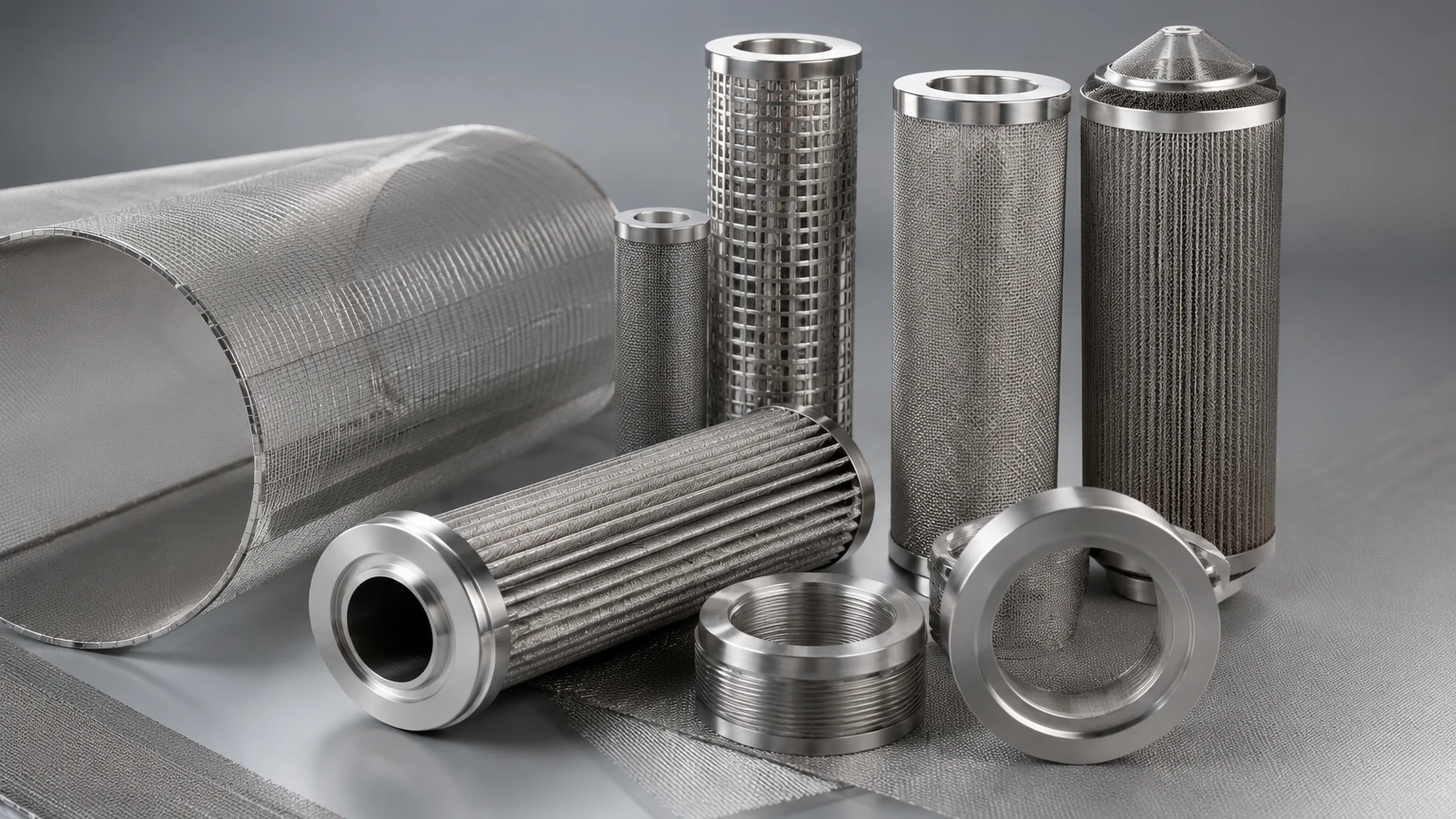
In industrial filtration, the challenge often lies in the "filter media" itself. While a stainless steel wire mesh provides excellent mechanical filtration, the points where the wires cross can create microscopic gaps. 3-A compliant filters must be engineered to ensure that these areas do not become traps for organic matter. This often involves specialized weaving patterns or sintering processes that fuse the wire contact points, creating a monolithic structure that is easier to clean than loose-weave mesh.
The Certification Process: Achieving the 3-A Symbol
It is important to distinguish between equipment that is "designed to meet 3-A standards" and equipment that is "3-A Certified." To display the official 3-A Symbol, a manufacturer must undergo a Third-Party Verification (TPV) inspection.
During a TPV, an independent Certified Conformance Evaluator (CCE) visits the manufacturing facility to inspect the equipment and the production processes. They verify that the materials, design, and surface finishes align exactly with the written standards. This certification must be renewed periodically, providing an extra layer of assurance for the end-user. For many global brands in the dairy and pharmaceutical sectors, using 3-A certified equipment is a mandatory requirement to satisfy food safety audits and HACCP (Hazard Analysis and Critical Control Points) plans.
Comparing 3-A with Other Global Sanitary Standards
While 3-A is a dominant standard in North America, engineers working on international projects may encounter other standards, such as EHEDG (European Hygienic Engineering & Design Group) or FDA (U.S. Food and Drug Administration) regulations.
* FDA: The FDA focuses primarily on the safety of the materials themselves (e.g., CFR Title 21), ensuring they do not migrate into the food. It does not provide the detailed mechanical design guidance found in 3-A.
* EHEDG: This European body has goals similar to 3-A but often uses different testing methodologies, such as cleanability testing using bacteria-laden media to prove that a design can be sanitized.
In many cases, a high-quality stainless steel filter designed by a professional manufacturer like Kaifil can meet the requirements of multiple standards simultaneously, providing flexibility for global equipment exporters.
Engineering Considerations for Selecting 3-A Compliant Filters
When selecting a filter for a sanitary application, engineers must look beyond the 3-A symbol and consider the specific performance requirements of their process. Key factors include:
* Filtration Accuracy: Determining the required micron rating is the first step. Whether the application requires coarse straining or fine particulate removal, the filter must maintain its integrity under pressure without bypassing.
* Flow Rates and Pressure Drop: Sanitary systems often operate at high flow rates. The filter design must minimize pressure drop to reduce energy consumption and prevent shear damage to sensitive products like cream or pharmaceutical proteins.
* Chemical Compatibility: The filter must be resistant not only to the product being filtered but also to the caustic and acidic cleaners used in the CIP cycle.
* Customization: Many industrial systems require unique dimensions or connection types (such as Tri-Clamp fittings). Working with an OEM-capable manufacturer allows for the development of bespoke solutions that fit existing piping while maintaining 3-A compliance.
For those looking to explore specific product configurations or technical support for sanitary applications, visiting the Main Page provides a comprehensive overview of available filtration technologies and engineering capabilities.
Maintenance, Cleaning, and Replacement Cycles
Even the best-designed 3-A filter requires proper maintenance to remain compliant. Over time, the repeated thermal cycling of steam sterilization or the abrasive nature of certain process fluids can degrade surface finishes or damage fine wire mesh.
Engineers should establish a regular inspection schedule to check for:
* Integrity of Seals: Gaskets and O-rings are the most common failure points in sanitary systems and should be replaced according to a preventative maintenance schedule.
* Mesh Condition: Any signs of fraying, tearing, or permanent deformation in the filter mesh can create areas that are impossible to clean and may lead to product contamination.
* Surface Pitting: In high-chloride environments, even 316L stainless steel can suffer from pitting corrosion. If pits develop on a contact surface, the component no longer meets 3-A standards and must be replaced.
Conclusion
Understanding what is 3a is fundamental for any professional involved in the design or operation of hygienic processing systems. The 3-A Sanitary Standards provide a rigorous framework that ensures equipment is not only functional but also safe and cleanable. By focusing on material purity, surface smoothness, and accessible design, these standards protect both the consumer and the manufacturer's brand reputation.
As a manufacturer specializing in custom stainless steel filtration, Kaifil understands the nuances of these requirements. By combining advanced manufacturing with a deep understanding of industrial filtration principles, we help our partners achieve reliable, durable, and compliant filtration performance in the most demanding environments. Whether you are designing a new processing line or optimizing an existing one, prioritizing 3-A principles in your filter selection is a critical step toward operational excellence.
