


Coalescing
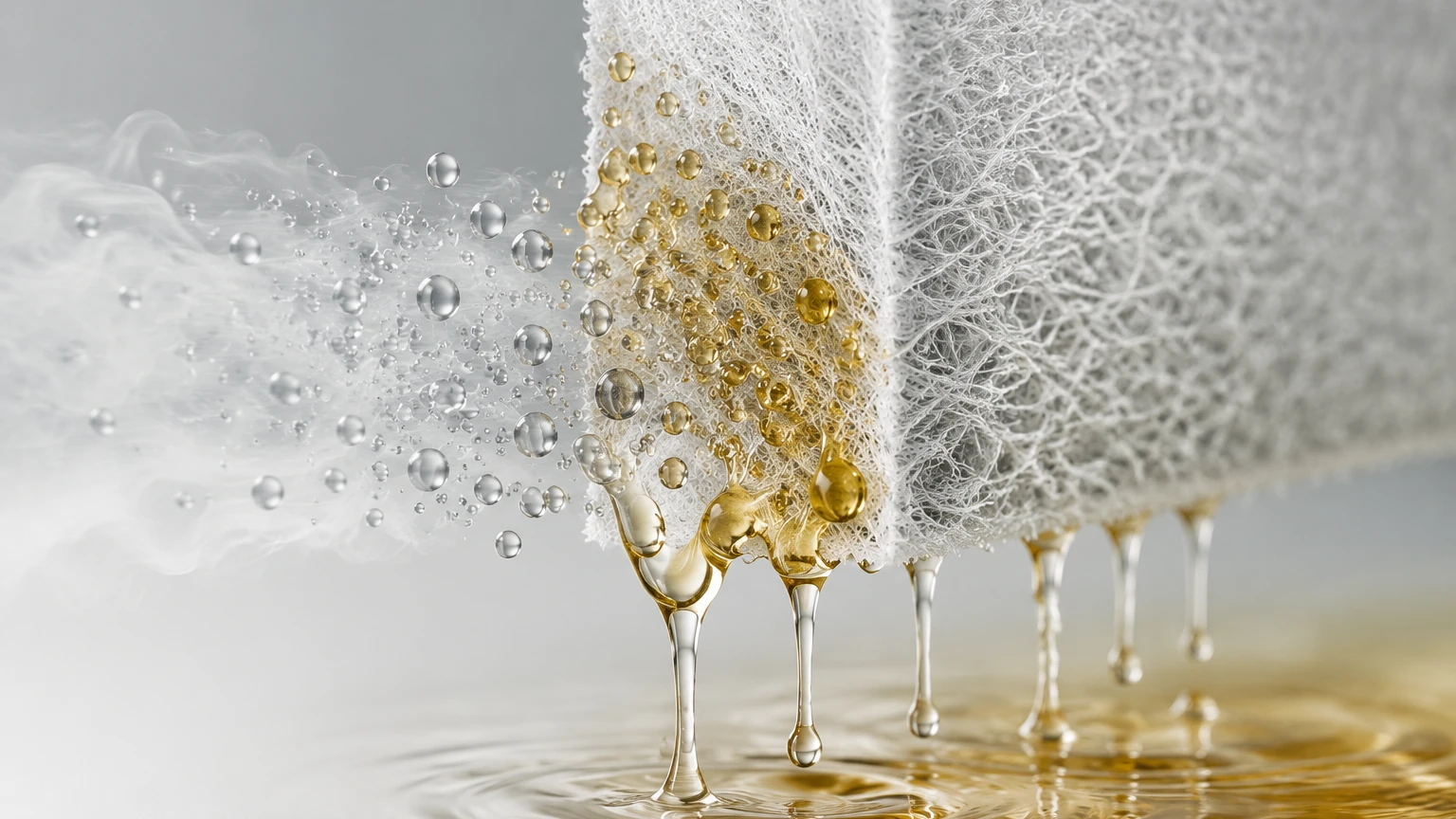
In industrial fluid processing, the separation of immiscible liquids or the removal of liquid aerosols from gas streams is a frequent engineering challenge. Coalescing is the physical process by which small droplets of a discontinuous phase (such as water in fuel or oil in air) are induced to merge into larger droplets, eventually reaching a size that allows for separation by gravity or other mechanical means. Unlike standard particulate filtration, which captures solid contaminants based primarily on size exclusion, coalescing relies on the interaction between fluid dynamics, surface chemistry, and specialized media structures.
For engineers and procurement teams managing complex systems in chemical processing, hydraulics, or pharmaceutical manufacturing, understanding the mechanics of coalescing is essential for optimizing equipment longevity and product purity. High-performance filtration solutions, such as those found on the Main Page of professional manufacturers, often incorporate advanced stainless steel media to facilitate these separations in demanding environments.
The Fundamental Principles of Industrial Coalescing
The coalescing process is generally divided into three distinct stages: interception, attachment (coalescence), and drainage. Each stage is governed by different physical laws and requires specific media characteristics to function efficiently.
1. Interception and Impaction
As the contaminated fluid passes through the coalescing media, the entrained droplets must come into contact with the fibers or wires of the filter. For larger droplets (typically greater than 1 micron), inertial impaction is the primary mechanism; the droplets' momentum prevents them from following the fluid streamlines around the media fibers, causing them to strike the surface. For sub-micron droplets, Brownian motion—the random movement of particles—increases the probability of the droplets colliding with the media.
2. Attachment and Coalescence
Once a droplet contacts the media, it must attach to the surface. This is where surface energy and the material properties of the filter come into play. In a typical liquid-liquid coalescer, the media is designed to be "philic" (attracted) to the discontinuous phase. As more droplets are intercepted, they move along the fibers and collide with one another. Due to the reduction in total surface area and the resulting lower energy state, these small droplets merge into larger ones. This growth is the core of the coalescing process.
3. Drainage and Separation
Once the droplets have grown to a sufficient size, the drag forces of the flowing fluid or the force of gravity overcome the adhesive forces holding the droplet to the media. The enlarged droplets then migrate to the downstream side of the element. In a liquid-liquid system, these large droplets will either sink to the bottom or rise to the top of a collection vessel, depending on the density difference between the two liquids. In gas-liquid systems, the heavy droplets fall into a sump for periodic drainage.
Coalescing vs. Particulate Filtration
It is a common misconception that a coalescer can be used interchangeably with a standard particulate filter. While many coalescing elements have the secondary benefit of removing solids, their primary engineering goal is phase separation.
Particulate filtration typically employs a "barrier" method where particles are trapped on the surface or within the depth of the media. In contrast, a coalescing element is designed to allow the fluid to pass through while encouraging the internal phase to accumulate and grow. If a fluid stream contains a high concentration of solid contaminants, it is standard engineering practice to install a pre-filter upstream of the coalescer. This prevents the solids from plugging the fine pore structure of the coalescing media, which would otherwise lead to a rapid increase in differential pressure and premature failure of the separation process.
Materials and Construction of Coalescing Elements
The choice of material for a coalescing filter is dictated by the chemical compatibility of the fluids, the operating temperature, and the required structural integrity. For many industrial applications, stainless steel is the preferred material due to its durability and resistance to corrosion.
Stainless Steel Wire Mesh
Custom-engineered stainless steel wire mesh is frequently used in coalescing applications. By layering different mesh counts, manufacturers can create a graded pore structure that maximizes the surface area available for droplet attachment. Stainless steel 304 and 316L are the industry standards, providing the necessary resistance to the organic solvents and acidic environments often found in chemical processing.
Sintered Metal Media
For high-pressure or high-temperature applications, sintered metal media offers superior performance. Sintering bonds the metal fibers or powders together at a molecular level, creating a rigid structure that does not shed fibers—a critical requirement in pharmaceutical and food-grade applications. The controlled porosity of sintered metal allows for precise control over the coalescing efficiency.
Surface Treatments
The effectiveness of coalescing is often enhanced by surface treatments. For example, in oil-water separation, a hydrophobic (water-repelling) coating may be applied to a separator screen used in conjunction with the coalescer to prevent water droplets from passing through, while allowing the oil to flow freely.
Liquid-Liquid Coalescing Applications
Liquid-liquid coalescing is vital in industries where two immiscible liquids must be separated for purity or environmental compliance.
* Petrochemical and Refining: Removing water from hydrocarbons is perhaps the most common application. Water in fuel can cause corrosion in storage tanks, ice formation in aircraft fuel lines, and damage to precision engine components. Coalescers are used to meet stringent industry standards for fuel dryness.
* Hydraulic Systems: Water contamination in hydraulic oil reduces lubricity and leads to component wear. Coalescing units are integrated into bypass loops to continuously remove moisture and extend the life of the hydraulic fluid.
* Wastewater Treatment: Industrial processes often generate oily wastewater. Coalescing plates or cartridges are used to separate the oil, allowing the water to be treated or discharged safely while recovering the oil for recycling.
In these applications, the interfacial tension (IFT) between the two liquids is a critical variable. Fluids with low IFT (below 20 dynes/cm) are significantly more difficult to separate and may require specialized media or longer residence times within the filter housing.
Gas-Liquid Coalescing (Aerosol Removal)
Gas-liquid coalescing, often referred to as aerosol removal, is used to protect downstream equipment from liquid droplets entrained in a gas stream.
* Compressed Air Systems: Air compressors often introduce oil mist into the air stream. Coalescing filters remove this oil to provide clean air for pneumatic tools, spray painting, and food packaging.
* Natural Gas Processing: In the midstream sector, coalescers remove liquid hydrocarbons and water from natural gas to protect compressors and prevent the formation of hydrates in pipelines.
* Vacuum Pump Exhaust: Coalescing filters are used on the exhaust of oil-sealed vacuum pumps to capture oil mist, preventing it from being released into the work environment.
For gas-phase coalescing, the flow velocity (flux) is a primary design consideration. If the gas velocity is too high, it can "re-entrain" the droplets, stripping them off the downstream face of the media before they have a chance to drain into the sump.
Engineering and Selection Criteria
When selecting a coalescing solution, engineers must look beyond simple micron ratings. Several technical factors determine the success of the separation:
1. Viscosity: Higher viscosity fluids offer more resistance to droplet movement, which can slow down the coalescing process. In some cases, the fluid may need to be heated to reduce viscosity before entering the coalescer.
2. Fluid Compatibility: The filter media and seals must be compatible with both the continuous and discontinuous phases. Stainless steel is often chosen for its broad compatibility range.
3. Flow Rate and Flux: Every coalescing element has an optimal flow range. Exceeding the maximum flow rate leads to high differential pressure and reduced separation efficiency due to re-entrainment.
4. Differential Pressure ($ΔP$): Monitoring the pressure drop across the filter is the primary method for determining the health of the element. A sudden drop in $ΔP$ might indicate a ruptured media, while a steady increase indicates particulate loading.
5. Target Purity: The required effluent quality (e.g., 5 ppm of water in oil) will dictate the density and depth of the coalescing media.
Maintenance and Operational Longevity
The total cost of ownership for a coalescing system is heavily influenced by the replacement cycle of the elements. While disposable glass-fiber elements are common, they often fail under high pressure or chemical attack.
Stainless steel coalescing components offer a distinct advantage in terms of durability. In many industrial settings, these elements can be cleaned and reused, provided the cleaning process does not damage the fine pore structure. Standard maintenance involves regular monitoring of the differential pressure and scheduled inspections of the drainage mechanisms (such as automatic float valves) to ensure that the separated phase is being removed effectively.
If the coalescer is part of a critical process, such as a pharmaceutical production line, validation of the filtration performance is necessary. This involves testing the effluent for the presence of the discontinuous phase using analytical methods like Karl Fischer titration for water content or laser particle counting for oil aerosols.
Conclusion
Coalescing is a sophisticated separation technology that requires a deep understanding of fluid behavior and material science. By selecting the appropriate media—particularly durable stainless steel options—and adhering to rigorous engineering standards for flow and pressure, industrial operators can achieve high levels of fluid purity and equipment protection.
For technical professionals seeking to implement or upgrade their filtration systems, consulting with a manufacturer that specializes in custom metal filtration is a vital step. To explore the range of available stainless steel filter cartridges and custom wire mesh solutions, engineers can refer to the Main Page for detailed product specifications and application support. Proper selection and maintenance of coalescing elements not only ensure process efficiency but also significantly reduce the long-term operational costs associated with fluid contamination and equipment downtime.
