


Panel Air Filter
In industrial environments, the efficiency of air intake and exhaust systems is directly tied to the quality of the filtration components utilized. A panel air filter serves as a primary line of defense, protecting sensitive machinery, maintaining air quality standards, and ensuring the longevity of downstream secondary filters. While disposable synthetic filters are common in commercial HVAC, industrial applications—particularly those involving high temperatures, corrosive chemicals, or stringent hygiene requirements—demand the robustness of metal-based filtration solutions.
As a specialized manufacturer, Kaifil focuses on providing high-performance stainless steel filtration components designed to withstand the rigors of heavy-duty industrial cycles. This guide examines the technical specifications, engineering considerations, and selection criteria for industrial panel air filters, providing engineers and purchasing teams with the data necessary to optimize their filtration infrastructure.
Engineering Fundamentals of Industrial Panel Air Filters
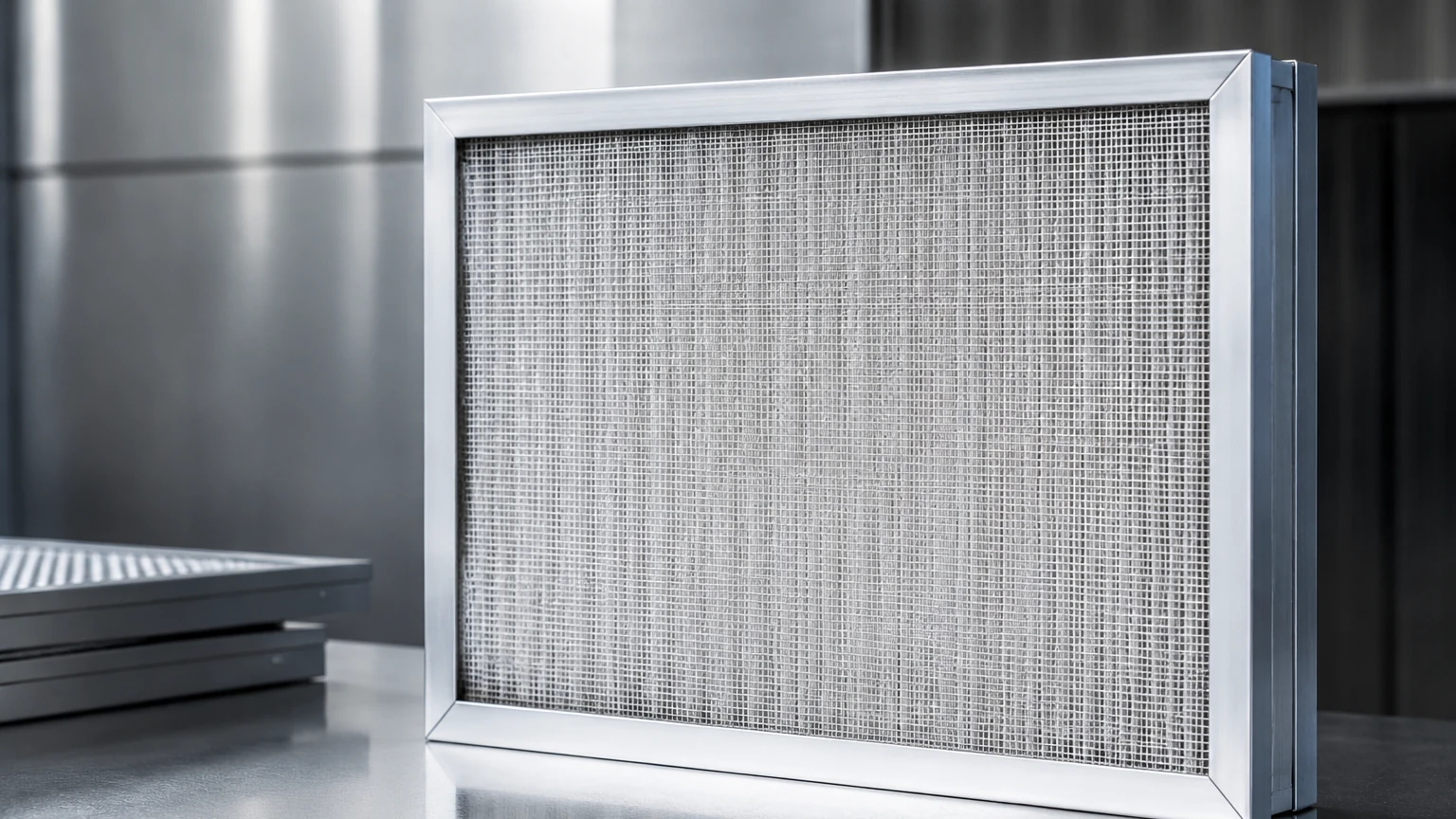
A panel air filter is characterized by its flat, rectangular, or square geometry, designed to fit into standardized or custom-built housing tracks. In the context of metal filtration, these units are typically constructed using a rigid outer frame and a multi-layered internal media pack.
Frame Construction
The frame provides the structural integrity required to prevent bypass and withstand the static pressure of the airflow. In industrial settings, frames are usually manufactured from stainless steel (304 or 316) or aluminum. Stainless steel is preferred for its superior strength-to-weight ratio and its ability to resist deformation under high thermal loads. For applications involving frequent washdowns or exposure to caustic cleaning agents, a fully welded stainless steel frame ensures there are no crevices where contaminants can accumulate.
Filter Media Composition
The internal media of a metal panel air filter often consists of multiple layers of woven wire mesh or expanded metal. By layering different mesh counts—ranging from coarse outer layers for large particle capture to fine internal layers for precision filtration—engineers can create a gradient density effect. This configuration maximizes the dust-holding capacity while maintaining a manageable pressure drop.
Pleated vs. Flat Designs
Panel filters are available in both flat and pleated configurations.
* Flat Panels: These are typically used for low-velocity applications or as primary moisture separators. They are easier to clean but have less surface area.
* Pleated Panels: By pleating the wire mesh media, the effective surface area is significantly increased. This allows for higher airflow rates (CFM) within the same face dimensions and extends the service interval by reducing the face velocity at the media level.
Material Selection and Environmental Compatibility
Choosing the correct material for a panel air filter is not merely a matter of cost; it is a critical engineering decision based on the operating environment. At Kaifil, we emphasize the use of stainless steel for applications where traditional fiberglass or polyester media would fail.
Temperature Resistance
Synthetic filters often have a maximum operating temperature of 180°F to 200°F (82°C to 93°C). In contrast, stainless steel panel filters can operate effectively in environments exceeding 800°F (427°C), making them essential for oven intakes, kiln ventilation, and high-temperature exhaust recovery systems.
Chemical and Corrosion Resistance
In chemical processing and pharmaceutical manufacturing, the air may contain trace amounts of solvents, acids, or bases. Stainless steel 316L offers enhanced resistance to pitting and crevice corrosion, particularly in chloride-rich environments. This durability ensures that the filter media does not degrade and introduce metallic particles into the process stream.
Hygiene and Washability
For the food and beverage industry, the ability to sanitize equipment is paramount. Metal panel filters are inherently non-shedding and can be cleaned using high-pressure steam, ultrasonic baths, or caustic detergents. This reusability not only supports sustainability goals but also ensures that the filtration system remains a sterile component of the production line.
Performance Evaluation Criteria for Engineers
When specifying a panel air filter, engineers must look beyond the physical dimensions. Several performance metrics dictate the efficiency and operational cost of the unit.
Pressure Drop (Resistance)
Pressure drop is the difference in air pressure between the upstream and downstream sides of the filter. It is measured in inches of water gauge (in. w.g.) or Pascals (Pa).
* Initial Resistance: The pressure drop of a clean filter at its rated velocity.
* Terminal Resistance: The point at which the filter is considered loaded and must be cleaned or replaced.
A well-designed metal mesh panel air filter provides low initial resistance, which reduces the load on fans and blowers, leading to significant energy savings over the life of the system.
Face Velocity
Face velocity is the speed of the air as it approaches the filter face, typically measured in feet per minute (FPM) or meters per second (m/s). Most industrial panel filters are rated for velocities between 250 FPM and 500 FPM. Exceeding the rated velocity can lead to "pull-through," where captured contaminants are forced through the media, or mechanical failure of the filter frame.
Filtration Efficiency and MERV Equivalency
While metal mesh filters are generally classified as coarse or medium-grade filters (equivalent to MERV 1–8), their efficiency can be tuned by adjusting the density of the mesh layers. They are highly effective at capturing large particulates, oil mist, and grease droplets. In multi-stage systems, they serve as pre-filters to protect high-efficiency HEPA or ULPA filters from premature loading.
Industrial Applications and Use Cases
The versatility of the stainless steel panel air filter makes it a staple across various demanding sectors. Understanding how these filters perform in specific scenarios is key to proper selection.
1. Oil Mist and Grease Extraction
In commercial kitchens and industrial machining centers, air is often saturated with oil or grease. Synthetic filters would quickly clog and become a fire hazard. Metal panel filters act as effective impingement filters, where the heavy particles strike the wire mesh and drain away, preventing buildup in the ductwork.
2. Pharmaceutical and Cleanroom Pre-filtration
To extend the life of expensive HEPA filters, pharmaceutical facilities use stainless steel panel filters to capture larger airborne debris. The non-shedding nature of the wire mesh ensures that the filter itself does not become a source of contamination.
3. Marine and Coastal Environments
Salt air is highly corrosive to standard galvanized steel filters. Using 316-grade stainless steel panel filters in marine HVAC systems or offshore turbine intakes provides the necessary protection against salt spray and moisture without the risk of rust-induced failure.
4. Heavy Machinery and Hydraulic Power Units
Large hydraulic systems and compressors require clean air for cooling and operation. Metal panel filters provide a rugged solution that can withstand the vibrations and pressure fluctuations common in heavy industrial machinery.
Customization and OEM Considerations
Standard off-the-shelf filters rarely meet the precise requirements of specialized industrial equipment. Customization is often necessary to ensure a perfect fit and optimal performance. When partnering with a manufacturer like Kaifil, engineers can specify several variables:
* Custom Dimensions: Non-standard heights, widths, and depths to fit legacy equipment or unique spatial constraints.
* Layer Configuration: Specific combinations of expanded metal, fine woven mesh, and support grids to achieve a target micron rating.
* Gasket Materials: Integration of high-temperature silicone, EPDM, or PTFE gaskets to ensure a leak-proof seal between the filter and the housing.
* Handle and Locking Mechanisms: Adding pull handles, lift tabs, or specialized locking tabs for easier maintenance in hard-to-reach locations.
For those seeking comprehensive filtration components, visiting the Main Page provides a broader view of how these panel solutions integrate into a complete filtration strategy.
Maintenance, Cleaning, and Service Life
One of the primary advantages of a stainless steel panel air filter is its status as a permanent, washable component. However, the longevity of the filter depends on a disciplined maintenance schedule.
Cleaning Protocols
1. Inspection: Regularly monitor the pressure drop across the filter using a manometer. When the terminal resistance is reached, the filter must be cleaned.
2. Dry Cleaning: For dry dust, compressed air can be blown through the filter in the opposite direction of the normal airflow (back-flushing).
3. Wet Cleaning: For grease or sticky particulates, soak the filter in a mild degreasing solution. Avoid using abrasive tools that could damage the wire mesh weave.
4. Drying: Ensure the filter is completely dry before re-installation to prevent moisture from being drawn into the system, which could lead to microbial growth or downstream corrosion.
When to Replace
While metal filters are durable, they are not infinite. Replacement is necessary if the frame becomes warped, the mesh layers become separated (delamination), or if the mesh is punctured. A compromised filter allows bypass, which can lead to catastrophic failure of downstream components.
Total Cost of Ownership (TCO) Analysis
When evaluating the procurement of a panel air filter, purchasing teams must look beyond the initial invoice price. The Total Cost of Ownership (TCO) for a stainless steel filter is often significantly lower than that of disposable alternatives over a 3-to-5-year period.
* Reduced Waste: Eliminates the disposal costs and environmental impact associated with spent synthetic filters.
* Energy Efficiency: By maintaining a lower average pressure drop through regular cleaning, the system consumes less energy.
* Inventory Management: Fewer units need to be stocked, as a single set of metal filters can last for years.
* System Protection: Superior structural integrity prevents filter blowouts, protecting expensive downstream blowers and secondary filters.
Conclusion
The industrial panel air filter is a critical component that requires careful engineering and material selection. By prioritizing stainless steel construction and customized mesh configurations, facilities can achieve higher filtration efficiency, better environmental resistance, and a lower total cost of ownership. Whether the application involves high-temperature exhaust or sterile pharmaceutical air, selecting a filter built to industrial standards is essential for operational reliability.
For technical assistance in designing a custom filtration solution or to explore our full range of stainless steel filter cartridges and wire mesh components, please visit our Main Page to connect with our engineering team.
