


Filter Bag Housings
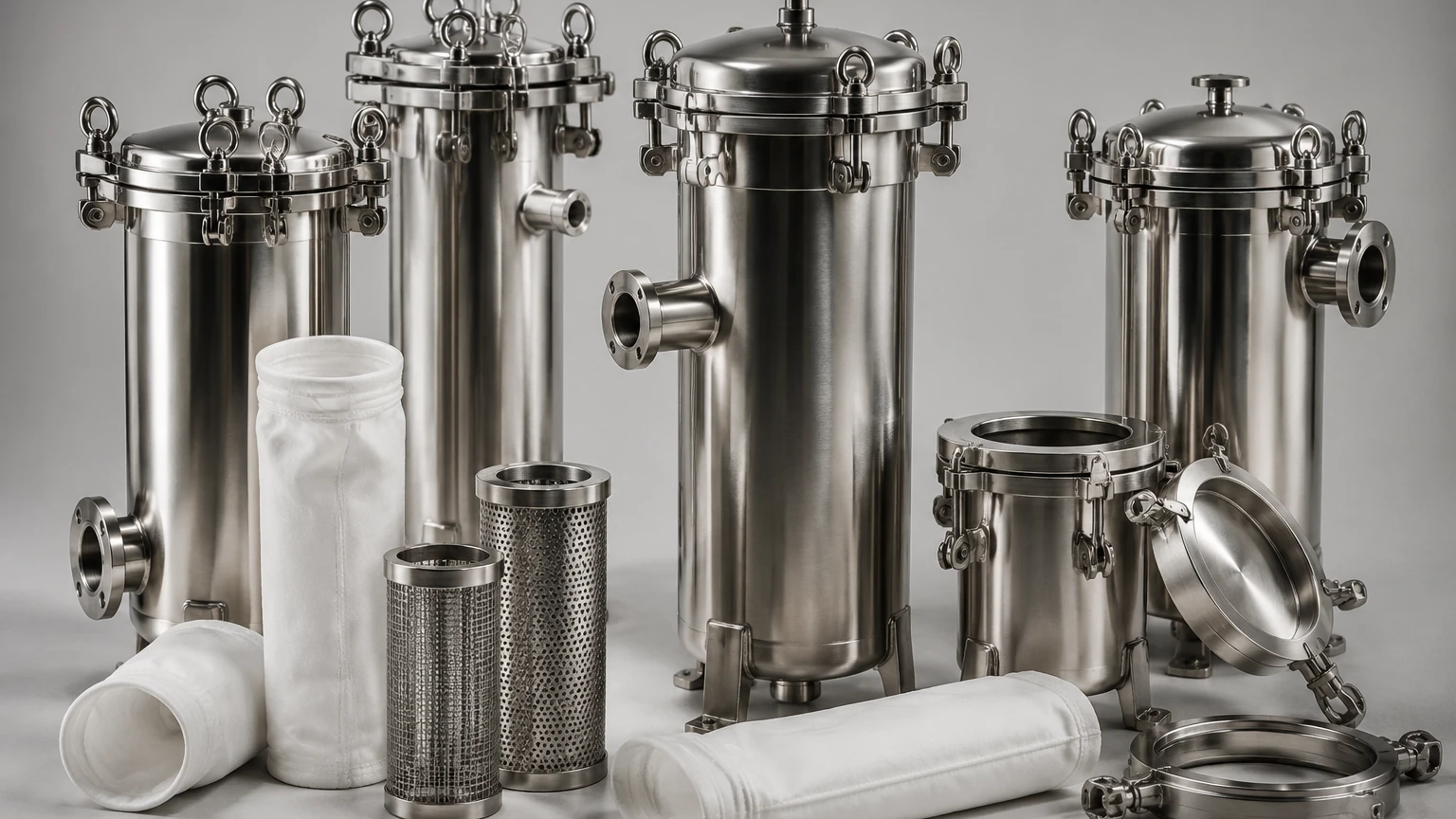
In industrial liquid filtration, filter bag housings serve as the critical pressure vessel component designed to hold filter bags securely in place while directing the flow of fluid through the media. These housings are foundational in sectors ranging from chemical processing and water treatment to food and beverage production. Choosing the correct housing involves more than simply matching a pipe size; it requires a deep understanding of fluid dynamics, material compatibility, and the specific mechanical requirements of the application.
As a professional manufacturer of stainless steel filtration solutions, Kaifil emphasizes the importance of engineering precision in these components. A well-designed housing ensures that the filter bag performs to its rated efficiency by preventing bypass and maintaining structural integrity under pressure. This guide explores the technical considerations, selection criteria, and operational factors that engineers must evaluate when integrating filter bag housings into their systems.
Engineering Fundamentals of Filter Bag Housings
Filter bag housings are typically constructed from metallic materials to withstand the internal pressures and environmental conditions of industrial plants. While carbon steel is used in some low-end applications, stainless steel (SS304 and SS316L) is the industry standard due to its corrosion resistance and longevity.
Material Selection
* Stainless Steel 304: Suitable for general-purpose applications, including water filtration, cooling systems, and non-corrosive chemical processing. It offers excellent structural strength and moderate corrosion resistance.
* Stainless Steel 316L: The "L" denotes low carbon, which improves weldability and resistance to intergranular corrosion. This material is preferred for pharmaceutical, food and beverage, and highly corrosive chemical environments where purity and resistance to pitting are paramount.
Pressure and Temperature Ratings
Standard industrial housings are often designed to operate at pressures up to 150 PSI (10 bar), though high-pressure variants are available for specialized hydraulic or process applications. Temperature ratings are largely determined by the sealing materials (O-rings) used in the housing, such as Buna-N, EPDM, Viton, or PTFE. Engineers must ensure the housing's design pressure exceeds the maximum possible surge pressure of the pump system to prevent catastrophic failure.
Key Components and Design Variations
To optimize filtration performance, the internal architecture of the housing must facilitate laminar flow and minimize turbulence. Several design variations exist to meet different operational footprints and flow requirements.
Single vs. Multi-Bag Housings
* Single Bag Housings: Used for batch processing or lower flow rate applications. They are compact and easier to maintain in systems where the process can be paused for bag changes.
* Multi-Bag Housings: Designed for high-volume flow rates, these units contain multiple bags (ranging from 2 to 24 or more) within a single large vessel. They allow for much higher surface areas, which reduces the frequency of maintenance shutdowns and manages high solids loading more effectively.
Flow Configurations: Side-Entry vs. Top-Entry
* Side-Entry (Tangent) Design: The fluid enters through the side of the housing, hits a baffle, and then flows down through the bag. This is a common, cost-effective design, though it can sometimes lead to uneven bag loading if not properly baffled.
* Top-Entry Design: The fluid enters through the top cover, ensuring a 360-degree even distribution into the filter bag. This design minimizes the chance of bypass and makes it easier to seat the bag correctly, as the lid itself often provides the compression needed to seal the bag collar.
The Internal Support Basket
Every filter bag requires an internal support basket, usually made of perforated stainless steel or heavy-duty wire mesh. This basket prevents the bag from bursting under the pressure of the fluid flow. The precision of the basket’s fit within the housing is vital; any gap between the basket and the housing wall can lead to bag movement and potential mechanical failure of the filter media.
Selection Criteria for Industrial Applications
Selecting the right filter bag housing requires a systematic review of the process parameters. Engineers should consult the Main Page for technical specifications on custom metal components that interface with these systems.
1. Flow Rate and Viscosity
The flow rate (GPM or m³/h) is the primary driver of housing size. However, fluid viscosity significantly impacts the pressure drop. A highly viscous fluid (like resin or syrup) will require a much larger housing or a multi-bag system to maintain a reasonable flow rate without exceeding the recommended initial pressure drop (usually 2-3 PSI).
2. Filtration Accuracy (Micron Rating)
While the bag determines the micron rating, the housing must be able to support the bag under the specific differential pressure associated with that rating. Finer filtration (e.g., 1-5 microns) typically results in a faster pressure build-up, requiring a housing design that allows for quick and frequent access.
3. Chemical Compatibility
Beyond the metal housing itself, the seals and gaskets must be compatible with the process fluid. For example, EPDM is excellent for hot water and steam but fails quickly when exposed to petroleum-based oils. Viton is often the choice for chemical and fuel applications due to its broad resistance spectrum.
Performance Expectations and Operational Efficiency
A common challenge in industrial filtration is "bypass"—where unfiltered fluid escapes around the edge of the filter bag. High-performance filter bag housings utilize a precision-machined sealing rim or a compression-fit lid to ensure that 100% of the fluid passes through the filter media.
Monitoring Pressure Drop
Efficiency is monitored via differential pressure (ΔP). Housings should be equipped with upstream and downstream pressure gauges. A clean system starts with a low ΔP; as the bag captures contaminants, the ΔP increases. Most industrial systems are designed for a bag change-out when the ΔP reaches 15-25 PSI. Operating beyond this point risks forcing contaminants through the media or collapsing the internal support basket.
Seal Integrity
The method of closing the housing also affects operational efficiency. Swing-bolt closures are the industrial standard for high-pressure applications, providing a robust and even seal. For lower-pressure or frequent-access applications, V-clamp or quick-release closures can reduce downtime during bag changes.
Maintenance, Replacement Cycles, and Total Cost of Ownership
The Total Cost of Ownership (TCO) for filter bag housings includes the initial capital expenditure, the cost of replacement bags, and the labor costs associated with maintenance.
Minimizing Downtime
To ensure continuous operation, many engineers specify duplex housing systems. A duplex system consists of two housings connected by a three-way valve. When one housing reaches its maximum pressure drop, the flow is diverted to the second housing, allowing the operator to change the bag in the first unit without stopping the process.
Cleaning and Inspection
Stainless steel housings are durable, but they require periodic inspection. Over time, the internal surfaces can accumulate scale or biofilm, depending on the application. Electropolishing the interior of the housing can reduce the adhesion of contaminants and make the cleaning process more efficient, particularly in food and pharmaceutical sectors. Baskets should be inspected for any signs of deformation or clogging of the perforations, as a compromised basket will lead to premature bag failure.
Customization and OEM Solutions
Standard off-the-shelf housings may not meet the specific spatial or technical requirements of every industrial plant. Customization is often necessary to integrate the filtration system into existing piping or to meet specific regulatory standards (such as ASME Section VIII or 3A Sanitary Standards).
Kaifil provides extensive OEM capabilities for custom stainless steel filtration components. This includes modifying inlet/outlet sizes, adding specialized mounting legs, or integrating heating jackets for temperature-sensitive fluids. When designing a custom solution, engineers should confirm the following details:
* Specific flange types (ANSI, DIN, JIS).
* Surface finish requirements (Ra values for sanitary applications).
* The presence of air vents and drain ports for safe depressurization and emptying.
Conclusion
Filter bag housings are more than just containers; they are engineered components that dictate the efficiency and safety of a filtration system. By focusing on material quality, flow design, and sealing integrity, purchasing teams and engineers can ensure long-term reliability and lower operational costs. Whether managing high-volume industrial wastewater or precision chemical processing, the choice of housing must align with the mechanical and chemical realities of the environment.
For those seeking reliable, high-performance filtration components and customized stainless steel solutions, exploring the technical resources available on the Main Page can provide the necessary foundation for a successful system design. Proper selection today prevents bypass, reduces maintenance labor, and protects downstream equipment from contamination.
