


Is Aluminum Porous
In the field of industrial engineering and material science, the question "is aluminum porous" requires a nuanced answer that distinguishes between the inherent properties of the metal, manufacturing defects in castings, and intentionally engineered porous structures. For procurement teams and filtration engineers, understanding the porosity of aluminum is essential when selecting materials for fluid dynamics, heat exchange, or specialized filtration applications.
Standard solid aluminum, in its wrought or properly cast form, is a dense, non-porous metal. However, the industrial landscape frequently utilizes "porous aluminum"—an engineered material designed with specific void fractions to achieve functional goals. This article explores the technical characteristics of aluminum porosity, the methods used to create it, and how it compares to high-performance alternatives like stainless steel filtration media.
Understanding the Physical State: Is Aluminum Naturally Porous?
At a molecular level, aluminum is a non-porous crystalline solid. When fabricated into sheets, bars, or foils, it acts as a total barrier to liquids and gases. This is why aluminum is a preferred material for vacuum chambers and food packaging.
However, the question of whether aluminum is porous often arises in two specific industrial contexts:
1. Casting Defects: In secondary aluminum smelting or sand casting, hydrogen gas can become trapped in the molten metal. As the metal cools, this gas forms microscopic voids or "pinhole porosity." This is generally considered a structural failure rather than a functional feature, as it compromises the mechanical integrity and pressure-tightness of the component.
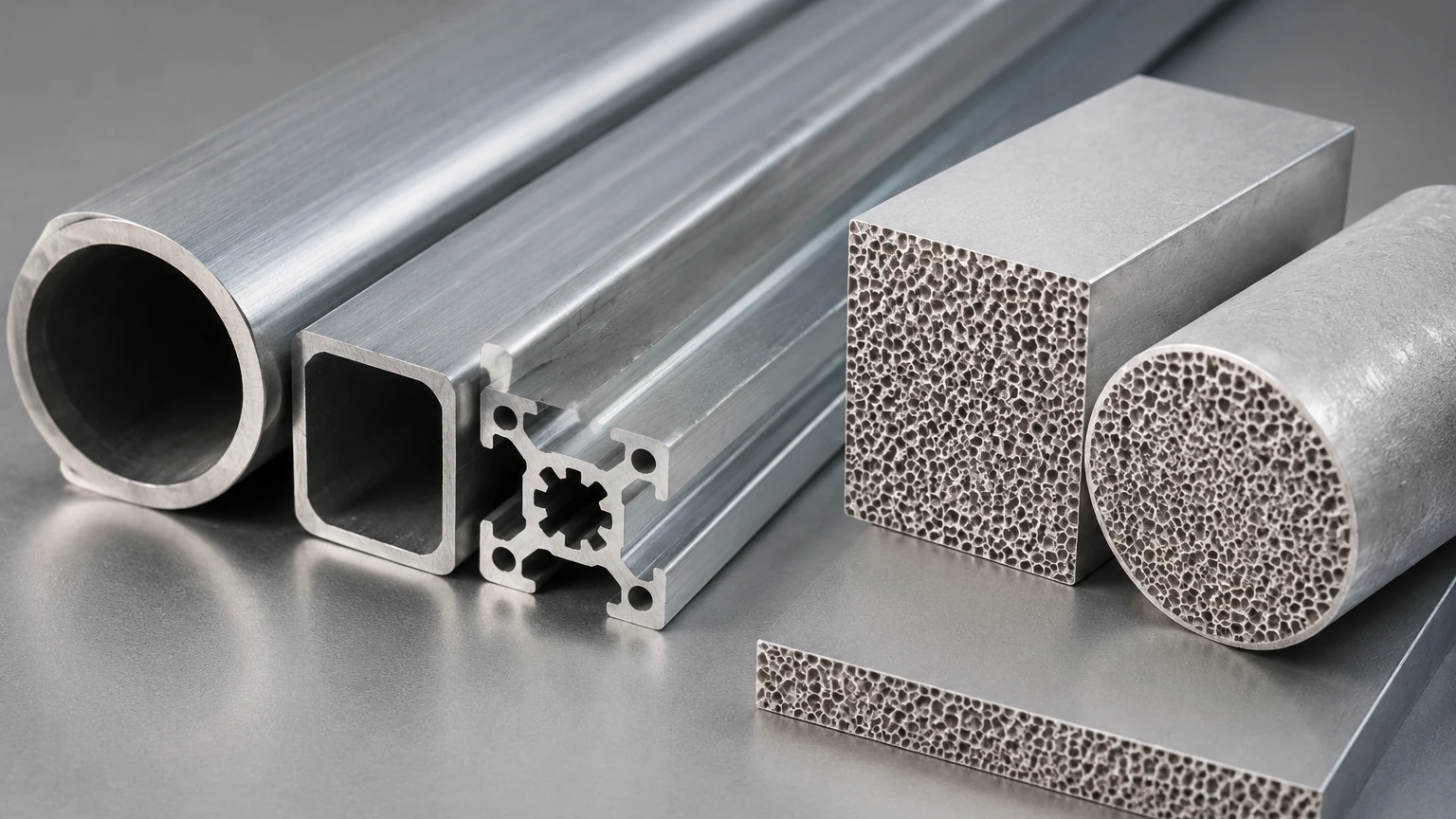
2. Engineered Porous Aluminum: This refers to aluminum foam or sintered aluminum powder, where porosity is a deliberate design choice. These materials are engineered to have a controlled network of interconnected or closed pores.
For engineers evaluating filtration solutions, the focus is almost exclusively on engineered porosity. While aluminum offers a high strength-to-weight ratio, its application in filtration is often limited by its chemical reactivity compared to the solutions found on the Kaifil Main Page, which emphasizes robust stainless steel components.
Types of Engineered Aluminum Porosity
When an application requires a porous metallic structure, engineers typically choose between open-cell and closed-cell configurations. The distinction is critical for determining the material's suitability for filtration or structural damping.
Open-Cell Porous Aluminum
In open-cell structures, the pores are interconnected, creating a tortuous path through which fluids or gases can flow. This is the primary form used in industrial filtration and heat exchangers. The porosity can range from 50% to as high as 95%, depending on the manufacturing method. These materials are often used for noise reduction, as the interconnected pores dissipate sound energy, or as flame arrestors.
Closed-Cell Porous Aluminum
Closed-cell aluminum (often called aluminum foam) consists of discrete, sealed pockets of gas within the metal matrix. Because there is no flow path through the material, it is not used for filtration. Instead, it is valued for its buoyancy, energy absorption in impact protection, and thermal insulation properties.
Manufacturing Processes for Porous Aluminum
To achieve a functional level of porosity, several specialized manufacturing techniques are employed. Each method results in different pore sizes and structural characteristics.
* Sintering: Similar to the production of stainless steel filter cartridges, aluminum powder can be sintered. In this process, the powder is heated below its melting point until the particles bond at their contact points. The spaces between the particles remain as pores. Sintered aluminum provides high precision in pore size distribution but is more susceptible to oxidation during manufacturing than stainless steel.
* Gas Injection: Molten aluminum is mixed with thickening agents (like silicon carbide or aluminum oxide) and then injected with gas (air or nitrogen). This creates a foam-like structure. Controlling the bubble size is difficult, making this method less ideal for fine filtration.
* Investment Casting (Lost Polymer): A polymer foam is used as a template, coated in a ceramic slurry, and then burned out. Molten aluminum is poured into the resulting cavity. This produces a highly uniform open-cell structure known as a metal foam.
* Space-Holder Method: Aluminum powder is mixed with a removable filler (like salt or carbamide). The mixture is compacted and the filler is dissolved or melted out, leaving behind a porous skeleton.
Engineering Considerations: Aluminum vs. Stainless Steel
When determining if a porous aluminum component is suitable for an industrial process, engineers must compare it against the industry standard: stainless steel. While the question "is aluminum porous" may lead to the discovery of aluminum foams, the operational environment often dictates a move toward more resilient materials.
Corrosion Resistance and Chemical Compatibility
Aluminum naturally forms a thin oxide layer that provides some protection. However, in industrial filtration—especially in chemical processing or water treatment—aluminum is highly vulnerable to pH fluctuations. It corrodes rapidly in both highly acidic and highly alkaline environments. In contrast, 316L stainless steel, a staple of custom filtration solutions, offers superior resistance to a wider range of chemicals and corrosive agents.
Thermal Limits
Aluminum has a relatively low melting point (approximately 660°C). Its mechanical strength begins to degrade significantly at temperatures above 200°C. For high-temperature steam filtration or hot gas applications, stainless steel or nickel alloys are required to maintain structural integrity and filtration accuracy.
Mechanical Strength and Durability
Porous aluminum is lightweight, which is an advantage in aerospace or portable equipment. However, it lacks the fatigue resistance and tensile strength of stainless steel wire mesh or sintered metal fibers. In high-pressure hydraulic systems, the risk of pore collapse or media migration is much higher with aluminum than with precision-engineered steel components.
Applications of Porous Aluminum in Industry
Despite its limitations compared to steel, porous aluminum serves specific niches where its unique properties are beneficial:
1. Pneumatic Silencers: Because it can be molded into complex shapes and offers good sound attenuation, it is used to quiet exhaust air from pneumatic valves.
2. Vacuum Tables: In manufacturing, porous aluminum plates are used to hold thin films or wafers in place via uniform suction across the surface.
Heat Sinks: The high thermal conductivity of aluminum, combined with the massive surface area of an open-cell foam, makes it excellent for liquid-cooled heat exchangers in electronics.
3. Aerospace Components: Where every gram of weight matters, porous aluminum may be used for non-critical fluid diffusion or structural stiffening.
Selection Criteria for Industrial Filtration
If you are evaluating whether to use a porous aluminum filter or a stainless steel alternative, the following criteria should guide the decision-making process:
* Filtration Rating (Micron Level): Sintered stainless steel can achieve much finer and more consistent micron ratings (down to 0.5 microns) compared to most porous aluminum foams.
* Cleaning and Reusability: Industrial filters are often an investment. Stainless steel filters can be cleaned via ultrasonic baths or backwashing many times without degrading. Aluminum's softer surface makes it more prone to damage during aggressive cleaning cycles.
* System Pressure: Evaluate the maximum differential pressure. If the system experiences pressure spikes, the ductility of aluminum may lead to permanent deformation of the pore structure.
* Regulatory Compliance: In food, beverage, and pharmaceutical industries, material traceability and inertness are paramount. Stainless steel is the gold standard for these applications due to its non-reactive nature.
Conclusion
So, is aluminum porous? In its standard commercial forms, no. But as an engineered material, it offers a unique set of properties for specific low-temperature, weight-sensitive applications. However, for the vast majority of demanding industrial filtration needs—where durability, chemical resistance, and precise flow control are required—stainless steel remains the superior choice.
Engineers looking for reliable, high-performance filtration components should prioritize material longevity and application compatibility. For those seeking custom-engineered solutions that withstand harsh environments, exploring the technical capabilities of stainless steel wire mesh and sintered cartridges is the logical next step. To learn more about professional-grade filtration materials and custom OEM capabilities, visit the Kaifil Main Page for detailed product specifications and engineering support.
