


Pleated Cartridge Filters
In industrial filtration, the primary objective is to achieve high-efficiency separation while maintaining a manageable system footprint and operational cost. Pleated cartridge filters represent a sophisticated engineering solution designed to maximize surface area within a standard cylindrical volume. By folding the filtration media into a series of pleats, manufacturers can significantly increase the effective filtration area compared to traditional depth or wrap-style cartridges. This design choice directly impacts flow rates, pressure drops, and the service life of the filter element.
For engineers and procurement professionals in sectors such as chemical processing, pharmaceuticals, and hydraulic systems, understanding the technical nuances of pleated cartridge filters is essential for optimizing process performance. This guide examines the mechanical principles, material considerations, and selection criteria necessary for implementing these components in demanding industrial environments.
The Engineering Logic Behind Pleated Media
The fundamental advantage of pleated cartridge filters lies in the geometric expansion of the filtration surface. In a standard 10-inch cylindrical filter, the surface area is limited by the outer diameter. By pleating the media, that surface area can be increased by a factor of five to fifteen, depending on the pleat density and depth.
Surface Area and Flux
This increase in area results in a lower "flux"—the volume of fluid passing through a unit area of media per unit of time. When flux is reduced, the velocity of the fluid through the pores of the filter decreases. Lower velocity leads to several technical benefits:
1. Reduced Pressure Drop (ΔP): A lower initial pressure drop allows for higher flow rates or the use of smaller pumps, reducing energy consumption.
2. Enhanced Particle Capture: Lower velocities increase the residence time of the fluid within the media, allowing for more effective mechanical straining and adsorption of contaminants.
3. Increased Dirt-Holding Capacity: With more surface area available, the filter can accumulate a larger mass of contaminants before reaching its terminal pressure drop, extending the interval between change-outs.
Pleat Geometry and Bridging
Engineering the pleat is a balance of density and accessibility. If pleats are packed too tightly, a phenomenon known as "pleat bridging" occurs, where contaminants clog the narrow gaps between pleats, effectively sealing off the inner surface area. High-quality pleated cartridge filters utilize support layers—often a coarser mesh or fabric—to keep the pleats separated and ensure that the entire surface area remains active throughout the filtration cycle.
Material Science in Pleated Cartridge Construction
While synthetic materials like polypropylene or PES are common in light-duty applications, industrial-grade pleated cartridge filters often rely on stainless steel for durability and chemical resistance. Kaifil specializes in the manufacture of these robust metal components, which are designed to withstand extreme temperatures and corrosive environments.
Stainless Steel Wire Mesh
Stainless steel wire mesh is the most common media for pleated metal filters. It offers precise pore sizes and is available in various weave patterns, such as plain, twill, or dutch weave. The mechanical strength of stainless steel allows the pleats to maintain their shape even under high differential pressure. For applications requiring finer filtration, sintered metal fiber felt may be used. This non-woven medium provides high porosity and excellent permeability, making it ideal for high-viscosity fluids.
Chemical and Thermal Compatibility
The choice between 304 and 316L stainless steel depends on the chemical composition of the process fluid. 316L is preferred in pharmaceutical and marine applications due to its superior resistance to pitting and chloride-induced corrosion. Furthermore, metal pleated filters can operate at temperatures exceeding 500°F (260°C), far beyond the melting points of polymer-based alternatives.
Evaluating Filtration Efficiency and Micron Ratings
When selecting pleated cartridge filters, engineers must distinguish between nominal and absolute micron ratings. This distinction is critical for ensuring process consistency and protecting downstream equipment.
Absolute vs. Nominal Ratings
* Nominal Rating: This is an arbitrary value indicating that the filter will retain a majority of particles at the specified size (typically 60% to 90%). It does not guarantee the capture of all particles and is often used for pre-filtration.
* Absolute Rating: This refers to the diameter of the largest hard spherical particle that will pass through the filter under specific laboratory conditions. For critical processes, such as final stage chemical purification or sterile filtration, absolute-rated pleated cartridge filters are mandatory.
The Beta Ratio
In technical specifications, efficiency is often expressed via the Beta Ratio (β). A Beta Ratio of 1000 at 5 microns (β5 = 1000) indicates that for every 1000 particles of 5 microns entering the filter, only one passes through. This provides a quantifiable measure of performance that allows engineers to predict the cleanliness levels of the effluent.
Structural Components and Mechanical Stability
A pleated filter is only as reliable as its structural housing. In industrial environments, the filter must resist mechanical stresses such as pressure surges, vibrations, and thermal expansion.
Inner Cores and Outer Cages
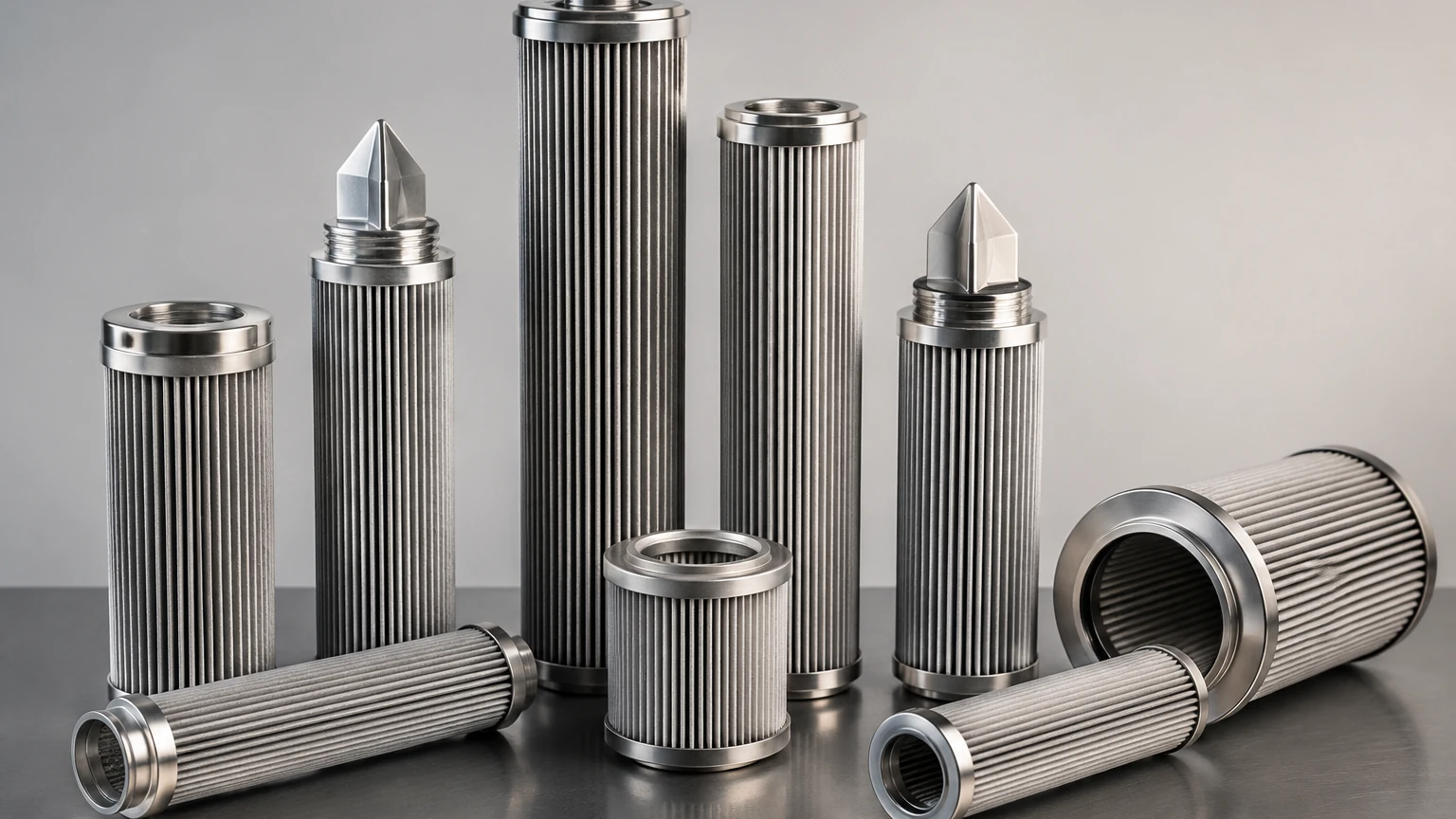
To prevent the pleated media from collapsing inward under external pressure, a perforated inner core is used. Conversely, an outer cage protects the pleats during handling and prevents outward expansion during backwashing. In high-pressure hydraulic applications, these cores are often heavy-duty stainless steel tubes with precision-drilled or punched flow paths.
End Cap Configurations
The method by which the filter seals into the housing is vital for preventing bypass. Common industrial end cap styles include:
* DOE (Double Open End): Utilizes flat gaskets on both ends; relies on housing compression for a seal.
* Code 7 (226 O-rings): Features a bayonet lock and double O-rings for a high-security seal, common in pharmaceutical applications.
* Code 3 (222 O-rings): A single-open-ended design with double O-rings, providing a reliable seal for liquid filtration.
Kaifil ensures that all structural components are joined using advanced welding techniques, such as TIG or plasma welding, to eliminate the need for adhesives or resins that could outgas or degrade in harsh chemicals.
Application-Specific Selection Parameters
The versatility of pleated cartridge filters allows them to be used across diverse industries, but each application demands specific design considerations.
Chemical Processing
In the chemical industry, compatibility with aggressive solvents and acids is the primary concern. Metal pleated filters are often the only viable option for high-concentration acids or high-temperature polymer filtration. Engineers must verify that the gaskets (Viton, EPDM, or PTFE) are as resistant as the stainless steel media.
Food and Beverage
For food-grade applications, the filters must comply with FDA and EU regulations regarding food contact materials. The construction must be free of lubricants and contaminants. Pleated filters are used here for polishing syrups, clarifying juices, and filtering steam used in sterilization processes.
Hydraulic and Lube Oil
Hydraulic systems require filters that can handle high-viscosity fluids and high-pressure differentials. Pleated cartridge filters are used to maintain ISO cleanliness codes for oils, protecting sensitive valves and actuators from wear-inducing particulates.
Operational Maintenance and Cleaning Protocols
One of the most significant advantages of stainless steel pleated cartridge filters is their cleanability. Unlike disposable synthetic filters, metal elements can be regenerated multiple times, significantly lowering the total cost of ownership.
Cleaning Methods
Depending on the contaminant, several cleaning methods can be employed:
* Ultrasonic Cleaning: Uses high-frequency sound waves to create cavitation bubbles that dislodge fine particles trapped deep within the pleats.
* Backwashing: Reversing the flow of clean fluid through the filter to push contaminants off the surface.
* Chemical Cleaning: Using surfactants or solvents to dissolve organic or mineral deposits.
* Burn-off/Pyrolysis: Heating the filter in a controlled environment to carbonize organic materials, which are then removed via ultrasonic cleaning.
Monitoring Performance
Engineers should monitor the differential pressure across the filter housing. A sudden drop in ΔP may indicate a media rupture or seal failure, while a rapid increase suggests that the cleaning cycle needs to be adjusted or that the fluid's contaminant load has increased.
Critical Specifications for Procurement and Customization
When transitioning from a standard filter to a customized solution, several data points must be confirmed to ensure a successful integration. As a professional manufacturer, Kaifil works with engineering teams to define these parameters before production begins.
Before finalizing a purchase, confirm the following:
* Operating Temperature and Pressure: Both steady-state and peak surge values.
* Fluid Viscosity: Measured at the operating temperature.
* Target Particle Size: Based on the sensitivity of downstream components.
* Housing Dimensions: Length, outer diameter, and internal clearance.
* Seal Material: Ensuring compatibility with both the process fluid and cleaning agents.
For those seeking to optimize their filtration systems with durable, high-performance components, it is advisable to Review product options and application support to ensure the selected pleated cartridge filters meet the specific demands of the industrial environment. By focusing on precision manufacturing and material integrity, facilities can achieve more reliable filtration, reduced downtime, and improved product quality.
