


True Hepa Filter Efficiency 0.3 Micron
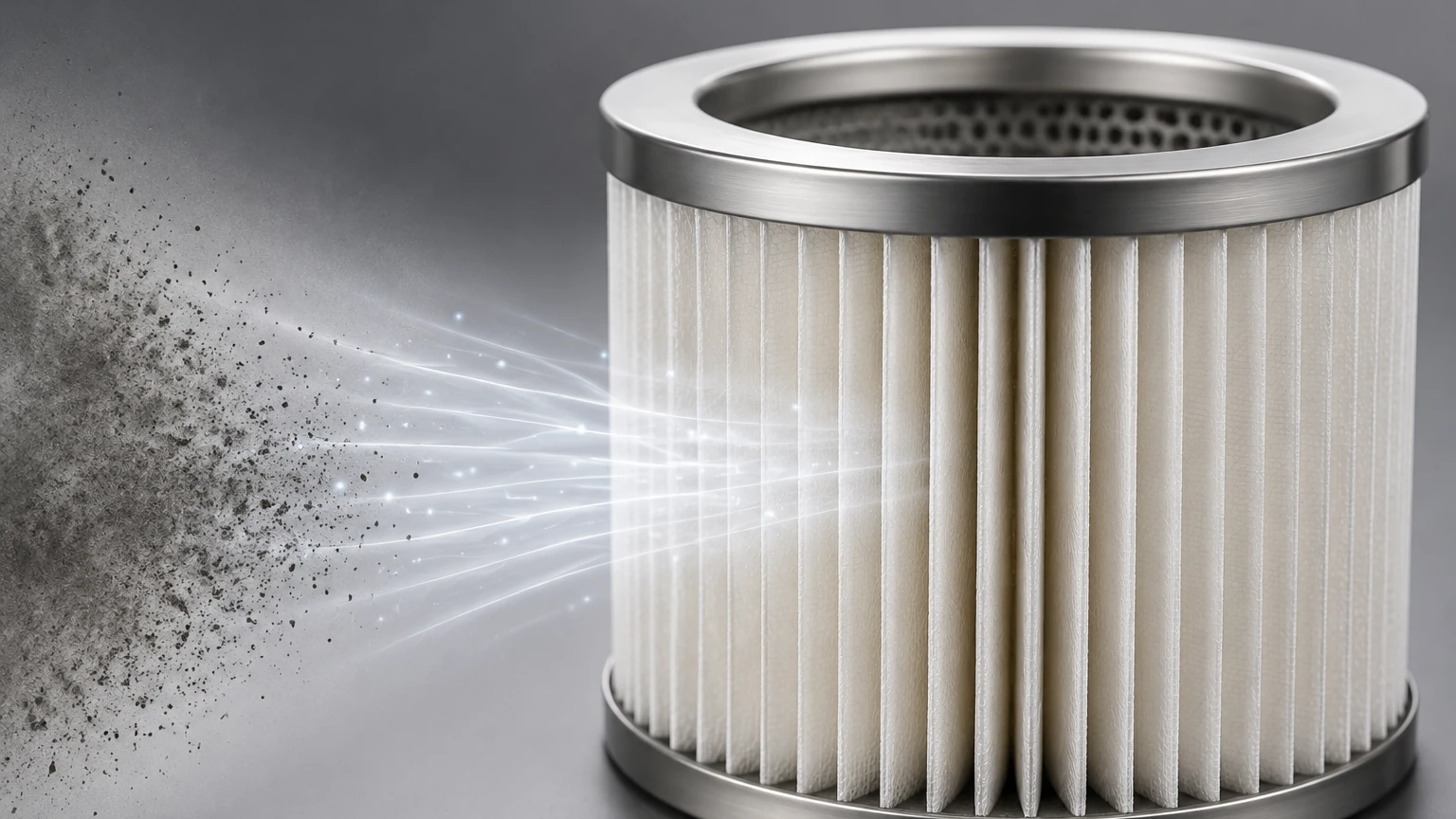
In the landscape of industrial air and gas purification, the term "HEPA" (High-Efficiency Particulate Air) represents a critical performance benchmark. For engineers and procurement specialists, understanding the technical nuances of true hepa filter efficiency 0.3 micron is essential for maintaining cleanroom standards, protecting sensitive equipment, and ensuring the safety of pharmaceutical or chemical processes. While many filtration products claim high efficiency, the "True HEPA" designation is strictly defined by its ability to capture at least 99.97% of particles that are 0.3 micrometers (microns) in diameter.
This article explores the engineering principles behind this efficiency rating, the significance of the 0.3-micron particle size, and how industrial facilities can optimize their filtration systems by integrating high-performance components, such as those found on the Kaifil Main Page.
The Technical Definition of True HEPA Efficiency
The HEPA standard was originally developed during the Manhattan Project to remove radioactive contaminants from the air. Today, it is governed by international standards such as DOE-STD-3020-2015 in the United States and EN 1822 in Europe. For a filter to be classified as "True HEPA," it must undergo rigorous testing to prove it can trap 99.97% of particles at the 0.3-micron level.
It is important to distinguish "True HEPA" from terms like "HEPA-type," "HEPA-like," or "99% efficiency." These marketing terms often lack the standardized testing required for industrial applications. In a B2B context, relying on non-standardized filters can lead to catastrophic failures in sterile environments or the contamination of high-purity chemical batches. True hepa filter efficiency 0.3 micron ensures a predictable level of performance that engineers can use in their mass-balance and contamination-control calculations.
The Physics of Filtration: Why 0.3 Microns is the Critical Benchmark
A common misconception in filtration is that filters act like simple sieves, where smaller particles simply pass through larger holes. In reality, HEPA filters utilize a complex interplay of physical mechanisms to capture particles. The 0.3-micron size is targeted specifically because it represents the Most Penetrating Particle Size (MPPS).
Diffusion
Particles smaller than 0.1 microns are so light that they do not follow streamlines. Instead, they are buffeted by gas molecules in a phenomenon known as Brownian motion. This erratic path increases the likelihood that the particle will collide with and adhere to a filter fiber. Therefore, HEPA filters are actually *more* efficient at capturing particles smaller than 0.1 microns than they are at 0.3 microns.
Interception
Particles that follow the airflow streamlines but come within one particle radius of a fiber are captured by interception. This mechanism is most effective for mid-sized particles that are large enough to follow the air path but small enough not to be thrown off by inertia.
Inertial Impaction
Larger, heavier particles (typically above 0.4 microns) have too much inertia to follow the curving streamlines around a filter fiber. Instead, they continue in a straight path and impact the fiber directly. This makes HEPA filters highly efficient at capturing dust, pollen, and large bacteria.
The 0.3 Micron "Gap"
The 0.3-micron particle sits at the intersection where diffusion becomes less effective and impaction has not yet become dominant. Because it is the hardest size to catch, it serves as the "worst-case scenario" for testing. If a filter can achieve 99.97% efficiency at 0.3 microns, its efficiency for both smaller and larger particles is typically even higher.
Industrial Applications of High-Efficiency Filtration
True hepa filter efficiency 0.3 micron is a requirement across several demanding sectors. Each industry has unique environmental stressors that dictate how these filters are deployed and protected.
Pharmaceutical and Biotechnology
In drug manufacturing and vaccine production, microbial contamination can ruin entire production runs. HEPA filters are used in laminar flow hoods and cleanroom HVAC systems to ensure that the air remains sterile. The 0.3-micron rating is sufficient to capture most airborne bacteria and larger viral clusters.
Semiconductor Manufacturing
Modern microchips have features measured in nanometers. A single 0.3-micron particle landing on a silicon wafer during the photolithography process can cause a short circuit, leading to significant yield loss. Semiconductor fabs utilize HEPA and ULPA (Ultra-Low Penetration Air) filters to maintain ISO Class 1 or Class 2 environments.
Chemical Processing and Exhaust Scrubber Systems
In chemical plants, high-efficiency filtration is used to recover valuable catalysts or to prevent hazardous particulate matter from being vented into the atmosphere. In these environments, standard fiberglass HEPA media may struggle with corrosive vapors. This is where specialized stainless steel pre-filters or high-precision metal mesh components become vital to protect the primary HEPA stage.
Material Science: Synthetic vs. Metallic Filtration Media
While traditional HEPA filters are constructed from a mat of randomly arranged borosilicate glass fibers, industrial environments often require more robust solutions. For engineers designing systems for high-temperature or high-pressure applications, the material of the filter housing and the pre-filtration stages is just as important as the HEPA media itself.
Stainless steel filtration solutions, such as those manufactured by Kaifil, provide the structural integrity needed to support high-efficiency systems. Precision wire mesh and sintered metal filters can act as essential pre-filters, removing the bulk of the particulate load before it reaches the HEPA stage. This staged approach extends the life of the HEPA filter and ensures that the true hepa filter efficiency 0.3 micron is maintained over a longer operational cycle.
In applications involving hydraulic fluids or high-viscosity liquids, metal filter cartridges offer the advantage of being cleanable and reusable, whereas standard HEPA media is strictly a consumable item. Understanding when to use a disposable HEPA filter versus a permanent stainless steel precision filter is a key part of total cost of ownership (TCO) analysis.
Engineering Considerations: Pressure Drop and Airflow
One of the most significant challenges in implementing true hepa filter efficiency 0.3 micron is the resulting pressure drop (resistance). Because the filter media is so dense, it requires significant energy to push air or gas through it.
1. Initial Pressure Drop: This is the resistance of a clean filter. Engineers must size fans and blowers to handle this resistance while still maintaining the required flow rate (CFM).
2. Operating Pressure Drop: As the filter captures particles, the resistance increases. Systems must be designed with variable frequency drives (VFDs) to increase fan speed as the filter loads, or risk a drop in air quality.
3. Terminal Pressure Drop: This is the point at which the filter is considered "full" and must be replaced. Exceeding this point can lead to media rupture or "blow-by," where contaminants bypass the filter entirely.
By utilizing high-quality stainless steel supports and precision-engineered housings, industrial operators can minimize turbulence and ensure that the pressure drop is distributed evenly across the filter surface, maximizing the lifespan of the media.
Maintenance and Replacement Cycles in B2B Environments
For a facility manager, the goal is to maintain true hepa filter efficiency 0.3 micron without incurring unnecessary downtime. A proactive maintenance strategy involves:
* Differential Pressure Monitoring: Installing manometers or digital sensors to track the pressure drop across the filter bank. This provides a data-driven schedule for replacement rather than relying on arbitrary calendar dates.
* Integrity Testing (DOP/PAO Testing): Periodically challenging the filter with a known concentration of aerosol particles (like Dispersed Oil Particulate) and measuring the downstream concentration. This ensures that no leaks have developed in the gaskets or the filter frame.
* Pre-filter Optimization: Using lower-cost, high-durability filters (such as stainless steel wire mesh) to capture particles in the 10-50 micron range. This prevents the HEPA filter from becoming clogged with large debris, allowing it to focus on the 0.3-micron particles it was designed for.
Customization and OEM Solutions
Not every industrial application fits a standard 24×24-inch HEPA frame. Many OEM manufacturers require custom filtration components that fit into compact medical devices, specialized aerospace hardware, or unique chemical reactors.
Customization options often include:
* Custom Dimensions: Tailoring the filter size to fit existing machinery footprints.
* Material Compatibility: Selecting specific grades of stainless steel (e.g., 304, 316L) for the filter structure to withstand corrosive environments.
* End-Cap Configurations: Designing specialized fittings (threaded, flanged, or bayonet) to ensure a leak-proof seal within the system.
Working with a manufacturer that understands both the physics of high-efficiency filtration and the mechanical requirements of industrial hardware is essential for successful integration.
Conclusion: Selecting the Right Filtration Partner
Achieving and maintaining true hepa filter efficiency 0.3 micron is not merely about buying a rated product; it is about designing a comprehensive filtration strategy. From the initial selection of the MPPS benchmark to the integration of durable stainless steel pre-filters, every component plays a role in the system's overall performance.
For engineers and purchasing teams, the focus should remain on verified performance data, material longevity, and the ability to customize solutions for specific industrial challenges. By prioritizing these factors, companies can ensure process purity, protect expensive downstream equipment, and comply with the most stringent regulatory standards. To explore a wide range of industrial filtration components and custom manufacturing capabilities, visit the Kaifil Main Page for detailed product specifications and engineering support.
