


Foam Filtration
In the landscape of industrial separation technology, foam filtration represents a specialized approach to removing particulates and contaminants from fluid streams. Unlike traditional surface filtration, which relies on a thin barrier to stop particles, foam filtration utilizes a three-dimensional, reticulated structure to achieve high-efficiency depth filtration. For engineers and procurement specialists in sectors such as chemical processing, hydraulics, and pharmaceutical manufacturing, understanding the technical nuances of foam-like structures—particularly those constructed from durable materials like stainless steel—is essential for optimizing system performance and longevity.
Industrial foam filtration is characterized by its high porosity and interconnected cell structure. This geometry allows for high flow rates with minimal pressure drop, making it an ideal solution for applications where energy efficiency and high throughput are paramount. This article explores the engineering principles, material considerations, and selection criteria necessary for implementing effective filtration solutions in demanding environments.
Understanding the Principles of Foam Filtration
The efficacy of foam filtration is rooted in its unique physical architecture. Most industrial foam filters feature an "open-cell" or reticulated structure. This means the individual cells are not enclosed but are interconnected, creating a complex, tortuous path for the fluid to travel through.
Depth Filtration Mechanics
As a fluid passes through the foam matrix, particles are captured through several mechanisms:
1. Inertial Impaction: Larger particles, unable to follow the fluid's streamlined path around the foam struts, collide with and adhere to the filter material.
2. Interception: Medium-sized particles that follow the fluid flow come into contact with the foam surface and are trapped.
3. Diffusion (Brownian Motion): Very fine particles move erratically within the fluid stream, eventually making contact with the filter media.
The "tortuosity" of the path—the degree to which the fluid must twist and turn—directly influences the filtration efficiency. A more complex path increases the likelihood of particle-to-media contact, enhancing the capture rate of smaller contaminants without significantly increasing the resistance to flow.
Material Selection for Industrial Environments
While polymer-based foams are common in low-temperature or disposable applications, industrial processes often require materials that can withstand extreme conditions. The choice of material is the primary factor in determining the filter's chemical compatibility, thermal stability, and mechanical strength.
Polyurethane and Ceramic Foams
Polyurethane foams are frequently used for air filtration and pre-filtration due to their low cost and flexibility. However, they are limited by low thermal resistance and susceptibility to chemical degradation. Ceramic foams, on the other hand, offer excellent heat resistance and are often used in molten metal filtration, though they are brittle and sensitive to mechanical shock.
Stainless Steel and Metal Foams
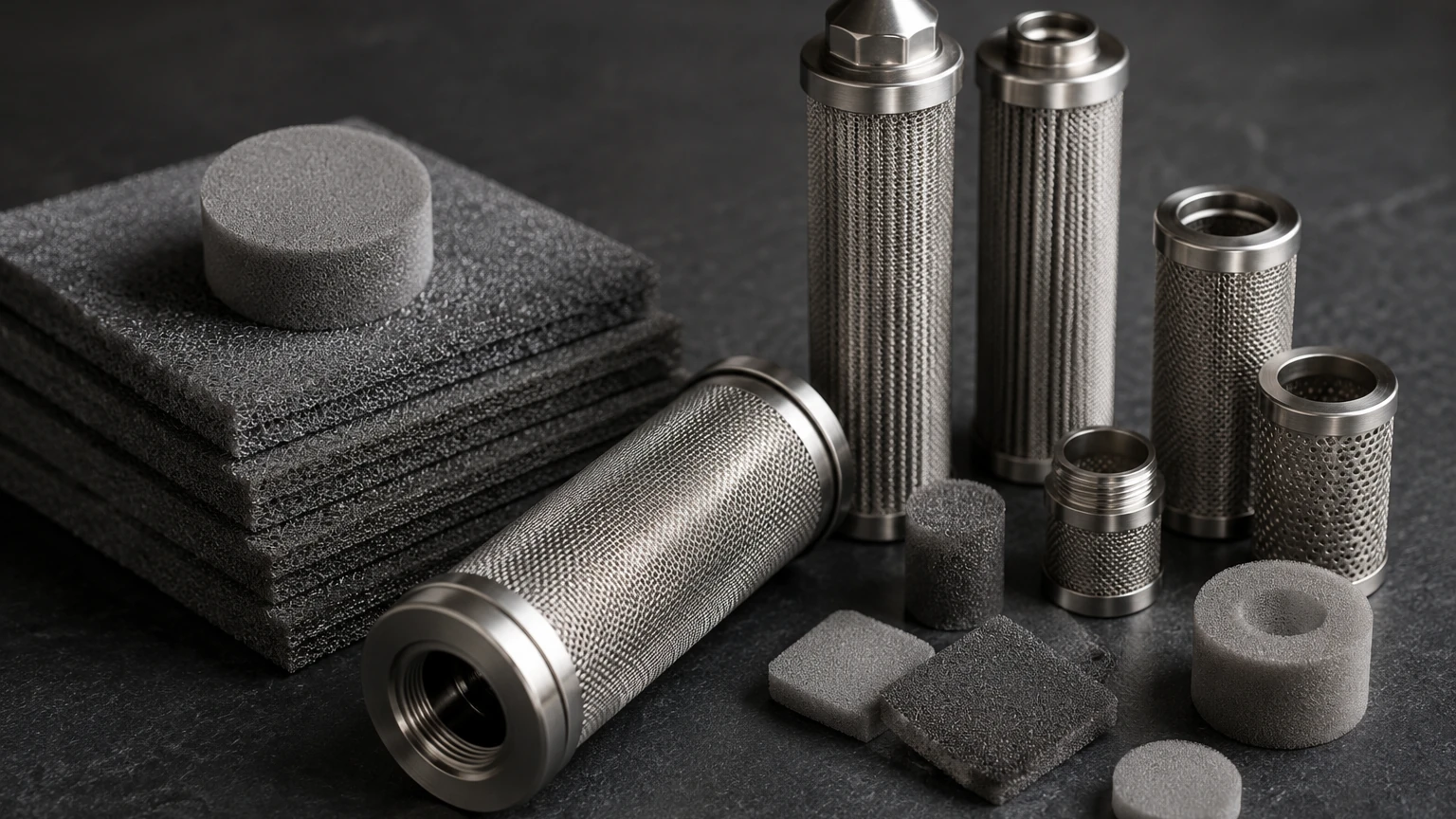
For the most demanding B2B applications, stainless steel (typically 304 or 316L grades) is the material of choice. Metal foam filtration solutions provide the structural integrity of a solid metal component with the functional porosity of a foam. These filters are essential in high-pressure hydraulic systems, corrosive chemical lines, and high-temperature steam applications. Stainless steel foam-like structures, such as those integrated into precision filter cartridges, offer superior durability, allowing for repeated cleaning and long-term reuse, which significantly lowers the total cost of ownership.
Key Performance Indicators (KPIs) for Filter Selection
When evaluating foam filtration components, engineers must look beyond simple dimensions. Several technical metrics define the performance profile of the filter:
Pores Per Inch (PPI)
PPI is a standard measure of the foam's coarseness or fineness. A higher PPI indicates a denser structure with smaller pores, providing higher filtration efficiency for fine particles but potentially increasing the pressure drop. Common industrial ratings range from 10 PPI (coarse) to 100 PPI (fine). It is critical to balance the PPI with the viscosity of the fluid to prevent premature clogging.
Pressure Drop (ΔP)
The pressure drop across a filter is a measure of the energy lost as fluid passes through the media. In foam filtration, the high void volume (often exceeding 90%) ensures that ΔP remains low compared to sintered or woven media of similar micron ratings. Engineers must calculate the maximum allowable pressure drop at the end of the filter's service life to ensure the system's pumps or compressors are not overloaded.
Dirt Holding Capacity
Because foam filtration acts as a depth medium, it has an exceptional dirt-holding capacity. Particles are trapped throughout the entire volume of the filter, not just on the surface. This leads to longer intervals between maintenance cycles and more stable flow rates over time.
Industrial Applications and Use Cases
Foam filtration is utilized across a broad spectrum of industries, each with specific technical requirements.
Chemical and Petrochemical Processing
In these environments, filters must resist aggressive solvents and high temperatures. Stainless steel foam structures are used for mist elimination and gas-liquid separation, ensuring that downstream equipment is protected from liquid carryover and corrosive aerosols.
Hydraulic and Lubrication Systems
High-performance hydraulic systems require clean fluid to prevent wear on precision valves and actuators. Foam-based pre-filters remove large contaminants before the fluid reaches high-efficiency surface filters, extending the life of the entire filtration system.
Food and Beverage Production
Filtration in this sector requires materials that are non-toxic and easy to sterilize. Stainless steel filtration components are preferred because they can withstand Steam-In-Place (SIP) and Clean-In-Place (CIP) procedures without losing structural integrity or leaching contaminants into the product stream.
Engineering Challenges and Risk Mitigation
Implementing foam filtration is not without its challenges. Engineers must account for several risks during the design and procurement phases:
* Media Migration: In lower-quality polymer foams, there is a risk of the foam material shedding particles into the filtrate. This is mitigated by selecting high-quality, reticulated metal foams or ensuring the foam is properly bonded within a housing.
* Bypass Risks: If the filter is not seated correctly within its housing, fluid will take the path of least resistance, bypassing the filtration media entirely. Precision-engineered seals and custom-designed end caps are necessary to ensure 100% filtration.
* Chemical Compatibility: Even stainless steel can succumb to specific corrosive agents under certain temperatures and concentrations. It is vital to confirm the specific alloy (e.g., 316L vs. 904L) is suitable for the chemical profile of the process fluid.
Customization and OEM Solutions in Filtration
Standard off-the-shelf filters rarely meet the specific needs of complex industrial systems. Customization is often required to match the exact flow rates, housing dimensions, and filtration levels of a particular application.
Working with a specialized manufacturer allows for the development of tailored filtration components. This includes the integration of foam-like metal structures into specialized cartridges or the creation of unique geometries for OEM equipment. For those seeking detailed technical specifications and support for customized filtration projects, visiting the Main Page of a professional manufacturer provides access to engineering resources and product catalogs that facilitate informed decision-making.
Customization also extends to the structural reinforcement of the filter. In high-pressure applications, a foam filter may be supported by a perforated metal core or an outer shroud to prevent deformation under heavy loads. These engineering enhancements ensure that the filter performs reliably even under fluctuating process conditions.
Maintenance and Total Cost of Ownership (TCO)
One of the primary advantages of high-quality metal foam filtration is its cleanability. While polymer foams are typically discarded after use, stainless steel filters can be cleaned using several methods:
* Ultrasonic Cleaning: High-frequency sound waves create cavitation bubbles that dislodge deeply embedded particles from the foam matrix.
* Backwashing: Reversing the flow of fluid through the filter can flush out accumulated contaminants.
* Chemical Cleaning: Soaking the filter in compatible solvents or acids can dissolve organic or mineral buildup.
When calculating the Total Cost of Ownership, procurement teams must weigh the higher initial investment of a stainless steel filter against the recurring costs of disposable filters, including replacement units, labor for frequent changes, and disposal fees for contaminated waste. In most long-term industrial operations, the durability and reusability of metal-based filtration solutions provide a significantly better return on investment.
Conclusion
Foam filtration is a versatile and efficient technology for managing fluid purity in industrial settings. By leveraging the principles of depth filtration and selecting materials capable of withstanding harsh environments, engineers can ensure the reliability and efficiency of their processes. Whether the goal is to protect sensitive downstream components or to ensure the purity of a final product, the selection of the right foam filtration media is a critical engineering decision. Focusing on technical parameters like PPI, pressure drop, and material compatibility—and opting for customized OEM solutions when necessary—will lead to optimized filtration performance and reduced operational costs.
