


Drum Filter for Pond
In the realm of large-scale aquaculture, industrial water treatment, and high-end pond management, the requirement for consistent water clarity and the removal of suspended solids is paramount. A drum filter for pond applications represents one of the most efficient mechanical filtration solutions available today. Unlike traditional static pressure filters or gravity-fed matting systems, the rotary drum filter (RDF) provides a continuous, automated process that removes waste before it can break down and impact water chemistry.
For engineers and procurement specialists, selecting the right filtration system requires a deep understanding of hydraulic loads, micron ratings, and material durability. As a specialist in custom stainless steel filtration solutions, Kaifil provides the precision components—specifically the high-grade wire mesh—that define the performance and longevity of these systems. To explore our full range of industrial filtration components, visit our Main Page.
Understanding the Mechanics of Drum Filtration
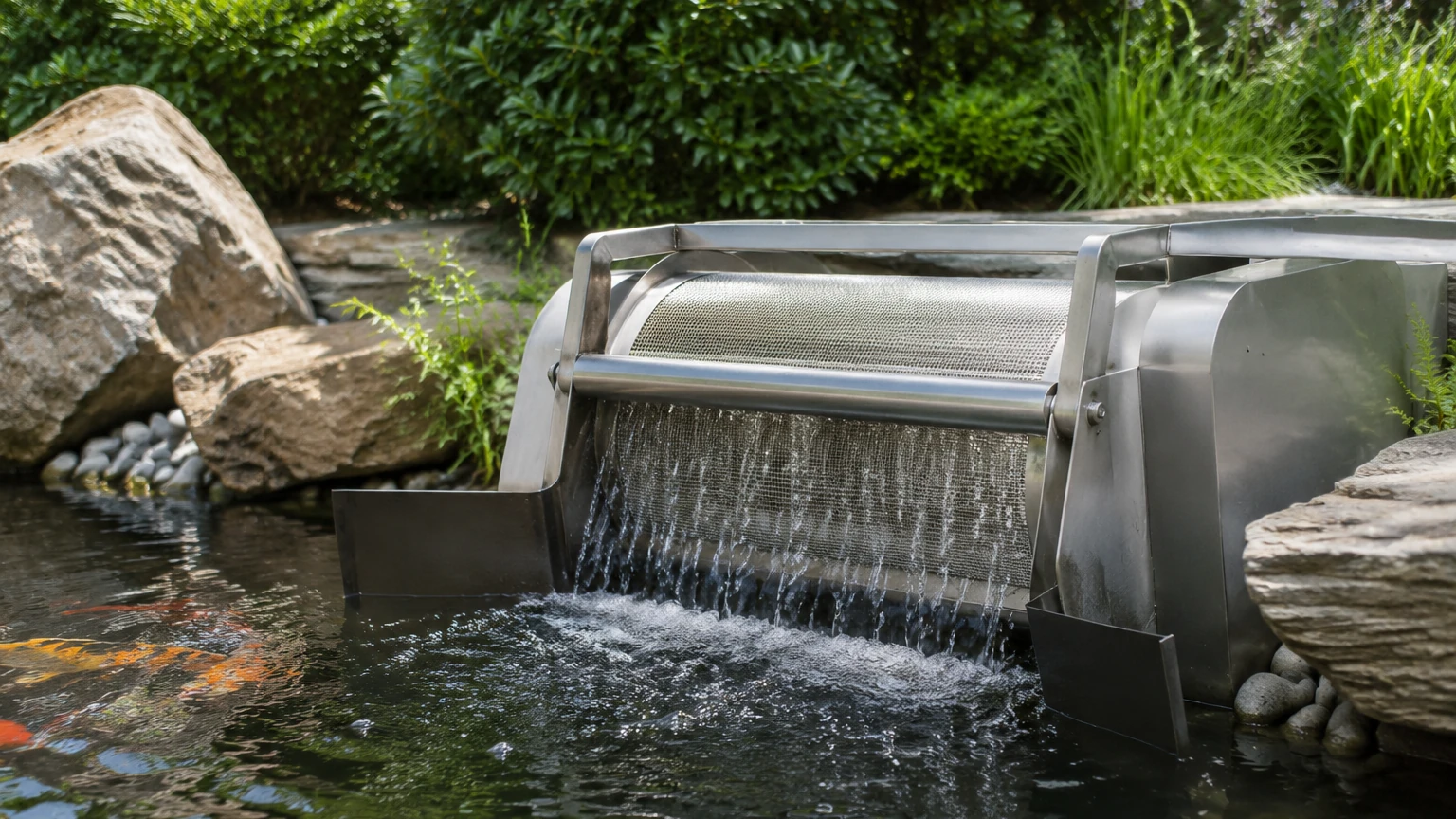
The fundamental operation of a drum filter for pond systems is based on mechanical sieving. The unit consists of a rotating drum covered in a fine filtration medium, usually a stainless steel wire mesh. Water enters the interior of the drum and is forced outward through the mesh by gravity or pump pressure.
As the water passes through the screen, particles such as uneaten feed, organic debris, and suspended solids are trapped on the inner surface of the mesh. As these solids accumulate, they create a "filter cake" which actually increases the filtration efficiency but simultaneously restricts water flow. This restriction causes a rise in the water level inside the drum (or a drop in the outer chamber, depending on the design).
Once a predetermined water level differential is reached, a sensor triggers the cleaning cycle. The drum begins to rotate, and high-pressure spray nozzles located above the drum blast water through the mesh from the outside in. This dislodges the trapped debris into a waste trough, which then carries the waste out of the system. This self-cleaning mechanism ensures that the filter operates at peak efficiency without the manual labor associated with traditional filter pads.
The Role of Stainless Steel Wire Mesh in Filtration Performance
The most critical component of any drum filter for pond use is the filter screen. While some entry-level models use synthetic fabrics, industrial and high-performance applications demand stainless steel wire mesh. The choice of material and weave type directly impacts the system's reliability and the quality of the filtrate.
Material Selection: 304 vs. 316 Stainless Steel
In most freshwater pond environments, Grade 304 stainless steel offers sufficient corrosion resistance. However, for applications involving brackish water, chemical treatments, or industrial runoff, Grade 316 stainless steel is the industry standard due to its increased molybdenum content, which provides superior resistance to pitting and chloride-induced corrosion.
Micron Rating and Open Area
The micron rating determines the smallest particle size the filter can effectively remove. For koi ponds and aquaculture, common ratings range from 40 to 100 microns. A lower micron rating provides clearer water but increases the frequency of cleaning cycles. Engineers must balance the micron rating with the "open area" percentage of the mesh. A higher open area allows for greater flow rates and lower head loss, which reduces the energy consumption of the circulation pumps.
Durability and Fatigue Resistance
Because the drum rotates and is subjected to high-pressure backwashing hundreds of times a day, the mesh must exhibit high fatigue resistance. Precision-woven stainless steel mesh from specialized manufacturers like Kaifil ensures that the wire diameters are consistent and the weave is tight, preventing the mesh from sagging or tearing under hydraulic pressure.
Key Engineering Specifications for Selection
When specifying a drum filter for pond or industrial use, several technical parameters must be evaluated to ensure the system meets the application's demands.
1. Maximum Flow Rate (GPH/LPH): This is the volume of water the filter can process per hour. It is influenced by the surface area of the drum and the micron rating of the mesh. It is a common mistake to size a filter based on its maximum theoretical flow; instead, engineers should size it based on the "dirty" flow rate to account for peak waste loading.
2. Hydraulic Head Loss: This refers to the pressure drop across the filter medium. Minimizing head loss is essential for maintaining gravity-fed systems and reducing pump wear.
3. Backwash Pressure and Volume: The cleaning system requires a dedicated high-pressure pump. Engineers must confirm that the available water supply can meet the pressure requirements (typically 4–6 bar) to ensure the mesh is thoroughly cleaned during each cycle.
4. Control System Integration: Modern drum filters often feature PLC (Programmable Logic Controller) integration. This allows for adjustable cleaning durations, emergency bypass alerts, and integration with broader building management systems (BMS).
Operational Challenges and Maintenance Strategies
While a drum filter for pond applications is designed for automation, it is not entirely maintenance-free. Understanding the common failure points is essential for long-term operational success.
Bio-fouling and Mineral Scaling
In environments with high mineral content (hard water) or high nutrient loads, the stainless steel mesh can become coated with calcium deposits or biofilm. This reduces the effective open area and causes the filter to clean itself too frequently. Periodic deep cleaning with a mild acid solution or specialized descaling agents is necessary to restore the mesh's permeability.
Seal Integrity
The drum must maintain a tight seal between the rotating assembly and the stationary housing. If the silicone or rubber seals degrade, "dirty" water can bypass the filter mesh, leading to a rapid decline in water quality. Regular inspection of these wear parts is a critical part of the maintenance cycle.
Drive System Reliability
The motor and gear assembly that rotates the drum are subject to high torque, especially if the drum is heavily loaded with debris. Ensuring the drive system is appropriately rated for the drum's weight and that all bearings are lubricated (or are maintenance-free polymer bearings) is vital for avoiding mechanical failure.
Customization and Industrial Scaling
Every industrial pond or aquaculture facility has unique requirements that off-the-shelf products may not satisfy. Customization is often necessary in the following areas:
* Custom Drum Dimensions: For facilities with existing concrete pits or restricted footprints, custom-sized drums allow for the maximization of filtration surface area within the available space.
* Specialized Mesh Weaves: Depending on the nature of the solids—whether they are fibrous, granular, or gelatinous—different weave patterns (such as plain weave or Dutch weave) can be utilized to optimize particle retention and backwash release.
* Housing Materials: While many pond filters use plastic housings, industrial versions often utilize full stainless steel enclosures for maximum structural integrity and resistance to UV degradation and physical impact.
Kaifil specializes in these types of customized filtration solutions. By working closely with OEM manufacturers and facility engineers, we develop filtration components that are tailored to specific flow dynamics and environmental conditions. Our focus on precision engineering ensures that the stainless steel cartridges and mesh components integrated into a drum filter for pond systems deliver reliable performance over years of continuous operation.
Total Cost of Ownership and ROI Analysis
From a procurement perspective, the initial capital expenditure (CAPEX) of a drum filter for pond use is significantly higher than that of traditional bead filters or sand filters. However, the return on investment (ROI) is realized through reduced operational expenditure (OPEX).
* Water Savings: Traditional filters require long backwash cycles that discard large volumes of treated water. Drum filters use a targeted spray that minimizes water waste, which is particularly beneficial in regions with high water costs or strict discharge regulations.
* Labor Reduction: The automated nature of the RDF eliminates the need for daily or weekly manual cleaning, allowing technical staff to focus on more critical system parameters.
* Improved Biological Efficiency: By removing solids before they decompose, the drum filter reduces the load on the biological filtration stage (such as moving bed biofilm reactors). This leads to lower ammonia and nitrite levels, healthier aquatic life, and reduced chemical usage.
When evaluating the total cost of ownership, the longevity of the filter medium is a major factor. A high-quality stainless steel mesh screen can last significantly longer than synthetic alternatives, provided it is manufactured to high standards and maintained correctly. This durability reduces the frequency of replacement parts and the associated downtime.
Conclusion
Selecting a drum filter for pond or industrial water management is a strategic decision that impacts the overall efficiency of the water treatment loop. By focusing on technical specifications—such as the quality of the stainless steel wire mesh, the hydraulic capacity, and the robustness of the drive system—engineers can ensure they implement a solution that provides long-term reliability and superior water clarity.
As industrial filtration needs become more complex, the importance of high-performance components cannot be overstated. Whether you are designing a new system or upgrading an existing facility, confirming the material specifications and customization options with a professional manufacturer is a critical step. For more information on custom filtration components and engineering support, please refer to our Main Page.
