


Wire Mesh Discs
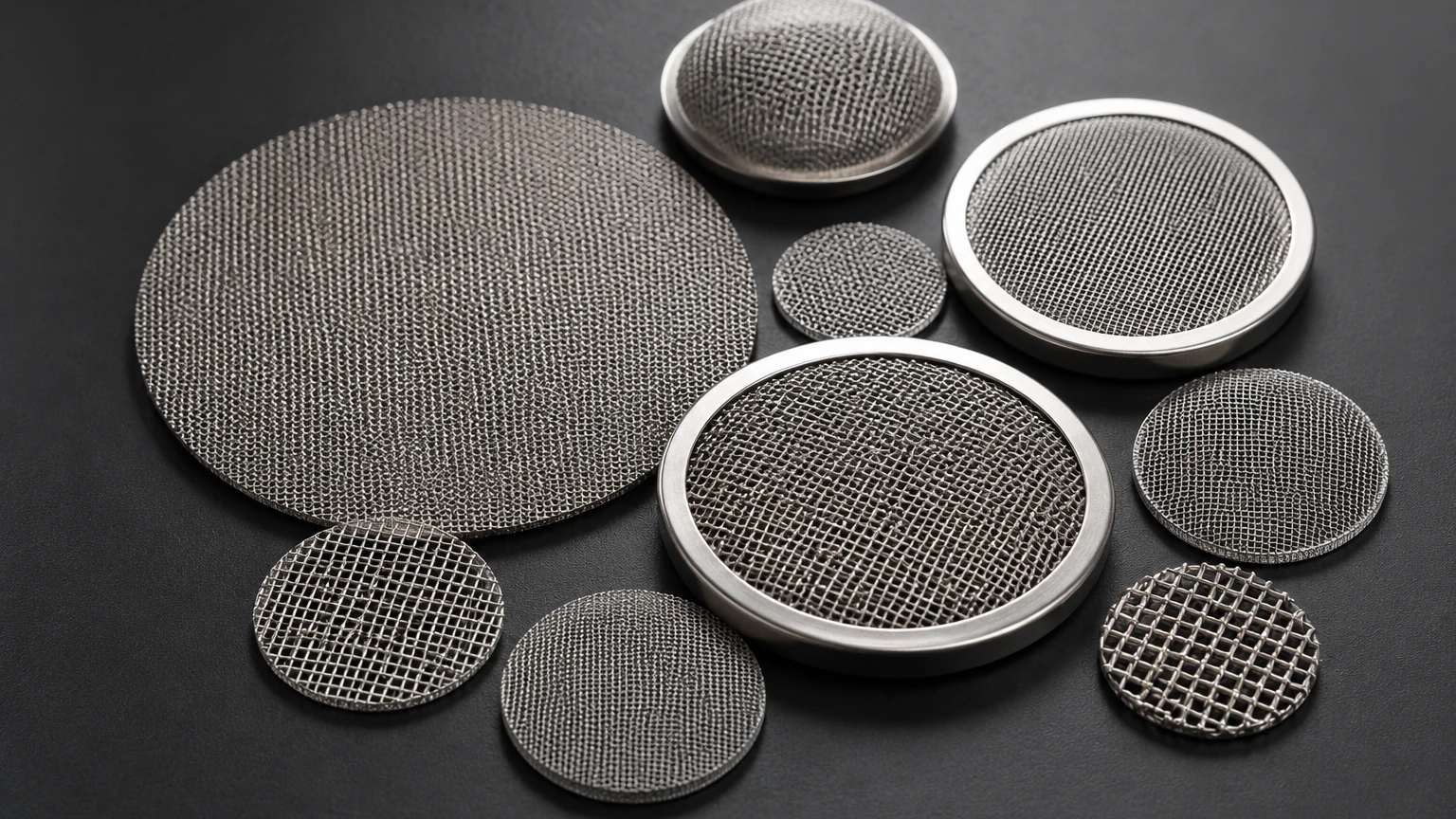
In the landscape of industrial filtration, wire mesh discs represent one of the most versatile and essential components for precision separation and media support. These circular filter elements, fabricated from woven wire cloth, are utilized across a vast spectrum of industries, including chemical processing, plastic extrusion, pharmaceutical manufacturing, and water treatment. As a specialized manufacturer, Kaifil focuses on delivering high-performance stainless steel filtration solutions that meet the rigorous technical demands of modern engineering environments.
Selecting the appropriate wire mesh discs requires an in-depth understanding of material science, weave patterns, and mechanical stresses. This guide provides a technical overview of the design considerations, material properties, and application-specific requirements that engineers and purchasing teams must evaluate to ensure optimal filtration performance and cost-efficiency.
Understanding Wire Mesh Discs: Construction and Materials
At their core, wire mesh discs are precision-cut sections of industrial wire cloth. While they may appear simple, their performance is dictated by the quality of the raw material and the accuracy of the fabrication process. Stainless steel is the industry standard for these components due to its inherent resistance to corrosion, high temperatures, and mechanical wear.
Material Selection
The choice of alloy is the first critical decision in the procurement process. The most common materials include:
* AISI 304 Stainless Steel: The standard grade for general industrial use. It offers excellent durability and cost-effectiveness for applications where extreme corrosion resistance is not the primary concern.
* AISI 316/316L Stainless Steel: Contains molybdenum, which significantly enhances resistance to chlorides and pitting. This is the preferred choice for marine environments, chemical processing, and pharmaceutical applications where hygiene and material stability are paramount.
* Specialty Alloys: For environments involving extreme heat or highly aggressive chemicals, discs can be fabricated from Monel, Inconel, or Hastelloy. These materials maintain structural integrity at temperatures where standard stainless steel might fail.
Fabrication Techniques
Precision in diameter and edge finish is vital for ensuring a proper seal within the filter housing. Manufacturing methods typically involve:
1. Stamping/Punching: Ideal for high-volume production of standard sizes. Precision dies ensure consistent dimensions across large batches.
2. Laser/Plasma Cutting: Used for custom sizes or complex geometries where tool-and-die costs are not justified. This method provides clean edges and high dimensional accuracy for specialized equipment.
Weave Types and Their Impact on Filtration Performance
The geometry of the weave determines the filtration characteristics of wire mesh discs, including the micron rating, flow rate, and particle retention capabilities. Understanding the relationship between wire diameter and aperture size is essential for calculating the effective filtration area.
Plain Weave
The most straightforward construction, where each warp wire crosses over and under each shute wire. Plain weave discs offer a high percentage of open area, making them suitable for high-flow applications with low-pressure drops. However, they are generally limited to coarser filtration levels.
Twill Weave
In a twill weave, each shute wire passes over and under two warp wires. This allows for a heavier wire diameter to be used for a given mesh count, resulting in a stronger mesh that can withstand higher mechanical loads. Twill weave is often used when a finer mesh is required without sacrificing structural stability.
Dutch Weave (Plain and Twill)
Dutch weaves utilize a larger diameter for the warp wires and a smaller diameter for the shute wires. The wires are driven closely together, creating a dense, wedge-shaped opening. This construction is ideal for high-pressure filtration and fine particle retention. Dutch weave wire mesh discs are frequently employed in hydraulic systems and fuel filtration where precision is non-negotiable.
Single-Layer vs. Multi-Layer Sintered Discs
Depending on the application's pressure and the nature of the fluid being filtered, engineers must choose between single-layer and multi-layer configurations.
Single-Layer Discs
These are the most economical option and are typically used in applications with low differential pressure. They are easy to clean and replace. However, in fine mesh counts, single-layer discs can be fragile and may require a perforated support plate to prevent deformation under flow.
Multi-Layer and Sintered Discs
To increase mechanical strength and filtration depth, multiple layers of mesh can be stacked. These layers often include a fine filtration layer protected by coarser drainage and support layers.
Sintered wire mesh discs take this a step further by bonding the layers together through a vacuum heat-treatment process. This creates a monolithic structure where the individual wires cannot migrate. Sintered discs offer several advantages:
* Permanent Pore Geometry: The apertures remain fixed even under high pressure.
* High Mechanical Strength: They can withstand significant back-pressure during cleaning cycles.
* Ease of Cleaning: The smooth surface and rigid structure allow for effective ultrasonic cleaning or back-washing, extending the component's service life.
Engineering Considerations for Custom Disc Design
When specifying wire mesh discs for a new system or as replacement parts, several engineering variables must be confirmed to ensure compatibility and performance. At Kaifil, we work closely with clients to define these parameters during the design phase.
Edge Treatment and Sealing
The edge of the disc is a potential point of bypass if not handled correctly. Common edge treatments include:
* Raw Edges: Suitable for discs that are clamped tightly between two flat surfaces.
* Rimmed/Bound Edges: A metal U-binding is applied to the circumference. This provides structural rigidity, protects the mesh from fraying, and can act as a gasket surface for a better seal.
* Spot Welding: In multi-layer discs, spot welding at the perimeter ensures the layers stay aligned during installation.
Pressure Drop and Flow Rate
The "clean pressure drop" is a critical metric. If the mesh is too fine or the open area is too small, the pump must work harder, increasing energy costs and the risk of cavitation. Engineers must balance the required micron rating with the available surface area of the disc. For more information on how to calculate these requirements for your specific system, you can review product options and application support on the Kaifil Main Page.
Industry-Specific Applications
Wire mesh discs are integrated into various industrial processes, each with unique performance benchmarks.
Polymer and Plastic Extrusion
In the plastics industry, wire mesh discs are used in "screen changers" to remove contaminants from the molten polymer before it reaches the die. These discs must withstand extreme temperatures (up to 400°C) and very high pressures. Multi-layer spot-welded packs are common here to prevent the mesh from collapsing under the viscosity of the melt.
Chemical and Petrochemical Processing
Filtration in chemical reactors often involves corrosive fluids and catalysts. Wire mesh discs made from 316L or specialty alloys are used to recover expensive catalysts or to protect downstream equipment from particulate matter. The ability to withstand chemical cleaning agents is a primary requirement in this sector.
Food and Beverage Production
Hygiene is the priority in food-grade applications. Discs must be burr-free and made from materials that comply with FDA or equivalent standards. Stainless steel discs are preferred because they do not shed fibers (unlike paper or fabric filters) and can be sterilized repeatedly.
Quality Control and Selection Criteria for Procurement
For purchasing teams, the total cost of ownership is often more important than the initial purchase price. A low-quality wire mesh disc that fails prematurely or allows bypass can lead to expensive downtime or equipment damage.
Key Evaluation Criteria
1. Mesh Uniformity: Inconsistent aperture sizes lead to unpredictable filtration results. High-quality discs should have a uniform weave across the entire surface.
2. Dimensional Tolerance: Discs must fit precisely within the filter housing. Even a millimeter of deviation can cause bypass or installation difficulties.
3. Material Certification: Ensure the manufacturer provides material test reports (MTRs) to verify the alloy composition, especially for 316L or specialty metals.
4. Cleanliness: For pharmaceutical or electronic applications, discs must be free of residual oils or metallic dust from the manufacturing process.
Common Risks to Avoid
* Wire Migration: In low-quality mesh, individual wires can break loose and enter the process stream. Sintered or high-quality woven mesh minimizes this risk.
* Corrosion Fatigue: Using 304 stainless steel in a high-chloride environment will lead to rapid failure. Always match the alloy to the chemical environment.
* Insufficient Support: Fine mesh discs without adequate support will "balloon" or tear under pressure. Always confirm if a support mesh or perforated plate is required.
Conclusion
Wire mesh discs are foundational elements in industrial filtration, providing a reliable and cleanable solution for particle separation. Whether used as a single-layer screen in a simple strainer or a complex multi-layer sintered component in a high-pressure hydraulic system, the performance of these discs depends on precise engineering and material selection.
By focusing on technical specifications such as weave type, alloy grade, and edge construction, engineers can optimize their filtration processes for durability and efficiency. Kaifil remains committed to providing the technical expertise and manufacturing precision necessary to support these demanding industrial applications. For detailed technical data and customized filtration solutions, visit our Main Page to connect with our engineering team.
