


Simplex Basket
In the landscape of industrial fluid handling, the simplex basket—often referred to as a simplex strainer or basket filter—serves as a critical line of defense for downstream equipment. Designed to remove unwanted solids from liquids, these components are essential for protecting pumps, valves, heat exchangers, and nozzles from damage, clogging, and premature wear. For engineers and procurement specialists, selecting the correct simplex basket involves a deep understanding of flow dynamics, material compatibility, and the specific mechanical requirements of the application.
As a specialized manufacturer of stainless steel filtration solutions, Kaifil provides high-performance components tailored to the rigorous demands of industrial environments. To explore the full range of custom filtration options and technical specifications, professionals are encouraged to visit the Main Page for detailed product data and engineering support.
The Fundamental Design and Function of a Simplex Basket
A simplex basket is a single-chamber filtration device installed in a pipeline to remove particulate matter. Unlike duplex strainers, which utilize two chambers and a diverter valve to allow for continuous operation during cleaning, a simplex system requires the flow to be temporarily halted or bypassed for maintenance. This makes them the primary choice for batch processes, cooling water systems, and any application where scheduled downtime is permissible.
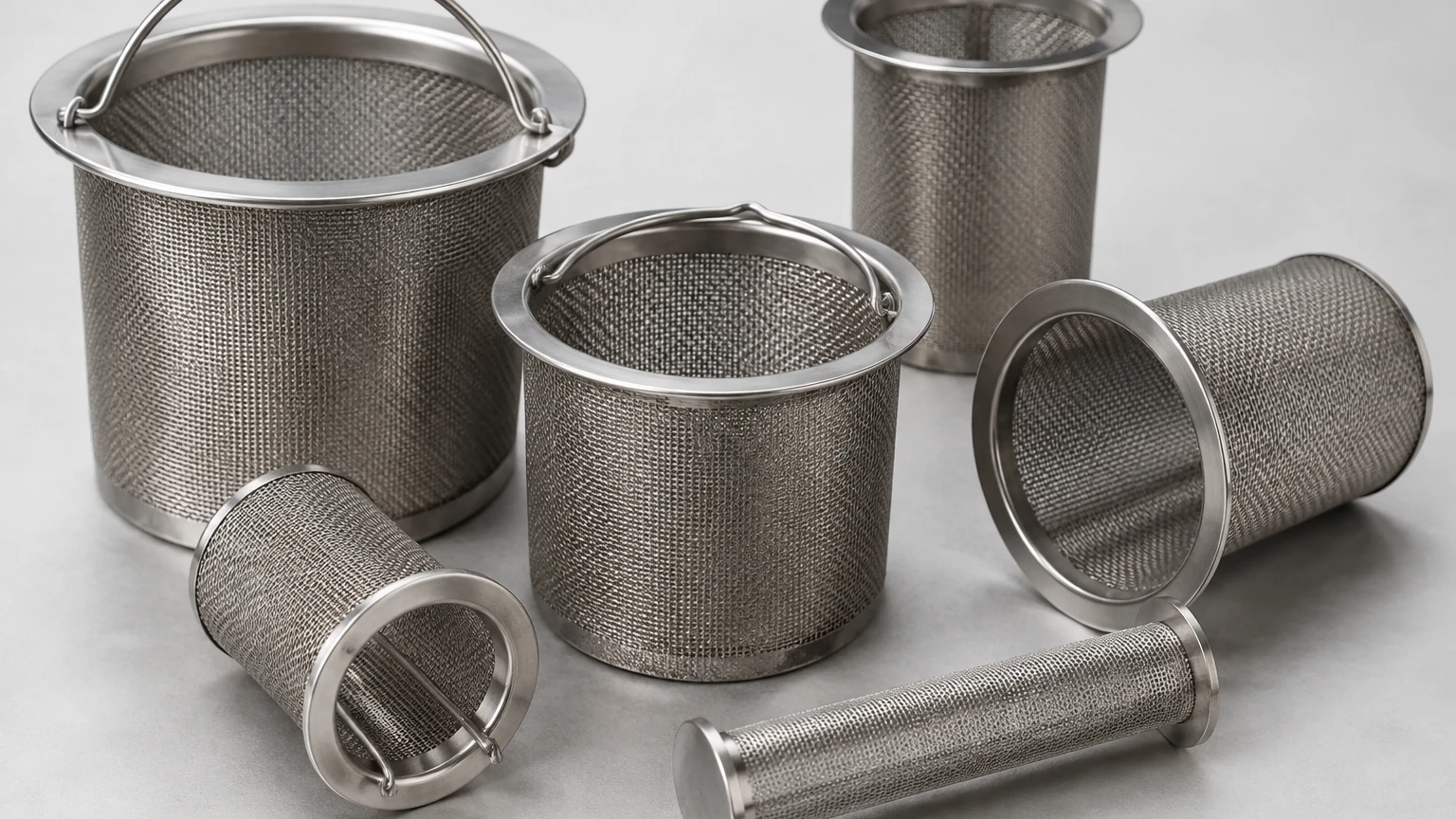
The core of the system is the internal basket. This component is typically constructed from perforated metal or a combination of perforated metal and fine wire mesh. The fluid enters the basket from the top or side, passes through the filtration media, and exits through the outlet, leaving the debris trapped inside the basket. The "basket" design is preferred over Y-strainers in many industrial scenarios because it offers a larger surface area, allowing for a greater dirt-holding capacity and longer intervals between cleaning cycles.
Engineering Considerations: Flow Rate and Pressure Drop
One of the most critical factors in specifying a simplex basket is the allowable pressure drop (ΔP). Every filtration component introduces a degree of resistance to the flow. In engineering terms, the "clean pressure drop" is the resistance measured when the filter is first installed. As the basket accumulates debris, the open area decreases, and the pressure drop increases.
Several variables influence this metric:
1. Open Area Ratio: This is the ratio of the total open area of the basket's holes to the cross-sectional area of the inlet pipe. For efficient industrial filtration, an open area ratio of at least 4:1 or 6:1 is often targeted. A higher ratio ensures that the velocity through the mesh remains low, reducing turbulence and minimizing the initial pressure drop.
2. Fluid Viscosity: Thicker, more viscous fluids require larger openings or a larger total filtration surface area to maintain flow rates without excessive pressure build-up.
3. Micron Rating: The finer the filtration (lower micron rating), the higher the resistance. Engineers must balance the need for high-purity filtration with the operational costs associated with high-pressure pumps.
Properly sizing the simplex basket ensures that the system operates within its design parameters, preventing cavitation in pumps and ensuring consistent flow to downstream processes.
Material Selection: The Role of Stainless Steel
In the chemical processing, pharmaceutical, and food and beverage industries, the material of construction is non-negotiable. Stainless steel is the industry standard for simplex basket components due to its mechanical strength and chemical resistance. Kaifil specializes in utilizing high-grade alloys to meet these demands.
* Grade 304 Stainless Steel: This is the most common grade for general industrial use. It provides excellent resistance to corrosion in many environments, including water treatment and standard chemical applications.
* Grade 316L Stainless Steel: For more aggressive environments, particularly those involving chlorides or high acidity, 316L is preferred. The addition of molybdenum enhances its pitting and crevice corrosion resistance, making it suitable for marine applications and pharmaceutical manufacturing.
Beyond the alloy, the structural integrity of the basket is paramount. Industrial baskets must withstand the "differential pressure" that occurs when the filter becomes clogged. If the basket is not engineered with sufficient wall thickness or reinforcing bands, the pressure can cause the basket to collapse, leading to catastrophic system failure and debris bypass.
Filtration Media and Mesh Configurations
The choice of filtration media determines the efficiency of the simplex basket. Depending on the particle size that needs to be captured, different configurations are employed:
Perforated Metal
For coarse filtration or as a support structure for finer mesh, perforated metal is used. The hole size and pattern (staggered or straight) are selected based on the size of the solids. Perforated baskets are exceptionally durable and easy to clean, making them ideal for removing large scale, stones, or metal shards.
Wire Mesh Liners
When finer filtration is required—down to 20 microns or less—a wire mesh liner is added to the interior of the perforated basket. Common weave patterns include:
* Plain Weave: A simple over-and-under pattern used for standard filtration tasks.
* Dutch Weave: This pattern uses heavier warp wires and smaller shute wires, creating a dense, strong mesh capable of fine filtration and high-pressure resistance.
* Twilled Weave: Used for even finer filtration, allowing for a thicker wire diameter in a given mesh count.
Sintered Metal Mesh
In high-pressure or high-temperature applications, sintered metal mesh provides the ultimate durability. Multiple layers of mesh are fused together through a heat-treatment process (sintering), creating a rigid, porous structure that does not migrate or deform under stress.
Application-Specific Selection for Industrial Sectors
Different industries have unique requirements for their simplex basket systems. Understanding these nuances is essential for effective procurement.
* Chemical Processing: Here, the focus is on chemical compatibility and safety. Baskets must be resistant to the specific solvents or acids in the line. Seals and gaskets (Viton, EPDM, or PTFE) must also be carefully matched to the fluid.
* Food and Beverage: Hygienic design is the priority. Baskets must be manufactured with smooth surfaces (often electropolished) to prevent bacterial growth. The design must allow for easy and thorough cleaning (CIP – Clean In Place compatibility).
* Oil and Gas: These systems often deal with high flow rates and heavy particulate loads. Rugged construction and large dirt-holding capacities are required to minimize maintenance frequency in remote locations.
* Water Treatment: In municipal or industrial water systems, simplex baskets protect membranes and sensitive sensors. Large-scale baskets are often used to handle high volumes of water with varying levels of organic debris.
Operational Best Practices and Maintenance
The longevity and effectiveness of a simplex basket depend on proper maintenance protocols. Engineers should implement the following practices:
1. Differential Pressure Monitoring: Installing a differential pressure gauge across the inlet and outlet of the strainer is the most effective way to determine when a basket needs cleaning. A common rule of thumb is to clean or replace the basket when the pressure drop reaches 5 to 10 psi above the clean reading.
2. Safe Removal Procedures: Before opening a simplex housing, the line must be depressurized and drained. Many industrial housings include a vent plug on the cover and a drain plug at the bottom to facilitate this process safely.
3. Cleaning Techniques: Stainless steel baskets can often be cleaned using high-pressure water, steam, or ultrasonic baths. It is vital to avoid using wire brushes or abrasive tools that could damage the fine mesh or compromise the integrity of the weave.
4. Gasket Inspection: Every time a basket is serviced, the seals and gaskets should be inspected for wear, hardening, or chemical degradation. Replacing a low-cost gasket is far more economical than dealing with a high-pressure leak.
Custom Engineering and OEM Manufacturing
Standard off-the-shelf simplex baskets do not always meet the specific constraints of a complex industrial system. Whether it is a unique piping dimension, an unusual flow rate, or the need for specialized materials like Monel or Hastelloy, custom engineering is often required.
Kaifil provides comprehensive OEM services, working closely with engineering teams to develop bespoke filtration components. By controlling the manufacturing process from material selection to final welding and finishing, Kaifil ensures that each basket meets the precise tolerances and performance expectations of the application. This collaborative approach helps in optimizing the total cost of ownership by reducing the frequency of replacements and ensuring maximum protection for expensive downstream assets.
Conclusion: Investing in Filtration Reliability
The simplex basket may seem like a simple component, but its role in industrial operational stability is profound. By selecting high-quality materials, accurately calculating flow requirements, and adhering to strict maintenance schedules, engineers can significantly enhance the reliability of their fluid handling systems. For those seeking technical expertise and customized stainless steel filtration solutions, visiting the Main Page offers access to the resources needed to make informed decisions and achieve optimal filtration performance.
