


What Does an Oil Filter Look Like
In the realm of industrial machinery, hydraulic systems, and chemical processing, the oil filter is a critical component that often goes unnoticed until a system failure occurs. For engineers, procurement specialists, and maintenance teams, understanding the physical characteristics and engineering specifications of these components is vital for ensuring operational uptime. When asking what does an oil filter look like, the answer depends heavily on the specific application, the required filtration precision, and the environment in which the filter must operate.
Industrial oil filters are not merely "cans" attached to an engine; they are sophisticated pressure vessels designed to remove microscopic contaminants from lubricating oils, hydraulic fluids, and coolants. From the outside, they may appear as simple metal cylinders, but their internal architecture reveals a complex arrangement of specialized media, structural supports, and sealing mechanisms. This guide provides a technical overview of the visual and structural elements of industrial oil filters, focusing on the high-performance stainless steel solutions that define modern industrial standards.
Understanding the Physical Form of Industrial Oil Filters
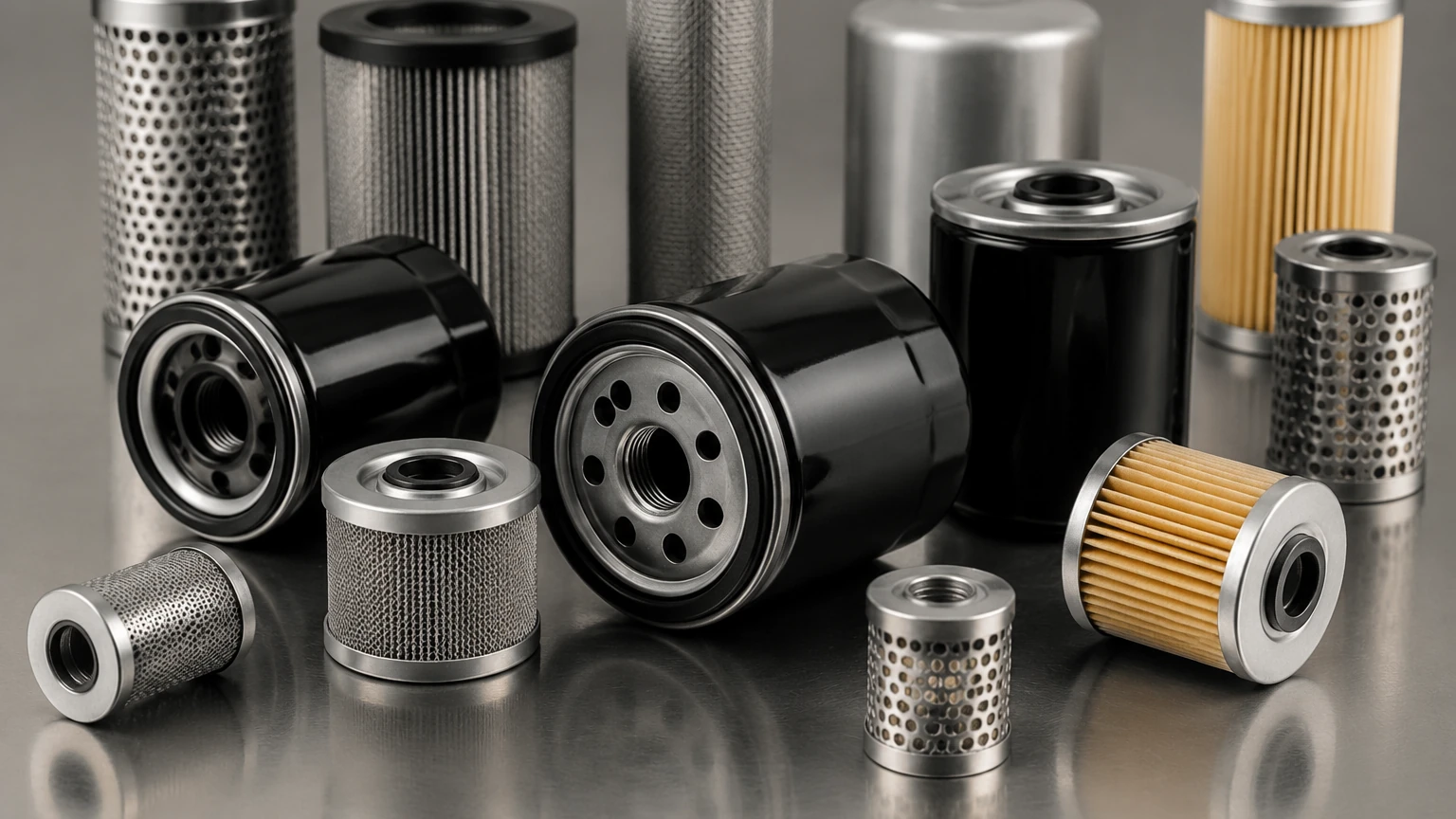
At its most basic level, an industrial oil filter typically takes one of two primary forms: the spin-on filter or the cartridge filter. While both serve the same fundamental purpose, their visual appearance and installation methods differ significantly.
The Spin-On Filter
A spin-on oil filter looks like a self-contained metal canister. It is usually cylindrical with a flat base plate at one end. This base plate features a central threaded hole and a series of smaller inlet holes surrounding it. On the exterior, you will often find a rubber gasket seated in a groove on the base plate, which ensures a leak-proof seal when the filter is hand-tightened onto the filter head. The housing is typically made of drawn steel or, in high-corrosion environments, stainless steel. The exterior may be painted or coated to prevent oxidation, though in many industrial B2B contexts, a clean, brushed stainless steel finish is preferred for its durability and resistance to chemical degreasers.
The Cartridge Filter
Unlike the spin-on variety, a cartridge filter does not have its own outer "can." Instead, it is designed to be inserted into a permanent housing or vessel. Visually, a cartridge filter looks like a pleated or cylindrical tube with end caps at both ends. These end caps may be made of plastic, aluminum, or stainless steel. The filtration media—the part that actually does the work—is visible on the exterior of the cartridge. In many high-end industrial applications, this media consists of pleated stainless steel wire mesh, which gives the filter a metallic, woven appearance. The center of the cartridge is usually hollow, supported by a perforated metal core that prevents the media from collapsing under high differential pressure.
Visual Components of a Spin-On vs. Cartridge Filter
When evaluating what does an oil filter look like from an engineering perspective, it is necessary to look beyond the surface. The visual cues of a filter can tell a professional a great deal about its build quality and intended use.
The Base Plate and Threads
In spin-on filters, the base plate is a heavy-duty component. If you look into the center hole, you will see precision-machined threads. The quality of these threads is a primary indicator of manufacturing standards. Burrs or uneven threading can lead to cross-threading during installation, which can cause catastrophic oil leaks. Surrounding the center hole are the inlet ports. The size and number of these ports determine the flow characteristics of the filter. Larger ports generally indicate a design intended for high-flow systems where low pressure drop is a priority.
The End Caps and Seals
For cartridge filters, the end caps are critical visual markers. They are often bonded to the media using high-temperature adhesives or, in the case of all-metal filters, through advanced welding techniques like TIG or plasma welding. A high-quality industrial filter will show clean, uniform weld beads or adhesive lines. The seals—often O-rings or flat gaskets—are usually located on the end caps. These are typically color-coded based on the material (e.g., black for Nitrile/Buna-N, green or brown for Viton/FKM), allowing engineers to visually confirm chemical compatibility with the fluid being filtered.
Material Matters: What High-Performance Filter Media Looks Like
The internal media is the heart of the filter. While automotive filters often use cellulose (paper) or synthetic glass fibers, industrial-grade filters frequently utilize stainless steel wire mesh. This choice of material significantly alters the visual and tactile profile of the filter.
Pleated Stainless Steel Mesh
When you look at a pleated stainless steel filter, you see a series of sharp, uniform folds. These pleats are designed to maximize the surface area within a limited volume. High-quality pleating looks perfectly symmetrical; uneven pleats or "bunching" can indicate a manufacturing defect that will lead to uneven flow and premature clogging. The mesh itself can range from a coarse screen, visible to the naked eye, to a microscopic weave that feels smooth to the touch but provides filtration down to 5 microns or less.
Sintered Metal Media
In some extreme-pressure or high-temperature applications, the filter media may look like a solid, porous metal tube. This is sintered metal. It is created by fusing layers of wire mesh or metal powders together under heat and pressure. To the untrained eye, it might look like a textured pipe, but it is actually a highly porous structure capable of withstanding massive pressure differentials that would shred conventional paper or fiberglass media.
For those seeking to explore specific configurations and material options, you can Review product options and application support on our Main Page to see how different media types are integrated into custom designs.
Engineering Details: Threads, Gaskets, and Seal Interfaces
Precision is the hallmark of industrial filtration. When examining an oil filter, the technical details of the interfaces are just as important as the media itself.
Thread Specifications
Industrial filters use a variety of thread standards, including NPT (National Pipe Thread), BSP (British Standard Pipe), and metric threads. Visually, it can be difficult to distinguish between a 1-inch NPT and a 1-inch BSP thread without a gauge, which is why most industrial filters have their specifications laser-etched onto the housing or end cap. A professional-grade filter will always have clear, legible markings indicating the part number, micron rating, and flow direction.
The Bypass Valve
If you look down the center tube of many spin-on filters, you may see a spring-loaded metal disc at the bottom. This is the bypass valve. It is designed to open if the filter becomes completely clogged or if the oil is too thick (such as during a cold start), allowing unfiltered oil to bypass the media to ensure the machinery is not starved of lubrication. In high-stakes industrial environments, the presence and calibration of this valve are essential visual checks during the procurement process.
Anti-Drainback Valves
Some filters feature a rubber or silicone flap visible just behind the inlet holes on the base plate. This is the anti-drainback valve. It prevents oil from draining out of the filter when the system is shut down, ensuring that oil pressure is reached almost instantaneously upon restart. A high-visibility orange or red valve usually indicates silicone, which remains flexible at much higher and lower temperatures than standard black nitrile rubber.
Identifying Signs of Quality and Failure in Industrial Filters
Knowing what does an oil filter look like when it is new is only half the battle; engineers must also know what it looks like when it is failing or when it is of poor quality. Visual inspection is a powerful tool in maintenance and quality control.
Indicators of High Quality
* Uniformity: Pleats are spaced evenly with no gaps.
* Weld Integrity: Stainless steel components show clean, localized welds without discoloration (which can indicate overheating and loss of corrosion resistance).
* Sturdiness: The center core is robust and does not flex under hand pressure.
* Clear Labeling: All technical data is permanently marked on the component.
Indicators of Poor Quality or Impending Failure
* Media Migration: If you see small fibers or metal shards on the "clean" side of the filter, the media is breaking down.
* Collapsed Core: If the internal perforated tube looks crushed or oval-shaped, the filter was subjected to pressure beyond its rating.
* Gasket Deformation: A gasket that is flattened, cracked, or bulging indicates improper installation torque or chemical incompatibility with the oil.
* Pleat Distortion: Wavy or collapsed pleats suggest that the fluid velocity was too high or the media was weakened by moisture or chemical attack.
Customization Options for Specialized Industrial Applications
In many B2B scenarios, standard off-the-shelf filters are insufficient. This is where custom stainless steel filtration solutions become necessary. Custom filters can be designed to fit existing housings while upgrading the performance characteristics of the system.
Dimensional Customization
Custom filters may look different in terms of aspect ratio—some are long and thin to fit into tight manifold spaces, while others are short and wide to handle high volumes of low-viscosity oil. The end caps can be customized with specialized fittings, such as bayonet mounts, bolt-hole flanges, or threaded studs, to ensure a proprietary fit that prevents the use of incorrect, lower-quality replacements.
Multi-Layer Mesh Structures
Advanced custom filters often look "thicker" because they utilize multiple layers of stainless steel mesh. A typical high-performance stack might include a coarse outer support mesh, a fine inner filtration layer, and a medium-grade drainage layer. This construction provides the structural integrity needed for high-pressure hydraulic systems while maintaining precise filtration levels.
Conclusion: Making Informed Procurement Decisions
Understanding what does an oil filter look like involves recognizing the marriage of form and function. For the industrial buyer, the visual characteristics of a filter—from the precision of its threads to the uniformity of its pleated stainless steel mesh—serve as a roadmap to its performance and reliability.
When selecting a filtration partner, it is essential to look for manufacturers who prioritize engineering transparency and material quality. Whether you are dealing with chemical processing, food and beverage production, or heavy hydraulic machinery, the right oil filter is the first line of defense for your equipment. By focusing on durable materials like stainless steel and ensuring that every component—from the bypass valve to the gasket—meets rigorous industrial standards, you can optimize your system's efficiency and extend the lifespan of your critical assets.
For more detailed technical specifications on custom stainless steel filters and to see how our engineering team can support your specific filtration needs, please visit our Main Page at https://www.kaifil.com/. Understanding the nuances of filter design is the first step toward achieving superior industrial performance and long-term cost savings.
