


Stainless Steel Wet Dust Collector
In the landscape of industrial air pollution control, the stainless steel wet dust collector stands as a critical asset for managing hazardous, combustible, or highly adhesive particulates. Unlike dry filtration systems, such as baghouses or cartridge collectors that rely on fabric media, wet collectors utilize a liquid—typically water—to intercept and remove contaminants from an air or gas stream. When these systems are constructed from stainless steel and equipped with precision-engineered internal filtration components, they offer unparalleled durability in the most demanding chemical and thermal environments.
For engineers and procurement teams, selecting a stainless steel wet dust collector involves more than just choosing a housing material; it requires a deep understanding of the internal filtration mechanisms, material compatibility, and the specific performance requirements of the application. As a specialist in custom stainless steel filtration solutions, Kaifil provides the technical components—from wire mesh demisters to precision cartridges—that ensure these systems operate at peak efficiency. For more information on our engineering capabilities, visit our Main Page.
Understanding the Role of Stainless Steel in Wet Dust Collection
The choice of stainless steel for a wet dust collector is primarily driven by the need for corrosion resistance and structural integrity. In many industrial processes, the exhaust gas contains not only dust but also moisture, acidic vapors, or alkaline compounds. When these elements mix with the scrubbing liquid, they can create a highly corrosive environment that would rapidly degrade carbon steel or aluminum.
Corrosion Resistance and Material Grades
Stainless steel grades such as 304 and 316L are the industry standards for wet scrubber construction. Grade 304 offers excellent resistance to atmospheric corrosion and many organic and inorganic chemicals. However, in environments involving high chloride concentrations or severe chemical exposure—common in chemical processing and pharmaceutical manufacturing—Grade 316L is preferred due to its molybdenum content, which provides superior resistance to pitting and crevice corrosion.
Thermal Stability
Wet dust collectors are often used to cool high-temperature gas streams. Stainless steel maintains its mechanical properties at elevated temperatures far better than plastics or treated carbon steels. This allows the system to handle fluctuating thermal loads without the risk of warping or structural failure, ensuring a longer service life and lower total cost of ownership.
Core Components and Filtration Mechanisms
A stainless steel wet dust collector operates through several physical mechanisms, including impaction, interception, and diffusion. The efficiency of these mechanisms is largely dependent on the design of the internal components.
The Venturi and Spray Zone
In many designs, the gas stream is accelerated through a venturi throat where it contacts the scrubbing liquid. The high velocity breaks the liquid into fine droplets, increasing the surface area available for dust particles to collide with. This initial stage is crucial for capturing larger particulates and cooling the gas.
Mist Eliminators and Wire Mesh Filters
Once the dust is trapped in the liquid droplets, the gas must be separated from the moisture before it is exhausted. This is where precision-engineered components are vital. Stainless steel wire mesh demister pads or chevron-style mist eliminators are used to intercept the moisture-laden air. As the air passes through the dense mesh, the droplets coalesce and fall into a collection sump, while the clean, dry air continues to the outlet. The density, wire diameter, and surface area of these mesh components are critical engineering variables that determine the final filtration efficiency.
Sump and Slurry Management
The collected dust forms a slurry in the bottom of the collector. Because stainless steel is non-porous and resistant to chemical attack, the sump can be easily cleaned and maintained without the risk of the slurry adhering permanently to the walls, which is a common issue with coated or plastic surfaces.
Technical Advantages of Stainless Steel Filtration Media
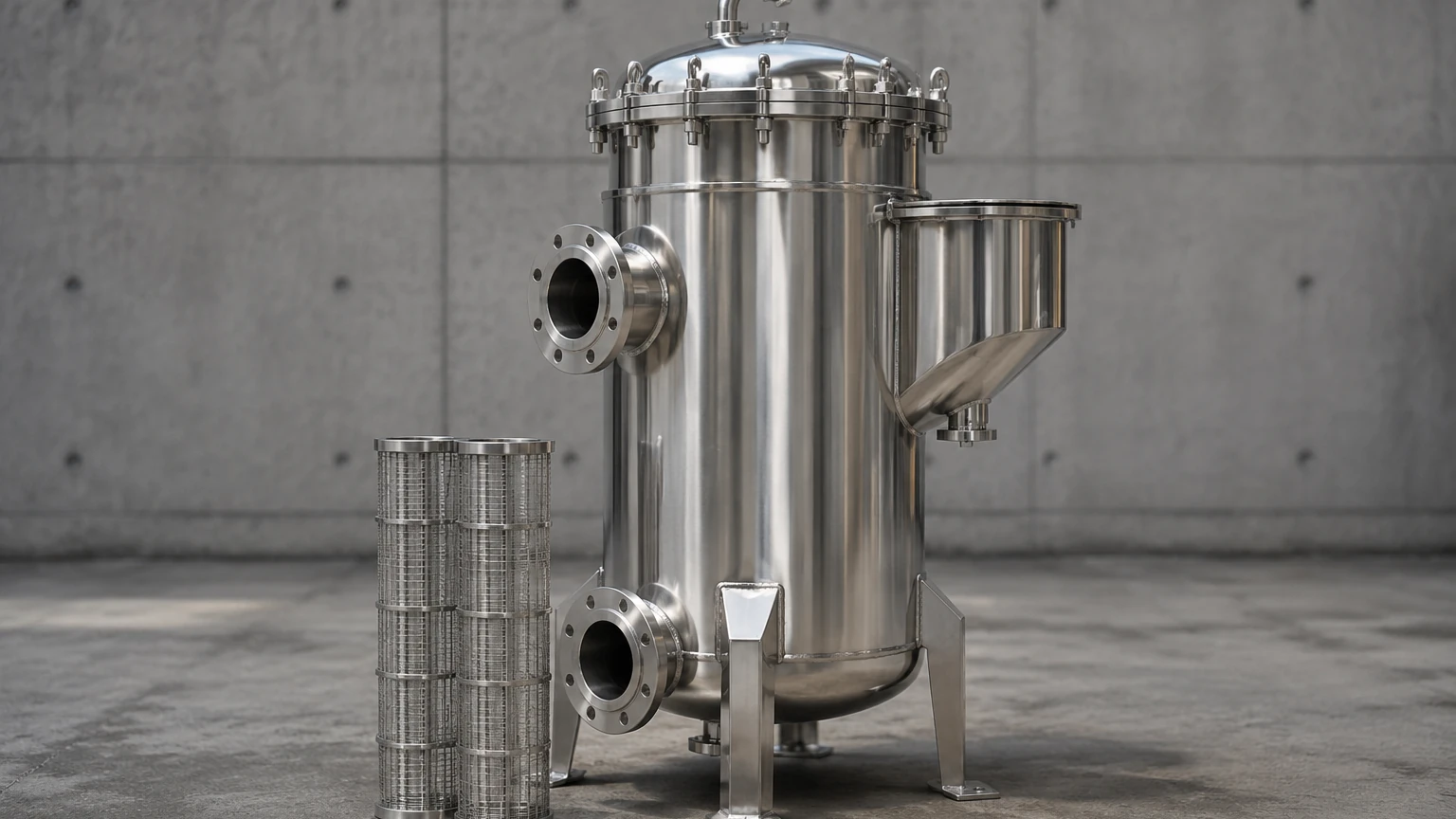
Within a stainless steel wet dust collector, the internal filtration media must be as robust as the housing itself. Kaifil specializes in manufacturing the high-performance metal components that facilitate this process.
1. Durability Under High Pressure: Unlike synthetic filters that may collapse or tear under high differential pressure, stainless steel wire mesh and perforated metal components maintain their shape and function. This is essential in high-velocity wet scrubbers where the force of the air and water can be substantial.
2. Cleanability and Reusability: One of the most significant advantages of stainless steel filtration media is that it can be cleaned. Whether through ultrasonic cleaning, backwashing, or chemical baths, these components can be restored to their original performance levels, significantly reducing the frequency of replacement.
3. Precise Micron Ratings: Advanced manufacturing techniques allow for the creation of stainless steel mesh with highly specific aperture sizes. This ensures that even fine particulates are captured effectively, meeting stringent environmental regulations and protecting downstream equipment.
4. Compatibility with Aggressive Scrubbing Fluids: In some applications, water alone is not sufficient, and chemical additives or specialized scrubbing fluids are used. Stainless steel components ensure that the filtration media will not react with or be degraded by these chemicals.
Engineering Considerations for System Selection
When specifying a stainless steel wet dust collector, engineers must evaluate several technical parameters to ensure the system is fit for purpose. A "one-size-fits-all" approach often leads to premature failure or inefficient filtration.
Particle Size Distribution (PSD)
The size of the dust particles is the most important factor in determining the required filtration accuracy. Fine dust (sub-micron) may require a high-energy venturi scrubber or specialized fine-mesh demisters, whereas larger particles can be managed with simpler spray towers. Understanding the PSD allows for the selection of the correct mesh weave and density for internal components.
Airflow and Velocity
The volume of air to be treated (measured in CFM or m³/h) dictates the size of the collector and the velocity of the gas through the filtration media. If the velocity is too high, "re-entrainment" can occur, where liquid droplets are pulled through the mist eliminator and exhausted. If it is too low, the impaction mechanism may fail to capture fine dust.
Liquid-to-Gas (L/G) Ratio
This ratio determines how much scrubbing liquid is required per unit of gas. A higher L/G ratio generally improves collection efficiency but increases the pump power requirements and the volume of slurry to be treated. Balancing this ratio is key to optimizing operational costs.
Pressure Drop ($ΔP$)
The resistance to airflow created by the collector is known as the pressure drop. A higher pressure drop usually indicates higher filtration efficiency but requires a more powerful fan. Engineers must specify components that achieve the target filtration efficiency while minimizing $ΔP$ to reduce energy consumption.
Maintenance and Longevity: Managing the Filtration Lifecycle
While a stainless steel wet dust collector is designed for longevity, its performance is dependent on a structured maintenance regime. The primary challenge in wet systems is the buildup of solids within the filtration media and the management of the scrubbing liquid.
Monitoring Differential Pressure
Continuous monitoring of the pressure drop across the mist eliminator or internal mesh filters is the most effective way to gauge the health of the system. A gradual increase in $ΔP$ indicates that the media is becoming blinded by particulates and requires cleaning.
Inspection for Scaling and Fouling
In systems using hard water or dealing with certain chemical dusts, mineral scaling can occur on the stainless steel surfaces. Regular inspections ensure that these deposits are removed before they restrict airflow or cause localized corrosion (pitting).
Replacement Cycles
Even the most durable stainless steel filters eventually reach the end of their service life. Factors such as erosion from abrasive dust or fatigue from mechanical vibration can necessitate replacement. Working with a manufacturer like Kaifil allows for the rapid production of custom replacement cartridges or mesh pads that meet the original equipment specifications precisely.
Customization and OEM Solutions for Industrial Applications
Industrial filtration is rarely a standard process. Each facility has unique constraints, from the chemical composition of the exhaust gas to the physical footprint available for equipment. This is why customization is a core component of the Kaifil philosophy.
Tailored Filtration Components
Kaifil works closely with OEMs and end-users to design and manufacture stainless steel filtration components that are optimized for specific wet dust collection systems. This includes:
* Custom Mesh Weaves: Selecting specific wire diameters and weave patterns (such as plain, twill, or dutch weave) to balance filtration efficiency and flow rate.
* Reinforced Cartridges: Designing internal support structures for filter cartridges to withstand high-pressure environments.
* Specialized Alloys: Providing components in exotic alloys if standard 304 or 316L stainless steel is insufficient for the chemical environment.
Supporting Diverse Industries
From the high-hygiene requirements of the food and beverage industry to the heavy-duty demands of mining and chemical processing, stainless steel wet dust collectors equipped with Kaifil components provide a reliable solution for air quality management. Whether you are designing a new system or seeking to optimize an existing one, our technical team is available to provide selection advice and engineering support.
To explore our full range of stainless steel filtration products and how they can be integrated into your wet dust collection strategy, please visit our Main Page. By focusing on quality manufacturing and precise engineering, we help our global partners achieve durable, efficient, and cost-effective filtration performance.
