


Industrial Dust Collector Suppliers
In industrial manufacturing, the management of airborne particulates is not merely a matter of site cleanliness; it is a critical requirement for regulatory compliance, equipment longevity, and process efficiency. Selecting the right industrial dust collector suppliers involves more than comparing equipment footprints and price points. For engineers and procurement teams, the focus must remain on the technical integrity of the filtration components, the durability of the materials used, and the ability of the supplier to provide customized solutions that meet specific application demands.
Industrial dust collection systems are utilized across a wide spectrum of industries, including chemical processing, food and beverage, pharmaceuticals, and metalworking. While the external housing of a dust collector provides the structure, the internal filtration media determines the system's ultimate performance. This article explores the technical considerations, evaluation criteria, and engineering requirements necessary when vetting suppliers for industrial filtration and dust collection components.
The Critical Role of Filtration Media in Industrial Dust Collection
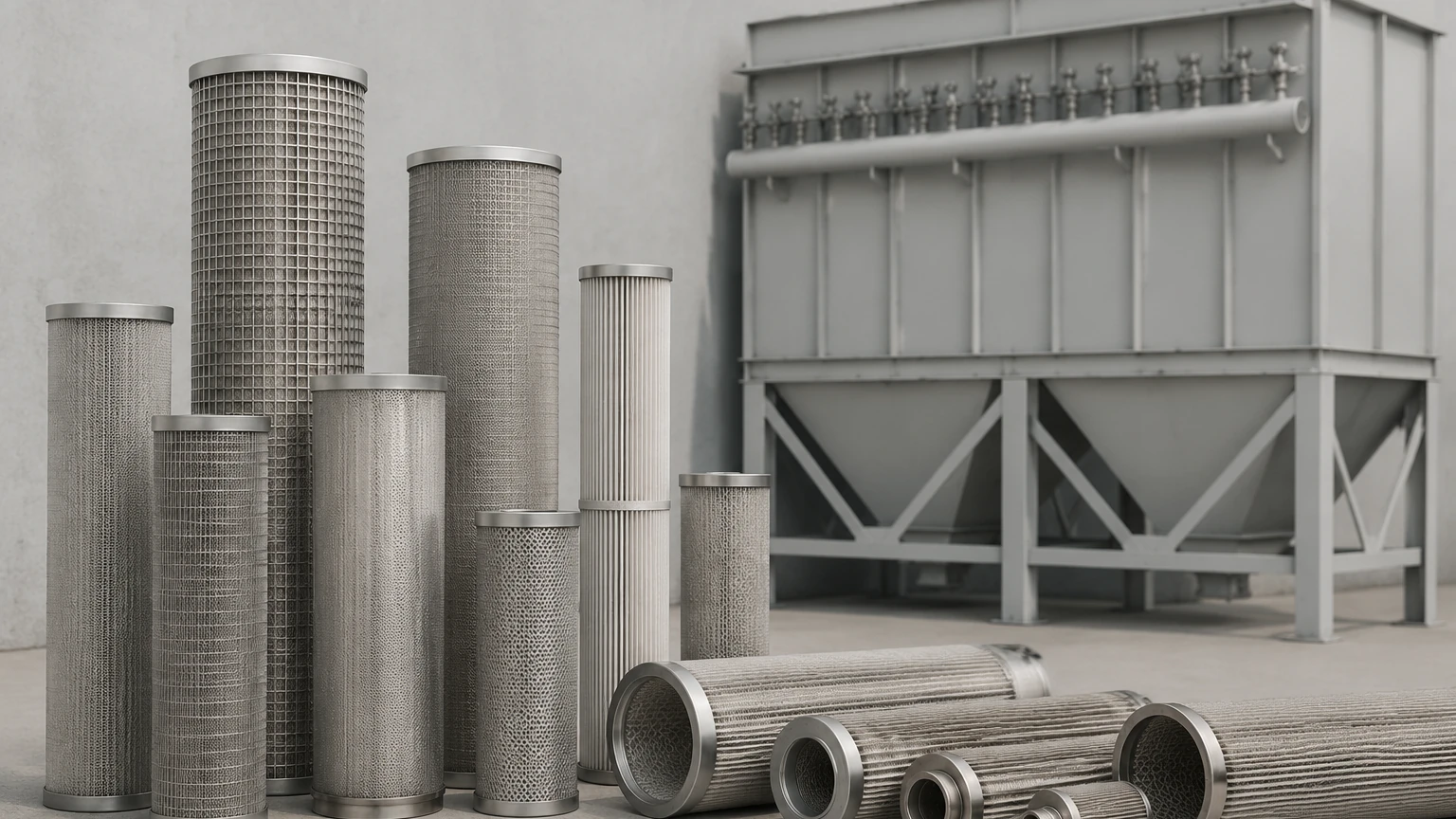
The heart of any dust collection system is the filter. While many standard systems rely on fabric bags or paper cartridges, demanding industrial environments often require more robust solutions. Industrial dust collector suppliers that specialize in high-performance environments frequently recommend stainless steel wire mesh or sintered metal filters for applications involving high temperatures, corrosive gases, or abrasive dust.
Stainless steel filtration components offer several advantages over traditional media:
* Thermal Stability: Unlike synthetic fibers, stainless steel can withstand extreme temperatures without losing structural integrity.
* Chemical Resistance: In chemical processing, filters are often exposed to acidic or alkaline vapors. 304 or 316L stainless steel provides the necessary corrosion resistance to prevent premature failure.
* Mechanical Strength: Metal filters can handle high differential pressures, which is essential in heavy-duty suction systems where standard media might collapse or tear.
Understanding these material properties is essential for engineers who need to ensure that their dust collection systems operate reliably over long cycles with minimal downtime.
Evaluating Industrial Dust Collector Suppliers: Key Technical Criteria
When assessing potential industrial dust collector suppliers, technical professionals should look beyond the surface-level specifications. A supplier’s manufacturing capability and engineering expertise are the primary indicators of product quality. For detailed technical specifications and to explore custom filtration options, engineers can visit the Kaifil Main Page to review comprehensive product data.
Material Selection and Traceability
In high-stakes industries like pharmaceuticals or food production, material traceability is non-negotiable. Suppliers should be able to provide certifications for the alloys used in their filters. Using the wrong grade of stainless steel can lead to contamination or structural failure. A reputable supplier will offer a range of materials, including 304, 316, 316L, and specialized alloys like Monel or Inconel for highly specific industrial needs.
Manufacturing Standards and Precision
The performance of a dust collector filter is largely dependent on the precision of its construction. This includes the uniformity of the wire mesh weave and the quality of the welding. Inconsistent pore sizes can lead to "leakage," where fine particulates pass through the filter, potentially damaging downstream equipment or violating air quality standards. High-quality industrial dust collector suppliers utilize advanced welding techniques, such as TIG or plasma welding, to ensure that the seams of the filter cartridges are as strong as the media itself.
Technical Specifications and Engineering Considerations
Engineers must define several key parameters before finalizing a supplier agreement. These specifications ensure that the filtration component is perfectly matched to the dust collector’s operating environment.
Filtration Accuracy (Micron Rating)
The micron rating defines the size of particles the filter can effectively capture. In dust collection, this is often categorized into nominal and absolute ratings. For fine chemical powders or hazardous dust, an absolute rating is required to ensure that 99.9% of particles above a certain size are trapped. Suppliers should provide testing data that supports these ratings under actual operating conditions.
Air-to-Cloth Ratio and Pressure Drop
The air-to-cloth ratio (or filtration velocity) is the amount of air passing through a square foot of filter media. If this ratio is too high, the pressure drop across the filter increases, leading to higher energy consumption by the system's fan and more frequent cleaning cycles. Industrial dust collector suppliers with engineering depth can help calculate the optimal surface area required to maintain a low differential pressure while maximizing particulate capture.
Structural Reinforcement
In large-scale industrial dust collectors, filters are subjected to significant physical stress, especially during pulse-jet cleaning cycles. Suppliers should offer reinforced designs, such as internal support cores or external cages, to prevent the filter media from deforming under the force of the compressed air pulses.
Customization and OEM Capabilities
One of the most significant challenges for maintenance engineers is sourcing replacement filters for older or highly specialized dust collection units. Many off-the-shelf solutions do not fit correctly, leading to bypass issues. This is where the value of a manufacturer like Kaifil becomes apparent. By offering OEM and customized filtration solutions, Kaifil allows companies to replace or upgrade their filtration components without needing to overhaul the entire dust collection system.
Customization options often include:
* Custom Dimensions: Tailoring the length, diameter, and end-cap configuration of filter cartridges to fit existing housings.
* Specialized End Caps: Providing threaded, flanged, or bayonet-style connections to ensure a leak-proof seal.
* Variable Media Layers: Combining different mesh counts to create a multi-stage filtration effect within a single cartridge, which can extend the life of the filter by pre-filtering larger particles.
Addressing High-Temperature and Corrosive Environments
Standard industrial dust collector suppliers often struggle with applications that exceed 250°F (121°C). In industries such as smelting, glass manufacturing, or power generation, exhaust gases can reach temperatures far beyond the limits of polyester or aramid bags.
Stainless steel wire mesh filters are the engineering standard for these environments. They maintain their shape and filtration efficiency at temperatures up to 800°F (426°C) or higher, depending on the alloy. Furthermore, in environments where moisture and sulfur compounds are present, the risk of acid dew point corrosion is high. A supplier capable of providing 316L stainless steel or higher-nickel alloys is essential for preventing the rapid degradation of the filtration system.
Total Cost of Ownership: Disposable vs. Cleanable Stainless Steel Filters
A common mistake in procurement is focusing solely on the initial purchase price. While stainless steel filter cartridges have a higher upfront cost than disposable bags or paper filters, their Total Cost of Ownership (TCO) is often significantly lower in industrial settings.
1. Longevity: Stainless steel filters are designed for years of service, whereas disposable media may need replacement every few months.
2. Cleanability: Metal filters can be cleaned using ultrasonic baths, backwashing, or chemical cleaning, allowing them to be reused multiple times. This reduces the waste disposal costs associated with contaminated filter bags.
3. Reduced Downtime: Fewer filter changes mean less system downtime and lower labor costs for maintenance teams.
4. Energy Efficiency: By maintaining a more consistent pressure drop through regular cleaning, the system's blowers operate more efficiently, leading to long-term energy savings.
Mitigating Procurement Risks with Specialized Manufacturers
Working with generic industrial dust collector suppliers can introduce risks, particularly regarding lead times and technical support. A specialized manufacturer that understands the nuances of metal filtration can provide faster turnaround on custom designs and more accurate troubleshooting advice.
Before selecting a supplier, engineers should confirm:
* Testing Protocols: Does the supplier perform bubble point tests, pressure decay tests, or flow rate testing?
* Quality Management: Is the facility ISO certified? What are their internal QC processes for weld integrity?
* Application Experience: Has the supplier successfully implemented filtration solutions in similar industrial environments?
By confirming these details, purchasing teams can avoid the pitfalls of substandard components that lead to environmental non-compliance or expensive equipment failures.
Conclusion: Selecting a Strategic Filtration Partner
The selection of industrial dust collector suppliers is a strategic decision that impacts the safety, efficiency, and cost-effectiveness of industrial operations. While many suppliers offer general equipment, the most reliable performance comes from those who specialize in the engineering and manufacture of high-quality filtration components.
For organizations requiring durable, high-precision stainless steel filtration, focusing on material quality, manufacturing precision, and customization capabilities is the most effective path forward. By prioritizing these technical factors, engineers can ensure that their dust collection systems provide consistent performance in even the most demanding industrial environments. To explore professional-grade filtration components and engineering support, the Kaifil Main Page serves as a primary resource for technical data and customized solution development.
