


Dust Collector Pleated Filter
In industrial environments, the management of airborne particulates is a fundamental requirement for both regulatory compliance and operational efficiency. The dust collector pleated filter represents a significant evolution in air filtration technology, offering a high-surface-area alternative to traditional felt or fabric filter bags. For engineers and facility managers, selecting the correct filtration media is not merely a matter of part replacement but a strategic decision that impacts energy consumption, system uptime, and the longevity of downstream equipment.
As industrial processes become more intensive, the demand for filtration systems that can handle higher dust loads without a corresponding increase in physical footprint has led to the widespread adoption of pleated designs. This guide examines the engineering principles, material considerations, and selection criteria essential for integrating pleated filters into industrial dust collection systems.
The Engineering Logic Behind Pleated Filter Media
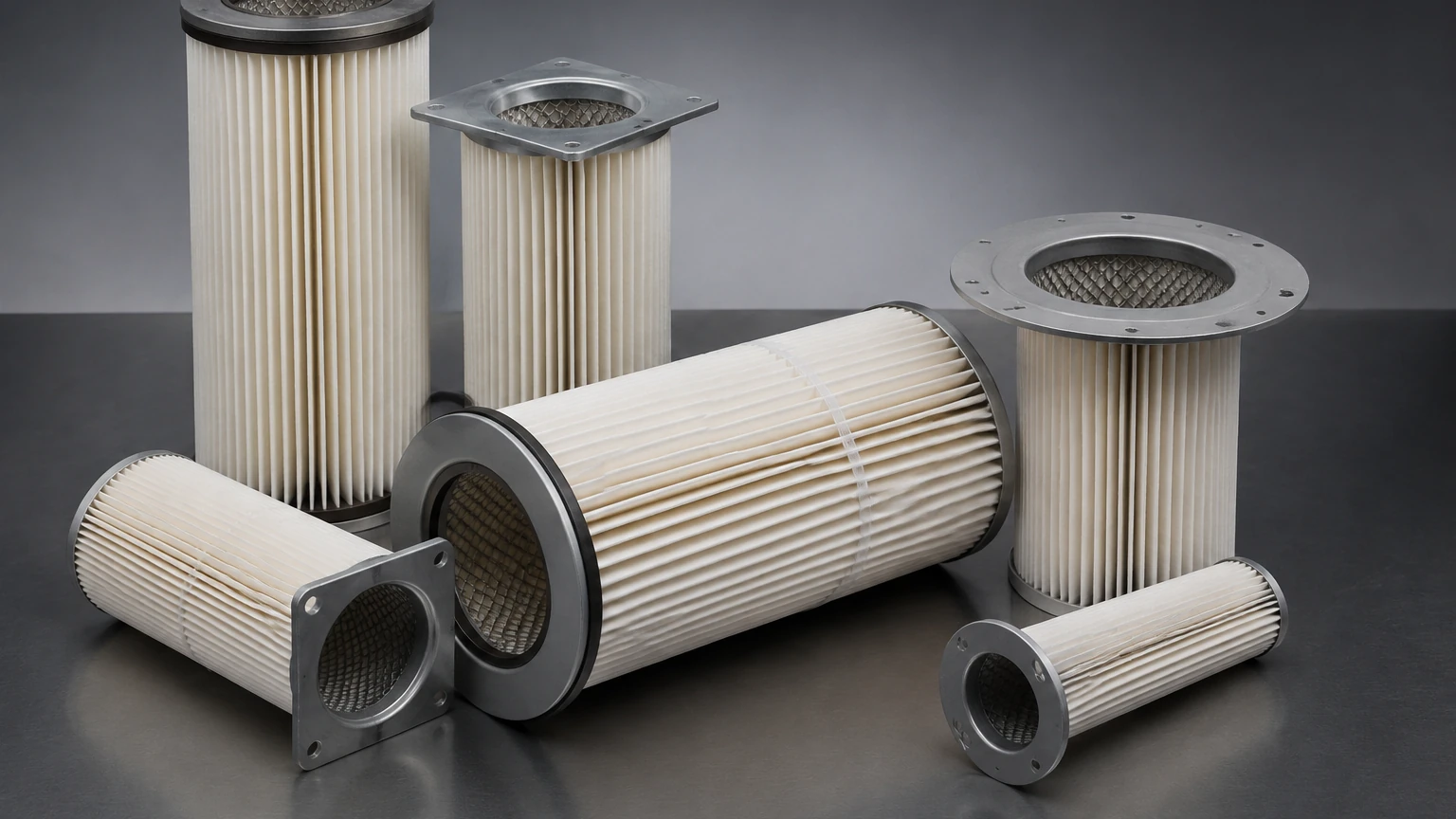
The primary advantage of a dust collector pleated filter lies in its geometric configuration. By folding the filter media into a series of pleats, manufacturers can significantly increase the effective filtration area within a specific cylindrical or conical volume. In many cases, a pleated element provides three to four times the surface area of a standard filter bag of the same dimensions.
Surface Area and Air-to-Cloth Ratios
From an engineering perspective, increasing the surface area directly influences the Air-to-Cloth (A/C) ratio, also known as the filtration velocity. A lower A/C ratio means that air passes through the media at a slower speed. This reduction in velocity is critical for several reasons:
1. Reduced Pressure Drop: Slower air passage results in lower resistance, which translates to a lower initial and operational pressure drop (ΔP). This allows the system fan to operate more efficiently, reducing total energy consumption.
2. Enhanced Particle Capture: Lower velocities increase the residence time of the air within the media, improving the efficiency of capture mechanisms such as diffusion and interception, particularly for sub-micron particles.
3. Reduced Media Abrasion: High-velocity dust particles can act as an abrasive, wearing down filter fibers. Lowering the velocity through increased surface area extends the mechanical life of the filter.
Interstitial Velocity Considerations
While increasing pleat count adds surface area, engineers must be cautious of "pleat crowding." If pleats are packed too tightly, the space between them (the interstitial space) becomes restricted. This can lead to high interstitial velocities, where dust becomes bridged between pleats and cannot be effectively removed during the cleaning cycle. Professional manufacturers like Kaifil emphasize optimized pleat spacing to ensure that the entire surface area remains active and cleanable. For more information on precision-engineered filtration components, you may visit the Main Page.
Material Science in Dust Collection
The performance of a dust collector pleated filter is heavily dependent on the base material and any specialized coatings or membranes applied to it. Unlike traditional bags which often rely on a depth-loading mechanism, pleated filters are frequently designed for surface-loading.
Synthetic Media and Spun-bond Polyester
The most common material for pleated dust filters is spun-bond polyester. This non-woven material is physically robust and offers excellent chemical resistance to most organic solvents and many acids. Spun-bond polyester is often treated with various finishes:
* PTFE Membrane: A laminated layer of Polytetrafluoroethylene (PTFE) provides a slick surface that prevents dust from penetrating the media fibers. This is ideal for sticky or hygroscopic dust, as it facilitates easy release during pulse-jet cleaning.
* Antistatic (Aluminized) Coatings: In environments where combustible dust is present, static electricity can pose an explosion risk. Antistatic coatings dissipate charges to ground, enhancing safety.
* Oleophobic/Hydrophobic Treatments: These treatments repel oil and water, preventing the media from becoming "blinded" in humid or oily conditions.
Stainless Steel and High-Temperature Requirements
In specialized industrial applications involving extreme temperatures or highly corrosive chemical vapors, synthetic polymers may fail. In these instances, precision metal filtration components become necessary. Stainless steel wire mesh or sintered metal fibers can be pleated to provide the same surface area advantages while maintaining structural integrity at temperatures exceeding 500°F (260°C). These metal elements are often found in chemical processing and high-end hydraulic systems where durability is paramount.
Performance Metrics: Efficiency and Pressure Drop
When evaluating a dust collector pleated filter, two metrics are paramount: filtration efficiency and the stable operating pressure drop.
Filtration Efficiency and MERV Ratings
Efficiency is typically measured by the Minimum Efficiency Reporting Value (MERV) or through specific micron ratings. Pleated filters often achieve higher MERV ratings (MERV 11 to 16) compared to standard needle-felt bags. This is due to the tighter pore structure of spun-bond media and the option for HEPA-grade membranes. For industries such as pharmaceuticals or food processing, where cross-contamination must be eliminated, the high capture efficiency of pleated media for fine particulates is a critical safety feature.
Delta P (ΔP) and Pulse-Jet Cleaning
In a pulse-jet dust collector, a burst of compressed air is sent down the center of the filter to dislodge the accumulated dust cake. The structural rigidity of a pleated filter is vital here. Because pleated filters often incorporate a hard inner core (often made of perforated metal or high-strength plastic), they do not collapse or flex excessively during the pulse. This rigidity ensures that the energy of the compressed air is efficiently transferred to the media surface, resulting in more effective cleaning and a lower stable operating pressure drop over the life of the filter.
Integration and Compatibility in Industrial Systems
Transitioning to pleated filters often requires an assessment of the existing dust collector's hardware. While many pleated filters are designed as "top-load" or "bottom-load" retrofits for existing baghouses, several technical factors must be confirmed before procurement.
1. Tube Sheet Compatibility: The filter must seat perfectly against the tube sheet to prevent bypass. This requires precise measurements of the hole diameter and the thickness of the tube sheet metal.
2. Gasket Selection: The seal at the top of the filter is a common failure point. Depending on the chemical and thermal environment, gaskets may be made of EPDM, Silicone, Viton, or Nitrile. A failure in the gasket leads to immediate "dusting" or leakage into the clean air plenum.
3. Length and Clearance: Because pleated filters provide more surface area per inch of length, they are often shorter than the bags they replace. This can be an advantage in collectors with limited hopper clearance, reducing the risk of dust re-entrainment from the hopper.
Maintenance, Cleaning, and Lifecycle Management
The total cost of ownership (TCO) for a dust collector pleated filter is determined by its service life and the energy required to operate the system. While the initial purchase price of a pleated element is typically higher than a standard bag, the long-term savings often justify the investment.
Monitoring the Pressure Drop
A magnehelic gauge or a digital differential pressure transmitter should be used to monitor the ΔP across the filter bank. A sudden drop in pressure may indicate a leak or a torn pleat, while a steady, irreversible rise in pressure (blinding) indicates that the filter has reached the end of its functional life.
Cleaning Cycle Optimization
Excessive pulsing can lead to premature media wear. By utilizing "clean-on-demand" controllers, which only trigger the pulse-jet system when the pressure drop reaches a certain threshold, facilities can extend filter life and save on compressed air costs. Pleated filters, with their high surface area, often require less frequent pulsing than bags, further contributing to their longevity.
Replacement Indicators
Unlike fabric bags, which may sag or show visible wear, pleated filters often maintain their physical shape even when blinded. Maintenance teams should look for:
* Increased energy consumption by the fan motor.
* Reduced suction at the pick-up points (hoods).
* Visible dust discharge in the clean air exhaust.
* Compressed air consumption increases as the system pulses more frequently to maintain airflow.
Customization for Specialized Industrial Applications
No two industrial processes are identical, and off-the-shelf filtration solutions may not always meet the specific demands of a facility. Customization is a core component of modern filtration procurement. When working with a manufacturer like Kaifil, engineers can specify various parameters to optimize the dust collector pleated filter for their unique environment.
Dimensional Customization
Custom lengths, diameters, and pleat depths allow for the optimization of airflow in non-standard collector housings. This is particularly useful for OEM equipment manufacturers who are designing compact dust collection units for integrated machinery.
End Cap Configurations
End caps can be constructed from galvanized steel, stainless steel, or molded polyurethanes. The choice depends on the mechanical stress the filter will endure and the chemical nature of the dust. For example, in food-grade applications, 304 or 316 stainless steel end caps are often required to meet hygiene standards and resist corrosion during wash-down procedures.
Specialized Media Blends
For applications involving high moisture or specific chemical sensitivities, manufacturers can provide specialized media blends, such as aramid (Nomex) for high heat or polyphenylene sulfide (PPS) for acid resistance. Combining these specialized fibers with a pleated structure allows for high-efficiency filtration in environments that would typically destroy standard filter media.
Conclusion
The selection of a dust collector pleated filter is a technical decision that balances initial capital expenditure against long-term operational efficiency. By providing significantly more surface area, lower pressure drops, and higher filtration efficiencies than traditional bags, pleated filters have become the standard for modern industrial air quality management.
For procurement teams and engineers, the focus should remain on material compatibility, structural integrity, and the optimization of the cleaning cycle. Partnering with a manufacturer that understands the nuances of metal support structures and precision media pleating ensures that the filtration system will perform reliably under the most demanding conditions. To explore a wide range of custom stainless steel and industrial filtration solutions, including precision-engineered components, visit the Kaifil Main Page for detailed technical support and product specifications.
