


Oil and Water Seperator
In industrial fluid management, the efficient removal of hydrocarbons from process water or coolant is a critical requirement for both operational efficiency and environmental compliance. An oil and water seperator serves as a specialized filtration or separation unit designed to isolate oil, grease, and other hydrocarbons from aqueous solutions. For engineers and procurement teams, selecting the correct separation technology requires a deep understanding of fluid dynamics, material science, and the specific chemical properties of the fluids being processed.
Industrial applications—ranging from chemical processing and pharmaceutical manufacturing to large-scale hydraulic systems—rely on these separators to protect downstream equipment, extend the life of process fluids, and meet stringent discharge regulations. As a manufacturer of precision stainless steel filtration components, Kaifil provides the foundational hardware, such as wire mesh and filter cartridges, that enables these systems to perform under demanding conditions.
Understanding the Mechanics of an Oil and Water Seperator
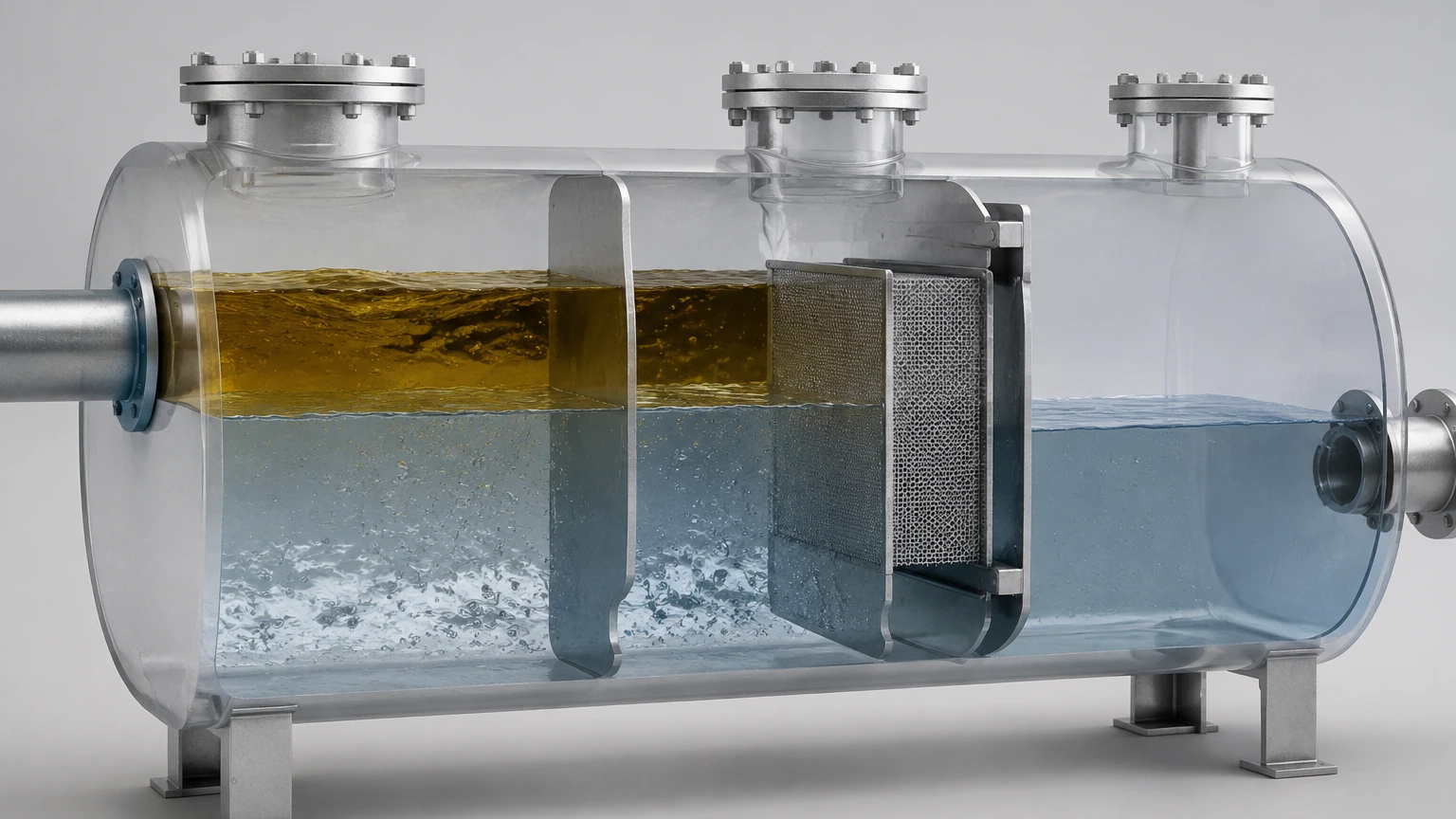
The fundamental principle behind an oil and water seperator is the difference in specific gravity between water and various types of oil. Most hydrocarbons have a lower density than water, meaning they naturally tend to float. However, in industrial environments, oil is rarely present only as a neat, floating layer; it often exists in three distinct states: free oil, dispersed oil, and emulsified oil.
Gravity Separation and Stokes' Law
Gravity separation is the most basic method, relying on the rise rate of oil droplets. This is governed by Stokes' Law, which calculates the velocity at which an oil droplet rises through the water column based on the droplet size, the difference in density between the two liquids, and the viscosity of the water. In a standard gravity separator, the goal is to provide enough residence time for the oil droplets to reach the surface before the water exits the tank.
Coalescence and Media-Based Separation
To enhance efficiency, many industrial systems utilize coalescing media. This is where precision-engineered components, such as those found on the Main Page, become essential. Coalescing media provides a high surface area that intercepts small oil droplets as they pass through the filter. As these droplets collide with the media (often made of stainless steel wire mesh or specialized cartridges), they merge into larger droplets. Because larger droplets have a higher rise rate according to Stokes' Law, they detach from the media and float to the surface much faster than individual small droplets would.
Material Selection: The Engineering Case for Stainless Steel
When designing or purchasing an oil and water seperator, the material of the internal components is a primary factor in the system's long-term reliability. While plastic or polymer-based coalescers are common in light-duty applications, industrial-grade separators frequently require stainless steel (typically Grade 304 or 316L).
Corrosion Resistance and Chemical Compatibility
In chemical processing and pharmaceutical industries, the water being treated may contain aggressive solvents, high salinity, or extreme pH levels. Stainless steel offers superior resistance to corrosion compared to carbon steel or standard plastics. 316L stainless steel, in particular, contains molybdenum, which provides enhanced resistance to pitting and crevice corrosion in chloride-rich environments.
Thermal Stability
Many industrial separation processes occur at elevated temperatures, either due to the nature of the process or to reduce the viscosity of the oil to aid separation. Polymer media can soften or degrade at temperatures exceeding 60°C (140°F). Stainless steel filter components maintain their structural integrity and filtration accuracy at significantly higher temperatures, ensuring consistent performance in steam-cleaned or high-heat environments.
Mechanical Durability and High-Pressure Performance
In hydraulic systems or high-flow industrial lines, the separator must withstand significant pressure differentials. Stainless steel wire mesh and cartridges are engineered to resist deformation under pressure. This durability prevents "channeling," a common failure in soft media where the fluid bypasses the filtration zone, leading to poor effluent quality.
Engineering Parameters for Effective Separation
Selecting an oil and water seperator is not a one-size-fits-all process. Engineers must evaluate several technical parameters to ensure the system meets the required PPM (parts per million) discharge limits.
1. Flow Rate (GPM or m³/h): The system must be sized to handle peak flow without creating excessive turbulence. Turbulent flow can break large oil droplets into smaller ones, making them harder to separate.
2. Specific Gravity of the Oil: The closer the density of the oil is to the density of the water, the more difficult the separation. Heavy oils require larger separation chambers or more advanced coalescing media.
3. Droplet Size Distribution: If the majority of the oil is in the form of droplets smaller than 20 microns, a standard gravity separator will be ineffective. Coalescing filters are required to bridge the gap between 10 and 150 microns.
4. Temperature and Viscosity: Higher temperatures reduce the viscosity of water, allowing oil droplets to rise more freely. If the process temperature fluctuates, the separator must be designed for the worst-case scenario (lowest temperature/highest viscosity).
Common Challenges and Performance Risks
Even a well-designed oil and water seperator can face operational challenges if certain variables are overlooked. Understanding these risks is essential for maintaining system uptime.
Emulsification
Chemical emulsions occur when surfactants or detergents are present in the water, which lower the surface tension and prevent oil droplets from coalescing. Mechanical emulsions can be caused by high-shear pumps located upstream of the separator. In these cases, standard coalescing media may need to be supplemented with chemical flocculants or ultrafiltration membranes.
Solids Loading and Fouling
Industrial wastewater often contains suspended solids (sand, grit, or metal shavings) alongside oil. If these solids enter the coalescing section, they can clog the wire mesh or settle in the bottom of the separator, creating a "sludge" that is difficult to remove. Pre-filtration using stainless steel mesh strainers is a standard engineering practice to protect the primary separation media.
Biological Growth
In stagnant or warm water systems, bacteria and algae can grow on the surface of the separation media. This bio-fouling reduces the effective surface area and can lead to unpleasant odors and system blockages. Stainless steel components are easier to sanitize and can withstand the harsh biocides or steam-cleaning cycles required to eliminate biological growth.
Customization and OEM Integration for Industrial Systems
Every industrial facility has unique spatial constraints and process requirements. Standard off-the-shelf separators often fail to meet the specific needs of specialized machinery. This is why customization is a core focus for manufacturers like Kaifil.
OEM (Original Equipment Manufacturer) solutions allow for the integration of separation components directly into the design of larger machines, such as CNC coolant systems or large-scale hydraulic power units. Customization options include:
* Variable Mesh Densities: Adjusting the weave of the stainless steel mesh to target specific oil droplet sizes.
* Custom Form Factors: Designing filter cartridges and coalescing packs that fit into existing housing footprints to avoid expensive piping re-configurations.
* End-Cap Configurations: Providing specialized fittings (threaded, flanged, or bayonet-style) to ensure leak-proof installation in high-vibration environments.
By working closely with a manufacturer that understands the nuances of metal filtration, engineers can develop an oil and water seperator system that is optimized for their specific fluid chemistry and flow dynamics.
Evaluating Total Cost of Ownership (TCO)
When procuring filtration hardware, the initial purchase price is only one component of the total cost. For an oil and water seperator, the TCO is heavily influenced by maintenance requirements and the lifespan of the separation media.
Maintenance and Replacement Cycles
Disposable polymer filters may have a lower upfront cost, but the frequent replacement cycles and the associated labor and disposal costs (especially if the filters are contaminated with hazardous oil) can be significant. In contrast, stainless steel filter elements are often cleanable and reusable. Through ultrasonic cleaning or backwashing, these components can be restored to near-original performance, significantly extending the time between capital expenditures.
Operational Efficiency
A high-quality separator reduces the burden on downstream water treatment processes. By effectively removing oil at the source, facilities can reduce the consumption of expensive chemicals in wastewater treatment plants and avoid the heavy fines associated with environmental non-compliance.
Conclusion: Selecting the Right Partner for Filtration Solutions
The selection of an oil and water seperator and its internal components is a critical engineering decision that impacts the reliability and environmental footprint of an industrial operation. By prioritizing high-quality materials like stainless steel and focusing on precise engineering specifications, technical teams can ensure their separation systems perform consistently over the long term.
For those seeking reliable, high-performance filtration components, Kaifil offers the technical expertise and manufacturing capabilities needed to support demanding industrial applications. From material selection to customized design, the focus remains on providing durable solutions that meet the rigorous standards of modern industry. To explore the full range of custom stainless steel filtration solutions, engineers and purchasing professionals are encouraged to review the technical resources available on the Main Page.
