


Coalescing Air Filter
In industrial compressed air and gas systems, the presence of liquid aerosols—specifically oil and water—poses a significant threat to downstream equipment, pneumatic tools, and final product quality. While standard particulate filters are designed to capture solid debris, a coalescing air filter is specifically engineered to remove sub-micron liquid droplets and oil mists. Understanding the technical nuances of these components is essential for engineers and maintenance professionals tasked with maintaining system integrity and operational efficiency.
At its core, a coalescing filter operates on the principle of merging small droplets into larger ones. As contaminated air passes through the filter media, liquid aerosols are captured, forced to accumulate, and eventually drained away. For high-demand industrial environments, the choice of filter media and the structural integrity of the housing are paramount. Professionals seeking high-performance filtration components often Review product options and application support to ensure their systems meet specific ISO standards for air purity.
Understanding the Coalescing Mechanism in Industrial Filtration
The operation of a coalescing air filter is more complex than simple mechanical straining. Because the contaminants are often smaller than one micron, the filter relies on three distinct physical mechanisms to capture aerosols effectively:
1. Direct Interception: This occurs when a particle or droplet follows a fluid streamline and comes within one-half its diameter of a filter fiber. It is primarily effective for larger particles (typically those above 1 micron).
2. Inertial Impaction: As air navigates the dense matrix of the filter media, larger droplets possess enough mass and velocity that they cannot follow the rapid changes in air direction. They strike the fibers and adhere to them. This mechanism is most effective at higher flow velocities.
3. Brownian Diffusion: For the smallest sub-micron particles (typically below 0.1 microns), the particles move in a random, zig-zag pattern due to collisions with gas molecules. This random motion increases the probability that the particle will contact a fiber and be captured. This is most effective at lower flow velocities.
Once these droplets are captured by the fibers, they migrate to the intersections of the media fibers, where they merge (coalesce) into larger drops. Gravity then pulls these larger drops toward the bottom of the filter element, where they collect in a quiet zone (sump) and are removed via a manual or automatic drain.
Key Components and Material Selection
The efficiency and durability of a coalescing air filter depend heavily on the materials used in its construction. Unlike standard air filters, coalescing elements usually require a multi-layered approach to handle both the filtration and the drainage phases.
Filter Media
Most high-efficiency coalescing filters utilize borosilicate glass microfibers. These fibers are exceptionally thin and can be packed into a dense matrix that provides a high surface area for droplet capture. However, because these fibers are delicate, they must be supported by internal and external structural layers.
Structural Support and Stainless Steel Integration
In demanding industrial applications, such as chemical processing or high-pressure hydraulic systems, the filter element must withstand significant differential pressures. This is where the expertise of a manufacturer like Kaifil becomes critical. The use of stainless steel wire mesh or perforated stainless steel cores provides the necessary mechanical strength to prevent media migration or element collapse. Stainless steel is preferred for its corrosion resistance, especially when the compressed air contains acidic condensates or when the filter is used in food and pharmaceutical environments.
The Drainage Layer
The outermost layer of a coalescing element is often a porous foam or a specialized synthetic wrap. This "socks" layer prevents the coalesced liquids from being re-entrained (picked up again) by the high-velocity air exiting the filter. Choosing a drainage material that is compatible with synthetic oils and chemical vapors is a vital engineering consideration.
Performance Evaluation Criteria: Efficiency vs. Pressure Drop
When selecting a coalescing air filter, engineers must balance filtration efficiency against the energy costs associated with pressure drop.
Filtration Efficiency and ISO 8573-1
Industrial air quality is often defined by ISO 8573-1, which categorizes air purity based on the concentration of solid particles, water, and oil. A high-grade coalescing filter can achieve Class 1 or Class 2 oil removal, reducing oil content to as low as 0.01 mg/m³. When evaluating a filter, it is important to confirm whether the efficiency rating is based on "dry" or "wet" conditions, as the presence of liquid in the media naturally increases resistance.
The Cost of Pressure Drop
Every pound per square inch (psi) of pressure drop across a filter represents an increase in the energy required by the compressor. A clean coalescing filter typically has an initial pressure drop of 1 to 3 psi. As the filter captures solid particulates (which often accompany aerosols), this pressure drop increases. From a total cost of ownership (TCO) perspective, it is often more economical to replace a filter element when the pressure drop reaches 8–10 psi rather than continuing to run the compressor at higher power levels to compensate for a clogged filter.
Applications Across Critical Industries
The versatility of the coalescing air filter makes it a staple in various sectors where air purity is non-negotiable.
* Chemical and Petrochemical Processing: In these environments, compressed air is used for pneumatic signaling and control valves. Oil or moisture in the lines can lead to corrosion, frozen lines, or inaccurate instrument readings.
* Food and Beverage Production: Air that comes into direct or indirect contact with food products must be free of oil aerosols to prevent contamination. Coalescing filters, often followed by activated carbon filters for odor removal, are essential here.
* Pharmaceutical Manufacturing: Sterile air is a requirement for many pharmaceutical processes. Coalescing filters serve as a critical pre-filtration stage for sterile membrane filters, protecting the expensive membranes from oil fouling.
* Painting and Surface Finishing: In automotive or industrial spray painting, even a microscopic droplet of oil in the air line can cause "fish-eyes" or adhesion failure in the finish, leading to costly rework.
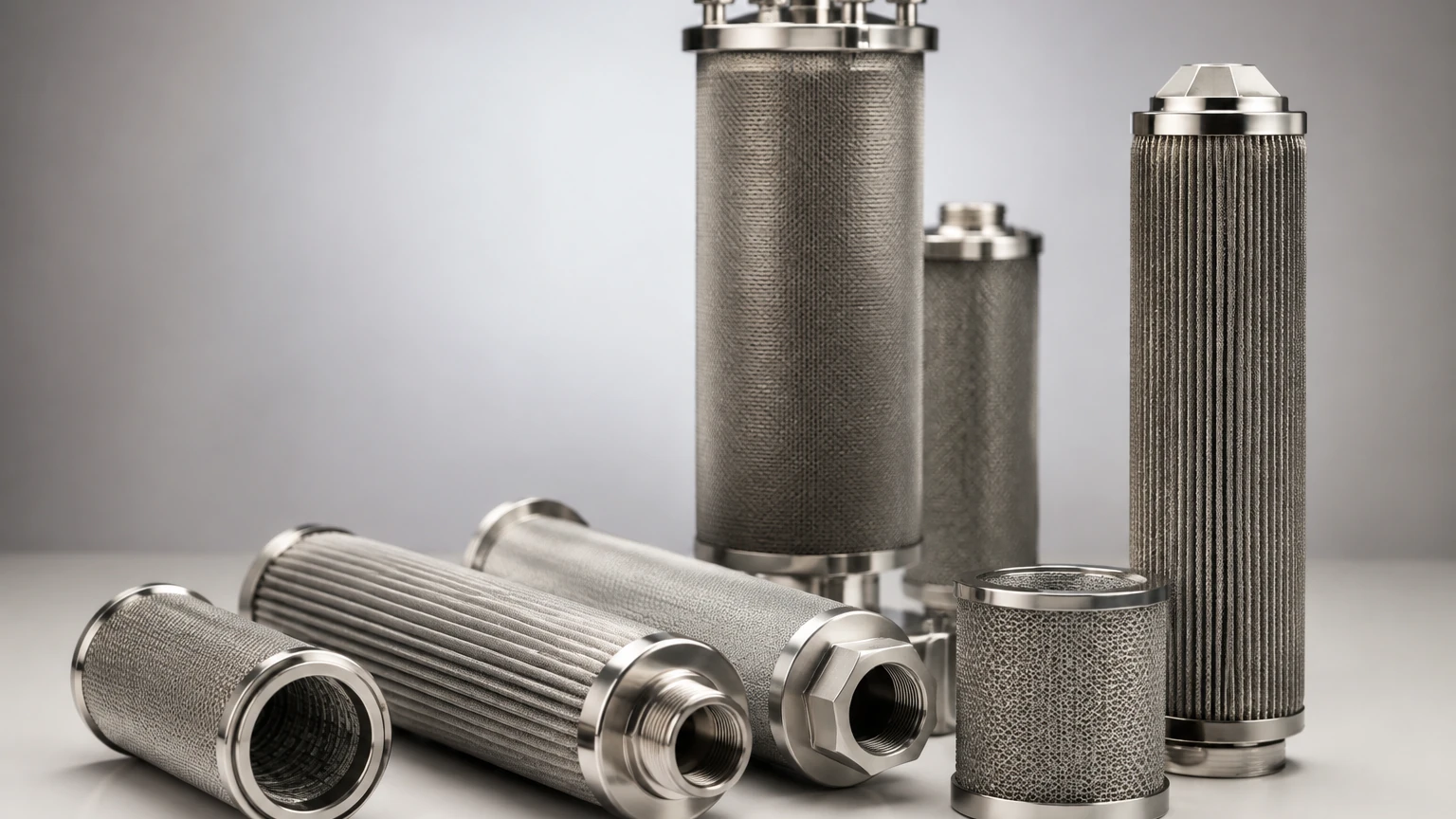
Engineering Considerations for Custom Coalescing Solutions
Off-the-shelf filtration solutions do not always meet the specific requirements of specialized OEM equipment. When designing a system, engineers should consider several customization factors:
* Flow Rate and Velocity: Filters must be sized correctly for the maximum flow rate of the system. If the air velocity is too high, the coalescing process is disrupted, and liquid re-entrainment occurs. Conversely, oversizing a filter can lead to unnecessary costs and space requirements.
* Operating Temperature: High temperatures can reduce the viscosity of oil aerosols, making them harder to capture, and can also degrade certain bonding agents used in filter media. Stainless steel components are often required for high-temperature gas filtration.
* Chemical Compatibility: The seals (O-rings) and the filter media must be compatible with the specific lubricants used in the compressor (e.g., synthetic vs. mineral oils) and any chemical vapors present in the intake air.
* Housing Design: For many industrial applications, the filter housing must comply with pressure vessel codes (such as ASME). Features like differential pressure gauges and automatic drains should be integrated into the design to simplify maintenance.
Maintenance, Replacement Cycles, and Total Cost of Ownership
A coalescing air filter is a consumable component. Its lifespan is determined by the amount of solid particulate it captures, as the liquid aerosols themselves eventually drain away.
Monitoring Performance
The most effective way to manage a coalescing filter is through differential pressure monitoring. Installing a gauge that measures the pressure drop across the filter allows maintenance teams to replace elements based on actual condition rather than a fixed calendar schedule. However, in sensitive applications, an annual replacement is often recommended to prevent the risk of media rupture or chemical degradation of the seals.
The Importance of Pre-filtration
To extend the life of an expensive coalescing element, it is standard engineering practice to install a general-purpose particulate filter upstream. This pre-filter removes larger solids (5 microns and above), allowing the coalescing filter to focus specifically on the fine aerosols it was designed to handle. This staged approach significantly reduces the total cost of ownership by protecting the high-efficiency media from premature clogging.
Quality Manufacturing
Selecting a manufacturer that understands the intricacies of metal fabrication and filtration science is vital. For those looking to integrate reliable filtration into their industrial systems, the Main Page of a specialized manufacturer provides a gateway to technical specifications and customization options that ensure long-term performance.
Conclusion
The coalescing air filter is a critical line of defense in modern industrial systems. By effectively removing oil and water aerosols, these filters protect downstream equipment, reduce maintenance costs, and ensure the purity of the final product. For engineers, successful implementation requires a deep understanding of the coalescing mechanism, careful material selection—particularly the use of stainless steel for structural support—and a proactive approach to maintenance and sizing. As industrial requirements for air purity continue to tighten, the role of precision-engineered coalescing solutions will only become more central to operational success.
