


Self Cleaning Filter
In industrial liquid processing, the transition from manual filtration to automated systems represents a significant shift toward operational efficiency and process consistency. A self cleaning filter is an automated system designed to remove solid contaminants from a liquid stream without requiring the interruption of the flow or manual intervention for cleaning. These systems are critical in high-volume or continuous-flow environments where downtime is costly and manual filter replacement is labor-intensive. For engineers and facility managers, understanding the underlying mechanics, material requirements, and selection criteria is essential for optimizing filtration performance and ensuring equipment longevity.
Industrial filtration often faces the challenge of high particulate loading, which can quickly blind traditional filter cartridges or bags. A self cleaning filter addresses this by utilizing an integrated cleaning mechanism—such as mechanical scraping or pressurized backwashing—to clear the filter element while the process remains online. This capability is particularly vital in sectors like chemical processing, water treatment, and food production, where maintaining a steady flow rate and pressure is paramount.
Understanding the Mechanics of Self-Cleaning Filtration
The efficacy of a self cleaning filter depends largely on its cleaning mechanism. While several variations exist, most industrial systems fall into two primary categories: mechanical scraping and backwashing.
Mechanical Scraping Systems
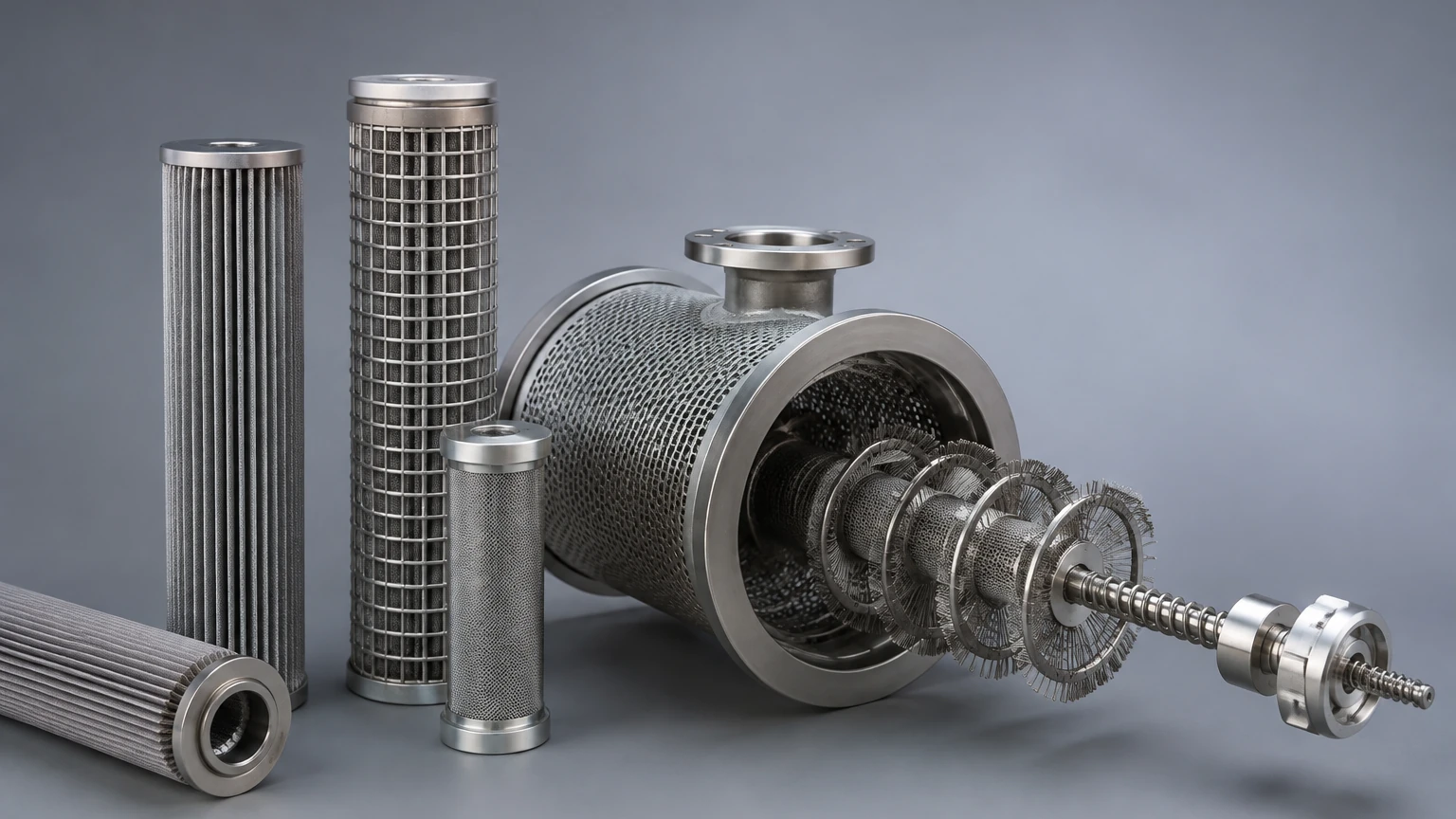
Mechanical scraping filters utilize a cleaning blade or brush that moves across the surface of the filter element. In an internally cleaned system, the scraper removes the accumulated "filter cake" from the inner surface of a cylindrical screen, pushing the debris toward a collection chamber at the bottom of the housing. This debris is then periodically purged through a flush valve. These systems are highly effective for handling viscous fluids or sticky contaminants that might not easily dislodge through fluid pressure alone. The filter elements in these systems are typically constructed from robust materials like wedge wire or perforated stainless steel to withstand the mechanical stress of the scraping action.
Backwashing and Back-Flushing Systems
Backwashing filters operate by reversing the flow of a portion of the filtered fluid (or an external clean fluid source) back through the filter media. This reverse flow dislodges particles trapped on the surface or within the mesh. In many advanced designs, a suction scanner or a rotating arm targets specific sections of the filter screen sequentially, allowing the majority of the screen to continue filtering while a small portion is being cleaned. This ensures that the pressure drop across the system remains stable. Backwashing is ideal for low-viscosity fluids and applications with high flow rates, such as cooling water loops or intake water filtration.
Key Components and Material Engineering
The performance of a self cleaning filter is fundamentally tied to the quality and design of its internal components. As a specialist in stainless steel filtration solutions, Kaifil emphasizes the importance of material selection in ensuring structural integrity and corrosion resistance.
Filter Media Selection
The heart of the system is the filter element. Common choices include:
- Wedge Wire: Known for its non-plugging characteristics and high structural strength, wedge wire is the preferred choice for mechanical scraping systems. The V-shaped profile of the wire ensures that particles only contact the leading edges, reducing the risk of permanent blinding.
- Sintered Mesh: For applications requiring high precision and fine micron ratings, multi-layer sintered stainless steel mesh provides excellent mechanical strength and uniform pore distribution. This material is often used in pharmaceutical and chemical applications where filtration accuracy is critical.
- Wire Mesh: Standard woven wire mesh offers a cost-effective solution for general-purpose filtration. When integrated into a self-cleaning housing, it must be properly supported to prevent deformation during cleaning cycles.
Housing and Gaskets
Industrial environments often involve aggressive chemicals or high temperatures. Utilizing 304 or 316L stainless steel for the filter housing ensures longevity and compatibility with a wide range of fluids. Furthermore, the selection of sealing materials—such as EPDM, Viton, or PTFE—must be based on the chemical nature of the process fluid and the operating temperature to prevent leaks and bypass.
Performance Evaluation and Selection Criteria
When selecting a self cleaning filter, engineers must evaluate several technical parameters to ensure the system meets the specific needs of the application. A mismatch in specifications can lead to frequent cleaning cycles, excessive fluid loss during purging, or inadequate filtration.
Flow Rate and Pressure Drop
The system must be sized to handle the maximum expected flow rate with a minimal initial pressure drop (Delta P). As the filter element accumulates contaminants, the pressure drop increases. The self-cleaning mechanism is typically triggered by a differential pressure switch or a set timer. It is crucial to confirm that the system can maintain the required flow even during the cleaning cycle.
Micron Rating and Particle Characterization
Defining the required filtration accuracy is the first step in selection. Engineers should distinguish between nominal and absolute micron ratings. Furthermore, understanding the nature of the particles—whether they are hard, deformable, fibrous, or gelatinous—will dictate the type of cleaning mechanism required. For instance, fibrous materials may require a specialized scraper design to prevent the fibers from intertwining with the mesh.
Purge Volume and Fluid Loss
Every cleaning cycle involves a purge of the concentrated waste. In applications where the process fluid is expensive or hazardous, minimizing the purge volume is a priority. Automated valves and precise control systems help optimize the purge duration, ensuring that only the necessary amount of fluid is sacrificed to remove the contaminants.
Industrial Applications and Operational Benefits
The implementation of self-cleaning technology provides measurable benefits across various industrial sectors. By visiting the Main Page of a professional manufacturer like Kaifil, technical teams can explore how these components are integrated into specialized systems.
Chemical and Petrochemical Processing
In chemical plants, filters are used to protect downstream equipment like heat exchangers and spray nozzles. The ability to handle corrosive fluids and maintain continuous operation makes stainless steel self-cleaning systems indispensable. They prevent the buildup of scale and particulate matter that could otherwise compromise heat transfer efficiency.
Food and Beverage Industry
Hygiene and consistency are the pillars of food and beverage production. Self-cleaning filters are used to clarify syrups, juices, and oils. The closed-loop nature of these systems prevents environmental contamination and protects the product from exposure to the atmosphere. Stainless steel construction ensures compliance with food safety standards and allows for effective Clean-in-Place (CIP) procedures.
Water Treatment and Power Generation
From cooling water loops to pre-filtration for Reverse Osmosis (RO) systems, self-cleaning filters manage large volumes of water with varying suspended solids. They protect sensitive membranes and prevent the clogging of small-diameter piping in power plant cooling systems, significantly reducing maintenance overhead.
Maintenance, Longevity, and Total Cost of Ownership
While a self cleaning filter is designed to reduce manual labor, it is not a "fit and forget" system. Proper maintenance is required to ensure the mechanical components continue to function correctly over years of service.
Replacement Cycles
The internal cleaning blades, brushes, and seals are wear items. Depending on the abrasiveness of the contaminants and the frequency of cleaning cycles, these components will need periodic replacement. Engineers should inquire about the ease of accessing the internals and the availability of replacement parts during the procurement phase. High-quality stainless steel elements, however, can last for years if the cleaning mechanism is properly calibrated.
Total Cost of Ownership (TCO)
The initial capital expenditure for an automated self-cleaning system is higher than that of a manual bag or cartridge filter housing. However, the TCO is often much lower when considering:
- Reduced Labor Costs: Elimination of frequent manual filter changes.
- Zero Consumable Costs: No need to purchase, inventory, and dispose of spent filter bags or cartridges.
- Increased Uptime: Continuous filtration prevents process shutdowns.
- Reduced Product Loss: Precise purging mechanisms minimize the waste of valuable process fluids.
Customization and Technical Support in Filter Design
No two industrial processes are identical, and off-the-shelf filtration solutions often require modification to meet specific spatial or performance constraints. Customization is a core strength of manufacturers like Kaifil, who provide OEM services and tailored engineering support.
Engineering Tailored Solutions
Customization may involve adjusting the inlet/outlet configurations to fit existing piping, selecting specific alloys for extreme chemical environments, or designing the filter element to handle unique particle distributions. Technical professionals should work closely with the manufacturer to provide detailed fluid data, including viscosity, density, and operating pressure ranges. This collaborative approach ensures that the final product is optimized for the specific application rather than being a generic compromise.
Confirming Technical Details Before Purchase
Before finalizing a purchase, the intended project audience should confirm the following:
1. Compatibility: Does the material of construction (both housing and seals) resist the chemical properties of the fluid?
2. Redundancy: In critical applications, is a duplex system required to ensure 100% uptime during maintenance of the primary unit?
3. Control Integration: Does the automated control system for the cleaning cycle interface with the facility’s existing PLC or SCADA system?
4. Performance Guarantees: What is the expected pressure drop at the rated flow, and what is the efficiency of the cleaning cycle under maximum particulate load?
By addressing these technical questions early, purchasing teams can secure a filtration solution that delivers reliable performance, protects downstream assets, and contributes to the overall efficiency of the industrial process. For more information on custom stainless steel filtration components and engineering support, reviewing the resources available on the Main Page of an experienced manufacturer is a recommended next step in the procurement process.
