


Sand Screening
In industrial processing, sand screening is a fundamental mechanical separation technique used to categorize granular materials by size. While the term often evokes images of construction site preparation, the industrial application of sand screening is a highly engineered process critical to chemical manufacturing, water treatment, pharmaceutical production, and hydraulic systems. For engineers and procurement specialists, selecting the appropriate screening media is not merely a matter of choosing a mesh size; it involves a complex evaluation of material science, fluid dynamics, and mechanical durability.
Industrial sand screening requires high-precision components that can withstand abrasive forces while maintaining consistent aperture sizes. As a professional manufacturer, Kaifil specializes in providing the stainless steel filtration and separation components necessary to meet these rigorous demands. Understanding the technical nuances of screening media is the first step toward optimizing process efficiency and reducing long-term operational costs.
The Engineering Principles of Sand Screening
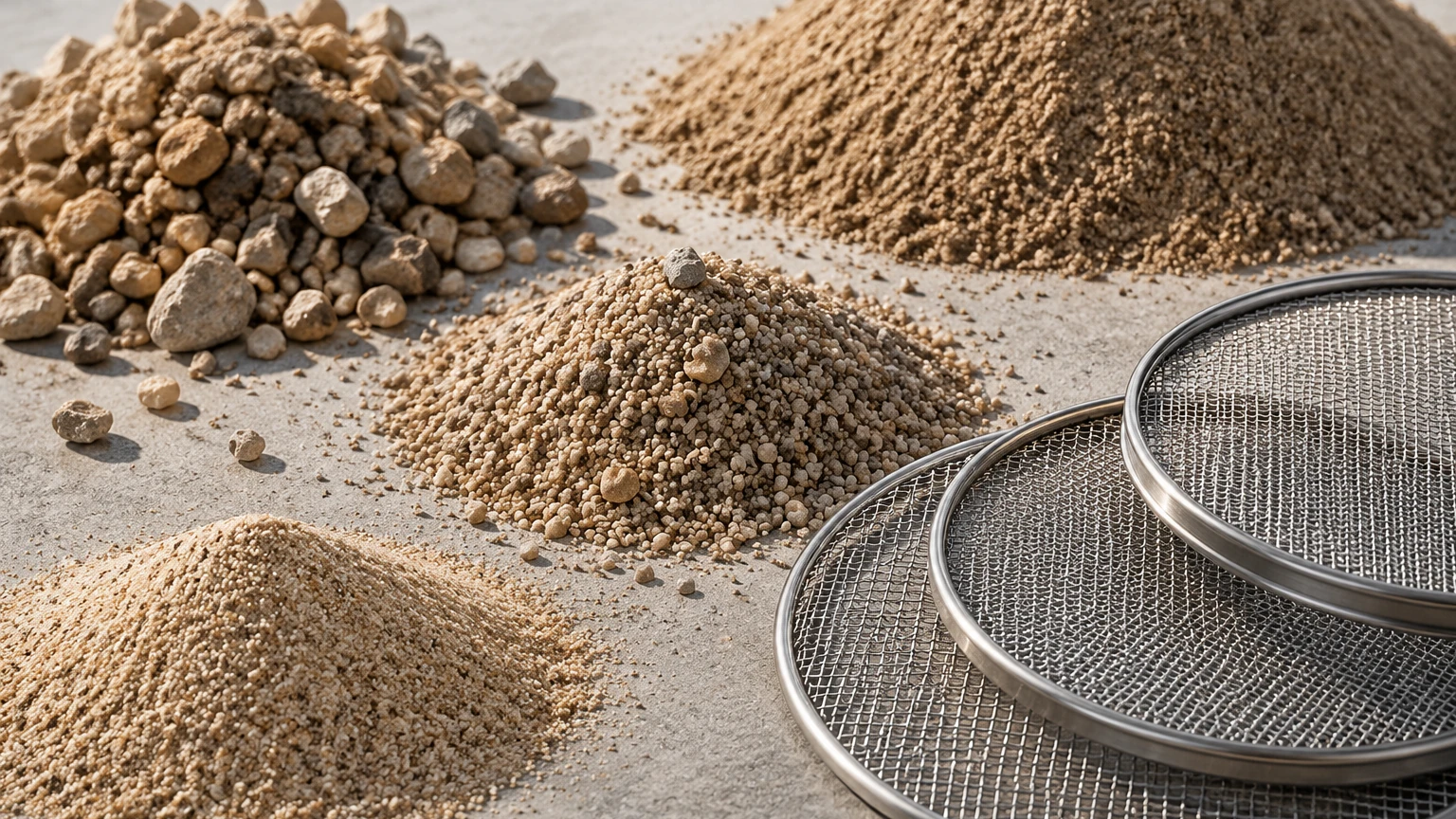
At its core, sand screening relies on the principle of geometric exclusion. Particles smaller than the screen aperture pass through (the undersize), while larger particles are retained (the oversize). However, in a B2B industrial context, the efficiency of this separation is influenced by several technical variables:
Particle Size Distribution (PSD)
Before selecting a screen, engineers must analyze the PSD of the feed material. A narrow distribution allows for high-speed screening, whereas a wide distribution with a high percentage of "near-mesh" particles (those within 10% of the aperture size) increases the risk of blinding or pegging. Blinding occurs when moisture or electrostatic forces cause fine particles to coat the mesh, while pegging happens when irregularly shaped particles become wedged in the openings.
Open Area and Throughput
The "open area" of a screen is the ratio of the total area of the apertures to the total area of the screen surface. A higher open area generally leads to higher throughput but may compromise the mechanical strength of the wire mesh. Calculating the required open area involves balancing the desired flow rate against the structural integrity needed to support the material load and the vibration forces of the screening machine.
Mesh Count vs. Micron Rating
In precision screening, the distinction between mesh count and micron rating is vital. Mesh count refers to the number of wires per linear inch, while the micron rating specifies the largest particle that can pass through the opening. Because different wire diameters can be used for the same mesh count, the actual aperture size (and thus the filtration accuracy) can vary significantly. Engineers must specify both the mesh count and the wire diameter to ensure the screening media meets the application's exact requirements.
Material Considerations: The Advantages of Stainless Steel
In demanding industrial environments, the material of the screening media is as important as its geometry. While synthetic polymers or carbon steel may be suitable for light-duty applications, stainless steel is the industry standard for high-performance sand screening. Kaifil utilizes various grades of stainless steel to address specific environmental challenges.
Corrosion Resistance
Sand screening often occurs in the presence of moisture, chemicals, or saline environments. Grade 304 stainless steel provides excellent resistance to atmospheric corrosion, making it suitable for many industrial applications. However, in chemical processing or marine environments, Grade 316 or 316L (low carbon) is preferred due to the addition of molybdenum, which enhances resistance to pitting and crevice corrosion.
Wear and Abrasion Resistance
Sand is inherently abrasive. Constant contact between the silica particles and the screening surface leads to wire thinning, which eventually enlarges the apertures and compromises separation accuracy. Stainless steel offers superior hardness and work-hardening properties compared to softer metals or plastics, significantly extending the service life of the filter components. For extremely abrasive sand screening tasks, specialized alloys or surface treatments may be employed to further harden the wire surface.
Thermal Stability
Certain industrial processes require screening at elevated temperatures, such as in the drying of specialty sands or the processing of hot chemical slurries. Stainless steel maintains its mechanical properties and dimensional stability at temperatures where synthetic meshes would soften, stretch, or melt. This ensures that the tension of the screen remains constant, preventing sagging and ensuring uniform particle separation.
Evaluating Filtration Media for High-Abrasion Environments
When designing or replacing components for sand screening systems, the choice of weave and structure determines the performance profile of the filter. Different industrial applications require different mechanical characteristics from their wire mesh.
Plain Weave vs. Twilled Weave
Plain weave, where each warp wire crosses over and under each shute wire, is the most common for standard sand screening. It provides a stable structure and consistent aperture sizes. For finer screening requirements where heavier wires are needed for durability, a twilled weave may be used. In a twilled weave, each shute wire passes over and under two warp wires, allowing for a heavier wire to be woven into a finer mesh, which is ideal for high-pressure or high-load environments.
Dutch Weave for Fine Particle Separation
In applications requiring the removal of very fine sand or silt from liquids, Dutch weave patterns (Plain Dutch or Twilled Dutch) are utilized. These weaves feature a higher density of shute wires, creating a tortuous path for the fluid. This results in a much finer filtration rating and higher mechanical strength, making them suitable for high-pressure hydraulic and water treatment applications where sand ingress could damage downstream equipment.
Support Structures and Reinforcement
For large-scale industrial screens, the wire mesh is often supported by a coarser backing mesh or a perforated metal plate. This multi-layer construction allows the fine screening layer to perform the separation while the robust support layer handles the mechanical stress and weight of the sand bed. Kaifil’s ability to manufacture custom metal filter components ensures that these layers are bonded or framed correctly to prevent delamination during operation.
Custom Design and OEM Integration for Screening Equipment
Standard off-the-shelf screening solutions often fail to meet the specific needs of specialized industrial processes. Customization is frequently required to optimize the interface between the screening media and the processing equipment. As a dedicated manufacturer, Kaifil provides tailored solutions that address the unique constraints of an engineering project.
Custom Dimensions and Framing
Industrial screening equipment comes in various shapes, from circular vibratory separators to rectangular gyratory screens. Custom-fabricated screen edges—such as hooked edges for tensioning, bolted frames, or polymer-bonded borders—are essential for ensuring a proper fit. A poor fit leads to material bypass, where unscreened sand leaks around the edges of the filter, contaminating the final product.
Specialized Filter Cartridges
In closed-loop systems, such as hydraulic circuits or chemical injection lines, sand screening is often performed by stainless steel filter cartridges. These can be designed as pleated elements to maximize surface area or as cylindrical strainers for high-flow applications. By customizing the end caps and internal support cores, these cartridges can be integrated into existing OEM housings, providing a seamless upgrade in filtration performance.
Engineering Collaboration
Selecting the right component involves more than just looking at a catalog. It requires a collaborative approach where the manufacturer understands the flow rates, pressure drops, and chemical exposures of the system. For more information on how custom engineering can improve your filtration outcomes, visit the Main Page to review product options and application support.
Operational Efficiency and Maintenance of Screening Components
The total cost of ownership (TCO) for sand screening equipment is heavily influenced by maintenance requirements and replacement cycles. An optimized screening system should minimize downtime while ensuring product quality.
Monitoring Pressure Drop
In liquid-solid separation, the pressure differential across the screen is a primary indicator of its condition. A sudden increase in pressure drop usually indicates blinding or the accumulation of a filter cake. Implementing automated backwashing or ultrasonic cleaning systems can help maintain flow, but eventually, the screening media will require physical inspection or replacement.
Inspection for Mechanical Fatigue
The constant vibration and loading inherent in sand screening can lead to metal fatigue. Inspection protocols should look for broken wires, particularly near the tensioning points or frame attachments. Even a single broken wire can allow oversized particles to pass through, which may have catastrophic effects on downstream processes, such as clogging spray nozzles or damaging high-speed turbines.
Replacement Cycles and Inventory Management
Engineers should establish replacement cycles based on empirical data from their specific process. Factors such as the abrasiveness of the sand, the frequency of cleaning cycles, and the chemical environment all dictate the lifespan of a stainless steel screen. Maintaining an inventory of critical screening components is essential for minimizing unplanned downtime. Working with a reliable OEM partner like Kaifil ensures that replacement parts meet the original specifications, maintaining the integrity of the filtration process over time.
Conclusion: Selecting the Right Partner for Sand Screening
Sand screening is a technical discipline that requires a balance of precision and durability. Whether the goal is to produce high-purity silica for glass manufacturing, protect hydraulic pumps from abrasive wear, or ensure the clarity of process water, the quality of the screening media is paramount. Stainless steel wire mesh and custom filtration components offer the resilience and accuracy needed for these demanding B2B applications.
By focusing on engineering considerations—such as material grade, weave type, and custom integration—technical professionals can significantly improve the efficiency of their separation processes. Kaifil remains committed to supporting these efforts through advanced manufacturing capabilities and deep expertise in industrial filtration. For engineers looking to optimize their sand screening systems, the path forward involves a thorough technical evaluation and the selection of high-performance components designed for the rigors of the industrial environment.
