


Technical Guide to 10 Gauge Woven Wire Mesh in Industrial Applications
In the landscape of industrial filtration and structural separation, the selection of wire diameter and mesh density is a critical engineering decision that dictates the longevity, efficiency, and safety of a system. Among the heavier specifications available for demanding environments, 10 gauge woven wire mesh stands out as a robust solution. Characterized by its significant wire thickness and high mechanical strength, this material is frequently specified for applications where thinner gauges would succumb to high pressure, abrasive media, or structural stress.
For engineers and procurement professionals, understanding the technical nuances of 10 gauge wire—specifically within the context of Woven Wire Mesh—is essential for optimizing process performance. This guide examines the specifications, material considerations, and engineering trade-offs associated with 10 gauge mesh to assist in informed decision-making.
Understanding the 10 Gauge Specification
The term "gauge" refers to the diameter of the wire used in the weaving process. In the context of industrial wire cloth, 10 gauge typically follows the American Wire Gauge (AWG) or the Washburn & Moen (W&M) standard, depending on the manufacturer and region. For most industrial stainless steel applications, a 10 gauge wire corresponds to a diameter of approximately 0.135 inches (3.43 mm).
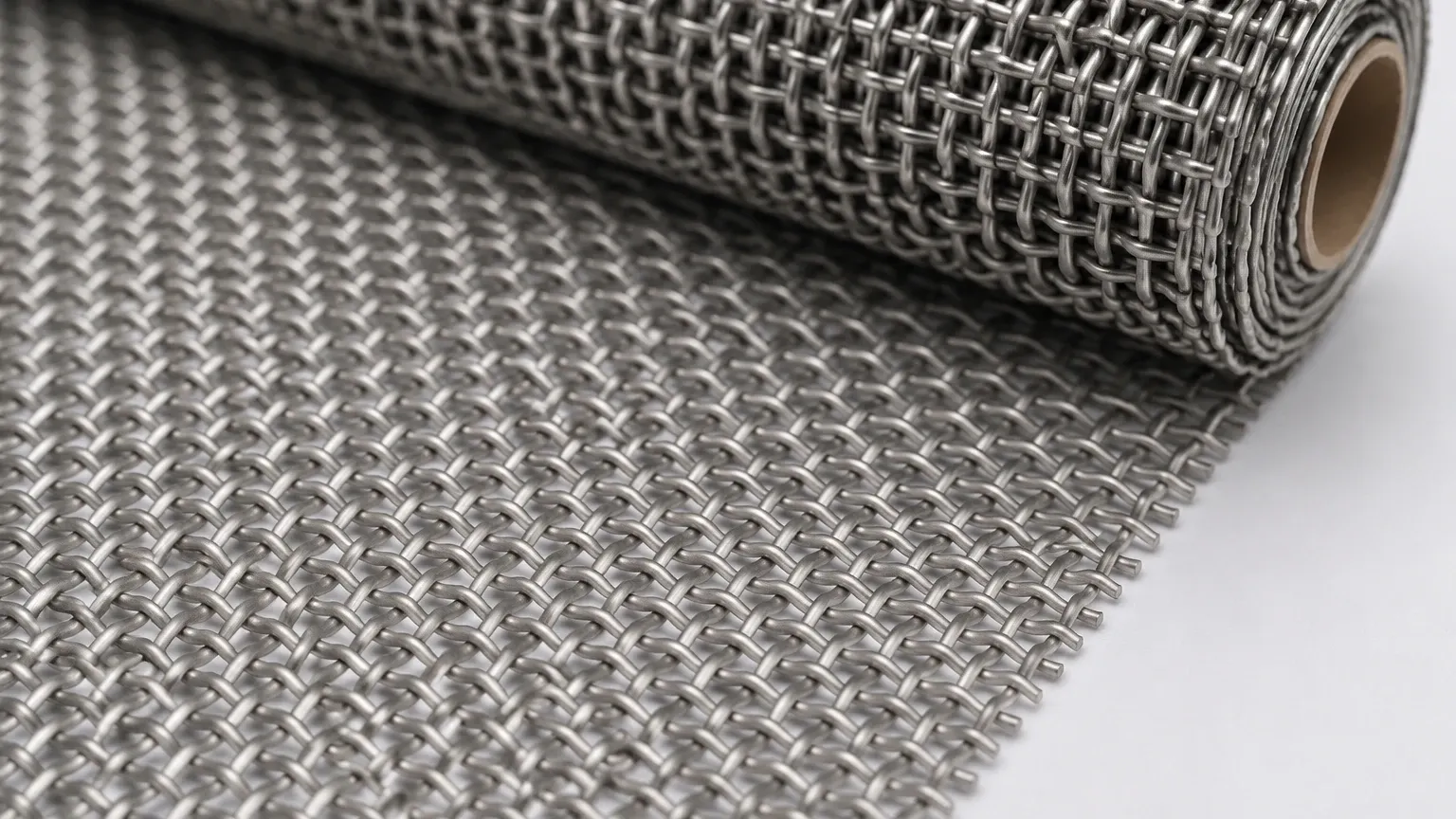
When this heavy-duty wire is processed into a woven structure, the resulting mesh is exceptionally rigid. Unlike finer meshes that may require support grids or perforated metal backings, 10 gauge woven wire mesh often functions as a self-supporting component. This inherent stability makes it a primary choice for heavy-duty sifting, protective screening, and primary filtration stages where large particles or high-velocity flows are present.
The Relationship Between Gauge and Mesh Count
It is important to distinguish between the wire gauge and the mesh count. While the gauge defines the thickness of the individual wires, the mesh count refers to the number of openings per linear inch. Due to the substantial diameter of 10 gauge wire, the maximum mesh count is physically limited. For instance, a 2-mesh screen (two openings per inch) using 10 gauge wire results in an opening size of roughly 0.365 inches, providing a high percentage of open area while maintaining extreme durability.
Material Selection: Stainless Steel Alloys
For the majority of B2B industrial applications, stainless steel is the standard material for 10 gauge woven wire mesh due to its mechanical properties and resistance to environmental degradation. At Kaifil, material selection is treated as a foundational engineering step.
SS304 vs. SS316L
* Type 304 Stainless Steel: This is the most common grade for industrial mesh. It offers excellent strength and good corrosion resistance for general applications, such as food processing, architectural screens, and standard water filtration. It is cost-effective but may be susceptible to pitting in high-chloride environments.
* Type 316L Stainless Steel: For chemical processing, marine environments, or pharmaceutical applications, 316L is preferred. The addition of molybdenum provides superior resistance to chlorides and acids. The "L" (Low Carbon) designation ensures better weldability and resistance to intergranular corrosion, which is vital when the 10 gauge mesh is integrated into larger fabricated assemblies.
Beyond these, specialty alloys like Monel, Inconel, or Duplex stainless steel may be specified for extreme temperatures or highly corrosive chemical streams, though these are typically reserved for custom OEM requirements.
Weave Patterns and Engineering Considerations
The method by which the 10 gauge wire is interlaced significantly impacts the mesh's performance characteristics. For heavy-gauge wires, the weave pattern must account for the wire's resistance to bending.
Plain Weave
The most common pattern is the plain weave, where each warp wire (running lengthwise) passes alternately over and under each weft wire (running crosswise). In 10 gauge specifications, the plain weave provides a consistent opening size and is the easiest to clean. It is the standard for sifting and sizing applications.
Intercrimp and Lock Crimp
Because 10 gauge wire is thick, it is often "pre-crimped" before weaving.
* Lock Crimp: The wires are crimped at the intersections to "lock" them into place. This is ideal for applications involving heavy vibration, as it prevents the wires from shifting and ensures the accuracy of the opening size over time.
* Intercrimp: Extra crimps are provided between the intersections. This is typically used when the mesh count is low relative to the wire diameter, providing additional stability to large-opening screens.
Performance Evaluation: Strength vs. Open Area
One of the primary challenges in specifying 10 gauge woven wire mesh is balancing structural integrity with the "Percentage of Open Area" (POA). The formula for calculating POA in a square mesh is:
POA = ((Opening Size) / (Opening Size + Wire Diameter))² x 100
Using a 10 gauge wire (0.135") in a 2-mesh configuration results in a POA of approximately 53%. Increasing the mesh count with the same 10 gauge wire would significantly decrease the POA, leading to higher pressure drops across the filter. Engineers must calculate the required flow rate and maximum allowable pressure drop before finalizing the mesh count for a 10 gauge specification.
Industrial Applications for Heavy-Duty Mesh
The robust nature of 10 gauge woven wire mesh makes it suitable for sectors that handle bulk materials or high-pressure fluids.
1. Mining and Quarrying: Used in vibrating screens for the primary sorting of ores and aggregates. The 10 gauge wire resists the impact and abrasion of heavy rocks.
2. Petrochemical and Refining: Employed as catalyst support grids or as the outer protective layer for multi-layered filter elements. Its thermal stability and chemical resistance are paramount here.
3. Water Treatment: Large-scale intake screens often utilize 10 gauge mesh to prevent debris from entering pumps and turbines. The thickness of the wire ensures a long service life even in turbulent water conditions.
4. Food and Beverage: In large-scale grain processing or industrial frying systems, heavy-gauge mesh provides the necessary support for high-volume throughput while complying with sanitary standards.
5. Waste Management: Used in trommel screens and recycling separators where the mesh must withstand constant mechanical stress and varied waste streams.
Customization and OEM Integration
Standard off-the-shelf mesh often fails to meet the precise tolerances required for specialized industrial machinery. This is where custom manufacturing becomes essential. Kaifil specializes in providing tailored solutions that go beyond simple rolls of wire cloth.
When a project requires specific dimensions, framing, or specialized weave types, engineers can request Plain, twill and dutch woven wire mesh in SS304/316L — rolls, cut mesh and framed panels. Send mesh count or micron target for a technical quote. This level of customization ensures that the 10 gauge mesh integrates seamlessly into the final equipment, whether it is a hydraulic filter housing or a chemical reactor internals.
Key Customization Options:
* Edge Treatments: For 10 gauge mesh, edges can be raw, hemmed, or welded into U-binders to prevent fraying and ensure safety during handling.
* Cylindrical Formations: Thick 10 gauge mesh can be rolled and seam-welded to create durable filter cartridges or strainers.
* Framed Panels: For architectural or safety applications, the mesh is often mounted into rigid stainless steel frames for easy installation.
Maintenance and Replacement Cycles
While 10 gauge woven wire mesh is designed for durability, it is not indestructible. The lifespan of the mesh depends on the media being filtered, the flow velocity, and the cleaning protocol.
Inspection Criteria
* Wire Thinning: In abrasive applications, the wire diameter will gradually decrease. Once the wire has lost a certain percentage of its original 10 gauge thickness, its structural integrity is compromised.
* Blinding/Plugging: If the mesh is not cleaned properly, particles can become lodged in the openings, increasing pressure drop and potentially causing the mesh to deform or burst.
* Corrosion Pitting: Even stainless steel can corrode if the environment changes. Regular visual inspections for localized pitting are necessary, especially in chemical processing.
Cleaning Methods
For heavy-gauge stainless steel mesh, mechanical cleaning, high-pressure water jetting, or ultrasonic cleaning are effective. Because 10 gauge wire is thick, it can withstand more aggressive cleaning methods than fine micronic mesh without the risk of tearing.
Conclusion: Selecting the Right Partner
Specifying 10 gauge woven wire mesh requires a thorough understanding of both the mechanical requirements of the application and the metallurgical properties of the mesh. By focusing on wire diameter, weave type, and material grade, engineers can ensure their filtration or separation systems operate at peak efficiency with minimal downtime.
As a professional manufacturer, Kaifil provides the technical expertise needed to navigate these choices. From initial material selection to the delivery of precision-cut components, the focus remains on quality and durability. For those seeking reliable, high-performance filtration components, choosing a manufacturer that understands the rigors of industrial environments is the most critical step in the procurement process.
