


18 Gauge Woven Wire Mesh: A Technical Guide for Industrial Applications
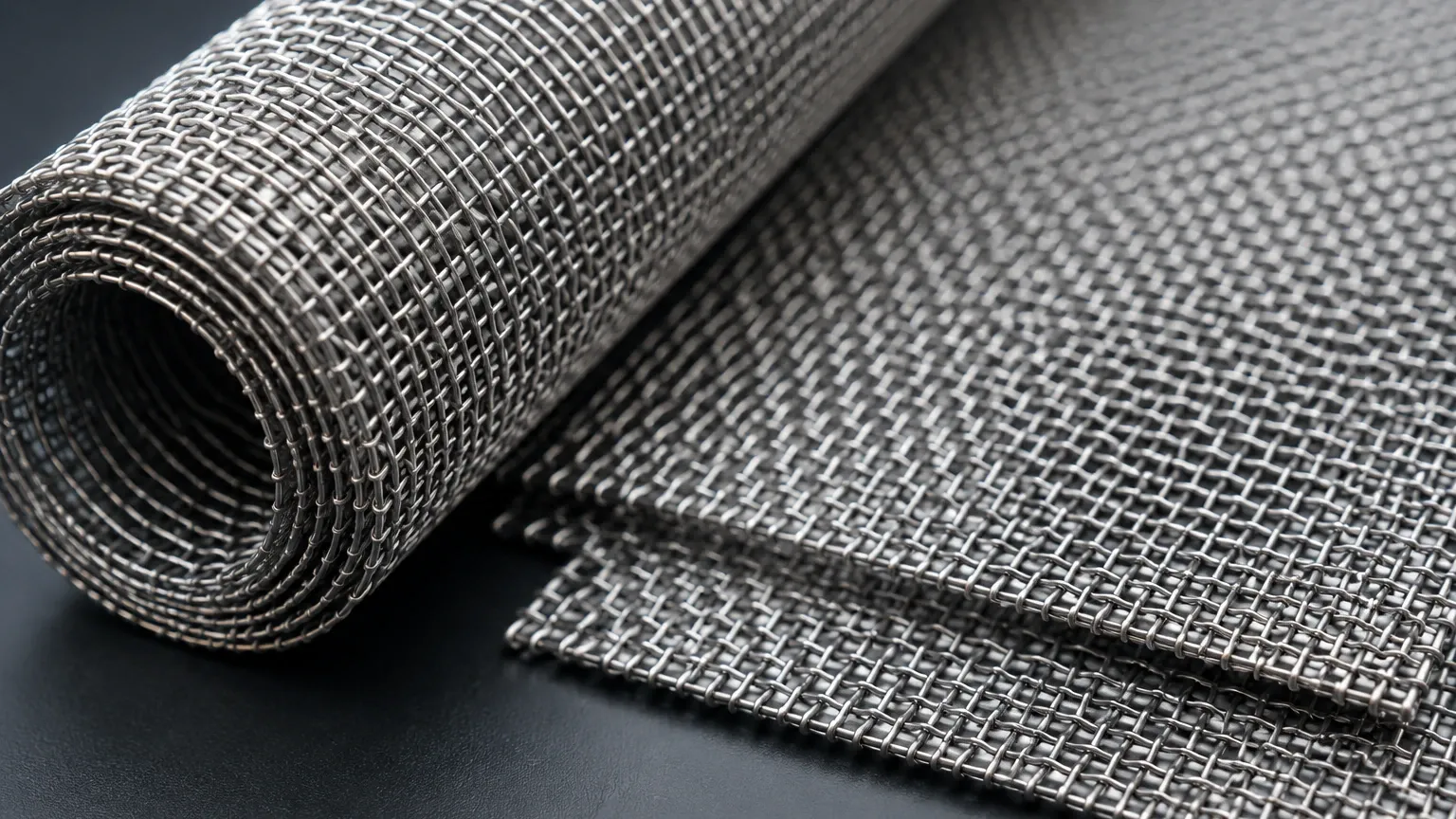
In the landscape of industrial filtration and structural screening, the specification of wire diameter is as critical as the mesh count itself. 18 gauge woven wire mesh represents a robust class of material utilized where mechanical strength, impact resistance, and durability are paramount. Unlike finer filtration cloths, mesh constructed from 18 gauge wire provides a rigid structure capable of withstanding high pressure and abrasive environments while maintaining precise aperture dimensions.
For engineers and procurement specialists, selecting 18 gauge woven wire mesh requires a nuanced understanding of wire gauge standards, material properties, and weave geometries. This guide explores the technical parameters of 18-gauge wire in woven applications, providing the factual basis needed to optimize filtration performance and service life.
Defining 18 Gauge in Woven Wire Mesh Specifications
When specifying "18 gauge," it is essential to identify the measurement standard being utilized. In the industrial wire mesh sector, two primary standards are commonly referenced: the Birmingham Wire Gauge (BWG) and the American Wire Gauge (AWG).
* Birmingham Wire Gauge (BWG): Most commonly used for industrial filtration and stainless steel wire mesh, 18 gauge BWG corresponds to a wire diameter of approximately 0.049 inches (1.245 mm).
* American Wire Gauge (AWG): Frequently used for electrical and non-ferrous applications, 18 gauge AWG corresponds to a wire diameter of approximately 0.0403 inches (1.024 mm).
In heavy-duty industrial contexts, the BWG standard is the default for stainless steel products. Using 18 gauge wire results in a mesh that is significantly stiffer than standard insect screening (which typically uses 30 gauge or thinner). This thickness dictates the maximum possible mesh count; for instance, it is physically impossible to weave a high-density 100-mesh screen using 18 gauge wire because the wire diameter exceeds the available space in the grid. Consequently, 18 gauge wire is typically found in coarse mesh counts ranging from 2×2 to 10×10.
Material Integrity: Selecting the Right Stainless Steel Grade
The performance of 18 gauge woven wire mesh is heavily dependent on the alloy selected. While carbon steel and galvanized options exist, stainless steel is the industry standard for longevity and chemical compatibility.
Type 304 Stainless Steel
As the most common industrial grade, T-304 provides excellent mechanical properties and basic corrosion resistance. It is suitable for architectural guards, general industrial sieving, and applications where the mesh is not exposed to highly corrosive chemicals or salt spray.
Type 316 and 316L Stainless Steel
For pharmaceutical, food processing, and marine applications, T-316 is the preferred choice. The addition of molybdenum enhances resistance to pitting and crevice corrosion, particularly in chloride-rich environments. For components requiring extensive welding, 316L (low carbon) is specified to prevent carbide precipitation and maintain corrosion resistance at the weld zones.
Specialty Alloys
In extreme environments involving high-temperature oxidation or aggressive acids, 18 gauge mesh can be produced in alloys such as Monel, Inconel, or Hastelloy. These materials are selected when standard stainless steel would suffer premature fatigue or chemical degradation.
Weave Patterns and Their Performance Characteristics
The method by which 18 gauge wire is interlaced determines the mesh's stability, flow characteristics, and filtration efficiency. For a comprehensive overview of available configurations, engineers can Review product options and application support to match weave types with specific pressure and particle retention requirements.
Plain Weave
The most straightforward pattern, where each warp wire passes alternately over and under each shute wire. In 18 gauge specifications, plain weave offers the highest percentage of open area and the most predictable flow rates. It is the standard for general-purpose screening and sizing.
Twill Weave
In a twill weave, each shute wire passes alternately over and under two warp wires. This allows for a heavier wire diameter than would be possible in a plain weave of the same mesh count. While less common for 18 gauge wire in coarse counts, it is used when a specific combination of thickness and density is required that exceeds the physical limits of plain weaving.
Dutch Weave (Plain and Twill)
Dutch weaves utilize different wire diameters for the warp and shute. While the primary structural wires may be 18 gauge, the interlocking wires are often finer and packed tightly together. This creates a "tortuous path" for filtration, providing high pressure resistance and precise micron ratings for liquid and gas filtration.
Engineering Performance: Strength, Flow, and Pressure Considerations
When integrating 18 gauge woven wire mesh into an industrial system, engineers must calculate the balance between structural integrity and hydraulic performance.
Percentage of Open Area
The open area is calculated using the formula:
`Open Area % = (Space / (Space + Wire Diameter))² x 100`
Because 18 gauge wire is relatively thick (0.049"), the percentage of open area decreases rapidly as the mesh count increases. For a 4×4 mesh with 0.049" wire, the open area is approximately 64.6%. For an 8×8 mesh with the same wire, the open area drops significantly. This affects the volume of fluid or air that can pass through the medium at a given pressure.
Tensile Strength and Burst Pressure
18 gauge wire provides high tensile strength, making the resulting mesh resistant to deformation under heavy loads. This is critical for vibrating screens used in mining or for filter elements subjected to high-pressure backwashing. The stiffness of the 18-gauge wire also reduces the need for extensive support structures, as the mesh itself can often span larger distances without sagging.
Weight and Handling
Buyers should be aware that 18 gauge mesh is substantially heavier than lighter grades. A square foot of 4×4 mesh using 18 gauge stainless steel wire weighs approximately 0.64 lbs. This weight must be factored into the design of frames, supports, and shipping logistics for large-scale OEM projects.
Industrial Applications of Heavy-Duty 18 Gauge Mesh
The versatility of 18 gauge woven wire mesh makes it a staple across several demanding sectors:
1. Petrochemical and Chemical Processing: Used as catalyst support grids and in large-scale filtration vessels where the mesh must withstand both chemical attack and the weight of the catalyst bed.
2. Food and Beverage: 18 gauge mesh is frequently used for industrial dehydrator trays, grain sifting, and protective screens for processing equipment where hygiene and durability are equally important.
3. Water Treatment: Serving as intake screens and primary filtration stages to remove large debris before water enters finer treatment membranes.
4. Machine Guarding and Security: Due to its impact resistance, 18 gauge mesh is an ideal material for safety partitions, window guards, and ventilation covers in industrial facilities.
5. Architectural and Decorative: The visible texture and inherent strength of 18 gauge stainless steel make it a popular choice for balustrade infill panels and functional facade cladding.
Critical Quality Factors and Procurement Risks
When sourcing 18 gauge woven wire mesh, technical professionals should evaluate suppliers based on several quality benchmarks to avoid operational failures.
* Wire Diameter Tolerance: Variations in wire diameter can lead to inconsistent aperture sizes. High-quality manufacturing ensures that the 18-gauge wire remains within strict tolerances (typically +/- 0.001") to maintain filtration accuracy.
* Mesh Regularity: The spacing between wires must be uniform. Inconsistent weaving can create "weak spots" where larger particles may pass through, or where the mesh may fail under pressure.
* Surface Finish: For many applications, the mesh must be free of oil, grease, and burrs. Ultrasonic cleaning or passivating may be required, especially for pharmaceutical or food-grade components.
* Edge Treatment: 18 gauge wire is stiff and sharp when cut. Depending on the application, edges may need to be hemmed, framed, or welded to ensure safety and ease of installation.
Customization and Fabrication for OEM Integration
Standard rolls of 18 gauge woven wire mesh often require further processing to meet specific application needs. Customization options include:
* Precision Cutting: Utilizing waterjet or laser cutting to achieve complex shapes without deforming the mesh structure.
* Framing and Edging: Adding U-channels or flat bar frames to the mesh panels for easy mounting into industrial housings.
* Forming and Welding: Shaping the mesh into cylinders, cones, or baskets. 18 gauge wire requires specialized welding equipment (such as TIG or resistance welding) to ensure strong bonds without burning through the material.
* Multi-Layer Sintering: In some high-performance filtration scenarios, 18 gauge mesh is used as a support layer, sintered together with finer mesh layers to create a composite filter media that combines high strength with fine filtration ratings.
Conclusion: Selecting the Right Specification
18 gauge woven wire mesh is a foundational material for applications requiring a balance of high mechanical strength and reliable open-area performance. By understanding the distinction between wire gauges, selecting the appropriate stainless steel alloy, and accounting for the physical limitations of mesh density, engineers can ensure their filtration and screening systems operate at peak efficiency.
When requesting a quote or technical evaluation, it is helpful to provide the specific mesh count, the required alloy (e.g., SS316L), and the intended environment (temperature, chemical exposure, and pressure). For projects requiring specific dimensions or specialized weave types, Plain, twill and dutch woven wire mesh in SS304/316L — rolls, cut mesh and framed panels. Send mesh count or micron target for a technical quote. This level of technical confirmation ensures that the final product meets the rigorous demands of modern industrial processes.
