


3×3 Woven Wire Mesh
In the landscape of industrial filtration and structural screening, the specification of a mesh is fundamental to the performance of the entire system. Among the various configurations available, 3×3 woven wire mesh occupies a critical position. Characterized by its relatively large openings and robust construction, this mesh size is frequently utilized in applications requiring high flow rates, structural rigidity, and coarse particle separation.
For engineers and procurement specialists, understanding the technical nuances of 3×3 mesh—ranging from wire diameter selection to material compatibility—is essential for optimizing equipment longevity and process efficiency. This guide examines the engineering principles, material considerations, and industrial applications of 3×3 woven wire mesh to support informed decision-making.
Understanding the Geometry of 3×3 Woven Wire Mesh
The term "3×3 mesh" refers to the mesh count, specifically indicating that there are three openings per linear inch in both the warp (lengthwise) and shute (crosswise) directions. This results in a total of nine openings per square inch. Because the mesh count is low, the physical size of each opening is significantly larger than that of fine filtration meshes.
The Relationship Between Mesh Count and Opening Size
The clear opening (the space between wires) is not determined by the mesh count alone; it is a function of both the mesh count and the wire diameter. The formula for calculating the opening size is:
Opening Size = (1 / Mesh Count) – Wire Diameter
For a 3×3 mesh, the center-to-center distance between wires is 0.333 inches (8.46 mm). If a standard wire diameter of 0.063 inches (1.6 mm) is used, the resulting clear opening is 0.270 inches (6.86 mm). Engineers must specify the wire diameter carefully, as a thicker wire increases the structural strength and abrasion resistance but decreases the percentage of open area.
Open Area and Flow Characteristics
The percentage of open area determines the throughput and pressure drop across the mesh. In 3×3 configurations, the open area typically ranges from 60% to 80%. A high open area is advantageous for gravity-fed systems or high-velocity air filtration where minimal resistance is required. However, in applications involving heavy mechanical loads or abrasive materials, a smaller open area (achieved through thicker wires) may be necessary to prevent mesh deformation or premature wear.
Material Selection for Industrial Environments
Material selection is perhaps the most critical factor in determining the service life of woven wire mesh. While various alloys are available, stainless steel remains the industry standard due to its mechanical properties and resistance to environmental degradation.
Stainless Steel 304 vs. 316L
* Type 304: This is the most common grade for industrial mesh. It provides excellent strength and good corrosion resistance for general applications, such as food processing (non-acidic), architectural screens, and machine guards. It is cost-effective but may succumb to pitting in high-chloride environments.
* Type 316L: For chemical processing, pharmaceutical manufacturing, or marine environments, Type 316L is preferred. The addition of molybdenum enhances its resistance to chlorides and acetic acids. The "L" designation (low carbon) is particularly important if the mesh is to be welded into frames, as it prevents carbide precipitation and maintains corrosion resistance at the weld points.
Specialty Alloys and High-Temperature Considerations
In specialized sectors, such as petrochemical refining or heat treating, standard stainless steels may not suffice. Alloys like Inconel or Monel may be specified for their ability to maintain tensile strength at extreme temperatures or their resistance to specific corrosive agents. When selecting a material for 3×3 woven wire mesh, engineers must evaluate the operating temperature, the chemical composition of the fluid or gas, and the potential for galvanic corrosion if the mesh is in contact with dissimilar metals.
Engineering Considerations: Weave Types and Stability
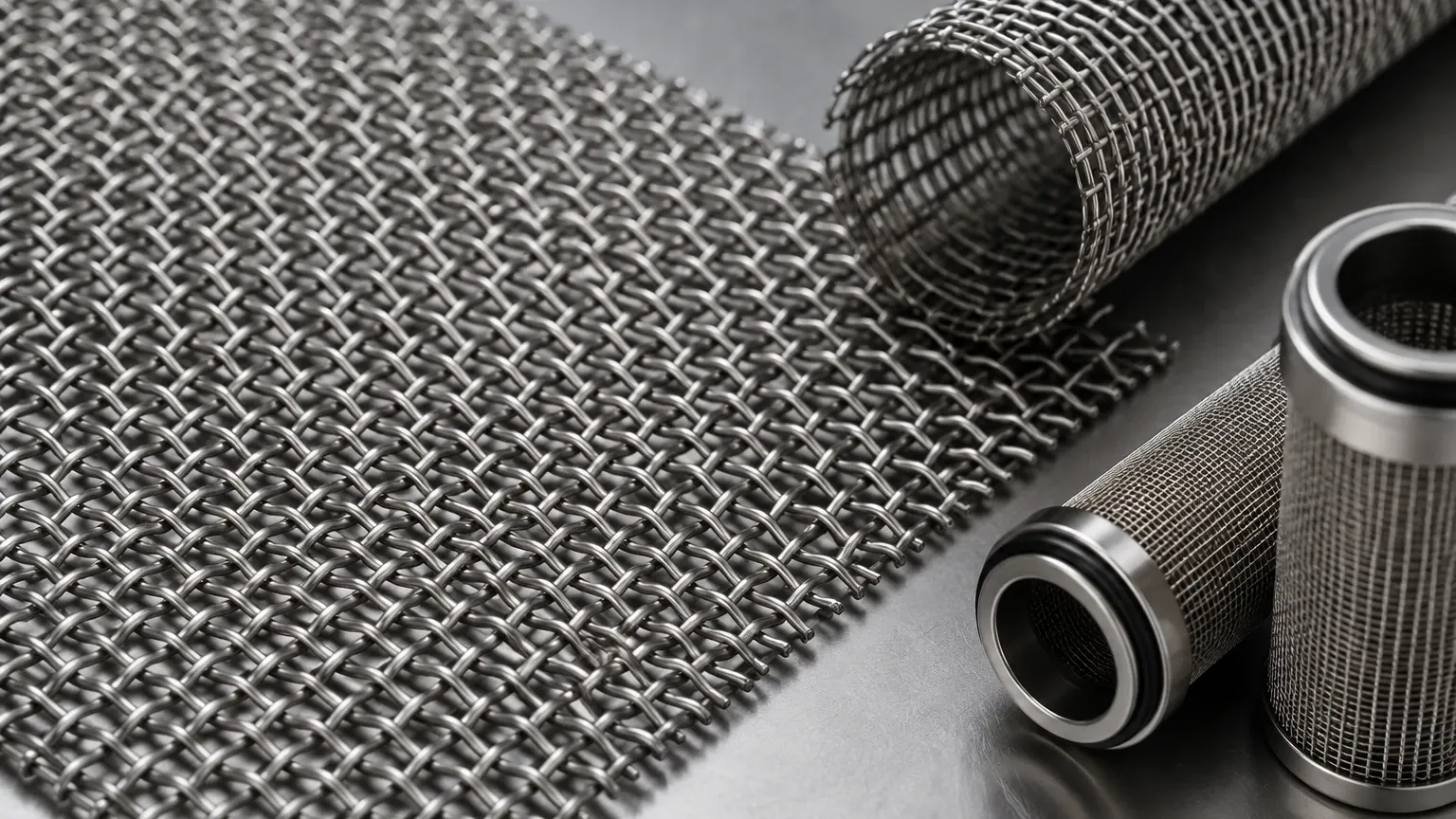
While finer meshes may utilize twill or dutch weaves to achieve specific micron ratings, 3×3 mesh is almost exclusively produced using a Plain Weave. In a plain weave, each shute wire passes alternately over and under each warp wire.
Structural Integrity and Crimp Styles
For coarse meshes like the 3×3, the "crimp" of the wire is essential for maintaining the accuracy of the openings.
1. Intermediate Crimp: Often used when the mesh count is low relative to the wire diameter. Extra crimps between the intersections provide added rigidity.
2. Lock Crimp: This style features distinct knuckles at the wire intersections, locking the wires firmly in place. This is highly recommended for 3×3 mesh used in vibrating screens or applications subject to heavy impact, as it prevents the wires from shifting and altering the opening size.
When evaluating Plain, twill and dutch woven wire mesh in SS304/316L — rolls, cut mesh and framed panels. Send mesh count or micron target for a technical quote., it is important to confirm that the weave stability matches the mechanical stresses of the intended application.
Primary Industrial Applications
The versatility of 3×3 woven wire mesh allows it to serve various roles across multiple sectors. Its primary function is usually separation or protection rather than fine-particle filtration.
1. Pre-Filtration and Scalping
In complex filtration systems, 3×3 mesh often serves as a "scalping" screen. It is positioned upstream to remove large debris, stones, or clumps that could damage more delicate, high-precision filter cartridges. By removing these large contaminants, the 3×3 mesh extends the replacement cycle of the secondary filters, reducing the total cost of ownership.
2. Food and Beverage Processing
In the food industry, 3×3 stainless steel mesh is used for sorting bulk agricultural products, such as grains or nuts. It is also used in drying trays where high airflow is necessary to ensure uniform moisture removal. Because stainless steel is non-reactive and easy to sanitize, it meets the stringent hygiene requirements of the FDA and other regulatory bodies.
3. Safety Guards and Security Screens
The inherent strength of a 3×3 mesh with a heavy wire gauge makes it an ideal material for machine guards. It allows operators to visually inspect moving parts while providing a physical barrier against accidental contact. Similarly, it is used in architectural security applications to protect windows or vents without significantly obstructing light or air.
4. Mining and Aggregate Sorting
In the extraction industries, 3×3 mesh is employed in vibrating sifters to categorize raw materials by size. The mesh must withstand constant abrasion and high-frequency vibrations. For these applications, high-tensile carbon steel or specialized wear-resistant stainless steels are often selected.
Customization and OEM Solutions
Standard off-the-shelf rolls of 3×3 mesh may not always meet the specific requirements of a specialized industrial machine. Customization is often necessary to ensure seamless integration into existing workflows.
Edge Treatments and Framing
Raw cut edges of woven wire mesh can be hazardous and prone to unraveling under stress. For many B2B applications, the mesh is supplied with specific edge treatments:
* U-Binding: A metal channel is welded around the perimeter, providing a smooth edge and increasing the structural rigidity of the panel.
* Hemmed Edges: The mesh edges are folded over to eliminate sharp wires.
* Custom Framing: For use in filtration vessels or sifting machines, the mesh may be circular-cut or framed with bolt holes for easy installation.
Precision Manufacturing at Kaifil
As a professional manufacturer, Kaifil specializes in providing tailored filtration solutions. This includes the ability to produce 3×3 woven wire mesh to exact tolerances, ensuring that the mesh count and wire diameter are consistent across the entire surface. For OEM partners, this consistency is vital for maintaining the performance benchmarks of their equipment.
Selection Criteria: A Checklist for Engineers
Before finalizing a purchase order for 3×3 woven wire mesh, technical teams should confirm the following parameters to avoid common performance failures:
1. Aperture Accuracy: Does the application require a precise opening size for strict particle separation, or is a general "commercial grade" tolerance acceptable?
2. Wire Gauge: Is the wire thick enough to handle the expected mechanical load and pressure? Conversely, is it thin enough to provide the required flow rate?
3. Environmental Compatibility: Will the mesh be exposed to high temperatures, cryogenic conditions, or corrosive chemicals? (e.g., Is 316L necessary over 304?)
4. Surface Finish: Does the application require an electropolished finish to prevent bacterial growth or a plain finish for industrial screening?
5. Form Factor: Is the mesh needed in bulk rolls, cut-to-size pieces, or fully fabricated framed panels?
Maintenance and Replacement Cycles
While stainless steel 3×3 mesh is exceptionally durable, its lifespan is not infinite. Factors such as "blinding" (where particles become trapped in the mesh) and mechanical fatigue can impact performance.
Cleaning Procedures
To maintain optimal flow, regular cleaning is required. For 3×3 mesh, mechanical cleaning (brushing) or high-pressure water jets are usually effective due to the large opening size. In the pharmaceutical or food industries, Clean-in-Place (CIP) systems may be used, requiring the mesh and its housing to be resistant to caustic cleaning agents.
Monitoring for Wear
Engineers should implement a regular inspection schedule to check for:
* Wire Thinning: Caused by abrasive materials passing through the mesh.
* Mesh Deformation: Indicating that the pressure drop across the screen has exceeded the design limits.
* Pitting Corrosion: Small holes or rust spots that could compromise the structural integrity of the weave.
Conclusion
3×3 woven wire mesh is a foundational component in many industrial processes, offering a balance of strength, high open area, and durability. Whether utilized for coarse filtration in a chemical plant or as a protective guard in a manufacturing facility, the performance of the mesh depends on precise engineering specifications. By selecting the appropriate material grade, wire diameter, and weave stability, and by working with a specialized manufacturer like Kaifil, organizations can ensure their filtration and screening systems operate at peak efficiency with minimal downtime.
For technical teams seeking to optimize their processes, confirming the exact requirements of the application—from micron targets to mechanical stress—is the first step toward a successful filtration solution.
