


Flat Expanded Metal
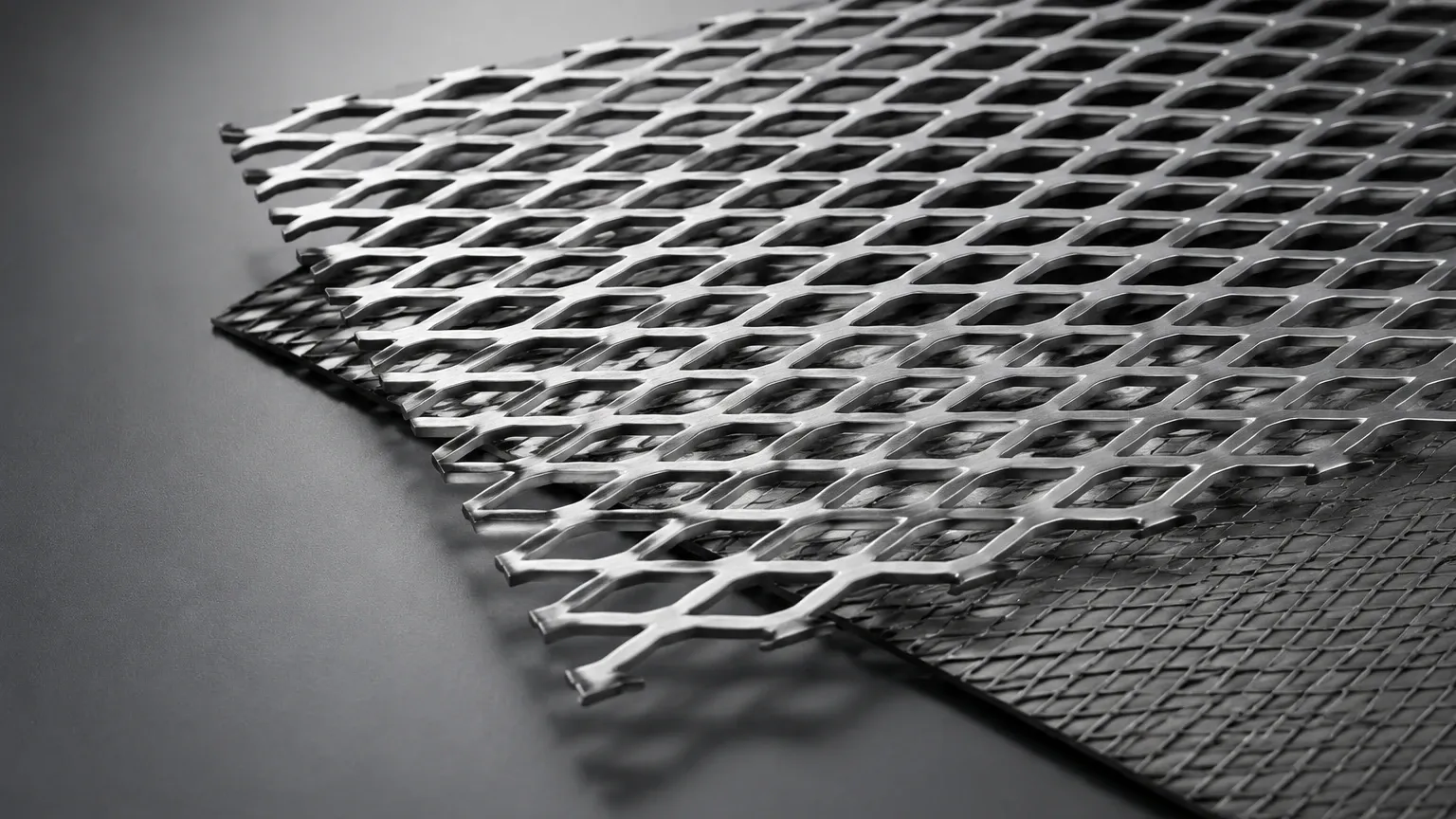
In industrial filtration and structural engineering, the selection of support media and protective components requires a precise balance between structural integrity and fluid dynamics. Flat expanded metal represents a specialized category of processed metal mesh that addresses these requirements through a unique manufacturing sequence. Unlike standard expanded metal, which features a raised, three-dimensional texture, flat expanded metal is cold-rolled to create a smooth, level surface. This characteristic makes it an essential component in high-precision filtration systems, chemical processing equipment, and food-grade machinery where surface uniformity is critical.
For engineers and procurement teams, understanding the mechanical properties and manufacturing tolerances of flat expanded metal is vital for optimizing system performance and ensuring long-term durability in demanding environments.
The Manufacturing Process: From Standard to Flat
The production of flat expanded metal begins with the standard expansion process. A metal sheet or coil—typically stainless steel for industrial filtration—is simultaneously slit and stretched by a reciprocating die. This process creates a diamond-shaped pattern of interconnected strands and bonds without any waste material, unlike the punching process used for perforated metal.
At this stage, the material is known as "raised" or "standard" expanded metal. The strands are set at a sharp angle to the plane of the sheet, providing high rigidity but a rough, uneven surface. To transform this into flat expanded metal, the raised sheet is passed through a heavy-duty cold-rolling mill. This secondary process flattens the strands and bonds back into a single plane.
Several critical changes occur during this flattening stage:
1. Thickness Reduction: The overall thickness of the sheet is reduced, often becoming approximately the same as the original base metal thickness.
2. Elongation: The flattening process slightly elongates the diamond pattern, typically increasing the Long Way of Design (LWD) by about 5% to 10%.
3. Surface Smoothness: The sharp edges of the strands are smoothed out, creating a surface that is safe to handle and easy to clean.
4. Work Hardening: The cold-rolling process can increase the hardness and tensile strength of the metal, which is a significant consideration for applications involving high-pressure differentials.
Technical Specifications and Terminology
When specifying flat expanded metal for industrial applications, engineers must use standardized terminology to ensure the manufactured product meets the design requirements. The following parameters are the primary metrics used to define the mesh geometry:
* SWD (Short Way of Design): The distance from the center of one bond to the center of the next bond across the short axis of the diamond.
* LWD (Long Way of Design): The distance from the center of one bond to the center of the next bond across the long axis of the diamond.
* SWO (Short Way of Opening): The actual width of the opening measured from the inside edge of one bond to the inside edge of the opposite bond.
* LWO (Long Way of Opening): The actual length of the opening measured from the inside edge of one bond to the inside edge of the opposite bond.
* Strand Width: The amount of metal fed into the die between slits. In flat expanded metal, the strand width remains relatively constant, but the strand thickness is reduced during rolling.
For filtration support, the ratio between the strand width and the opening size determines the "open area" percentage. This percentage is a critical factor in calculating flow rates and pressure drops across the filter element.
Material Selection for Corrosive and High-Temperature Environments
The choice of material is the most significant factor in the longevity of flat expanded metal components. While carbon steel and aluminum are common in architectural applications, industrial filtration typically demands the corrosion resistance and thermal stability of stainless steel.
Stainless Steel 304 and 304L
Grade 304 is the standard choice for general industrial use. It offers excellent resistance to atmospheric corrosion and many organic and inorganic chemicals. However, in applications involving welding, 304L (low carbon) is often preferred to prevent sensitization and intergranular corrosion.
Stainless Steel 316 and 316L
For more aggressive environments, such as chemical processing, pharmaceutical manufacturing, or marine applications, Grade 316 is the industry standard. The addition of molybdenum provides superior resistance to chlorides and pitting. 316L is used for components that require extensive welding to maintain structural integrity in corrosive media.
Specialty Alloys
In extreme cases involving high-temperature oxidation or highly acidic environments, specialty alloys like Monel, Inconel, or Hastelloy may be used. These materials maintain their mechanical properties and resist scaling at temperatures where standard stainless steels would fail.
Comparing Flat Expanded Metal with Perforated & Expanded Metal
When designing a filtration system or a protective barrier, engineers often choose between Perforated & Expanded Metal solutions. Each has distinct advantages depending on the application.
Perforated Metal offers the highest level of precision in hole size and placement. It is ideal for applications requiring very specific filtration ratings or aesthetic uniformity. However, the perforation process generates significant scrap (the "slugs" punched out of the holes), which increases the material cost, especially when using expensive alloys.
Flat Expanded Metal is often a more cost-effective alternative because the expansion process produces no scrap. From a structural standpoint, the interconnected strands of expanded metal provide a better strength-to-weight ratio than perforated metal of the same thickness. Because the metal is stretched rather than cut, the structural continuity of the sheet is maintained, allowing it to distribute loads more effectively.
In filtration, flat expanded metal is frequently used as a support layer for fine wire mesh. The smooth surface of the flattened mesh prevents the delicate wires of the filter media from being abraded or punctured under pressure, a risk that is much higher with standard raised expanded metal.
Industrial Applications and Engineering Considerations
The versatility of flat expanded metal allows it to serve various roles across multiple sectors. Its primary function in industrial settings is often as a structural support or a protective interface.
Filtration Support and Pleat Spacing
In the manufacturing of filter cartridges, flat expanded metal serves as the inner core or outer cage. It provides the necessary rigidity to prevent the filter media from collapsing under high differential pressures. Because the surface is flat, it provides uniform contact with the media, ensuring that the effective filtration area is maximized and that flow is distributed evenly across the surface.
Chemical and Pharmaceutical Processing
In these industries, hygiene and cleanability are paramount. The smooth, two-dimensional surface of flat expanded metal minimizes areas where particles can become trapped (known as "dead zones"). This makes the components easier to clean using CIP (Clean-In-Place) systems and reduces the risk of cross-contamination between batches.
Food and Beverage Production
Flat expanded metal is used in drying trays, sorting screens, and protective guards within food processing plants. Stainless steel variants are required to meet FDA and stringent local health regulations. The lack of sharp edges reduces the risk of material snagging and improves worker safety during maintenance and cleaning cycles.
Hydraulic and Water Treatment
In hydraulic systems, flat expanded metal is used in suction strainers and return line filters to protect sensitive pumps from large contaminants. In water treatment, it serves as a pre-filter or a support for membrane filtration systems, where its high open area allows for high flow volumes with minimal resistance.
Engineering Evaluation: Flow Dynamics and Structural Integrity
When integrating flat expanded metal into a technical design, engineers must perform a detailed evaluation of two competing factors: flow capacity and structural strength.
Pressure Drop Calculations
The open area of expanded metal is not as easily calculated as that of perforated metal. It depends on the strand width, the thickness, and the angle of the diamond openings. A higher open area reduces the pressure drop across the filter, which improves energy efficiency and reduces the load on pumps. However, increasing the open area usually requires narrower strands, which can compromise the structural integrity of the sheet.
Load-Bearing Capacity
Flat expanded metal is directional. It possesses significantly higher strength when the load is applied across the Short Way of Design (SWD) compared to the Long Way of Design (LWD). This anisotropy must be accounted for in the orientation of the mesh during fabrication. For cylindrical filter cores, the LWD is typically oriented around the circumference to provide maximum hoop strength.
Procurement and Quality Assurance
To ensure the successful implementation of flat expanded metal in industrial projects, purchasing teams and engineers should confirm several key factors with the manufacturer before production begins:
1. Tolerance Requirements: Standard industrial tolerances for expanded metal can be broader than those for machined parts. If the mesh must fit into a precision-machined housing, tighter tolerances must be specified.
2. Edge Conditions: Expanded metal can be supplied with "random sheared" edges (where diamonds are cut through) or "bond sheared" edges (where the cut follows the line of the bonds). Bond shearing provides a cleaner edge and is often necessary for safety and ease of welding.
3. Surface Finish: Beyond the cold-rolling process, additional finishes such as degreasing, pickling, or electropolishing may be required. For pharmaceutical and food-grade applications, electropolishing is often specified to achieve a mirror-like finish and enhance corrosion resistance.
4. Flatness Specifications: While the rolling process flattens the material, some residual stress may remain, leading to slight bowing or camber. If the application requires absolute flatness (e.g., for large tray liners), specialized leveling processes may be necessary.
As a manufacturer specializing in custom filtration solutions, Kaifil provides comprehensive OEM support for flat expanded metal components. By focusing on material purity, precise mesh geometry, and secondary processing techniques, we ensure that each component meets the specific demands of its intended industrial environment. Whether providing support for complex filter cartridges or durable screens for chemical processing, our engineering-led approach helps clients achieve optimal filtration performance and extended equipment life cycles.
