


How Is Expanded Metal Sizes
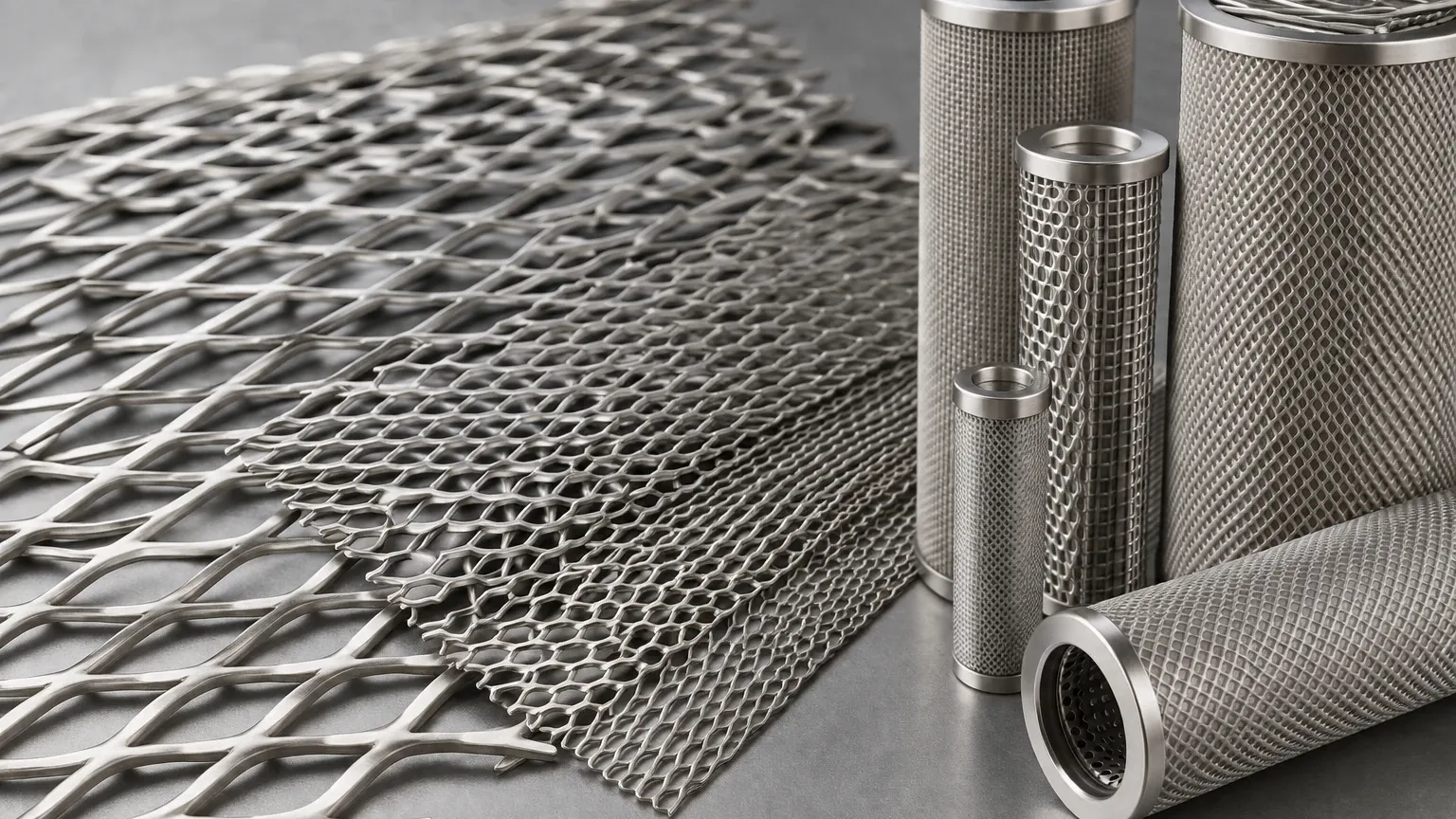
In industrial filtration and structural engineering, understanding the precise geometry of expanded metal is essential for ensuring both mechanical integrity and filtration efficiency. Expanded metal is a versatile material produced by simultaneously slitting and stretching a solid sheet of metal, typically stainless steel, to create a diamond-shaped pattern. Unlike perforated metal, where material is punched out and discarded, expanded metal is formed without waste, resulting in a high strength-to-weight ratio. However, the unique manufacturing process introduces specific terminology and measurement standards. For engineers and procurement professionals, knowing exactly how is expanded metal sizes determined is the first step in specifying the correct component for a high-performance system.
At Kaifil, we specialize in precision Perforated & Expanded Metal solutions tailored for demanding industrial environments. This guide provides a technical deep dive into the measurement protocols, dimensional variables, and engineering considerations required to select the right expanded metal size for your application.
The Fundamental Dimensions: SWD and LWD
When evaluating expanded metal, the most critical measurements are the Short Way of Design (SWD) and the Long Way of Design (LWD). These dimensions do not refer to the size of the opening itself, but rather to the distance between the centers of the "bonds" (the points where the strands intersect).
Short Way of Design (SWD)
The SWD is the distance measured from the center of one bond to the center of the next bond across the short axis of the diamond. In most industrial specifications, the SWD is the first number listed. For example, in a "1/2-inch" expanded metal specification, the 1/2 inch typically refers to the SWD. This dimension is crucial because it dictates the density of the pattern and significantly influences the overall rigidity of the sheet.
Long Way of Design (LWD)
The LWD is the distance measured from the center of one bond to the center of the next bond across the long axis of the diamond. While the SWD determines the "tightness" of the mesh, the LWD defines the elongation of the pattern. Together, these two measurements establish the basic grid of the expanded metal sheet. Understanding how is expanded metal sizes calculated through these center-to-center measurements allows engineers to calculate the number of openings per linear foot, which is vital for estimating flow resistance in filtration applications.
Measuring the Clear Opening: SWO and LWO
While SWD and LWD are the standard for cataloging expanded metal, engineers focusing on filtration or particle retention are often more concerned with the actual physical space between the strands. This is where Short Way of Opening (SWO) and Long Way of Opening (LWO) come into play.
* Short Way of Opening (SWO): This is the clear distance between the inside edges of the bonds across the short dimension. This is the "hole" through which a particle or fluid must pass.
* Long Way of Opening (LWO): This is the clear distance between the inside edges of the bonds across the long dimension.
In filtration, the SWO is often the limiting factor for particle passage. If you are designing a stainless steel filter cartridge for a hydraulic system, the SWO must be precisely matched to the required filtration grade. Because the expansion process involves stretching the metal, the relationship between the SWD and SWO is dependent on the width of the metal strands.
Strand Dimensions and Material Thickness
The physical properties of the expanded metal—its weight, strength, and open area—are determined by the strand dimensions. There are two primary measurements for the strands: strand width and strand thickness.
Strand Width
Strand width refers to the amount of metal fed through the expanding machine between each slit. It is essentially the "width" of the metal that forms the sides of the diamond. Increasing the strand width increases the strength and weight of the mesh but reduces the percentage of open area. For heavy-duty support structures or high-pressure filtration housings, a wider strand is often preferred to resist deformation.
Strand Thickness
Strand thickness is the thickness of the original base metal sheet before it was expanded. In the context of stainless steel filtration, this thickness is usually specified in gauges or millimeters. It is important to note that in "Standard" (raised) expanded metal, the thickness of the overall sheet is significantly greater than the strand thickness because the strands are turned at an angle during the expansion process. However, in "Flattened" expanded metal, the strand thickness and the overall sheet thickness are nearly identical.
Standard vs. Flattened Expanded Metal Sizes
One of the most common points of confusion when discussing how is expanded metal sizes measured is the difference between standard and flattened varieties. The choice between these two significantly impacts the final dimensions of the product.
Standard (Raised) Expanded Metal
Standard expanded metal is the product as it comes directly off the expanding machine. The strands and bonds are set at a uniform angle to the plane of the sheet. This creates a three-dimensional surface that provides excellent grip and structural stiffness. When measuring standard expanded metal, the "overall thickness" will be much larger than the original gauge of the metal. For example, a 16-gauge sheet might result in a standard expanded product that is 0.150 inches thick. This added depth is beneficial for creating turbulence in fluid filtration or providing mechanical reinforcement in composite materials.
Flattened Expanded Metal
Flattened expanded metal is produced by passing standard expanded metal through a cold-roll reducing mill. This process flattens the strands and bonds into a single plane, creating a smooth, flat surface. During flattening, the LWD remains relatively constant, but the SWD may slightly increase as the diamonds are stretched. Most importantly, the overall thickness is reduced to roughly the original gauge of the material. Flattened expanded metal is ideal for applications where a smooth surface is required to prevent abrasion or where the filter must fit into a very thin housing.
Engineering the Open Area
For B2B applications in the chemical, food and beverage, and pharmaceutical industries, the percentage of open area is a critical performance metric. The open area determines the pressure drop across the filter and the velocity of the fluid passing through the mesh.
The open area is calculated using the relationship between the strand width and the SWD. The formula generally follows:
**Percentage of Open Area = (1 – (2 * Strand Width / SWD)) * 100**
By manipulating how is expanded metal sizes are configured—specifically by adjusting the strand width relative to the SWD—manufacturers like Kaifil can fine-tune the mesh to meet specific flow requirements. A higher open area is preferred for low-pressure gas filtration, while a lower open area provides the structural support needed for high-viscosity liquid filtration.
Material Selection and Its Impact on Sizing
The choice of material, such as 304 or 316 stainless steel, influences the manufacturing tolerances and the longevity of the dimensions. Stainless steel is the preferred material for industrial filtration due to its corrosion resistance and ability to maintain structural integrity at high temperatures.
When specifying sizes for Perforated & Expanded Metal, engineers must account for the mechanical properties of the alloy. For instance, 316L stainless steel has slightly different elongation properties than 304L, which can affect the precision of the diamond shape during the expansion process. At Kaifil, our advanced manufacturing capabilities ensure that even with difficult-to-process alloys, the SWD and LWD tolerances remain within strict industrial standards.
How to Specify Expanded Metal for Your Project
To ensure you receive the correct component, your specification should include the following data points:
1. Material Type: (e.g., Stainless Steel 316L).
2. Style Designation: This is usually a combination of the SWD and the gauge of the metal (e.g., 1/2" #13).
3. Standard or Flattened: Specify if the mesh needs to be raised or smooth.
4. Strand Width and Thickness: Provide these if you have specific strength or open area requirements.
5. Sheet Size and Orientation: Specify the dimensions of the sheet and the direction of the LWD (usually parallel to the length or width of the sheet).
Orientation is particularly important for structural support. The LWD is generally stronger than the SWD. If the expanded metal is being used as a support layer for a fine wire mesh filter, the LWD should be oriented to handle the primary mechanical load.
Common Risks in Sizing and Selection
Misunderstanding how is expanded metal sizes are measured can lead to several common engineering failures:
* Pressure Drop Inaccuracies: If the strand width is specified incorrectly, the open area may be too small, leading to excessive pressure drop and potential system failure.
* Fitment Issues: In standard (raised) expanded metal, failing to account for the "overall thickness" (which is greater than the gauge) can result in the filter element not fitting into its designated housing.
* Bypass Risks: If the SWO is too large for the intended application, large particles may bypass the filter, leading to downstream contamination.
To mitigate these risks, it is advisable to work closely with a manufacturer that understands the technical nuances of metal expansion. Kaifil provides reliable OEM and customized filtration solutions, ensuring that every dimension—from the LWD to the strand thickness—is optimized for the specific application.
Conclusion
Determining how is expanded metal sizes are measured is more than a simple exercise in using a ruler; it requires an understanding of the expansion process, material behavior, and the specific needs of the industrial application. By mastering the concepts of SWD, LWD, strand width, and the differences between standard and flattened finishes, engineers can specify filtration components that offer the perfect balance of flow efficiency and structural durability.
Whether you are designing a custom stainless steel filter cartridge for chemical processing or a precision metal component for a hydraulic system, accurate sizing is the foundation of performance. Review product options and application support to see how Kaifil’s expertise in expanded metal can support your next industrial project.
