


How Is Expanded Metal Measured
In industrial filtration and structural engineering, precision is the foundation of performance. When specifying components for chemical processing, hydraulic systems, or water treatment, understanding the exact dimensions of your materials is critical. Expanded metal, a versatile material created by simultaneously slitting and stretching metal sheets, presents a unique set of measurement challenges compared to standard perforated sheets.
For engineers and procurement professionals, knowing exactly how is expanded metal measured ensures that the final product meets flow rate requirements, structural loads, and filtration efficiency. This guide provides a technical breakdown of the terminology, measurement methodologies, and engineering considerations necessary for selecting the right Perforated & Expanded Metal for industrial applications.
Understanding the Geometry of Expanded Metal
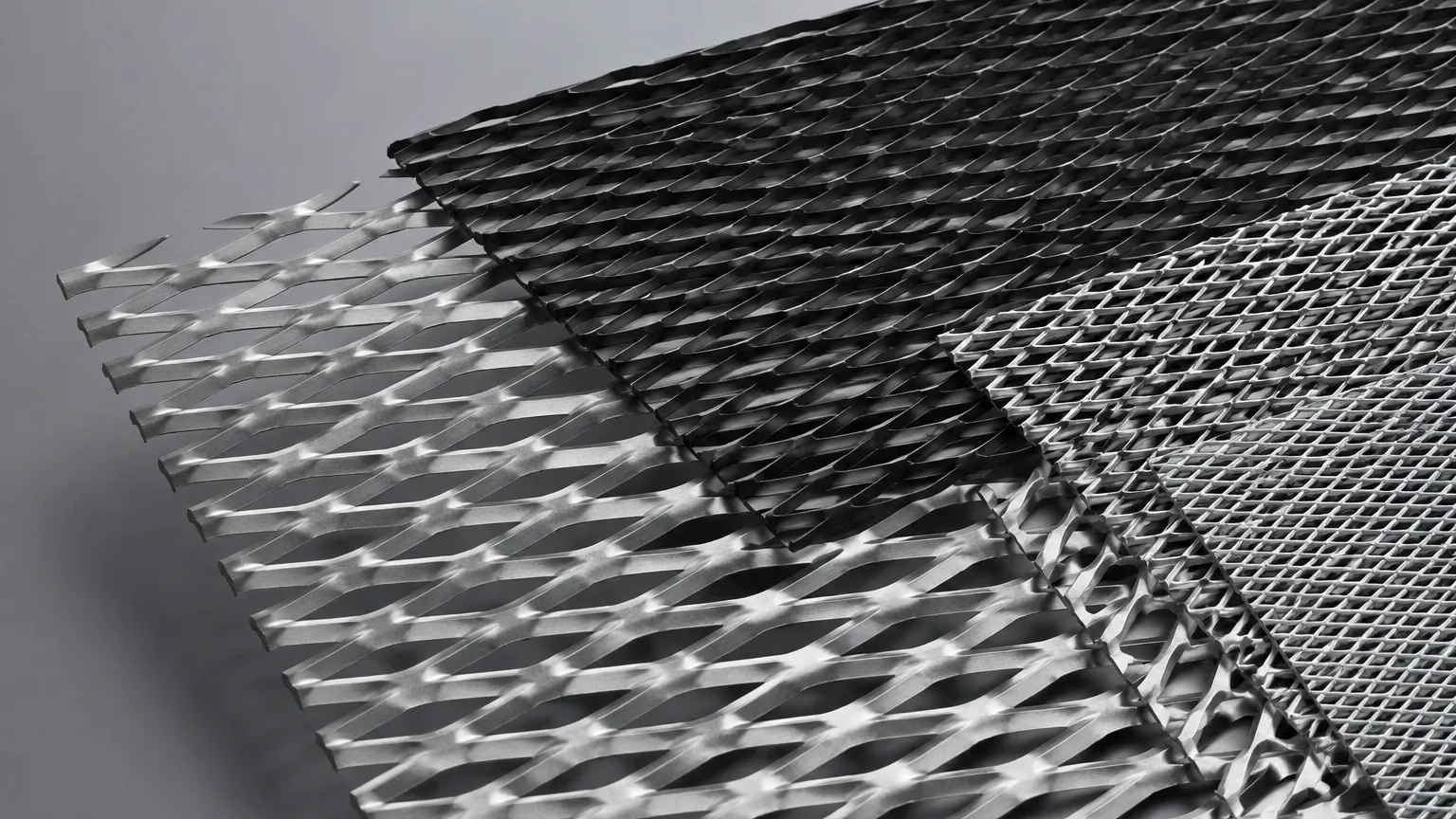
Unlike woven wire mesh or perforated plate, expanded metal is a single-piece structure without joins or welds. The manufacturing process creates a series of diamond-shaped openings. To measure this material accurately, one must look beyond simple length and width and focus on the geometry of the diamond itself.
There are two primary orientations for these diamonds: the Short Way of Design (SWD) and the Long Way of Design (LWD). These are the most fundamental metrics used in the industry.
Short Way of Design (SWD)
The SWD is the distance measured from a point on one diamond to the corresponding point on the next diamond across the short axis. It is important to note that this is typically measured from the center of one bond (the intersection of the strands) to the center of the next bond.
Long Way of Design (LWD)
The LWD is the distance measured across the long axis of the diamond, again from the center of one bond to the center of the adjacent bond.
In a standard specification, the SWD is usually listed first (e.g., 1/2" SWD x 1.2" LWD). This orientation is critical because it dictates the mechanical strength of the sheet and how it will fit into a filter housing or support frame.
Key Dimensional Parameters for Procurement
Beyond the basic diamond size, several other parameters define the physical properties and performance of the material. When discussing requirements with a manufacturer like Kaifil, providing these four measurements is essential for an accurate quote and functional end-product.
1. Strand Width
This refers to the amount of metal between the openings. It is the thickness of the metal "rib" that forms the diamond. In filtration, the strand width directly impacts the structural integrity of the filter cartridge and the total open area.
2. Strand Thickness (Gauge)
This is the thickness of the base material from which the expanded metal is made. In "Standard" (raised) expanded metal, the strand thickness is the gauge of the original sheet. In "Flattened" expanded metal, this thickness is reduced during the cold-rolling process.
3. Opening Size (SWO and LWO)
While SWD and LWD measure from center-to-center, the Short Way of Opening (SWO) and Long Way of Opening (LWO) measure the actual clear space within the diamond. Engineers use these figures to determine the largest particle size that can pass through the mesh.
4. Overall Thickness
In standard expanded metal, the strands are set at an angle to the plane of the sheet. The overall thickness is the total measurement from the top-most point to the bottom-most point of the profile. This is a vital measurement for ensuring the material fits within the grooves of a filter assembly or a retaining ring.
Step-by-Step Guide: How Is Expanded Metal Measured?
To achieve consistent results, follow this standardized measurement protocol used by quality control teams in industrial manufacturing.
Tools Required
* Digital Calipers: For precise measurement of strand width and thickness.
* Steel Ruler or Tape Measure: For SWD, LWD, and overall sheet dimensions.
* Micrometer: For verifying the gauge of the base material, especially in high-precision stainless steel applications.
The Measurement Process
1. Identify the Orientation: Lay the sheet flat. Determine which direction the long axis of the diamonds is running. This is the LWD direction.
2. Measure SWD and LWD: Use your ruler to measure from the center of one bond to the center of the next. For higher precision in small-mesh filtration components, measure across ten diamonds and divide by ten to find the average.
3. Measure the Openings (SWO/LWO): Place the tips of the calipers inside the diamond. Measure the widest part (LWO) and the narrowest part (SWO). This confirms the clearance for fluid or gas flow.
4. Measure the Strand: Use calipers to measure the width of the metal strand itself. Then, measure the thickness (gauge) of the strand.
5. Determine Overall Thickness: Place the expanded metal on a flat surface and use the depth gauge of your calipers or a thickness gauge to measure the total height of the raised profile.
Differences Between Standard and Flattened Expanded Metal
When asking how is expanded metal measured, it is crucial to specify whether the material is "Standard" or "Flattened," as the measurement interpretation changes.
Standard (Raised) Expanded Metal
Standard expanded metal is the product as it comes off the expanding machine. The strands and bonds are set at a uniform angle to the plane of the sheet. This provides extra strength and rigidity, making it ideal for support cores in heavy-duty filter cartridges.
* Measurement focus: Overall thickness is significantly greater than the strand thickness.
Flattened Expanded Metal
Flattened expanded metal is manufactured by passing standard expanded metal through a cold-roll reducing mill. This process flattens the strands and bonds into the same plane as the sheet.
* Measurement focus: The strand thickness and the overall thickness become nearly identical. However, the LWD is usually elongated slightly during the flattening process, which must be accounted for in the engineering drawings.
Material Selection and Its Impact on Measurement Accuracy
The material choice—most commonly stainless steel 304 or 316L—affects how the metal reacts during the expansion process. Stainless steel has a high work-hardening rate. When it is stretched to create the expanded pattern, the strands become stronger but slightly less ductile.
For B2B buyers in the chemical or pharmaceutical sectors, material certification is as important as dimensional accuracy. At Kaifil, we ensure that the starting gauge of the stainless steel meets ASTM standards before expansion. This ensures that even after the material is stretched, the strand thickness remains within the required tolerances to prevent premature failure due to corrosion or pressure spikes.
Engineering Considerations for Filtration Applications
In the context of industrial filtration, the measurements derived from the expanded metal are used to calculate two critical performance factors: Percent Open Area and Pressure Drop.
Calculating Percent Open Area
The open area determines the flow capacity of the filter. It is calculated using the strand width and the diamond dimensions. A higher open area reduces the pressure drop across the filter but may decrease the structural support for the filter media (such as fine wire mesh or paper).
Structural Support
Expanded metal is often used as a "support cage" for finer filtration layers. In these cases, the LWD should typically run parallel to the length of the filter cartridge to provide maximum longitudinal strength. If the measurements are off by even a few millimeters, the support cage may fail to fit the end caps, leading to bypass or structural collapse under hydraulic pressure.
Critical Information to Confirm Before Ordering
Before finalizing a purchase of Perforated & Expanded Metal, technical teams should confirm the following details to avoid common procurement errors:
* Direction of the Diamond: Specify if the LWD should run parallel to the length or the width of the sheet. This affects the flexibility and strength of the component.
* Edge Conditions: Do you require "Bond Sheared" edges (where the cut happens at the intersection, leaving no sharp points) or "Random Sheared" edges (which may leave open prongs)?
* Tolerances: Standard industrial tolerances for expanded metal are generally +/- 1/4" for sheet size, but for precision filtration components, much tighter tolerances are often required. Ensure these are documented.
* Flattening Requirements: If the material must be perfectly flat to be laminated with other mesh layers, specify the maximum allowable thickness variation.
By understanding how is expanded metal measured, engineers can better communicate their requirements, ensuring that the filtration solutions provided are durable, efficient, and perfectly suited to the demanding environments of modern industry. Whether you are designing a new hydraulic filter or replacing components in a chemical reactor, precise measurement is the first step toward operational excellence.
