


Expanded Metal Mesh Panels
In industrial filtration and structural engineering, the selection of appropriate media is critical to the longevity and efficiency of a system. Expanded metal mesh panels represent a specialized category of materials that offer a unique combination of structural integrity, high open-area ratios, and cost-effectiveness. Unlike traditional woven wire mesh or perforated sheets, expanded metal is produced through a process of slitting and stretching, which results in a continuous, jointless piece of metal that retains its strength even when subjected to high-pressure environments.
For engineers and procurement professionals, understanding the technical nuances of expanded metal mesh panels is essential for optimizing filtration performance. Whether used as a primary coarse filter, a support structure for finer mesh, or a protective outer guard for delicate filter cartridges, these panels must be specified with precision regarding material grade, diamond dimensions, and surface finish.
The Engineering Behind Expanded Metal Production
The manufacturing process of expanded metal mesh panels is fundamentally different from that of perforated metal. While perforated metal is created by punching holes into a sheet—resulting in significant material waste—expanded metal is produced by a shearing and stretching process. A solid metal sheet is fed through a machine that simultaneously slits and expands the material.
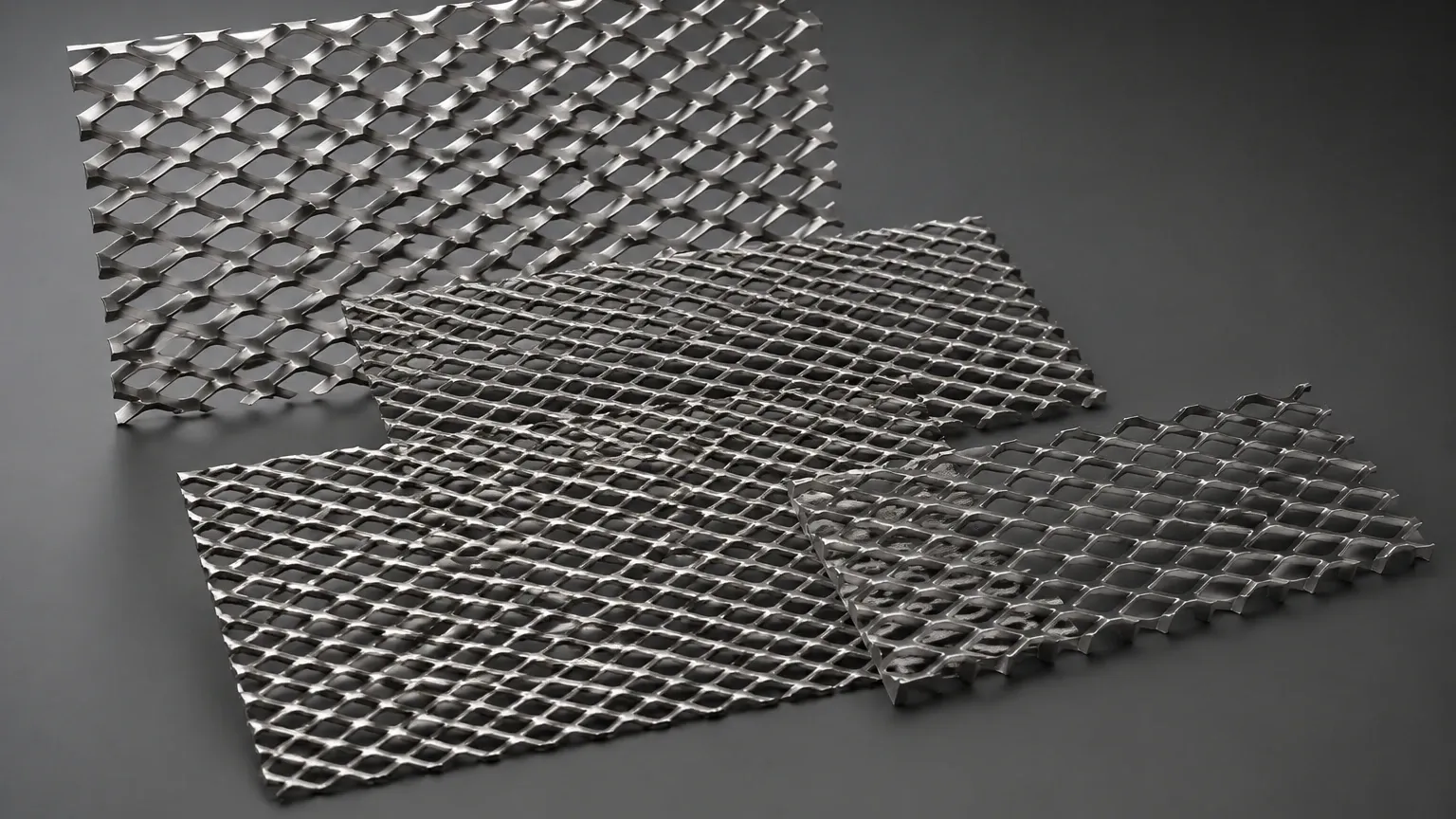
This process creates a series of diamond-shaped openings. Because the metal is stretched rather than cut out, there is virtually no scrap material, making it an environmentally and economically efficient choice. From a structural standpoint, the resulting strands and bonds (the intersections of the strands) are set at a uniform angle to the plane of the sheet. This configuration provides inherent rigidity and allows the material to distribute loads more effectively than flat perforated sheets.
When evaluating Perforated & Expanded Metal for industrial use, engineers must choose between "raised" and "flattened" expanded metal. Raised expanded metal retains the angled strands produced during the initial expansion, providing maximum strength and a high-friction surface. Flattened expanded metal undergoes an additional cold-rolling process to level the strands into the same plane as the bonds, resulting in a smoother, thinner profile that is often preferred for filtration applications where a flush surface is required to prevent turbulence or to facilitate easier cleaning.
Key Technical Specifications: SWD, LWD, and Open Area
To accurately specify expanded metal mesh panels, technical teams must use standardized terminology to describe the diamond pattern. These dimensions directly impact the filtration rating and the flow characteristics of the panel.
* SWD (Short Way of Design): This is the distance from the center of one bond to the center of the next bond measured across the short diamond diagonal.
* LWD (Long Way of Design): This is the distance from the center of one bond to the center of the next bond measured across the long diamond diagonal.
* SWO (Short Way of Opening): The actual width of the opening, excluding the strand width.
* LWO (Long Way of Opening): The actual length of the opening, excluding the strand width.
* Strand Width and Thickness: These parameters determine the mechanical strength and the total weight of the panel.
One of the most critical calculations for filtration engineers is the Percentage of Open Area. This determines the flow rate and the pressure drop across the filter. A higher open area reduces resistance to fluid or gas flow but may compromise the structural support provided to secondary filter media. In many industrial applications, expanded metal mesh panels are engineered to provide a balance between maximum throughput and the necessary rigidity to withstand hydraulic shocks or high-viscosity fluids.
Material Selection for Demanding Industrial Applications
Material compatibility is a primary concern in chemical processing, pharmaceutical manufacturing, and water treatment. Kaifil specializes in stainless steel solutions, as this material offers the necessary corrosion resistance and thermal stability for harsh environments.
1. Stainless Steel 304: The most common grade, offering excellent durability and resistance to oxidation. It is suitable for food and beverage applications and general industrial filtration.
2. Stainless Steel 316/316L: Containing molybdenum, these grades provide superior resistance to chlorides and pitting. They are the standard choice for marine environments, pharmaceutical production, and aggressive chemical processing where 304 might fail.
3. Specialty Alloys: For extreme temperatures or highly acidic environments, materials such as Monel, Inconel, or Titanium can be expanded, though stainless steel remains the most versatile and cost-effective option for the majority of B2B filtration needs.
When selecting a material, engineers must consider the pH levels of the fluid, the operating temperature, and the potential for galvanic corrosion if the expanded metal mesh panels are in contact with dissimilar metals within the filter housing.
Integration into Filtration Systems: Support and Protection
While expanded metal mesh panels can serve as primary filters for large particulates, their most common role in industrial settings is as a support or protective component.
Support Cores for Filter Cartridges
In high-pressure hydraulic or liquid filtration, fine wire mesh or pleated paper media lack the structural strength to maintain their shape under flow pressure. Expanded metal is rolled into cylinders to form the inner core or outer cage of a filter cartridge. The diamond pattern provides a high degree of radial strength, preventing the collapse of the filter media while maintaining a high open area for fluid passage.
Pleat Support
In air filtration and dust collection, expanded metal is often laminated to the back of pleated media. This ensures that the pleats remain uniformly spaced and do not bunch together under high face velocities, which would otherwise lead to uneven loading and premature filter failure.
Protective Guards
In heavy industrial environments, filter elements are susceptible to mechanical damage during installation or operation. Expanded metal mesh panels act as a robust outer shield, protecting delicate internal components from impact or abrasion without significantly hindering the flow of the process fluid.
Comparing Expanded Metal with Perforated Metal
Choosing between perforated and expanded metal often comes down to the specific requirements of the application. Perforated metal offers more variety in hole shapes (round, square, hexagonal) and can be produced with very small apertures for finer filtration. However, it is generally more expensive due to material waste and higher energy requirements during production.
Expanded metal mesh panels, conversely, offer a higher strength-to-weight ratio. The interconnected strands provide a continuous path for heat and electricity, which can be advantageous in certain electrochemical filtration processes. Furthermore, the "raised" version of expanded metal creates a three-dimensional surface that can help break up laminar flow, potentially increasing the efficiency of certain gas-phase filtration systems by promoting turbulence and contact with the media.
Customization and OEM Considerations for Engineers
For B2B applications, off-the-shelf solutions rarely meet the precise requirements of complex industrial machinery. Customization is often necessary to ensure seamless integration into existing systems. When partnering with a manufacturer like Kaifil, engineers should be prepared to confirm several factors:
* Edge Configurations: Expanded metal can be supplied with "random" edges (where the diamonds are cut through) or "bonded" edges (where the cut is made exactly at the bond, resulting in a smooth, finished edge). Bonded edges are safer to handle and easier to weld into frames.
* Tolerances: Precision is vital, especially when the mesh is being integrated into CNC-machined housings. Standard commercial tolerances may not be sufficient for high-performance filtration components.
* Surface Treatments: Depending on the application, panels may require electropolishing to remove burrs and improve corrosion resistance, or specialized coatings for chemical compatibility.
* Forming and Fabrication: Many projects require the expanded metal to be supplied in specific shapes, such as discs, cylinders, or conical forms. Understanding the ductility of the chosen material grade is essential for successful forming without fracturing the bonds.
By providing detailed application data, including flow rates, pressure requirements, and chemical exposure, purchasing teams can Review product options and application support to ensure the selected mesh meets the project's technical demands.
Evaluating Total Cost of Ownership and Maintenance
When specifying filtration components, the initial purchase price is only one part of the equation. The total cost of ownership (TCO) includes the lifespan of the filter, the frequency of maintenance, and the impact on system energy consumption.
Expanded metal mesh panels are known for their durability. In many water treatment and industrial washing applications, these panels can be cleaned and reused multiple times. The lack of joints or welds within the mesh structure (unlike woven mesh) reduces the number of crevices where bacteria or contaminants can accumulate, making the cleaning process more effective—a critical factor in food-grade and pharmaceutical applications.
However, if the mesh is not correctly specified for the environment—for example, using 304 stainless steel in a high-chloride environment—the cost of premature failure and system downtime will far outweigh any initial savings. Engineers should also consider the pressure drop; a panel with an insufficient open area will force pumps to work harder, leading to increased energy costs over the life of the system.
Conclusion
Expanded metal mesh panels are indispensable in the world of industrial filtration. Their unique manufacturing process provides a robust, efficient, and versatile material that supports the most demanding engineering applications. By carefully considering material grades, diamond dimensions, and structural requirements, technical professionals can select filtration solutions that offer optimal performance and long-term reliability. Whether providing the backbone for a high-pressure hydraulic filter or protecting a sensitive chemical processing unit, the right expanded metal specification is a cornerstone of industrial system integrity.
