


Expanded Metal Mesh 4×8
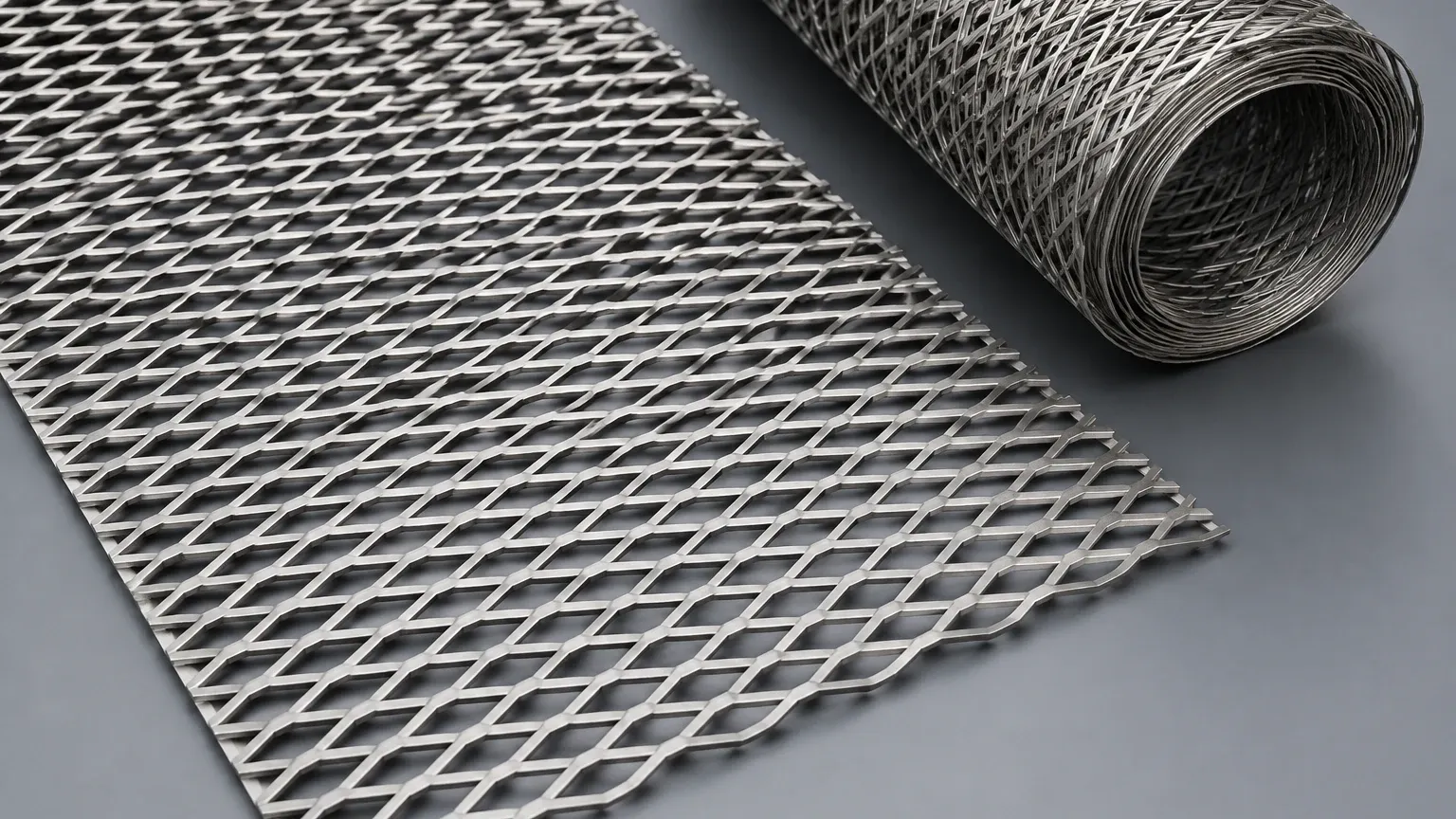
In the realm of industrial filtration and structural support, the expanded metal mesh 4×8 sheet stands as a foundational component. This standard dimension—four feet by eight feet—is the most widely utilized format across global manufacturing sectors, providing a balance between ease of handling and material yield. Unlike perforated materials that are created by punching holes and discarding the resulting "slugs," expanded metal is produced through a precision slitting and stretching process. This method ensures zero material waste while creating a rigid, interconnected diamond pattern that offers exceptional strength-to-weight ratios.
For engineers and procurement professionals, selecting the correct expanded metal mesh 4×8 involves more than just identifying the sheet size. It requires a deep understanding of the geometry, material properties, and the specific demands of the industrial environment, particularly when the mesh is integrated into complex filtration systems or high-pressure hydraulic assemblies.
Understanding Expanded Metal Mesh 4×8 in Industrial Applications
The designation "4×8" refers to the standard sheet size, but the performance of the mesh is dictated by its internal architecture. Expanded metal is formed from a single solid sheet of metal—typically stainless steel in high-performance industrial contexts. The manufacturing process involves a machine that simultaneously slits and stretches the metal. As the metal is expanded, it forms a series of diamond-shaped openings.
Because the mesh is made from a single piece of material, there are no welds or joints to fail under stress. This structural integrity makes it an ideal candidate for heavy-duty filtration support. In many chemical processing and water treatment facilities, the expanded metal mesh 4×8 serves as the primary skeleton for multi-layered filter elements. It provides the necessary rigidity to prevent the collapse of finer wire mesh layers when subjected to high differential pressures.
Technical Specifications and Geometry of Expanded Metal
To specify expanded metal accurately, engineers must move beyond the external dimensions of the sheet and define the diamond geometry. The following terms are standard in the industry:
* SWD (Short Way of Design): The distance from the center of one bond to the center of the next bond measured across the short diamond diagonal.
* LWD (Long Way of Design): The distance from the center of one bond to the center of the next bond measured across the long diamond diagonal.
* Strand Width: The amount of metal fed into the machine for each slit and stretch cycle.
* Strand Thickness: The thickness of the original base metal.
* Opening Size: The actual clear space between the strands, often referred to as SWO (Short Way of Opening) and LWO (Long Way of Opening).
When ordering an expanded metal mesh 4×8, the orientation of the diamonds relative to the 4-foot or 8-foot side is critical. Usually, the LWD runs parallel to the length of the sheet (the 8-foot side), but custom orientations can be requested depending on how the sheet will be cut or formed into cylindrical filter cartridges.
Material Selection: Why Stainless Steel is the Industrial Standard
While expanded metal can be produced from carbon steel or aluminum, industrial filtration applications almost exclusively demand stainless steel. At Kaifil, the focus remains on high-grade alloys that can withstand corrosive environments and extreme temperatures.
1. Stainless Steel 304: The most common grade, offering excellent corrosion resistance and formability. It is suitable for most food and beverage applications and general industrial filtration.
2. Stainless Steel 316: Contains molybdenum, which provides superior resistance to chlorides and marine environments. This is the preferred choice for pharmaceutical processing and aggressive chemical filtration.
3. High-Nickel Alloys: For specialized applications involving high heat or highly acidic fluids, exotic alloys may be used to ensure the longevity of the filter component.
Selecting the right material for an expanded metal mesh 4×8 sheet ensures that the filtration system does not introduce contaminants through oxidation or material degradation over time.
Flattened vs. Raised Expanded Metal
One of the most important distinctions for engineers to make is between "raised" and "flattened" expanded metal.
* Raised (Standard) Expanded Metal: In this form, the strands and bonds are set at a uniform angle to the plane of the sheet. This creates a textured surface and provides maximum rigidity. In filtration, raised mesh is often used as a pre-filter or a protective outer guard for filter cartridges, as the angled strands can help deflect larger debris.
* Flattened Expanded Metal: After the expansion process, the sheet is passed through a cold-roll reducing mill. This flattens the strands and bonds into the same plane, resulting in a smooth, level surface. For filtration support, flattened expanded metal is often superior. It provides a consistent surface for fine wire mesh to rest against, reducing the risk of the fine mesh being punctured or abraded by the sharp edges of a raised strand.
When integrating Perforated & Expanded Metal into a multi-stage filtration unit, the choice between flattened and raised surfaces will directly impact the lifespan of the primary filtration media.
Role of Expanded Metal Mesh in Filtration Systems
In industrial filtration, expanded metal rarely acts as the primary filter medium for fine particulates. Instead, it serves several critical secondary roles:
1. Pleat Support
In pleated filter cartridges, the expanded metal mesh 4×8 is cut and formed to provide a backing for the pleated media. It ensures that the pleats remain open and evenly spaced, even as the pressure drop across the filter increases. This maximizes the effective filtration area and extends the service life of the element.
2. Core Strength
For cylindrical filters used in hydraulic systems or high-flow water treatment, expanded metal is rolled into a tube to form the inner core. This core must resist the inward pressure of the fluid flow. The high structural integrity of stainless steel expanded metal makes it ideal for preventing core collapse.
3. Outer Protection
External cages made from expanded metal protect delicate filter media from mechanical damage during installation, cleaning, or operation. The open area of the mesh allows for unrestricted flow while providing a robust physical barrier.
Comparing Expanded Metal vs. Perforated Metal for Filtration
Engineers often weigh the pros and cons of expanded metal versus perforated metal. While both are used in Perforated & Expanded Metal applications, expanded metal offers specific advantages in certain scenarios:
* Cost Efficiency: Since no material is lost during production, expanded metal is often more cost-effective than perforated metal, especially when using expensive alloys like 316L stainless steel.
* Weight: Expanded metal typically provides a higher open-area-to-weight ratio, which is beneficial in portable filtration units or aerospace applications.
* Flow Dynamics: The angled strands of raised expanded metal can create turbulence, which in some specialized mixing or filtration applications is used to prevent the rapid buildup of a filter cake.
However, perforated metal is often preferred when extremely precise hole diameters or specific hole patterns (such as staggered centers) are required for exact flow calculations.
Key Evaluation Criteria for Procurement and Engineering
When sourcing expanded metal mesh 4×8, technical professionals should evaluate suppliers based on the following criteria:
1. Dimensional Tolerance: How much variance is allowed in the SWD and LWD? For precision filter assembly, tight tolerances are non-negotiable.
2. Edge Conditions: Does the sheet come with "random sheared" edges or "bond sheared" edges? Bond shearing provides a cleaner edge with fewer sharp points, which is safer for handling and easier to weld.
3. Flatness: For flattened mesh, the degree of flatness is critical. Any bowing or camber in the 4×8 sheet can complicate the automated rolling or cutting processes used in filter manufacturing.
4. Surface Cleanliness: In pharmaceutical and food-grade applications, the mesh must be free of residual oils from the expansion process. Suppliers should offer ultrasonic cleaning or passivation as part of their OEM services.
Common Risks and Quality Assurance in Sheet Production
The primary risk in expanded metal production is the presence of burrs or "edge wire." During the slitting process, if the tooling is not perfectly maintained, small metal slivers can remain attached to the strands. In a filtration system, these slivers can break off and enter the downstream flow, causing catastrophic failure in sensitive equipment like hydraulic pumps or medical devices.
Quality assurance protocols at Kaifil involve rigorous inspection of the strand integrity and the consistency of the expansion. For B2B buyers, it is essential to confirm that the manufacturer uses high-quality feedstocks and maintains their expansion dies to prevent these microscopic defects.
Customization and OEM Solutions Beyond Standard 4×8 Sheets
While the expanded metal mesh 4×8 is the standard, many industrial projects require customized solutions. OEM manufacturers can provide:
* Custom Sheet Sizes: Reducing the need for on-site shearing and minimizing scrap.
* Varying Open Areas: Adjusting the expansion ratio to achieve a specific percentage of open area, which is critical for calculating pressure drops in filtration systems.
* Secondary Fabrication: This includes cutting to size, rolling into cylinders, welding, and adding end caps or flanges to create a complete filter component.
By working closely with a manufacturer that understands both the material science and the application requirements, engineering teams can optimize their filtration systems for durability and performance. Whether the need is for a standard expanded metal mesh 4×8 for general use or a highly specialized stainless steel component for a chemical reactor, understanding the technical nuances of the expansion process is the first step toward a successful procurement strategy.
For those seeking reliable, high-performance filtration components, investigating the full range of Perforated & Expanded Metal options is essential. From material selection to final fabrication, every detail contributes to the total cost of ownership and the operational efficiency of the industrial filtration system.
